Author: l0cknsec

  • Meta’s 60% Cut in 90 Days — The Reversal Reuters Traced Through Zuckerberg

    Meta’s 60% Cut in 90 Days — The Reversal Reuters Traced Through Zuckerberg

    Key Summary

    • According to Reuters, Meta drew up an internal plan around January 2025 to reduce its existing team size by up to 60%.
    • The means were layoffs and workforce reassignment, premised on the assumption that AI would keep the productivity of a smaller team at the previous level.
    • HR projected the plan’s effect, though the original reporting did not disclose the specific figures.

    Analysis

    Table of Contents

    In January 2025, the Meta 60% cut plan written into internal documents was scrapped in less than 90 days. Under the premise that AI would fill the resulting gaps, layoffs and workforce reassignment were pushed forward simultaneously. Ultimately, CEO Mark Zuckerberg himself reversed this attempt, as reported by Reuters.

    Before diving in, one point is worth flagging. The assumption that “AI preserves productivity” is not grand philosophy; it is something teams that have already adopted AI coding tools feel to some degree. Where Meta went wrong was drawing a straight line from that assumption to a “60% cut” number.

    Meta 60% Cut: The Plan That Began in January 2025

    According to Reuters’ reporting, Meta drew up an internal plan around January 2025 to shrink its existing engineering organization by as much as 60%. The means were two-pronged: layoffs and workforce reassignment. HR projected the effects, and the premise was explicit — that AI tools would keep a smaller team’s productivity at the prior level.

    What stands out at this point is the weight of the “premise.” A 60% cut should have been a destination, not a starting point. Meta should have first measured the productivity AI could actually preserve, then decided the size of the cut. Meta reversed that order.

    The Background of the Reversal and the Lingering Aftermath

    Zuckerberg ultimately reversed the plan. But the reversal did not return teams to their prior state. The company was left carrying the aftermath of crushed morale and a “mercenary” organizational culture. Three groups — teams that had been told layoffs were coming, teams slated for reassignment, and the teams that remained — were now operating side by side inside the same company.

    The word “mercenarization” may sound like an exaggeration. Yet in any organization where the perception “I could be cut tomorrow” has taken hold, asking people to commit to long-term investment is nearly impossible. Codebase improvements, technical debt cleanup, onboarding new hires — these tasks generate no immediate revenue, so they are the first to be neglected.

    What the Instagram Zero-Authentication Flaw Revealed

    Gergely of The Pragmatic Engineer newsletter pulled in Instagram’s “zero-authentication password reset” flaw as a symbolic case for this situation. His analysis was that simply asking an AI bot to change an email on the account was enough to take over any account, including that of former U.S. President Barack Obama. On the surface it looks like a technical bug, but in this writer’s view it is a warning shot of quality degradation produced by the collapse of the workforce structure.

    When there are not enough people responsible for maintenance, security flows inevitably collapse in this way. AI can generate code, but it cannot stand in for accountability. Someone has to hold “what zero authentication means” and “how this path is used” in their head. The Pragmatic Engineer’s analysis of the Meta 60% cut pinpoints exactly this issue.

    Implications for Workforce Reshuffling at Other Big Tech Companies

    Once the Meta 60% cut attempt became public, similar discussions at Amazon, Google, and Microsoft came under scrutiny. Microsoft publicly referenced its AI tool usage in 2024, hinting at a workforce reshuffle. Amazon is on a similar trajectory. The Meta episode is a warning that the simple equation “AI = labor replacement” does not operate cleanly in practice.

    It is time to question how far executive confidence in AI actually holds. Three Questions on GPT-6 and Astra — How Far Does OpenAI’s Confidence in Declaring an “AGI Era” Really Go? offered a similar lens.

    Category Meta’s Approach An Alternative Approach
    Order of cut decisions AI assumption → 60% cut Measure AI productivity first → gradual cut
    HR projection Project effect after the cut Grounded in pre-pilot results
    Team operations Run sacrifice, waiting, and remaining groups in parallel Hold size constant + adopt tools
    Quality control Assume natural decline with fewer people Pair with automated code review and testing
    Cost of reversal Trust costs not accounted for Estimate reversal costs in advance

    As the table shows, the core difference is the order. Does AI adoption come first, or does the cut? Once the order flips, the team’s reaction changes completely.

    The Balance Practitioners Should Watch

    The most meaningful takeaway from this episode, from a practitioner’s perspective, is that organizations need to define what AI cannot replace before defining what it can. Code generation, test case writing, document drafts — replaceable. System design judgment, security path review, user trust accountability — hard to replace.

    The Meta 60% cut case was ultimately a problem of accountability structure, not numbers. Before introducing a tool, redraw who owns the responsibility. Skip that order, and the failure surfaces as a security flaw like the one on Instagram.

    Key Issues at a Glance

    1. The gap between the cut premise and actual measurement. Meta set 60% on the premise alone that “AI will preserve productivity.” Actual measurement data should have come first.

    2. Cost of reversal. A cut that has been announced once leaves trust costs behind even when reversed. These costs do not show up in HR metrics.

    3. Limits of automating security and trust paths. Authentication, payment, and personal-data flows can be supplemented by AI, but accountability must remain with people.

    4. Other big tech’s recalibration. The Meta case is directly referenced in workforce reshuffle discussions at Amazon, Google, and Microsoft.

    What to Do Right Now

    • Draft a written list for each team of “decisions AI can replace” versus “decisions people must own.”
    • If cuts are on the table, demand at least three months of pilot results. A cut without a pilot is a bet.
    • Explicitly define new roles for the remaining staff (AI tool operations, prompt curation, quality ownership).
    • Assign an owner at the single-line-of-code level for every authentication, payment, and personal-data flow.
    • Audit weekly whether the decision structure still allows reversal. A cut that has been announced once leaves the organization with a recovery bill.

    Frequently Asked Questions

    Was the Meta 60% cut actually carried out?

    No. Zuckerberg personally reversed the plan at the planning stage. However, personnel anxiety had already spread across the organization in the process.

    Can AI really replace the work of one engineer?

    Partially, yes. Boilerplate code, test automation, and document drafts are tasks AI can handle. System architecture decisions, security review, and user trust accountability still need a person in charge.

    Are other big tech companies trying something similar to Meta?

    Meta is the only company to publicly cite a figure in the 60% range. However, there have been multiple instances in which Amazon, Google, and Microsoft hinted at workforce reshuffles under the banner of AI tool usage.

    Is the Instagram zero-authentication flaw causally linked to the Meta 60% cut?

    The Pragmatic Engineer analyzed the flaw as a signal of the organizational turmoil created by Meta’s 60% cut attempt. It is hard to assert a direct causal link, but the timing does overlap.

    Source Material

    This article was written after reviewing the following original source: The Pragmatic Engineer — The Pulse: Meta wanted to reduce teams by 60% because of AI

  • Three Questions About GPT-6 Astra — How Far Does OpenAI’s Confidence Go in Declaring the ‘AGI Era’

    Three Questions About GPT-6 Astra — How Far Does OpenAI’s Confidence Go in Declaring the ‘AGI Era’

    Key Summary

    • OpenAI officially unveiled its next-generation AI model ‘GPT-6 Astra’ on Thursday, claiming cutting-edge performance in computer and web browser manipulation, software creation, and solving complex math problems
    • OpenAI described GPT-6 Astra in its blog as the ‘world’s best computer-use model,’ emphasizing that its ability to autonomously operate computers and browsers on behalf of humans has been significantly improved over previous generations
    • A phased rollout to paid customers is underway, starting with enterprise clients in the ‘Daybreak Early Access Program,’ followed by ChatGPT Plus, Pro, Business, and Enterprise subscribers in that order

    With OpenAI elevating its new model to the ‘threshold of the AGI era,’ an analytical article that cross-verifies the model’s technical claims, business strategy, competitive landscape, and safety debates will resonate most with readers

    Table of Contents

    OpenAI planted its flag on Thursday. The company officially unveiled its new model GPT-6 Astra, going as far as calling it ‘a model that handles computers better than humans.’ On the same day, co-founder Greg Brockman told reporters at a briefing, “It wouldn’t be a stretch to say we’ve now entered the AGI era.”

    The announcement landed with impact, but for practitioners, the first thing to verify is the gap between the claims and real-world performance.

    1. The Weight Behind the Claim of ‘World’s Best Computer-Use Model’

    OpenAI described GPT-6 Astra in its blog as the ‘world’s best computer-use model.’ The company says it has improved significantly over the previous generation in three areas: web browser manipulation, software writing, and solving difficult math problems.

    What caught this writer’s attention is the very category of ‘computer use.’ Agentic tasks — filling out forms, navigating sites, and writing code directly without human intervention — are an area where the industry has hit reliability limits for more than two years. Whether GPT-6 has actually broken through that wall depends on external benchmarks.

    2. GPT-6 Phased Rollout — Who Gets Access First

    It won’t be open to all users immediately after launch. Enterprise clients in the ‘Daybreak Early Access Program’ get it first, followed by ChatGPT Plus, Pro, Business, and Enterprise subscribers in that order. Plans for free users have not been announced.

    OpenAI competitor Anthropic is also pushing agentic products as it prepares for an IPO. With GPT-6 pulling out all the stops with an ‘AGI era declaration,’ the two-horse race is unlikely to end with a single announcement.

    3. The Weight of GPT-6 and the ‘AGI Era’ Statement

    Brockman’s remark — “When we look back in a few years, this is likely when AGI was created” — is less marketing and closer to an internal company assessment. However, since the very definition of AGI varies across the industry, external observers will likely quickly attach an ‘overhyped’ frame to it.

    According to a Wired report, the company identified balancing safety and release speed as a core challenge. The pace of external safety verification will be the key variable for the next six months.

    Item Details
    Model Name GPT-6 Astra
    Core Claim World’s best computer-use model
    First Access Daybreak Early Access enterprise clients
    Second Access ChatGPT Plus/Pro/Business/Enterprise
    Free Users No rollout plan announced
    AGI Statement Brockman: “We’ve already entered it”

    Key Issues at a Glance

    • Will GPT-6’s ‘computer use’ performance be reproduced in external benchmarks?
    • Does the phased rollout further raise accessibility barriers for free users?
    • The ‘AGI era’ declaration could backfire by inflating market expectations and increasing the burden of safety verification

    What to Do Right Now

    • If you’re a ChatGPT Plus or higher subscriber, turn on account notifications and track when GPT-6 access becomes available
    • Pick one or two automation workflows your company uses (web forms, data entry) and document them so you can compare before and after applying GPT-6
    • If you’re considering deploying AI agents, check Daybreak Early Access enterprise client recruitment announcements weekly
    • Subscribe to RSS feeds where OpenAI safety reports and external red team evaluations are published

    Frequently Asked Questions

    What is the biggest difference between GPT-6 Astra and the previous GPT-5?

    OpenAI says GPT-6 has reached a level where it can replace humans in ‘agentic’ tasks that autonomously manipulate computers and web browsers. Where previous models were limited to generating answers and writing code, GPT-6 has advanced to the stage of executing outputs directly on screen.

    Will GPT-6 be available to free ChatGPT users?

    The currently published roadmap includes no timeline for free users. Access is being rolled out to Daybreak Early Access enterprise clients and paid subscribers (Plus, Pro, Business, Enterprise) in that order, with a separate free-tier announcement likely to come later.

    How much should we trust the ‘AGI era’ declaration?

    Brockman’s remarks are closer to an internal self-assessment based on the company’s own criteria. Since the definition of AGI varies across academia and industry, it’s difficult to judge without parallel external evaluations. The true inflection point will come when safety verification reports and independent benchmarks are released together.

    If you want more details from the original reporting, the Wired article on GPT-6 Astra lets you review the company’s statements right after the announcement.

    Source Article

    This article was prepared after reviewing the following original source: Wired — GPT-6 Astra Is Here—and OpenAI Thinks It May Kick Off the AGI Era

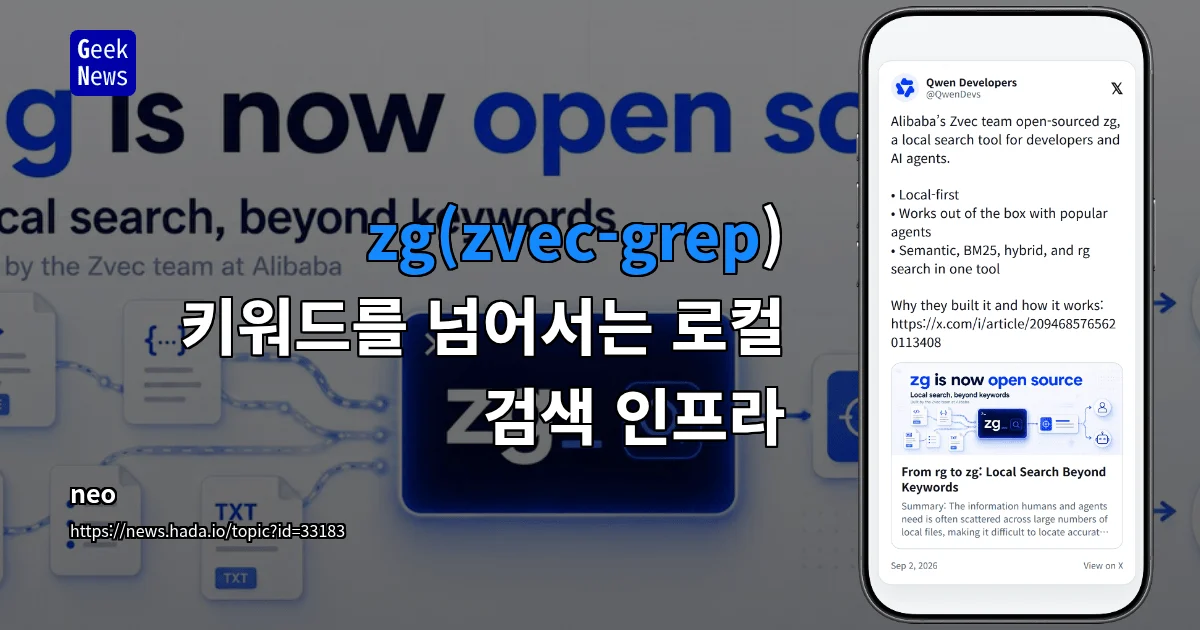
  • Local Search in 30 Seconds, 3,457 Files Indexed — How Qwen’s zg Transforms Agent Workflows

    Local Search in 30 Seconds, 3,457 Files Indexed — How Qwen’s zg Transforms Agent Workflows

    Key Takeaways

    • zg (zvec-grep) is a local-first search tool open-sourced by the Qwen team. It combines ripgrep’s precise text matching with vector search, BM25, and hybrid retrieval, letting natural-language intent navigate code and documents while narrowing down to the exact location.
    • The default embedding model is local/potion-code-16m-v2 — 16M parameters, about 32 MiB of local cache, no GPU required. Eleven on-device embedding models are bundled so users can pick the right one for each use case.
    • It indexed the entire Django repository of 3,457 files in under 30 seconds on an Apple M4 Pro. Zvec stores vector and BM25 indexes as an embedded library on the device, eliminating the need for a separate database service.

    Analysis

    Table of Contents

    The standard for local search is shifting. The figure of indexing 3,457 files of the Django repository in 30 seconds on an Apple M4 Pro highlights the limits of workflows that have long relied on ripgrep. zg (zvec-grep), open-sourced by the Qwen team, is a tool that adds semantic exploration to a local-search experience previously confined to keyword matching.

    A New Standard for Local Search: The Context Behind zg

    ripgrep is fast, but it struggles with natural-language questions like “Where is the OAuth callback handled?” zg addresses exactly that gap in local search. It adopts local/potion-code-16m-v2 as the default embedding model — 16M parameters, about 32 MiB of local cache, running on CPU alone with no GPU required. Eleven on-device embedding models are bundled, letting users choose based on the task at hand.

    The vector and BM25 index, called Zvec, is stored on the device as an embedded library. No separate database service is required. This distinction changes how the tool operates in on-premise environments and agent workflows.

    The Architecture of Hybrid Local Search

    The core idea is fusion, not a single algorithm. BM25 and vector search generate candidates, ripgrep adds exact matching, and RRF (Reciprocal Rank Fusion) produces the final ranking. The default output is a constrained preview plus a compressed ranked list, giving the next reasoning step enough context without re-reading entire result files.

    Comparing Three Local Search Approaches

    Item ripgrep alone zg hybrid Remote vector DB
    Indexed target Text only Vector + BM25 + text Vector + metadata
    Natural-language queries Not supported Supported Supported
    Local self-sufficiency Full Full Not possible (API-dependent)
    Agent integration Direct call MCP supported out of the box Requires a separate adapter
    Primary cost Disk I/O CPU embedding API call fees

    How to Plug zg into Your Agent Workflow

    The integration path for agents is MCP (Model Context Protocol). Since multiple agents share the same local index, redundant per-agent indexing never happens. The tool description also specifies search termination conditions, reducing repeated calls for the same query. What stands out for practitioners is the shift in cost structure. Given the growing number of teams adopting agent-based development, the local-search layer is becoming the next variable in cost competitiveness.

    What Two Benchmarks Reveal About Local Search

    SWE-QA-Bench tests multi-step reasoning on 20 questions across real code repositories. With zg introduced, tool calls dropped by more than half and input tokens fell by nearly half. The Judge score rose by 1.50 points.

    BrowseComp-Plus is a deep-research evaluation of 80 questions. Accuracy climbed from 98.67% to 99.00%, while input tokens dropped 37.56%, tool calls 43.52%, and agent runtime 38.58%. It is worth remembering, however, that the one-time initial index creation and remote embedding API costs were excluded from these figures.

    Practical Application Points

    • Start indexing from the repository root with `zg index .`, and add the default `.zvec/` directory to `.gitignore`.
    • Use `.zgignore` to explicitly exclude large directories such as `node_modules`, `dist`, and `venv` to reduce indexing time.
    • Launch in MCP server mode (`zg serve –mcp`) and include a stop rule in the agent system prompt, such as “after three searches, synthesize the answer candidates.”
    • Swap among the 11 embedding models based on the code/documentation/natural-language ratio. For code-heavy work, use `potion-code-16m-v2`; for Korean-language documents, prioritize a multilingual model.

    Try It Right Now

    • Clone a demo repository (e.g., requests, fastapi) and measure the runtime of `zg index .`.
    • Compare ripgrep-only results with zg hybrid results on the same query and track token usage.
    • Register the zg server in the MCP configuration file of your agent (Claude Code, Cursor, etc.).
    • Write a `.zgignore` to block noisy directories and shrink the index size.
    • Pick 5 of the 11 embedding models and record accuracy by query type (symbol search, semantic search, typo correction).

    Unverified Aspects and Remaining Challenges

    The author views the tool’s significance as lying less in raw search speed and more in the cost structure of a single agent cycle. Cutting tokens and call counts by nearly half means longer reasoning runs on the same budget. That said, the remaining validation challenges are clear: index update policy, monorepo memory footprint, and model swap cost. The original is available at Hacker News Korea’s zg (zvec-grep) — local search infrastructure beyond keywords.

    Frequently Asked Questions

    Does zg replace ripgrep?

    It does not replace it — it sits on top of it. The architecture preserves ripgrep’s exact matching for result precision while placing BM25 and vector search in front to extend candidate generation with semantic understanding.

    Can local search work without a GPU?

    Yes. The default model, local/potion-code-16m-v2, runs on CPU alone. At 16M parameters and roughly 32 MiB of local cache, indexing and search are feasible on a standard laptop.

    How much does it reduce cost when used as an agent tool?

    In the BrowseComp-Plus evaluation of 80 questions, input tokens dropped 37.56%, tool calls dropped 43.52%, and agent runtime dropped 38.58%. This is because results are returned as previews and compressed ranked lists.

    Is index refresh automatic or manual?

    Based on the published workflow, manual indexing (`zg index`) is the default. Automatic refresh based on file-change detection remains an open validation task in monorepo environments.

    Reference Source

    This article was written after verifying the following source: geeknews — zg (zvec-grep): local search infrastructure beyond keywords

  • Kim Seung-won, Justice Minister Nominee, Faces Triple Scandal — Key Issues 3 Days Before Confirmation Hearing

    Kim Seung-won, Justice Minister Nominee, Faces Triple Scandal — Key Issues 3 Days Before Confirmation Hearing

    Key Summary

    • Justice Minister nominee Kim Seung-won stated on the 3rd, during his first visit to the confirmation hearing preparation office, that he has no intention of directing the dismissal of charges in President Lee Jae-myung’s criminal case.
    • The nominee mentioned that the Minister of Justice does not have direct authority to command the Prosecutor General on individual cases; however, under the current Prosecution Service Act and the Public Prosecution Act scheduled to take effect in October, there is a clear legal basis for the Minister of Justice to command the Prosecutor General on specific cases.
    • Nominee Kim, who served as co-chair of the “Legislative Caucus for the Dismissal of Charges in the Lee Jae-myung Presidential Case and a National Investigation” (Gongchwi-mo), has publicly advocated for charge dismissal, but explained that his remarks conveyed “the public’s position that the state should correct indictments fabricated through illegal investigation.”

    This article bundles, as a political issue, the denial of charge-dismissal authority and the explanation of the new drug lobbying allegations ahead of the nominee’s confirmation hearing in three days. Meanwhile, a new controversy — the warrant-dedicated judge collusion suspicion — has been raised by former leader Han Dong-hoon, presenting a key agenda that requires verification at the hearing, making an issue-organization format appropriate.

    Table of Contents

    Justice Minister nominee Kim Seung-won drew a line on the 3rd, stating he has no intention of directing the dismissal of charges in President Lee Jae-myung’s criminal case, as he made his first visit to the confirmation hearing preparation office. At the same time, regarding the COVID-19 treatment clinical trial request allegations, he explained, “I have never done anything improper.” However, on the same day, former People Power Party leader Han Dong-hoon raised suspicions of warrant-dedicated judge collusion, meaning nominee Kim Seung-won has entered hearing D-3 carrying all three controversies at once.

    The nominee’s side explains that the Minister of Justice does not have direct authority to command the Prosecutor General on individual cases. However, the current Prosecution Service Act and the Public Prosecution Act scheduled to take effect in October clearly stipulate a legal basis for the Minister of Justice to command the Prosecutor General on specific cases. Since Justice Minister Kim’s command authority operates across the entire investigation and indictment stages, the explanation that “we respect the trial prosecutor who decides whether to proceed to trial” reads as a superficial concession.

    From the author’s perspective, the most concerning part is the Gongchwi-mo record. Despite being a former co-chair of the “Legislative Caucus for the Dismissal of Charges in the Lee Jae-myung Presidential Case and a National Investigation,” it appears contradictory that he explained his own remarks as conveying “the public’s position that the state should correct indictments fabricated through illegal investigation.” If he changed his position, we need to hear when and why; if he didn’t, we need to hear why he believes he can perform the duties of minister.

    Kim Seung-won, Justice Minister Nominee: The Legal Contradiction in Charge-Dismissal Remarks

    The fact that the Justice Minister’s command authority exists under current law has been addressed in legal literature. However, while the nominee emphasizes that “the authority to maintain charges in individual cases belongs to the trial prosecutor,” command at the investigation stage and command at the indictment decision stage are distinguished. How far confirmation hearing members probe this distinction is the first verification point. There is a large interpretive gap between the ruling and opposition parties on this matter.

    New Drug Lobbying Timeline — From 2021 Request to 2024 Constitutional Complaint

    In 2021, Justice Minister nominee Kim Seung-won was investigated on charges of intermediating bribery promises, etc., for accepting a request from acquaintance Yang Mo and asking then-Ministry of Food and Drug Safety head Kim Gang-rip to expedite approval of Genencell’s COVID-19 treatment clinical trial. In December 2024, he received a suspension of indictment from the prosecution, and filed a constitutional complaint with the Constitutional Court the same year. The nominee’s side argues the injustice, stating, “Not guilty was warranted, but the indictment was merely suspended because I introduced a fundraising method.”

    Yang Mo was confirmed to have called nominee Kim “oppa” (older brother) and sent a message reading, “He’s in the Lee Jae-myung line, but since I couldn’t repay the favor, it feels awkward to ask again.” Yang requested the founder of the pharmaceutical company, Mr. Kang, “Please give a 5 million won donation to Kim, who worked hard for us.” However, since Justice Minister Kim Seung-won’s donation limit was already filled, no actual transfer took place. The nominee’s side maintains the position, “We never requested treatment approval, priority review, standard relaxation, or procedure omission, and the approval process proceeded normally.”

    The amount of 5 million won is not insignificant even under the Political Funds Act. However, from a practitioner’s standpoint, the more meaningful point is that the matter ended in a suspension of indictment. The prosecution must have had a clear reason for choosing a suspension of indictment rather than a not-guilty disposition, and whether that reason will be disclosed at the hearing is the key. Reports that Yang said, “Attracting 30 billion won was easy,” have also become a new flashpoint in partisan clashes.

    Han Dong-hoon Raises Allegations of Warrant-Dedicated Judge Exclusion Request Related to Justice Minister Nominee

    Independent lawmaker Han Dong-hoon disclosed on this day through social media the fact that the request to exclude warrant-dedicated judge Jeong Mo from the new drug lobbying case was sent up from the Supreme Prosecutors’ Office to the Supreme Court, but was not accepted. Whether the special relationship between Justice Minister nominee Kim Seung-won and Yang was cited as the reason for exclusion has emerged as a key issue. It was reported that former leader Han fiercely criticized candidate Kim across 13 instances and stated his position of “special prosecutor over hearing.”

    It has not yet been officially confirmed whether the warrant-dedicated judge exclusion request was actually filed with the Supreme Court. Why the Supreme Prosecutors’ Office requested exclusion and on what grounds the Supreme Court rejected it are verification points for the hearing. Justice Minister nominee Kim Seung-won’s side has not yet issued an official position on this allegation. People Power Party demanded the withdrawal of the nomination that day.

    Issue Nominee’s Position Opposition’s Claim Hearing Verification Point
    Charge Dismissal Authority “No intention to command” Command authority exists under current law, Gongchwi-mo record When and why Gongchwi-mo activities were discontinued
    New Drug Lobbying “Never did anything improper” Request facts acknowledged, constitutional complaint in progress Whether actual influence was exerted on clinical trial approval
    Warrant Collusion No official position issued Han Dong-hoon: “Exclusion request was made” Supreme Court filing status and reasons for rejection

    The original report can be found at the related article source.

    What to Do Right Now

    • Check the confirmation hearing schedule on the National Assembly website and pre-open the live broadcast channel
    • Browse the nominee Kim’s speech records and legislative activities on the Open Assembly site in advance
    • Follow former leader Han Dong-hoon’s official social media accounts to track subsequent positions on the warrant-dedicated judge
    • Check the progress of the constitutional complaint on the Constitutional Court website
    • Read the provisions related to command authority in the Prosecution Service Act and the Public Prosecution Act directly at the Prosecution Service’s legal information center

    Frequently Asked Questions

    When is the confirmation hearing for Justice Minister nominee Kim Seung-won?

    It will be held as scheduled at the National Assembly’s Legislation and Judiciary Committee. The exact schedule can be confirmed through the committee’s notice, and at the time of this report, there are three days left until the hearing (D-3).

    Does the Justice Minister actually have charge-dismissal command authority?

    Both the current Prosecution Service Act and the Public Prosecution Act scheduled to take effect in October provide grounds for the Minister of Justice to command the Prosecutor General on specific cases. However, in practice, the trial prosecutor makes the final decision on whether to maintain or dismiss charges at trial.

    Is a suspension of indictment the same as not guilty?

    No. A suspension of indictment is a disposition under the Criminal Procedure Act where, although criminal suspicion is acknowledged, the indictment is suspended for reasons of criminal policy. It is distinguished from a not-guilty disposition.

    What does a warrant-dedicated judge exclusion request mean?

    Under the Criminal Procedure Act, it is a procedure to request a judge to be excluded from a case when there are circumstances that make it difficult to expect fair review. If accepted by the Supreme Court, another judge takes over the warrant review.

    Issue Summary

    What needs to be confirmed at the hearing is essentially three things. First, when and under what circumstances nominee Kim concluded his co-chair activities at Gongchwi-mo. Second, whether any actual financial benefit was received as consideration for the request in his relationship with Yang Mo. Third, whether the nominee’s circumstances were reflected in the background of the warrant-dedicated judge exclusion request. If all three are not resolved, it will be difficult to receive trust as the head of the Ministry of Justice. Ultimately, how transparently these three are addressed within the three-day hearing period is likely to be the turning point that determines the appointment of Justice Minister Kim Seung-won.

  • The Truth Behind TVING’s 39.54 Million Record Leak — Joint Investigation Team Pinpoints Initial Response Failure

    The Truth Behind TVING’s 39.54 Million Record Leak — Joint Investigation Team Pinpoints Initial Response Failure

    Key Summary

    • The Ministry of Science and ICT (MSIT) and KISA jointly released the results of the public-private investigation into the TVING breach on the 3rd.
    • The initially reported 39.54 million leaked accounts include many duplicates; the precise scope will be confirmed by the Personal Information Protection Commission (PIPC) investigation.
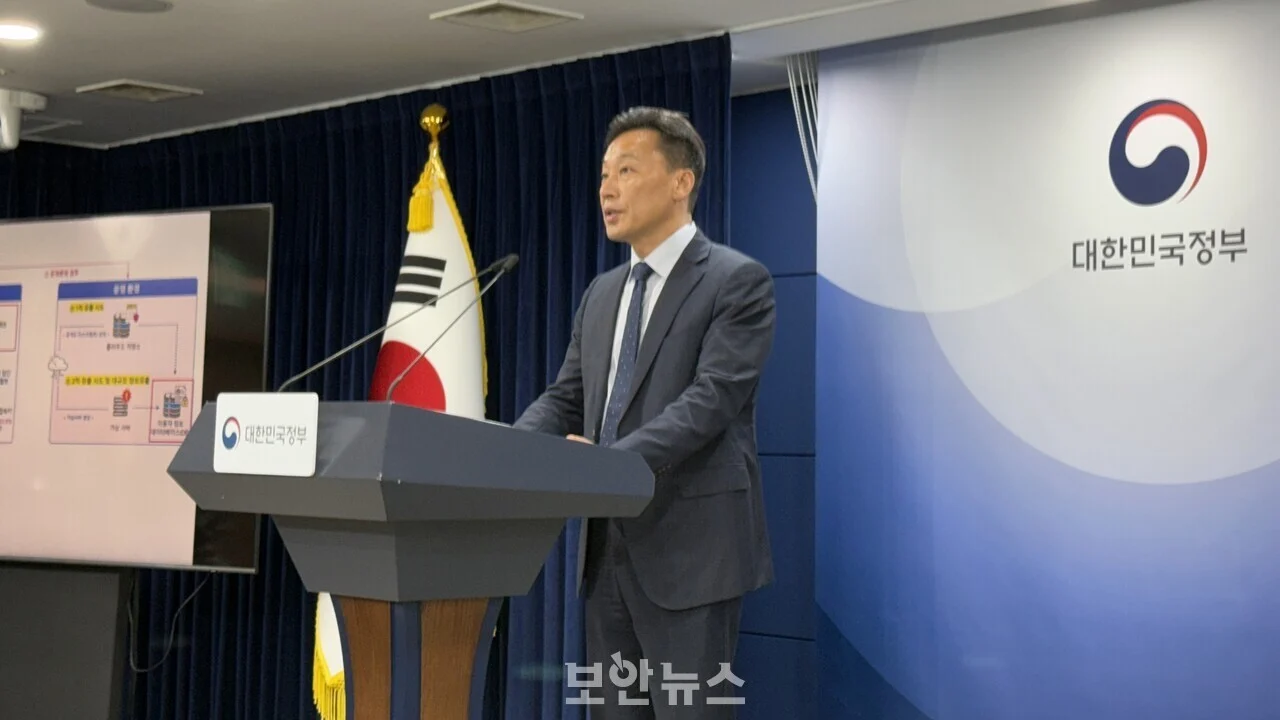
    • During the first attack attempt, a CPU 100% spike alarm was triggered, but MSIT Director-General for Information Protection Network Policy Lim Jeong-gyu acknowledged at the briefing that it was classified at the time as a routine system error rather than a cyberattack, and no follow-up security measures were taken.

    Analysis

    Table of Contents

    The number that first made headlines for the TVING breach was 39.54 million. Not all of these were unique accounts. According to the joint public-private investigation results released on the 3rd by MSIT and KISA, the reported 39.54 million figure includes many duplicates. The precise scope of the breach will be determined through the PIPC’s investigation.

    While the joint investigation team officially confirmed this fact, it also drew a different line from the “inflated figures” controversy that erupted immediately after the announcement. At the briefing, MSIT’s Lim Jeong-gyu answered, “The initially reported figure includes duplicates, and the actual scope of damage will be confirmed through the PIPC investigation.” KISA’s spokesperson, Park Yong-gyu, Head of the Digital Threat Response Division, added at the same podium, “The exact number will come out once the investigation is concluded.”

    What I found most significant in that room was not simply the fact that the numbers were inflated. The real takeaway is that the presenters and questioners started over from the shared premise that “the exact scope is still unknown” while sitting in the same room. When a data breach occurs, the pattern repeats itself: the first day’s figure draws the loudest headlines, followed by corrections and clarifications the next day. The TVING breach has followed the same pattern.

    However, there was a heavier question beyond the numbers. The questions concentrated in the Q&A were: “Why was the initial alarm ignored?” According to the investigation team, a CPU 100% spike alarm was triggered on TVING’s system during the first attack attempt. Yet Director-General Lim directly acknowledged, “At the time, this was judged to be a routine system error rather than a cyberattack, and no follow-up security measures were taken.”

    This single sentence captures the essence of the TVING breach incident. The alarm sounded, but no one read it; even if it was read, it was misjudged; and there was no procedure to correct that misjudgment. In incident response, the most expensive mistake is not the response after a breach, but missing the very moment of breach. From a practitioner’s perspective, what stands out is that this is not just TVING’s problem — it reflects a structural weakness across major domestic OTT and platform operators that fail to maintain proper monitoring systems and escalation rules.

    In the latter part of the Q&A, the level of sanctions and responsibility emerged as key issues. Under the current Information and Communications Network Act, fines and criminal penalties are possible for violations, but if the initial figure of 39.54 million is adjusted, the scale of sanctions could also change. The joint investigation team only reiterated its position that “the level of sanctions will be decided after reviewing the PIPC’s results.”

    These investigation results officially indicate insufficient early detection and response capabilities in the TVING breach. It is not merely a hacking incident — it is a case where “the alarm sounded but was not heard.” In this respect, the TVING breach raises the need for the industry as a whole to re-examine its incident response matrix. It should also be clearly remembered that the 39.54 million figure announced on September 3rd may not be the confirmed number. The initial announcement figure, the measured value after excluding duplicates, and the PIPC’s final confirmed value — whether these three numbers will match to a single digit is still unknown.

    What to Do Right Now

    • Change your TVING account password immediately to a combination of 12+ characters including letters, numbers, and special symbols.
    • Also change passwords separately for any other services (email, banking, shopping) that share the same password as your TVING account.
    • Enable ‘Login Notifications’ and ‘Two-Factor Authentication (if available)’ in the TVING app settings.
    • Check whether the email you use is included in leaked datasets at haveibeenpwned.com.
    • Review your payment card transaction history registered with TVING on a 7-day cycle, and request an immediate card suspension from the issuer if you detect any suspicious transactions.

    Key Issues

    • Actual scope of the breach: 39.54 million is the initial figure including duplicates and will be finalized through the PIPC investigation.
    • Initial alarm misjudgment: Circumstances in which the CPU 100% alarm was classified as a system error have been officially confirmed.
    • Responsibility: The level of fines and criminal penalties for detection and response failures will be determined after the figure is confirmed.
    • Industry implications: Platforms that do not operate an alarm-escalation-response matrix are exposed to the same pattern.
    • Individual control: Users should trust the initial announcement figure but simultaneously carry out password changes and payment monitoring until the confirmed figure is released.

    Frequently Asked Questions

    How can I directly check whether my TVING account was leaked?

    TVING officially operates a leaked account lookup page. You can also instantly check whether your registered email is included in external breach datasets by searching it at haveibeenpwned.com.

    How many actual victims are there among the 39.54 million reported accounts?

    This has not yet been confirmed. The 39.54 million figure is the initial count including duplicates, and the precise scope of the breach will be disclosed through the PIPC’s additional investigation.

    Is it safe to delete my TVING account?

    The leaked data is already out in the wild, so deletion is not a direct solution. Instead, changing your password, separating payment methods, and enabling two-factor authentication are more effective.

    What sanctions may be imposed on TVING in the future?

    Fines, corrective orders, and criminal penalties are possible for violations of the Information and Communications Network Act. However, the level of sanctions depends on the PIPC’s final investigation results and cannot be predicted at this time.

  • Google Ad Monopoly Ruling: 5 Key Takeaways From the Brinkema Verdict — Breakup Averted, but Unresolved Issues Remain

    Google Ad Monopoly Ruling: 5 Key Takeaways From the Brinkema Verdict — Breakup Averted, but Unresolved Issues Remain

    Key Takeaways

    • On September 2, 2026, Judge Leonie M. Brinkema of the U.S. District Court for the Eastern District of Virginia ruled in Google’s ad-tech antitrust case, ordering changes to how the business operates but denying a breakup of the ad business.
    • While declining to break up Google’s ad operations, the court required structural adjustments that benefit competitors. However, the New York Times reported that the ruling did not specify concrete implementation measures.
    • This ruling is the latest outcome of the Department of Justice’s multi-year effort to break up Google through two antitrust lawsuits, anchored by the 2020 search monopoly case and the 2023 ad-tech monopoly case.

    Analytical — This piece chronologically organizes the results of the DOJ’s two federal antitrust lawsuits against Google and highlights the issues the Brinkema ruling leaves for the digital ad market.

    Table of Contents

    On September 2, 2026, Judge Leonie M. Brinkema of the U.S. District Court for the Eastern District of Virginia issued a ruling that became a turning point for the direction of the Google ad monopoly case. The court denied the breakup of Google’s ad-tech business — the core of the Google ad monopoly lawsuit — while ordering structural adjustments to the business that benefit competitors.

    However, practitioners remain cautious because the ruling did not specify concrete implementation measures. According to reports, the ruling did not lay out follow-up remedies such as what data should be shared with whom or what contract terms should be changed.

    The Two Google Ad Monopoly Lawsuits the DOJ Pursued Over Six Years

    The U.S. Department of Justice has filed two federal antitrust lawsuits against Google. The 2020 search monopoly case and the 2023 ad-tech monopoly case form the backbone of these efforts.

    In the 2024 first trial of the search case, the court recognized Google’s search business and search advertising business as lawful monopolies. Last April, the first trial of the ad-tech case reached the same conclusion. Both cases resulted in victories for the DOJ at the first trial, but the two diverged at the structural remedy stage of the Google ad monopoly case.

    In the search case, the DOJ proposed aggressive structural remedies, including divestiture of the Chrome browser and Android operating system. However, Judge Amit Mehta rejected all of these in September 2025. Instead, the court ordered Google to end its exclusive default installation contracts and share some search data; Google is currently appealing.

    Item DOJ Proposal Search Case 1st Trial Ad-Tech Case 1st Trial
    Filing Year – 2020 2023
    Monopoly Recognized – 2024 April 2025
    Business Breakup Request Divest Chrome & Android Rejected Sept 2025 Denied Sept 2, 2026
    Presiding Judge – Judge Amit Mehta Judge Leonie Brinkema
    Final Obligations – End default contracts, share data Operational changes (lacking specifics)

    As the table shows, both cases avoided a business breakup. The approach taken by Judge Mehta and Judge Brinkema is the same: a “behavioral remedy” that keeps the business itself intact while mandating competition-friendly changes in how it operates.

    The Gaps the Brinkema Ruling Leaves in the Google Ad Monopoly Case

    The most notable point for practitioners in this ruling is the level of specificity in the operational changes. While the court ordered “support for competitors,” the questions of what data should be shared with whom and by when, and what contract terms should be changed, are essentially left to subsequent proceedings.

    I see a high likelihood that this gap will function as a negotiation card in the Google ad monopoly case going forward. Additional back-and-forth is expected, with Google attempting “reasonable interpretations” and the DOJ demanding more specific remedies. From the perspective of ad-tech ecosystem participants, it is difficult to predict how the market landscape will be reshaped until clear guidelines emerge.

    The core of the ad-tech stack is Google’s Ad Manager and AdX. How these two products are opened up will reshape the competitive dynamics of the entire display advertising market. However, rather than triggering immediate changes from this ruling alone, shifts are likely to emerge gradually over the coming years.

    Issue Summary

    This Google ad monopoly ruling reveals two trends. One is the U.S. federal courts’ consistent approach of avoiding business breakups and relying on “behavioral remedies.” The other is that both the search case and the ad-tech case have entered the appeals stage, potentially freezing regulatory enforcement in practice for the next 2–3 years. As these two trends overlap, the industry — including advertisers — should anticipate gradual environmental changes rather than dramatic short-term shifts.

    What to Do Right Now

    • Review the channel-by-channel allocation of your Google ad budget quarterly and rebalance any medium whose dependency exceeds 70%.
    • Run at least one campaign comparing performance against alternative ad platforms such as Meta, Amazon, and TikTok.
    • Set up a weekly monitoring routine for Google Ads policy updates and ad-tech news.
    • Tighten up campaigns that depend on third-party data for targeting and measurement, and increase the share of first-party data.
    • Read the original first-trial ruling with your agency or in-house team and reflect the insights in your quarterly ad strategy.

    Frequently Asked Questions

    Why was a business breakup denied in the Google ad monopoly case?

    Both presiding judges determined that while the monopoly was recognized, a breakup would be a “disproportionate remedy.” They viewed a “behavioral remedy” — keeping the business intact while imposing competition-friendly changes to its operations — as more appropriate.

    What specific operational changes did Judge Brinkema order?

    The ruling stated that the business structure should be adjusted in ways that benefit competitors. However, it reportedly did not specify implementation details such as what data should be shared with whom or what contract terms should be changed, with these specifics expected to be addressed in future proceedings.

    What happens if Google appeals?

    Google is already appealing the search case, and the ad-tech case also remains open to appeal. If the case reaches a U.S. federal appellate court, a final conclusion could take 2–3 years, limiting short-term structural changes.

    What impact does this ruling have on the average advertiser?

    In the short term, immediate changes to ad operations are likely to be limited. However, if Google’s Ad Manager and AdX face open-access requirements in the future, changes could emerge in display ad cost structures and targeting options, requiring industry monitoring.

    Source: TechCrunch original

    Reference Source

    This article was written based on the following source: TechCrunch — Google spared from ad-business breakup, but judge orders changes to how it operates

  • IT Burnout: A 5-Step Recovery Protocol — The Signal a 20-Year Veteran Reads When Only the Motivation Disappears

    IT Burnout: A 5-Step Recovery Protocol — The Signal a 20-Year Veteran Reads When Only the Motivation Disappears

    Key Summary

    • Context_Conditions: [‘Over 20 years in the same occupation, where work context and tech stack are embodied and new challenge stimuli have diminished’, ‘Multiple projects, upgrades, and security issues have piled up simultaneously, pushing cognitive load past its limit’, ‘Frequent platform vendor changes periodically invalidate existing know-how, eroding a sense of control over expertise’, ‘A sense of alienated self-awareness where the person still evaluates the company and job positively, but only emotional motivation operates separately’, ‘Already initiated voluntary recovery attempts (like starting exercise) but failing to feel effects due to diminished motivation’]
    • Repeated_Community_Solutions: [‘Intentionally design micro-success experiences completable within a day by shrinking work units’, “Forcefully reawaken a ‘beginner’s mind’ by touching long-neglected auxiliary areas or learning new tools”, ‘Top up a sense of value from outside through meaningful non-work activities (mentoring, community contribution, side projects)’, ‘Reset physical rhythms (sleep, meals, exercise) and explicitly schedule mandatory rest into time blocks’, ‘Officially request priority re-adjustment in regular 1:1s with managers or peers to structurally relieve overload’]
    • Opposing_Views: [‘Simple rest and hobbies alone won’t solve the root problem; larger structural changes like role redefinition or career shifts are needed’, ‘If long-accumulated lethargy isn’t recovered by short routine changes, medical or psychological professional intervention should be prioritized’]

    The original is a diagnostic-request type concern thread, so this concludes by analyzing the psychological and structural causes and then guiding readers to a step-by-step recovery procedure that peer IT practitioners can immediately execute when they spot the same signals

    Table of Contents

    A colleague’s hands stop in front of a system they’ve touched for 20 years. The company is fine, the role still feels like a source of pride. But the moment they open their laptop in the morning, the mind just won’t turn on. On the commute, the sentence “Why am I even doing this?” pops up automatically. This article is a procedure for the IT practitioner caught in that state to read IT burnout not as temporary fatigue but as a structural signal and make it tangible, step by step.

    Why This State Repeats for 20-Year Veterans

    Veteran practitioners with 20+ years in the same occupation already have their work context and tech stack embodied. They’ve seen too many incidents and upgrades of the same kind. New challenge stimuli diminish, and frequent platform vendor changes periodically invalidate even the know-how they had. The confidence of “I know this well” slides into the anxiety of “I can’t keep up with change.”

    When multiple projects, upgrades, and security issues pile up simultaneously on top of that, cognitive load exceeds the limit. The body can still show up to work, and the person still evaluates the company positively — yet an alienated self-awareness appears where only motivation operates separately. From a practitioner’s perspective, what stands out is that this point is a different stage from simple fatigue. IT burnout at this stage isn’t a willpower problem — it’s closer to a “disconnection of the reward circuit.”

    Step 1 — Self-Check: Sorting the IT Burnout Signal

    If you answer “yes” to 3 or more of the 5 items below, treat it as a burnout signal rather than temporary fatigue.

    • Fatigue persists that isn’t recovered even with 4+ weeks of sleep and hobby time
    • Work performance is maintained, but the question “Why?” surfaces automatically
    • Your evaluation of the company/role and your emotions operate separately
    • You’ve already attempted voluntary recovery (exercise, routines) but with no effect
    • You can still show up to work, but the first hour feels empty

    If physical symptoms such as cough, headaches, or digestive issues persist for 8+ weeks, consider medical or psychological professional intervention before self-prescribing for IT burnout. The reason this distinction matters is that advice like “just exercise and you’ll be fine” actually ties your hands in this band.

    Step 2 — Separating Causes into Three Axes

    Even when it’s called IT burnout, the causes differ. First, see which of the three axes below carries the most weight.

    Axis Signal Solution Direction
    Work Overload 3+ concurrent projects, 2+ overtime nights per week, 1+ priority changes per week Formal re-negotiation of priorities, shrinking work units
    Role Identity Thoughts like “This isn’t my job” appearing 3+ times per week Mentoring & community activities, learning auxiliary areas
    Speed of Tech Change 2+ new tool introductions within 6 months, experiences of existing know-how being invalidated Re-combining expertise, negotiating role shifts

    In most cases, multiple axes overlap rather than just one. The author sees this separation itself as the most meaningful first practice. If you don’t separate the causes, you just keep repeating partial prescriptions like “exercise.”

    Step 3 — Short-Term Recovery (1–2 Weeks): Making IT Burnout Tangible

    Resetting physical rhythms comes first. Add 30 minutes to your sleep and pin meal times to the same slot for the next 2 weeks. If you’ve already started exercising, cut intensity by 30% and keep frequency. Make the call on effectiveness after 2 weeks.

    Next, shrink the work units. Break an 8-hour task into 16 blocks of 30 minutes. This is the method of intentionally designing micro-success experiences completable within a day. Completion checkmarks piling up becomes input to the motivation circuit itself. At this stage, formally request priority re-adjustment in a regular 1:1 with your manager or a peer. Concrete requests like “cut the top priority this quarter down to just three” are more effective than generic “I have too much work.”

    Run cognitive-load blocking in parallel. Turn off internal messenger notifications outside work hours and protect the first hour of your morning for deep work.

    What to Do Right Now

    • Block one hour today and break 10 in-progress tasks into 30-minute units, then log them on your calendar
    • Turn off internal messenger notifications outside work hours and set your first morning hour as a protected, notification-free window
    • Add 30 minutes to your sleep and pin meal times to the same slot for the next 2 weeks
    • Schedule a 1:1 with your manager this week to ask, “Please lock down just the top 3 priorities for this quarter”
    • Pick one long-neglected auxiliary area and revisit it as a 30-minute learning session

    Step 4 — Mid-Term Recharge (1–3 Months)

    Once your hands start moving again through short-term recovery, top up a sense of value from outside. Internal mentoring, community contribution, and small side projects are effective. The key at this stage isn’t “performance” but “sense of value.”

    At the same time, start learning auxiliary areas. Touch advanced features of existing tools or new tools in adjacent fields in 30-minute blocks. This is the device that forcefully reawakens a “beginner’s mind.” It’s especially effective for 20-year veterans because, when the sense of control from “I know everything” wavers, “the joy of learning for the first time” re-engages the reward circuit.

    If the cause was structural workload overload, formalize priority re-negotiation at this point. Seeing how peer IT practitioners handle the same signals is a worthwhile starting point, but don’t force routines that don’t fit your own work context on yourself.

    Step 5 — Long-Term Redesign: Your Place After IT Burnout

    If motivation isn’t fully recovered even after 1–3 months of mid-term work, consider a role shift within the same occupation. Areas like platform engineering, architecture design, and internal consulting are natural places to re-combine a 20-year veteran’s know-how. Decisions at this stage shouldn’t be made at the burnout peak. Move only after observing at least 3 months of recovery trajectory.

    Even when proceeding this way in stages, if lethargy, concentration loss, and physical symptoms persisting 8+ weeks accompany the picture, prioritize professional intervention first. Reversing this priority will only lengthen the IT burnout recovery.

    Common Mistakes — Avoiding the Extremes

    Avoid the two biggest mistakes. One is the pattern of immediately quitting or switching roles at the burnout peak, which worsens the situation. The other is the pattern of avoiding it with “it’ll be fine soon” and taking no action at all, crossing the threshold. Walking the 5 steps above in order, between these two extremes, is the realistic answer.

    Obsessing only over partial prescriptions like exercise and sleep without touching the structural workload cause is the same kind of avoidance. “Managing only the body while leaving work as-is” won’t last. Conversely, forcibly adopting someone else’s recovery routine verbatim when it doesn’t match your own work context is another common trap.

    Practical Application Points

    • Start diagnosis by separating causes into three axes: work overload, role identity, and speed of tech change
    • For the short term (1–2 weeks), focus on micro-success experience design and physical rhythm reset
    • For the mid term (1–3 months), top up sense of value from outside through mentoring, community, and auxiliary-area learning
    • Make long-term decisions only after observing at least 3 months of recovery trajectory
    • If physical symptoms persist 8+ weeks, prioritize professional intervention

    Link to Operational Risk

    Operational mistakes increase in a state of diminished motivation. IT burnout is both a personal issue and a signal of operational risk. The 5-Step AI Data Leak Prevention Procedure is a control layer that must always work regardless of condition. The more your own state wavers, the more important the existence of such procedures becomes.

    Frequently Asked Questions

    How do I tell IT burnout apart from simply being tired?

    If rest for 4+ weeks doesn’t bring recovery, and performance is maintained yet the question “Why?” surfaces automatically, treat it as a burnout signal rather than temporary fatigue. If physical symptoms persist 8+ weeks, professional intervention is the priority.

    Can exercise and sleep alone bring recovery?

    If you’ve already started voluntarily, observe the effect for 2 more weeks. If there’s still no change at that point, you need to address the structural workload cause together. Partial prescriptions alone won’t untangle the structural cause of IT burnout.

    Can I make the call to quit right now?

    Big decisions at the burnout peak are a pattern that worsens the situation. It’s safer to move only after observing at least 3 months of recovery trajectory and after first checking whether a role shift within the same occupation is possible.

    Do mentoring or community activities really work?

    External top-up channels based on sense of value rather than performance often re-engage the motivation circuit. The fact that “what I know helps someone else” is itself a strong input for a 20-year veteran.

    Reference Original

    This article was prepared after reviewing the following original: r/sysadmin — Midlife IT Crisis

  • Trump’s Iran Pressure: A Three-Layer Strategy — Two Speeds Between the Hormuz Threat and the November Election

    Trump’s Iran Pressure: A Three-Layer Strategy — Two Speeds Between the Hormuz Threat and the November Election

    Key Summary

    • On the 2nd (local time), President Trump said in the White House Oval Office that a renewed Iranian attack “won’t last very long,” warning that additional strikes are ready, citing claims that Iran is rebuilding its radar, missile, and mine capabilities in the Strait of Hormuz area.
    • President Trump posted on Truth Social, “How about renaming the Strait of Hormuz the Trump Strait?” but when a reporter asked whether he was pursuing the renaming, he drew the line, calling it “just something I threw out there.”
    • Reuters reported that senior White House aides are pursuing a plan to keep conflict with Iran at a “relatively limited level” before the November 3 midterm elections, and that Vice President JD Vance and Secretary of State Marco Rubio have reportedly agreed.

    Analysis — The structure of policy inconsistency revealed by public hawkish rhetoric and the White House’s internally election-driven strategy

    Table of Contents

    Trump’s Iran policy is moving at two different speeds with two months to go before the November 3 midterm elections. The rhetoric coming from the Oval Office says “additional strikes at any time,” while the internal current is “relatively limited level.” This gap is the essence of Trump’s Iran policy right now.

    The Strait of Hormuz Threat and Trump’s Iran Rhetoric

    On the 2nd (local time), President Trump publicly warned that Iran is rebuilding its radar, missile, and mine capabilities in the Strait of Hormuz area. He added that a renewed Iranian attack “won’t last very long.” On the same day, a post appeared on Truth Social reading, “How about renaming the Strait of Hormuz the Trump Strait?”

    However, when a reporter asked whether he was pursuing the renaming, the President drew the line, calling it “just something I threw out there.” This, in my view, is the most meaningful signal. He personally revealed the distance between threat rhetoric and actual policy operation. That distance is exactly the size of the negotiating leverage Trump’s Iran policy currently holds.

    Inside the White House, November 3 Comes First

    Reuters reported that senior White House aides are pushing to keep conflict with Iran at a “relatively limited level” before the November 3 midterm elections. Vice President JD Vance and Secretary of State Marco Rubio have reportedly agreed. One White House official clearly stated, “We are continuing pressure on Iran,” but added, “November is the priority.”

    What stands out from an operational standpoint is that the speakers and the policy decision-makers are different. The President moves public opinion with hawkish rhetoric, while the administrative and military lines are tied to the election calendar. These two currents do not collide because they are bound by the shared agreement to “continue the pressure.”

    What “I Am Not Running” Means in Trump’s Iran Policy

    President Trump flatly denied the interpretation that the midterm elections influence his Iran policy. His phrasing was, “I am not running; my party is.” He added that the principle of not permitting Iran to possess nuclear weapons is a consensus across the entire Republican Party. In other words, he deliberately asserted policy continuity.

    With the Republican Party under pressure to defend its majorities in both chambers, the Iran policy has become a litmus test of the party’s overall identity. Hawkish rhetoric appeals to voters, while limited conflict prevents accidental escalation. The danger begins when this balance within Trump’s Iran policy is disturbed.

    Information Warfare — Calls for Uprising and Hints of CIA Deployment

    President Trump posted on Truth Social directly calling for an uprising among the Iranian people. On the possibility of CIA deployment, he sidestepped, saying, “I want to tell you, but it’s not appropriate,” while diagnosing, “That regime is getting weaker by the day.” This is the second layer of Iran policy, running psychological and information warfare alongside military pressure.

    Where the Two Speeds Meet, and the Variables Ahead

    If Iran nuclear negotiations make progress, the public rhetoric could be dialed back. Conversely, if an actual maritime clash occurs in the Strait of Hormuz, the internal agreement on a “limited level” will immediately dissolve. Both variables must be watched simultaneously.

    The two speeds of Trump’s Iran policy are no accident. Hawkish rhetoric serves public opinion and negotiating leverage, while limited conflict serves to prevent accidental escalation. The point at which this balance breaks will first signal itself through the actual situation in the Strait of Hormuz and shifts in the Republican Party’s election strategy. For a more detailed sequence of statements, you can check the original Hankyoreh article. For a longer look at where this stretch of policy began, it may be worth reading the prior phase, U.S.-Iran Airstrike Second Wave Record, alongside it.

    Summary of Key Issues

    • Official hawkish rhetoric vs. internally limited conflict operations — how the two-speed policy structure is maintained
    • Freedom of navigation in the Strait of Hormuz — U.S. verification of Iran’s claimed capability rebuild and the gap in public information
    • Policy consistency before and after the midterm elections — whether the Republican consensus on the Iran posture will hold after the election

    What to Do Right Now

    • Check official U.S. Department of Defense and Navy press releases on the Strait of Hormuz daily
    • Cross-verify signs of progress in Iran nuclear negotiations through IAEA and regular White House briefings
    • Compare key Republican candidates’ Iran policy pledges to directly measure the temperature within the party
    • Track movements in Hormuz-related insurance premiums and crude oil futures premiums
    • Record the frequency and tone shifts of Trump’s Truth Social posts to read the cycle of hawkish rhetoric

    Frequently Asked Questions

    Is President Trump seriously pursuing the renaming of the Strait of Hormuz?

    In official settings, he drew the line with “just something I threw out there.” However, the Truth Social post itself was clearly used as a symbolic pressure tool, and it is worth watching whether any follow-up administrative procedures emerge.

    Does the November midterm election directly affect the Iran policy?

    Although President Trump denied a direct effect, combining the White House official’s comments and the Reuters report, the current is moving toward avoiding a full-scale escalation. It is the “speed” of the policy that is being adjusted, not the “intensity.”

    If Iran nuclear negotiations resume, will the hawkish rhetoric stop?

    At present, the principle of Iran nuclear non-proliferation is classified as a consensus across the entire Republican Party. If negotiations make progress, the tone of public rhetoric may soften, but the pressure posture itself is unlikely to disappear in the short term.

    What happens if a Strait of Hormuz blockade becomes reality?

    This is a route through which a significant share of global seaborne crude oil transport passes. If a blockade occurs, oil prices will spike and insurance premiums will rise simultaneously, and a U.S. Navy task force deployment is likely to follow.

    Reference Source

    This article was prepared after checking the following original source: Google News Korea — Trump “Iran’s renewed attack won’t last long…additional strikes at any time” – hani.co.kr

  • Big Three Unveil AI Security Models in Coordinated Push: Inside the Google, Anthropic, and OpenAI Cyber Race

    Big Three Unveil AI Security Models in Coordinated Push: Inside the Google, Anthropic, and OpenAI Cyber Race

    Key Summary

    • Google unveiled its cybersecurity-focused AI security model, ‘Gemini 3.8 Flash Cyber,’ and self-evaluated it as the “most capable cybersecurity model to date.”
    • Google provides early access to the model to critical defense organizations in government, healthcare, and telecommunications through the ‘Fairwind Program.’
    • Based on the article headline, Anthropic and OpenAI also appear to have released cybersecurity AI models along with safeguards and access programs, but the main body of reporting only covers Google-related content.

    Analyzing how three big tech companies are applying AI in earnest to the cybersecurity field, and the policy and practical implications of restricted, trusted defender-led early access programs

    Table of Contents

    The race to develop AI security models has accelerated all at once. In September 2026, Google unveiled its cybersecurity-specialized AI security model, ‘Gemini 3.8 Flash Cyber,’ self-praising it as “the most capable cybersecurity model ever.” Reports surfaced that Anthropic and OpenAI also released their respective AI security models and early access programs in the same breath. The fact that all three big tech companies moved on the same topic simultaneously reads not as a simple product release, but as a signal of a turning point in the trend.

    Google Gemini 3.8 Flash Cyber: Where the AI Security Model Focuses

    This AI security model, called the Gemini Cyber line, narrowed its functionality to defender-centered tasks such as threat detection, breach analysis, and code security review. Rather than grafting a general-purpose generative model onto security as-is, the decisive difference from existing product lines is that this is a specialized model tailored to the workflow. The basis for Google’s use of the phrase “capable cybersecurity model” lies in its internal benchmark scores, but unless the evaluation criteria and datasets are made public, it’s difficult for readers to accept it at face value. This was the most disappointing point for me as well. The fact that benchmarks do not equal real-world performance has been repeatedly confirmed across the industry.

    Fairwind Program: The Controlled Deployment Approach of AI Security Models

    The Fairwind Program, which Google unveiled alongside the model, is a channel that provides early access to the AI security model for critical defense organizations. Organizations directly connected to national critical infrastructure—government, healthcare, telecommunications, and the like—are the priority targets, and a select group of “trusted defenders” uses the model in a controlled environment. The key point is that the program is not immediately open to general companies or individual developers. Google has chosen controlled access under the framework of responsible deployment, but the dual nature of this choice becomes the next point of contention.

    Anthropic and OpenAI Response: Limits of Reading the Headline Alone

    Based on the article headline, Anthropic and OpenAI also appear to have simultaneously released cybersecurity AI models and safeguards. However, since the main body of reporting remained at the level of an RSS summary, the specific model names, access program structure, and target organization scope of the two companies have not been confirmed. The fact that all three companies promoted AI security models at the same time is itself evidence that industry standards are forming quickly.

    Three-Company Comparison: AI Security Model Release Status at a Glance

    Item Google Anthropic OpenAI
    Model Name Gemini 3.8 Flash Cyber Unconfirmed Unconfirmed
    Early Access Program Fairwind Program Unconfirmed Unconfirmed
    Target Organizations Government, Healthcare, Telecommunications Unconfirmed Unconfirmed
    Release Scope Controlled Early Access Unconfirmed Unconfirmed
    Emphasis Selection of Trusted Defenders Estimated Safeguard-Centric Estimated Safeguard-Centric

    Issue Analysis: The Dual Edge of Responsible AI Security Model Deployment

    Controlled early access is a double-edged sword. While the advantage of preemptively reducing the possibility of model misuse is clear, it simultaneously concentrates more technological superiority in the hands of the group with access. The argument that security tools themselves can amplify asymmetry has been raised consistently in academia and policy circles. Depending on who defines the criteria for a “trusted defender,” the market may shrink, or game rules favorable to a specific group may become entrenched.

    From a practitioner’s perspective, the notable question is whether this system advances the democratization of security. If the baseline set by big tech becomes the default for global security practices, it becomes a standard in its own right. More details on the trend can be found in the original The Hacker News article.

    Practical Application Points

    • Within one week, review the scope of work that AI security models can replace in your organization’s security operations.
    • Determine in advance whether your organization qualifies as a target institution for the Fairwind Program and check the application eligibility requirements.
    • Track when competing models from the three companies release their benchmarks and build a comparative evaluation plan.
    • Check whether your team has internal guidelines for generative AI use, and draft one if it doesn’t exist.

    Actions You Can Take Right Now

    • Add “Review of AI security model adoption” as a one-line agenda item to today’s security operations meeting.
    • Update the contact information between Google Cloud Console and your security team point of contact.
    • Bookmark the official Fairwind Program guidance page and turn on notification alerts.
    • Check Anthropic and OpenAI official channels once a week for follow-up cybersecurity model announcements.
    • Add a one-page section on “Cases of generative AI used in attacks” to your internal security training materials.

    Frequently Asked Questions

    Can general companies use Gemini 3.8 Flash Cyber right away?

    A general public release date has not yet been set. The model is structured to be provided first to critical defense organizations such as government, healthcare, and telecommunications through the Fairwind Program, and general companies must wait for follow-up announcements.

    What are the eligibility requirements for the Fairwind Program?

    According to Google, organizations with critical infrastructure defense missions are the priority target. Specific eligibility requirements and procedures should be confirmed through official channels, and a CISO-level point of contact is recommended.

    What AI security models did Anthropic and OpenAI release?

    Based on the article headline, both companies appear to have released cybersecurity models, but due to limitations in the main body of reporting, the model names and access program details have not been confirmed. There is a need to watch for follow-up announcements through official channels.

    Will the introduction of cybersecurity AI reduce the demand for security personnel?

    While simple repetitive tasks may decrease, the demand for personnel responsible for model output verification and governance is likely to increase. Reorganizing the operating system, rather than just introducing tools, is the key task.

    Reference Original

    This article was written with reference to the following original: The Hacker News — Google, Anthropic, and OpenAI Unveil Cyber AI Models, Safeguards, and Access Programs

  • Gemini 3.8 Flash Launched: 3 Reasons Why Real Costs Are Climbing 40% Despite Identical Pricing

    Gemini 3.8 Flash Launched: 3 Reasons Why Real Costs Are Climbing 40% Despite Identical Pricing

    Key Takeaways

    • Google unveiled Gemini 3.8 Flash just weeks after releasing 3.7 Flash.
    • Google said 3.8 Flash “works harder” by running more reasoning steps and repeatedly calling tools on complex tasks.
    • Launch pricing is identical to 3.7 Flash: $0.75 per million input tokens and $3.75 per million output tokens.

    An analytical news brief examining a new model with identical headline pricing but a fundamentally different real-world cost structure, from a developer and product perspective. The practical takeaway: model adoption decisions should weigh token-usage growth, not just the price sheet.

    Table of Contents

    Gemini 3.8 Flash arrived just weeks after 3.7 Flash. The published price sheet is unchanged: $0.75 per million input tokens and $3.75 per million output tokens. Yet measurements show that running the same task drives bills up by nearly 40% on average. Here’s why the listed rate can mislead.

    What “Works Harder” Really Means

    Google described Gemini 3.8 Flash with the phrase “works harder.” Unpacked, that combines two changes: it runs multiple internal reasoning steps on complex requests, and it repeatedly calls tools to review its own output.

    According to Artificial Analysis, per-task output tokens rose roughly 30% versus 3.7, and average turn counts climbed across agentic benchmarks — so a price that looked flat-rate ended up behaving like pay-per-use. That’s why Google officially warned about “possible increases in token usage.”

    Same Rate, Different Real Cost — Gemini 3.8 Flash Comparison

    Item 3.7 Flash Gemini 3.8 Flash
    Input rate (per 1M tokens) $0.75 $0.75
    Output rate (per 1M tokens) $3.75 $3.75
    Average output tokens per task Baseline ~30% increase
    Agentic eval turn count Baseline Increased
    Real per-task cost Baseline ~40% increase
    Lowest price at intelligence tier — Per Artificial Analysis

    As the table shows, the rate column is empty. What changed is the amount of tokens the model burns on its own. Google sets the price, but how the model solves the task ultimately decides the bill.

    What Practitioners Should Check Before Adopting Gemini 3.8 Flash

    From a practitioner’s standpoint, the most meaningful point is that the second half of the equation “rate × token volume = cost” is hard to control. Token volume is decided inside the model, so it can’t be fully suppressed by prompt tweaks alone. It’s safer to verify the following first.

    Pull the average output tokens per task and monthly totals from existing API call logs. Run sample tests with 3.8 Flash on the same inputs to measure how much output-token volume grows. Keep cost-sensitive workloads (summarization, classification, routing) on 3.7 Flash. Run A/B evaluations to confirm numerically that quality gains justify the cost increase. Different pricing tiers may apply depending on Fairwind Program eligibility, so revisit your contract terms.

    Where Gemini 3.8 Flash Stands in the Industry

    Artificial Analysis classified Gemini 3.8 Flash as “the lowest measured price at that intelligence level,” meaning the lowest cost for its quality tier. Aigora.ai CEO John Ennis called it “Opus 5-level coding quality at a much lower cost and faster speed.” The crux of the market reaction is that where Gemini 3.8 Flash sits against Anthropic’s Opus line — and whether it truly wins on token efficiency — needs to be examined separately.

    Google recognizes this too. It will continue offering 3.7 Flash for developers who want to minimize token consumption. With both available in the API, the premise that “the new model is always right” doesn’t hold. From this perspective, this launch should be read less as a trigger for wholesale model swaps and more as a signal to reset routing policy.

    What to Try Right Now

    • Pull average per-task output tokens and monthly token totals from your current API call logs.
    • Run 100 prompts of the same kind through 3.8 Flash to measure the output-token increase rate.
    • Build an A/B scenario where humans can evaluate whether quality differences justify the cost increase.
    • Define a routing policy that sends cost-sensitive workloads to 3.7 Flash and quality-sensitive jobs to 3.8 Flash.
    • Confirm Fairwind Program applicability and additional terms with the contracts team.

    Practical Application Points

    • Identical rate sheets don’t mean identical costs. Your actual bill is proportional to the tokens the model consumes.
    • Workloads with large output-token footprints see the biggest cost inflation on 3.8 Flash.
    • Because 3.7 Flash remains available, partial routing is safer than a full migration to the new model.
    • If you can’t numerically prove that quality gains justify the cost increase, it’s better to delay adoption.

    Frequently Asked Questions

    Is Gemini 3.8 Flash more expensive than 3.7?

    The rate is identical: $0.75 per million input tokens and $3.75 per million output tokens. However, because per-task token consumption has increased, measurements show bills rise by roughly 40% on average.

    Why does token usage increase in the same model family?

    Google explained that Gemini 3.8 Flash runs repeated reasoning steps on complex requests and makes multiple tool calls. It’s designed to work harder internally, so output tokens and turn counts both grow.

    Can I keep using 3.7 Flash?

    Yes, Google announced it will continue offering 3.7 Flash. A hybrid setup is possible: send token-efficiency-critical tasks to 3.7, and reserve 3.8 for jobs where quality and speed matter more.

    What is the Fairwind Program?

    It’s a new Google program launched alongside Gemini 3.8 Flash. Pricing conditions may vary by eligibility, so check the terms and scope before adoption.

    The essence of this announcement is not “a smarter model” but “a model that does more work for the same price.” Since Google itself warned about possible token-usage increases in the original Verge report, model choice should be driven by usage logs, not the price sheet.

    Reference Source

    This article was prepared after checking the following original source: The Verge — Google says its new Gemini 3.8 Flash model 'works harder' but might cost more