Author: l0cknsec

  • AMD’s $8.2 Billion World Labs Acquisition — AMD’s Full-Stack AI Bet That Brings Fei-Fei Li On Board

    AMD’s $8.2 Billion World Labs Acquisition — AMD’s Full-Stack AI Bet That Brings Fei-Fei Li On Board

    Key Takeaways

    • AMD has announced it will acquire World Labs, an AI research lab launched in 2024, for approximately $8.2 billion in an all-stock transaction.
    • World Labs is an AI startup that reached a $1 billion valuation within months of its 2024 founding, and its co-founder is AI luminary Dr. Fei-Fei Li.
    • World Labs launched Marble, a world-generation model that creates interactive 3D worlds from prompts alone, as its first commercial product in 2025.

    Analysis

    Table of Contents

    The AMD World Labs acquisition has been officially announced at $8.2 billion. AMD has officially revealed that it will absorb World Labs—an AI research company co-founded in 2024 by AI luminary Dr. Fei-Fei Li—through an all-stock transaction. This is more than a simple startup M&A; it is AMD’s all-out bet to seize the initiative in the post-LLM, next-generation model war.

    What I find most significant at this point is the nature of the deal. The $8.2 billion price tag is a declaration that AMD intends to fold in software and model capabilities simultaneously, even as it goes head-to-head with Nvidia through the MI300 and MI325 accelerator lineup.

    The World Labs Acquisition Target: Who They Are

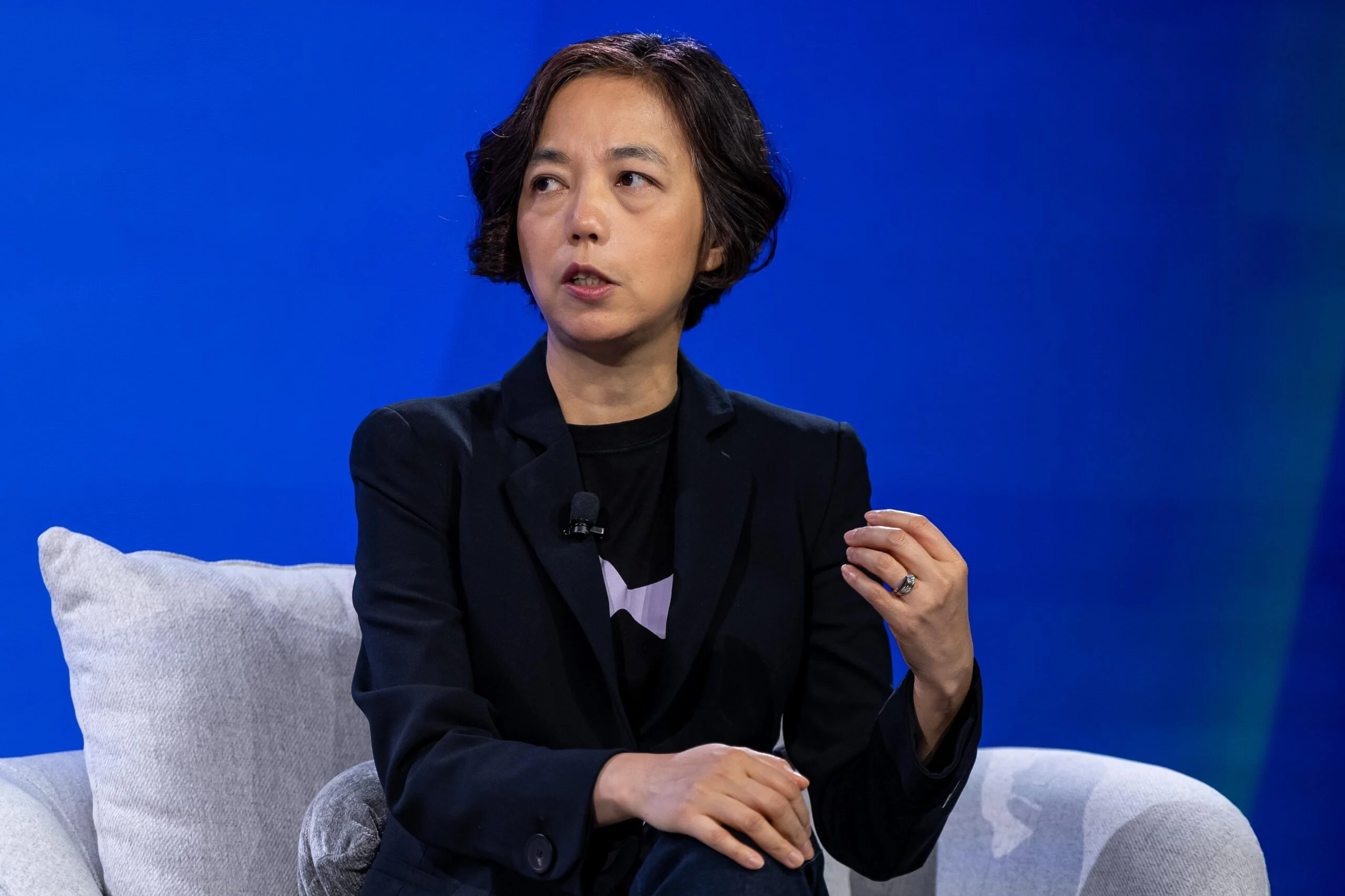
    World Labs is an AI startup that reached a $1 billion valuation within just a few months of its 2024 founding. Co-founder Dr. Fei-Fei Li is the researcher who launched the era of computer vision with ImageNet, making her one of the most influential voices in academic AI.

    In 2025, World Labs introduced Marble, a model that generates interactive 3D worlds from text prompts alone, as its first commercial product. If LLMs generate text, Marble generates space. Its applications span gaming, simulation, and robotics training data.

    Structure of the AMD–World Labs Deal

    This AMD World Labs acquisition is being executed as an all-stock transaction. New AMD shares will be issued to World Labs shareholders with no cash burden. The deal is expected to close by the end of 2026.

    The rationale for choosing stock over cash is clear. AMD is already pouring massive amounts of capital into the MI350 and MI400 roadmap and HBM memory procurement. If M&A consideration were also paid in cash, the balance sheet would wobble. Leveraging its own share price is the safer financial route.

    Where Does Fei-Fei Li Sit?

    World Labs founder Fei-Fei Li joins AMD as Executive Vice President (EVP) and Chief Scientist. She reports directly to AMD CEO Lisa Su. This is a different pattern from the common one in which founders stay on as CEOs of acquired subsidiaries.

    Two things are implied by this arrangement. World Labs is being absorbed into the parent company’s R&D axis rather than remaining an independent subsidiary. And Fei-Fei Li’s academic network is highly likely to be leveraged across AMD’s broader AI strategy. In her own Substack, Li stated, “Just as I decided to start a company to accelerate work on foundation models that go beyond LLMs, continuing World Labs’ mission within AMD is the clear path forward.”

    How Does It Differ from Nvidia and Big Tech?

    Placing the AMD World Labs acquisition alongside Nvidia’s and Big Tech’s M&A patterns makes the differences stark.

    Category AMD Nvidia Big Tech Average
    Recent Major M&A World Labs, $8.2B Infrastructure and networking focused Primarily internal R&D
    Research Talent Recruitment Founder appointed as EVP Industry practitioner retention model In-house lab absorption
    Model–Hardware Coupling In-house world-generation model Strong software stack Software-first
    Form of Consideration All-stock Mixed Mostly cash

    As the table shows, the AMD World Labs acquisition differs from typical acquisitions in that it places an AI research figure at the very center of the company. It is not simply a matter of acquiring technology IP, but of bringing in the person’s entire sphere of influence.

    AMD’s Place in the Full-Stack Competitive Landscape

    Until now, AMD has been evaluated as strong on MI series accelerator hardware but lacking in the software ecosystem and proprietary foundation models needed to rival CUDA. From the MI300X and MI325X to the upcoming MI350, the lineup is on par with Nvidia’s H100 and B200, but it has lagged a step behind in developer-friendliness.

    With the World Labs acquisition, AMD secures model IP in “spatial reasoning,” a category that goes beyond LLMs. World-generation models like Marble demand enormous compute at inference time. This is a so-called “model-to-hardware lock-in” strategy that naturally channels demand toward MI accelerators. From a practitioner’s perspective, what stands out is how rapidly AMD is transforming from a mere chip vendor into a company that owns responsibility for models and software as well.

    Unresolved Issues

    The risks are clear. The first is how much research autonomy AMD will guarantee to the World Labs team. The company has announced that it will “continue to focus on pushing the frontier of AI model research,” but how reality changes inside a large corporation remains to be seen.

    The $8.2 billion valuation is also questionable. World Labs is a startup in its first year, and aside from Marble, it does not yet have a sufficient, validated product pipeline. Shareholder and regulatory approvals are additional variables.

    Third is the risk of talent outflow. If research velocity slows inside AMD, key personnel could move to competitors like OpenAI or Anthropic. Competition to secure AI talent is now spreading across the entire globe.

    Follow-Up Indicators to Watch in 2026

    There are three main indicators to monitor in the market following the AMD World Labs acquisition: MI accelerator shipment volumes and AMD data center revenue trends, the number of Marble’s commercial customers, and the research output Fei-Fei Li directly announces. If all three move up together, the full-stack AI strategy is effectively working.

    Conversely, if accelerator revenue stagnates while Marble’s sales also fall short of expectations, the $8.2 billion acquisition will weigh on AMD. While Nvidia maintains dominance in the GPU market, how quickly AMD can productize world-generation models will be the variable in next year’s competition. The real contest for the AMD World Labs acquisition starts now.

    Key Issues Recap

    • The AMD World Labs acquisition is an $8.2 billion all-stock transaction, with Dr. Fei-Fei Li joining as EVP and Chief Scientist in a direct-report line to CEO Lisa Su.
    • The world-generation model Marble targets the post-LLM, next-generation model category, and is designed to drive model-to-hardware lock-in that naturally funnels into MI accelerator demand.
    • The all-stock structure preserved AMD’s cash flow while promising research autonomy, but the actual extent of that autonomy remains unknown.
    • The $8.2 billion valuation, shareholder and regulatory approvals, and the risk of key talent departures are the main risks carried by the AMD World Labs acquisition.

    What to Do Right Now

    • Review the original Verge report on the AMD–World Labs deal and compare the deal terms yourself.
    • Search AMD IR materials to find out which workloads make Marble prefer MI accelerators.
    • Compile a side-by-side list of Nvidia’s recent M&A activity to understand the texture of the AMD World Labs acquisition within full-stack competition.
    • Follow Fei-Fei Li’s Substack and X accounts to track changes in her research roadmap after joining AMD.
    • Build a checklist to track the share of MI accelerator revenue and R&D cost increases in AMD’s quarterly earnings releases.

    Frequently Asked Questions

    What are the size and structure of the AMD World Labs acquisition?

    It is approximately $8.2 billion and is being executed as an all-stock transaction. New AMD shares are issued with no cash burden, and the deal is expected to close by the end of 2026.

    What is Marble, World Labs’ first product?

    Marble, released in 2025, is a world-generation model that creates interactive 3D worlds from text prompts alone. Its applications span gaming, robotics simulation, and media production.

    What role will Fei-Fei Li take on at AMD?

    She joins as EVP and Chief Scientist, reporting directly to AMD CEO Lisa Su. She will lead the World Labs team while also being involved in AMD’s broader AI strategy.

    What impact will this acquisition have on Nvidia and the AI infrastructure market?

    If AMD formalizes a lock-in strategy that bundles world-generation models with its accelerators, an alternative narrative to Nvidia’s CUDA ecosystem could emerge. However, it will take time before this translates into near-term revenue.

    Reference Source

    This article was written with reference to the following original: The Verge — AMD is acquiring AI company World Labs in a deal worth more than $8 billion


  • Seoul Moa Housing Complex 1 Begins Move-In in September: Three Challenges to the 2031 40,000-Unit Target

    Seoul Moa Housing Complex 1 Begins Move-In in September: Three Challenges to the 2031 40,000-Unit Target

    Key Summary

    • Hanyang Row Houses in Gwangjin-gu, Seoul, has been designated as ‘Moa Housing Complex No. 1’ and will begin its first move-ins in September. Because Seoul’s Moa Housing system supplies public rental units by bundling them at the complex-group level rather than at the individual complex level, the move-in date of the first case is seen as a turning point for gauging the policy’s real-world effectiveness. Seoul Mayor Oh Se-hoon unveiled a plan to break ground on 40,000 Moa Housing units by 2031, signaling that the Moa Housing line has established itself as a policy axis separate from existing public rental supply volumes. Given that the article was published on September 28, 2026, the simultaneous release of ‘move-in at Complex 1’ and the ‘40,000-unit target’ within the same quarter is interpreted as a combination of an early-stage performance report and a roadmap presentation. Specific figures needed to measure supply effects—such as the number of actual residents at Complex 1, rent levels compared to surrounding market prices, and eligibility requirements—were not confirmed in the original article, so this analysis covers only the fact of the move-in and the policy numbers. For the 40,000-unit target, it appears necessary to distinguish between short-term groundbreaking volumes and long-term cumulative targets, and securing sites within urban areas and the project financing method are seen as variables that will determine future implementation speed.

    As the first move-in at Moa Housing Complex 1 and the 40,000-unit groundbreaking target are announced simultaneously, this article organizes the key issues around whether Seoul’s new public rental housing policy axis can take root as actual complexes.

    Table of Contents

    Seoul Moa Housing Complex 1 Move-in

    Hanyang Row Houses in Gwangjin-gu, Seoul, began its first move-ins for Seoul Moa Housing Complex 1 on September 28. The same day, Seoul Mayor Oh Se-hoon unveiled a plan to break ground on 40,000 Moa Housing units by 2031. The first move-in and the 40,000-unit target were announced at the very same moment. Rather than viewing this as a symbolic starting line, the author sees it as closer to a turning point for verifying the policy’s real-world effectiveness.

    How Seoul Moa Housing Differs from Existing Public Rental Housing

    Seoul Moa Housing has a fundamentally different structure from existing SH Corporation public rental, purchase-and-lease rental, and jeonse rental housing. Moa Housing assigns public rental unit quotas not at the level of individual complexes, but at the level of grouped complexes. Because Complex 1 is the first application of this grouped quota assignment, it shapes the design direction for the remaining 40,000 units. How the model of bundling existing row houses such as Hanyang Row Houses in Gwangjin-gu has worked in Complex 1 becomes the reference point for negotiations on subsequent complexes.

    However, the number of units, rent levels, and resident composition for Complex 1 were not confirmed in the original article. According to a report by World Environment News, only the fact of the September move-in and the 40,000-unit target are stated. It is a form in which the target figure was disclosed at an early policy stage, with the underlying numbers missing.

    Issue 1. Securing Sites in Urban Areas

    The 40,000-unit scale is a problem of a different kind from the Complex 1 case. Bundling existing row houses through remodeling, as was done with Hanyang Row Houses in Gwangjin-gu, will not be enough to meet the volume. New candidate sites must be sought within the urban core, where negotiations with redevelopment project unions and landowner acquisition are variables. The difficulty of site selection may have factored into why the Complex 1 move-in date was set for September.

    From a practitioner’s perspective, what stands out is how candidate sites are disclosed. Where Seoul Moa Housing’s 2nd and 3rd complex candidate sites are located, and what the land acquisition schedule looks like, will be key variables in the next announcement.

    Issue 2. Project Costs and Financing

    If we assume 40,000 new public rental units are to be built, the construction cost and subsidy per household alone will amount to several trillion won. Which combination—Seoul Metropolitan Government budget, central government housing stabilization project budget, or LH purchase scheme—will be used to raise funds will determine the speed. If the specific cost-sharing structure does not accompany Mayor Oh’s announcement, the 40,000 units risk remaining merely a target figure.

    In particular, if Complex 1 is a remodeling project, the ratio of remodeling units to new-build units within the 40,000 will determine the project cost scale. The fact that this ratio is missing from the policy announcement is a point that needs to be verified in practice.

    Issue 3. Absence of Real Occupancy Data from the First Complex

    The number of actual residents, eligibility requirement fulfillment rate, and rent level compared to surrounding market prices at Complex 1 have not yet been disclosed. Only when Complex 1’s real occupancy data is released will it be possible to measure the supply effects of the 2nd and 3rd complexes. Whether Seoul Moa Housing shows the same level of data disclosure as existing public rental housing at Complex 1 will set the evaluation baseline going forward.

    In existing public rental housing, resident lists, rents, and surrounding market price comparison data are regularly disclosed. Setting the data disclosure cycle at the early policy stage is itself a measure of policy credibility.

    Outlook: 2nd and 3rd Complex Timelines as Inflection Points

    The move-in at Seoul Moa Housing Complex 1 is a symbolic event, but the policy’s weight lies in the 2nd and 3rd complex timelines. If the gap between Complex 1 and the next complex move-in exceeds one year, the credibility of the 40,000-unit cumulative target will be shaken. Site acquisition speed, financing structure, and real occupancy data disclosure—these three will form the monitoring baseline for the next 1–2 years.

    Summary of Key Issues

    • Site Acquisition: Complex 1 is a remodel of existing row houses; achieving 40,000 units will inevitably require a mix of new builds and reconstruction
    • Financing Structure: 40,000 units are not possible with the Seoul Metropolitan Government budget alone; central government and LH cost-sharing must be specified
    • Data Disclosure: Number of units, rent, and resident composition figures for Complex 1 have not been disclosed

    What You Can Do Now

    • Check Seoul Moa Housing announcements weekly to track the timing of the Complex 2 candidate site announcement
    • Monitor LH and SH Corporation move-in recruitment notices with the Seoul Moa Housing keyword to check remaining Complex 1 inventory
    • Look up actual transaction prices of nearby complexes via the Korea Real Estate Board to pre-compare the rent calculation baseline
    • Review the Seoul housing stabilization project budget trends in National Assembly Budget Office data to gauge the 40,000-unit funding availability

    Frequently Asked Questions

    Where is Seoul Moa Housing Complex 1 located?

    Hanyang Row Houses in Gwangjin-gu, Seoul, was designated as Complex 1 and began its first move-ins on September 28. It is the first case of bundling existing row houses for public rental unit allocation.

    By when will 40,000 units be supplied?

    Seoul Mayor Oh Se-hoon publicly announced a target of breaking ground on 40,000 units by 2031. Whether this is a cumulative groundbreaking target or a completion-based target requires further announcement.

    How is it different from existing SH Corporation public rental housing?

    Moa Housing assigns unit quotas not at the level of individual complexes but at the level of grouped complexes. It is a policy axis operated separately from SH Corporation’s single-supplier line.

    What are the move-in eligibility requirements?

    The number of residents, eligibility requirements, and rent levels were not disclosed in the original article. Comparisons will only be possible after Complex 1’s real occupancy data is released.

  • Redefining the AI Developer Role in 5 Steps — When Time Spent Hand-Writing Code Shrinks

    Redefining the AI Developer Role in 5 Steps — When Time Spent Hand-Writing Code Shrinks

    Key Takeaways

    • Conditions where it works: Even in systems-language domains (e.g., C++) with relatively limited training data, automation pays off the most when token budgets are generous and the environment lets you hand off system logs, errors, and stack traces to the AI. Connecting external data tools (Datadog, Slack, etc.) via an MCP server extends the reach further, letting the AI perform cross-system data correlation on its own.
    • Scope AI has taken over: Unit-test generation, bug analysis and fixes, drafting high-performance code (cache-friendly, branchless), polishing rough notes into high-quality documentation, and adjusting tone, style, and level of detail. Among C++ practitioners, the consensus is that AI now handles the bulk of unit testing, code generation, and bug fixes on its own.
    • Repeatedly confirmed playbook: Treat the AI less like a separately trained tool and more like a teammate you brief in conversation. Spell out specific requirements and constraints before starting, and hand over system context (logs, codebase, integrated tools) at the same time. For documentation, write only a rough high-level prompt and let the AI polish it. For performance optimization, name the pattern explicitly (cache-friendly, branchless) when prompting.

    Analysis

    Contents

    More and more AI developers who barely write code by hand anymore are turning the question “What exactly am I doing?” on themselves. As the community piles up evidence that AI now handles unit tests, bug fixes, cache-friendly code drafts, and documentation on its own—even in systems-language domains—role anxiety among AI developers is rising at the same speed.

    Why AI developer role anxiety keeps repeating

    The less you type with your own fingers, the more natural it is to feel the “Is this really my job?” sensation fade. Even in systems-language domains like C++ with relatively limited training data, if token budgets are comfortable and you can hand over system logs, error messages, and stack traces to the AI, automation effectiveness climbs to roughly the same level as general web development. There are also reported cases where connecting external tools like Datadog and Slack via an MCP server lets the AI perform cross-system data correlation. If AI developers don’t redefine their own roles, all that’s left is the job title handed down from outside.

    Conditions where automation works—and where it doesn’t

    The environments where AI automation pays off share a few common variables: sufficient token limits, the ability to pass system context, and external-tool integration channels like MCP. When context is thin or the AI is trapped in a workflow it can’t reach, it stalls or produces inefficient code.

    The reason I find this point significant is that it’s not tool performance but the structure of the work environment that determines the depth of automation. Even with the same AI, the quality of the output varies dramatically depending on what context you bundle and hand over.

    The workflow the community keeps validating

    Compressing the procedures practitioners have shared into five steps, it looks like this. First, before starting a task, write out specific requirements and constraints in sentences. Second, if any ambiguous words remain, clean them up once more. Third, hand over system context (logs, codebase, integrated tools) at the same time.

    Fourth, if performance optimization is needed, name the pattern explicitly—cache-friendly, branchless. Fifth, for documentation, write only rough notes and let the AI adjust tone and level of detail.

    What’s noticeable from a practitioner’s standpoint is that the approach yielding the most consistent results is treating the AI not as a separately trained tool but as a colleague sitting next to you that you brief in conversation. The shift in work environments where AI now writes almost every line can be read in the same context.

    Common pitfalls

    The most common mistake is spending time polishing prompt sentences themselves. Compared to the time poured into prompt tuning, organizing domain and system context delivers bigger returns. If you tweak prompts without domain knowledge, only the surface of the output changes.

    Another is the attitude of accepting the AI’s first output as-is. Because the responsibility for AI-generated code ultimately falls back on the human, unverified acceptance essentially trades the gains of automation back into verification costs.

    Try this right now

    • List out the context (logs, code, tools) you handed to the AI in today’s work.
    • Before sending requirements, rewrite them in a single sentence and remove ambiguous words.
    • For performance-critical code, explicitly name cache-friendly or branchless patterns in your prompt.
    • Before merging AI-generated code, read at least one line yourself and verify the intent.
    • For documentation, write only rough notes and let the AI adjust tone and format.

    The four seats left for the AI developer

    System design, problem definition, context assembly, and quality verification and responsibility for AI output—these are the seats humans should focus on. The less time you spend writing code directly, the more the share of time spent on these four grows automatically. Once the criterion becomes not “what do I do” but “what do I take responsibility for,” role anxiety shrinks.

    Another take on the same conclusion: The AI Developer Replacement 4-Step Survival Procedure. It covers the same point that the deeper automation goes, the clearer your own seat becomes.

    Practical application points

    • The depth of automation is determined by token limits and the structure of context delivery.
    • Spend time on organizing domain context rather than polishing prompt sentences.
    • Responsibility for AI output rests with the human. Unverified merging is a cost.

    Frequently asked questions

    How should I redefine the AI developer role?

    The less time you spend writing code by hand, the more time you spend on four areas: system design, problem definition, context assembly, and AI output verification. The criterion becomes not what you did but what you take responsibility for.

    What should I do if I’m spending too much time writing prompts?

    Rather than polishing prompt sentences, organizing domain and system context and handing it to the AI delivers bigger returns. Passing along logs, stack traces, and integrated-tool information improves output quality.

    Is AI automation effective even in systems-language domains?

    Even in domains with limited training data like C++, if token limits and system context are sufficient, AI developers can automate unit testing, bug fixes, and high-performance code draft writing. Connecting tools like Datadog and Slack via MCP servers extends it to data correlation analysis.

    Source material

    This article was written after reviewing the following source: r/cscareerquestions — Everything’s AI now

  • IP Warranty Comparison of 5 Coding Agents — How Far Does the Liability of GitHub Copilot, Kiro, Cursor, Devin, and Windsurf Extend?

    IP Warranty Comparison of 5 Coding Agents — How Far Does the Liability of GitHub Copilot, Kiro, Cursor, Devin, and Windsurf Extend?

    Key Takeaways

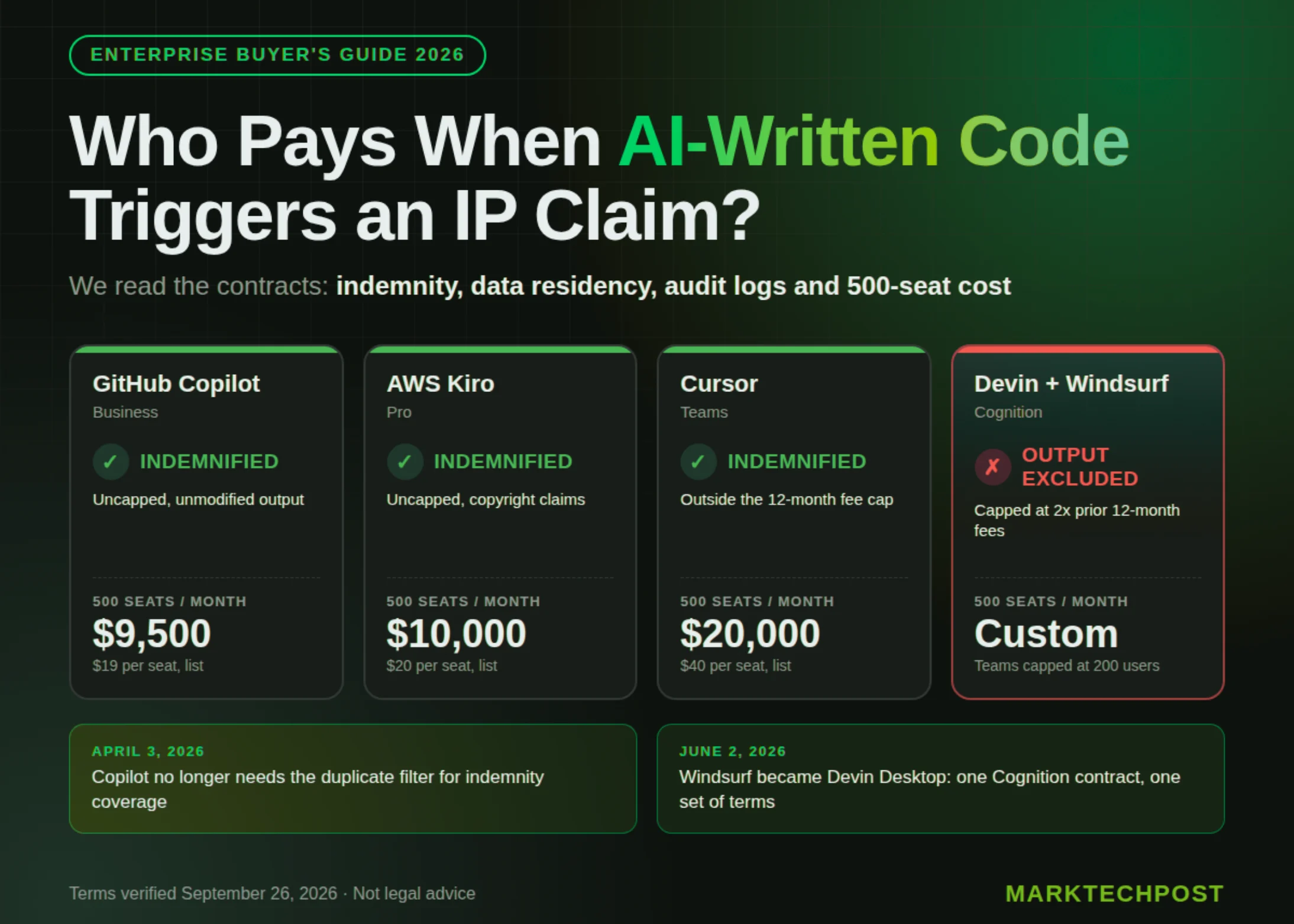
    • When Microsoft updated the GitHub Copilot terms on April 3, 2026, it removed the previous structure in which a single administrator setting could void the warranty. The current “Required Mitigations” page lists no additional required actions for the GitHub product family.
    • The central interpretive issue surrounding the Copilot warranty is the “unmodified” expression: any code edited even once before release could fall outside the warranty, so legal review is essential.
    • AWS Kiro inherits the AWS Generative AI Warranty (Section 50.10) and advertises unlimited coverage for copyright claims. However, the warranty collapses if the input itself is infringing or if filtering features are disabled.

    Analysis

    Table of Contents

    When an enterprise considers adopting one of 5 coding agents, the first wall a procurement lead runs into is not licensing cost but the IP warranty clause. The enterprise AI coding agent comparison report published by MarkTechPost on September 26, 2026 placed GitHub Copilot, AWS Kiro, Cursor, and Cognition’s Devin/Windsurf on the same scale. This author finds that the questions the report puts to legal reviewers are the most practical ones.

    The 4 Questions Enterprises Ask About Coding Agents

    The report highlights four core questions. When IP infringement occurs, who is liable? Where are prompts and generated code stored? Can administrators receive audit logs? What is the actual cost when contracting at the 500-seat scale? To answer these, you have to dissect the vendor’s terms clause by clause.

    The Four Axes Used in the Comparison

    The evaluation was organized around four axes: warranty structure, data residency, administrator audit logs, and 500-seat TCO. Warranty is assessed on “what is covered, under what conditions, and to what extent”; data is assessed on storage region and retention period; logs are assessed on what is visible from the admin console; and cost is assessed on the sum of published pricing and negotiated variables.

    GitHub Copilot — What the April 3, 2026 Terms Change Means

    Microsoft updated the GitHub Copilot terms on April 3, 2026. The previous structure, in which a single administrator setting could void the warranty, has been removed, and the current “Required Mitigations” page lists no additional required actions for the GitHub product family. In practice, this change is favorable to enterprises because the hidden triggers that could erode the warranty have decreased.

    However, the word “unmodified” still gets in the way. It means any code edited even once before release can fall outside the warranty. In reality, all code goes through internal review and is modified. If this clause is applied as written, the warranty could effectively be empty, making legal review essential.

    AWS Kiro — The Two Sides of the Unlimited Section 50.10 Warranty

    AWS Kiro inherits AWS Generative AI Warranty Section 50.10. Its claim of unlimited coverage for copyright claims is the strongest among the five coding agents. There is, however, an exclusion clause that causes the warranty to collapse if the input is already infringing or if filtering features are disabled. The input-infringement exclusion refers to cases where externally licensed code imported for training is used as-is. The filter-disabling case is practically significant because filters are sometimes turned off for performance reasons during the PoC stage.

    Cursor — The Collision Between a Broad MSA and Narrow Exclusions

    Cursor’s MSA is nominally the broadest. It explicitly names “Suggestions” and separates the warranty cap from the usage-fee cap. Exclusion clauses activate for claims related to modification or unapproved combination. An interesting point is the gap between the enterprise and consumer terms. The consumer ToS, conversely, places the burden of indemnification on the user toward Anysphere. Even for the same company’s coding agent, responsibility flips depending on the license type. At the adoption stage, you must first confirm which terms apply.

    Cognition (Devin · Windsurf) — The Outlier That Disclaims Warranty

    Cognition is the only outlier among the five coding agents. Its MSA explicitly excludes generated outputs from warranty scope. After acquiring Windsurf on June 2, 2026, it changed the editor name to Devin Desktop and unified the price list and terms. The warranty disclaimer means the IP risk returns entirely to the user. Given that an agentic coding agent autonomously writes code and pushes to external repositories, this clause may be triggered more frequently than with other products. What stands out from a practitioner’s standpoint is that Cognition does not hide this fact and states it explicitly.

    Comparison Table of 5 Coding Agents

    Product IP Warranty Scope Key Exclusions Notes
    GitHub Copilot Generated outputs only Applies only to unmodified code April 3, 2026 terms change removed the admin trigger
    AWS Kiro Unlimited under Section 50.10 Input infringement, filter disabled Limited to copyright claims
    Cursor (MSA) Suggestions explicitly named, cap separated Modification, unapproved combination Consumer ToS places indemnification on the user
    Devin Generated outputs disclaimed All items Unified after the June 2, 2026 Windsurf acquisition
    Windsurf → Devin Desktop Same as Devin Same as Devin Unified price list and terms

    Limits of the Data Collected

    The original report focuses on the four questions, but the collected body text was truncated in the middle. Specific figures for the 500-seat cost table and detailed audit log items were not confirmed in the body. This article clarifies that the verification was based on the vendor’s official pages as of September 26, 2026. Since terms may change later, the latest terms at the time of legal review must be re-checked. Teams evaluating coding agent adoption are advised to obtain console and terms PDFs directly during the PoC stage.

    Practical Application Points

    • Review clauses containing conditional expressions such as “unmodified” with the legal team to determine whether they conflict with the in-house standard development workflow.
    • Verify data residency not from the marketing page but from the DPA body, checking the storage region and retention period.
    • During the PoC stage, log in to the admin console directly to confirm that the required events appear in the audit logs.
    • For agentic coding agents (e.g., Cognition), run a separate simulation of the scenarios in which the warranty disclaimer clause would be triggered.
    • Add the 500-seat TCO to a sheet together with volume discounts, multi-year commitments, and training costs, on top of the published price list.

    What to Do Right Now

    • Search the vendor’s terms for three keywords: “indemnify”, “warranty”, and “limitation of liability”.
    • Flag any responsibility-shifting expressions such as “unmodified”, “as-is”, or “your responsibility”.
    • Open the DPA and extract three fields: storage region, sub-processor list, and data retention period.
    • Request a PoC of the admin console and verify that prompt lookup, generated code download, and admin override items appear in the audit logs.
    • Obtain the 500-seat quote under two scenarios (single-year / 3-year commitment) and place them side by side in a sheet.

    Frequently Asked Questions

    Which clause should be examined first when adopting a coding agent?

    The IP warranty (Indemnification) clause. When infringement occurs, who bears the legal fees and damages is decided before cost. Price negotiation comes after that.

    Can the IP warranty be voided by administrator settings alone?

    In the past, GitHub Copilot had a structure in which certain administrator settings could void the warranty, but the April 3, 2026 terms change removed that trigger. However, conditional clauses such as “unmodified” remain.

    What should I do when the consumer and enterprise terms differ?

    Even with the same vendor, B2B and B2C terms can differ. Cursor is a representative case: the enterprise MSA has the vendor providing the warranty, while the consumer ToS places indemnification on the user toward the vendor. Confirm the applicable terms at the adoption stage.

    How should the actual 500-seat cost be calculated?

    The starting point is the official price list multiplied by the number of users. Add volume discounts, multi-year commitment discounts, training/onboarding costs, and the cost of management features such as SSO and audit logs to derive the real TCO.

    Source Reference

    This article was written after reviewing the following source: MarkTechPost — AI Coding Agents for Enterprise: IP Indemnity, Data Residency and 500-Seat Cost Compared

  • Assassins Tops Chuseok Box Office — Full Scorecard of All 6 Films at a Glance

    Assassins Tops Chuseok Box Office — Full Scorecard of All 6 Films at a Glance

    Key Takeaways

    • Director Heo Jin-ho’s “Assassins” drew 1,119,156 viewers over the three-day Chuseok holiday (Sep 25–27), claiming the No. 1 spot on the domestic weekend box office (Korean Film Council’s integrated ticketing network, as of Sep 28).
    • The film crossed the 1 million-viewer mark in just four days after its Sep 23 release, with cumulative admissions reaching 1,566,222. More than 1 million viewers flocked to theaters during the three-day holiday weekend alone.
    • “Assassins” traces the suspicions and the mastermind behind the August 15, 1974 first-lady shooting incident. The narrative follows detective Cheol-gu (Yoo Hai-jin), newspaper social-affairs chief Jae-hwan (Park Hae-il), and rookie reporter Young-il (Lee Min-ho) as they chase conflicting testimonies and the investigation.

    A fact-driven viewer guide that lays out the Chuseok 1–6 box-office scorecard while also examining the hit’s backdrop, holiday box-office dynamics, and the social controversy triggered by the film’s treatment of a real historical event.

    Table of Contents

    Released on the 23rd, “Assassins” grabbed the No. 1 spot at the Chuseok box office. From the 25th through the 27th, the film drew 1,119,156 viewers over the three days, pushing its cumulative total to 1,566,222. These figures come from the Korean Film Council’s integrated cinema ticketing network (as of the 28th).

    More than 1 million viewers packed theaters during the first weekend alone. By comparison, “The Odyssey” attracted 364,763 viewers and “The Intern” drew 206,347 over the same period — making the gap behind the “Assassins” box-office hit strikingly clear.

    1. ‘Assassins’ Box-Office Scorecard — 1 Million in 4 Days

    Director Heo Jin-ho’s “Assassins” traces the suspicions and the mastermind behind the August 15, 1974 first-lady shooting incident. The narrative follows detective Cheol-gu (Yoo Hai-jin), newspaper social-affairs chief Jae-hwan (Park Hae-il), and rookie reporter Young-il (Lee Min-ho) as they chase conflicting testimonies and the investigation.

    What stands out is the three-character structure. With the eyes of the investigation, the press, and a rookie reporter all converging on a single case, the film transcends a simple thriller to engage directly with key debates in modern Korean history. Crossing 1 million viewers in just four days reflects a curve that emerges only when ‘audience draw’ and ‘social conversation’ activate at the same time.

    2. Yoo Hai-jin’s ‘Holiday Hit Guarantee’ Formula

    Yoo Hai-jin has now carried holiday box-office success for the second time this year. “The Man Standing Next,” which opened during the Lunar New Year holiday, drew 16.93 million viewers. The same actor returning to the top during the Chuseok season suggests the “Assassins” box-office hit is not a coincidence but a trend.

    Genre-wise, “The Man Standing Next” is a period political thriller, while “Assassins” carries an investigation-mystery tone. Different genres, but the common denominator is an actor image that absorbs both family audiences and adult viewers simultaneously. From an industry standpoint, opening back-to-back holiday seasons on a single actor variable is a rare feat when planning box-office marketing.

    3. Chuseok Weekend Box Office 1–6 at a Glance

    Rankings 2 through 6 are as follows (three days from Sep 25–27, KOFIC integrated ticketing network).

    Rank Title Director Weekend Viewers Cumulative Viewers
    1 Assassins Heo Jin-ho 1,119,156 1,566,222
    2 Tazza: The Song of Beolje-bup Choi Gook-hee 566,526 833,030
    3 The Odyssey Christopher Nolan 364,763 11,783,297
    4 The Intern Kim Do-young 206,347 756,057
    5 Possible Love Lee Chang-dong 72,022 115,938
    6 Obsession Curry Barker 67,619 849,155

    No. 2 “Tazza: The Song of Beolje-bup” is rated R (minor viewing restricted) yet pulled in 566,526 weekend viewers, with cumulative admissions at 833,030 — within reach of the 1 million mark. No. 3 “The Odyssey” has a cumulative 11,783,297 viewers, leaving about 217,000 before the 12 million milestone. With weekend attendance up compared to the previous week, the long-tail curve remains intact.

    No. 4 “The Intern” (starring Choi Min-sik and Han So-hee) also drew more than 200,000 viewers over the Chuseok weekend. No. 5 “Possible Love” (starring Jeon Do-yeon, Sol Kyung-gu, Jo In-sung, and Jo Yeo-jeong) is receiving a limited two-week theatrical run ahead of its November 6 Netflix release. No. 6 “Obsession” (starring Michael Johnston and Indy Nevereti) reached a cumulative 849,155 viewers.

    4. ‘Assassins’ and the Social Controversy

    Alongside its box-office success, “Assassins” has pulled in social discourse. Because the film tackles the real-life August 15, 1974 first-lady shooting incident, reports indicate simultaneous controversy over freedom of expression and historical interpretation from the bereaved family, film critics, and political circles (including the People Power Party).

    However, the original source did not compile specific statements by camp. A full mapping of the controversy requires additional verification — the bereaved family’s position, critical reviews of the film, and political statements or legislative responses. The author views this as the most meaningful section. The unusual flow in which box-office success and controversy unfold in parallel is itself a variable as weighty as the “Assassins” box-office scorecard itself.

    What to Watch Next

    • Whether “Assassins” can add another 1 million viewers after entering its second weekend
    • When “The Odyssey” will cross 12 million viewers, and what shape its long-tail trajectory takes
    • When the R-rated “Tazza: The Song of Beolje-bup” surpasses 1 million viewers
    • The theatrical effect of “Possible Love”‘s two-week limited run ahead of its November 6 Netflix release

    Try It Right Now

    • Check the daily box office as of the 28th directly on the KOFIC integrated ticketing network
    • Compare “Assassins” showtimes and screens across CGV, Lotte Cinema, and Megabox apps
    • Pull together one-line summaries of the bereaved family’s position, critic reviews, and political statements from each outlet
    • Track “Tazza: The Song of Beolje-bup”‘s path to 1 million viewers on a weekly basis
    • Record how many days it takes “The Odyssey” to close the remaining 217,000 viewers on its way to 12 million

    FAQ

    What is “Assassins” about?

    A Korean investigation drama tracing the suspicions and the mastermind behind the August 15, 1974 first-lady shooting incident. The narrative follows a detective, a newspaper’s social-affairs chief, and a rookie reporter as their three perspectives cross while approaching the case, directed by Heo Jin-ho.

    Why is Yoo Hai-jin at No. 1 again?

    After “The Man Standing Next” drew 16.93 million viewers during the Lunar New Year holiday, Yoo Hai-jin reclaimed the top spot at the Chuseok box office with “Assassins.” An actor image that simultaneously absorbs both family and adult audiences has repeatedly translated into holiday-season box-office success.

    Why is “Assassins” controversial?

    Because it deals with the real-life first-lady shooting incident, the bereaved family, critics, and political circles are simultaneously voicing positions on freedom of expression and historical interpretation. Specific statements by camp were not compiled in the original source and require additional verification.

    What are the Chuseok box-office 1–6 titles?

    For the three days from Sep 25–27: 1. “Assassins,” 2. “Tazza: The Song of Beolje-bup,” 3. “The Odyssey,” 4. “The Intern,” 5. “Possible Love,” 6. “Obsession.” Two Korean new releases — “Assassins” and “Tazza” — split the top two spots.

    With two Korean new releases — “Assassins” and “Tazza: The Song of Beolje-bup” — splitting the 1–2 spots this Chuseok season, “The Odyssey” was pushed to No. 3. Beyond its box-office tally, the “Assassins” hit is simultaneously driving social discourse, meaning its evaluative weight going forward is heavier than next week’s box-office numbers alone.

    Source: View the original Money Today article

  • Two Citrix NetScaler RCE Zero-Days Confirmed Under Active Exploitation — 5 Immediate Response Steps

    Two Citrix NetScaler RCE Zero-Days Confirmed Under Active Exploitation — 5 Immediate Response Steps

    Key Summary

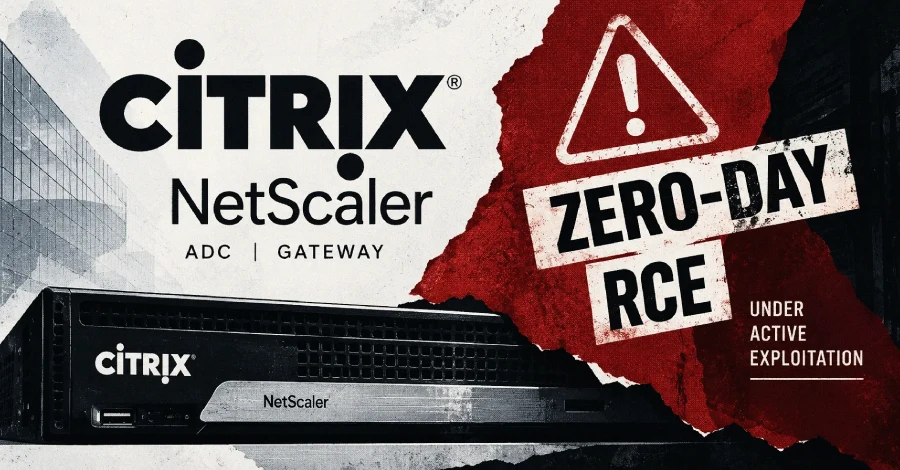
    • Citrix officially confirmed on September 27 via a security advisory that two critical-rated remote code execution vulnerabilities affecting NetScaler ADC and NetScaler Gateway are being exploited in the wild.
    • Alongside the two zero-days, an additional six flaws were fixed in the same release, bringing the total number of vulnerabilities patched in this advisory to eight.
    • One of the two zero-days applies to all deployments running affected versions, including default configurations, meaning exploitation is possible regardless of whether users have customized their settings.

    A security alert article that cross-references initial foreign press reports with Citrix’s official advisory to provide Korean readers with a threat summary along with practical inspection, patching, and mitigation procedures that IT teams can immediately apply

    Table of Contents

    Two critical-rated remote code execution (RCE) zero-day vulnerabilities affecting Citrix NetScaler ADC and NetScaler Gateway were officially confirmed on September 27. Citrix began distributing patches through a security advisory issued the same day, fixing the two zero-days along with six additional flaws in one consolidated release. Given that the disclosure came the day after watchTowr’s external report, the assessment is that patches effectively followed only after exploitation activity had already been exposed.

    What stands out from a practitioner’s perspective is that one of the two zero-days works straight out of the box in default configuration. Even if users have not modified any settings, simply running an affected version places the system directly on the attack surface. Citrix’s NetScaler advisory specifies the affected versions and upgrade paths together, but organizations that do not apply patches immediately remain exposed externally in a zero-day state.

    Which Products and Versions Are Affected

    The affected product family is limited to Citrix NetScaler ADC and NetScaler Gateway. Both product lines are commonly deployed at the network perimeter, meaning a single flaw can serve as an entry point for internal compromise. According to Citrix’s official advisory, two of the eight issues fixed in this release are classified as zero-days, while the remaining six are cumulative security improvement patches.

    Category Details
    Affected Products Citrix NetScaler ADC, NetScaler Gateway
    Zero-Days 2 critical-rated RCE vulnerabilities
    Additional Patches 6 flaws fixed in the same release
    Exploitation Status In-the-wild exploitation confirmed (September 27)
    Disclosure Background Citrix advisory issued the day after watchTowr’s report
    Notable Point One zero-day is exploitable even in default configuration

    Why the Disclosure Timing Is Especially Sensitive

    The fact that the advisory came the day after the external report is itself a risk signal. Until watchTowr published its analysis, attackers were likely gathering the same information in parallel, and the 24 to 72 hours immediately following disclosure is the window during which unpatched organizations become direct targets. The author views this point as the most significant aspect of the incident. Even though a patch line is already available, restarting NetScaler ADC in large enterprise environments directly translates into service impact.

    The point that warrants greater concern is the RCE itself. If Citrix NetScaler ADC and Gateway are compromised, there is ample room for subsequent lateral movement and data exfiltration. Because these devices sit at the network perimeter, a single flaw directly escalates into exposure risk for the entire network.

    Five Actions Practitioners Should Take

    What to Do Right Now

    • Pull the operational inventory of Citrix NetScaler ADC and Gateway from the asset management system and document the owning department and responsible personnel in a table.
    • Compare the firmware versions in production against the affected versions listed in the Citrix advisory and flag any vulnerable versions.
    • If patching will take time, immediately apply the temporary mitigation settings (WAF rules, ACLs, management interface restrictions) recommended by Citrix.
    • Block external access to the management interfaces (NSIP, management VIP) on the firewall in front of NetScaler and restrict them to internal use only.
    • Add the exploitation patterns specified in the Citrix advisory to SIEM rules and run a retrospective review of the past 7 days of logs.

    Practical Application Points

    • When applying patches in environments where service impact is significant, minimize downtime by upgrading the passive node first in an active-passive setup, then failing over, and finally upgrading the old node.
    • Treat temporary mitigation settings as a time-buying measure rather than a full replacement for the patch, and continue monitoring for exploitation attempts even while mitigations are in place until the actual patch is deployed.
    • To verify whether exploitation has occurred, inspect NetScaler’s audit logs, system logs, and traces of abnormal process creation, and register the IOCs from the Citrix advisory in the SIEM.
    • Because additional analyses beyond watchTowr may follow, monitor the Citrix advisory and subsequent CVE publications on a 24-hour cycle.

    The Weight of the 72 Hours After Exploitation Exposure

    From the moment a zero-day is disclosed, time becomes an ally of the adversary. More important than the fact that Citrix has published NetScaler patches is that the window has already opened for other security vendors or attacker groups to create and distribute exploit code targeting the same flaw. The global availability of NetScaler across enterprises can be easily estimated by attackers through internet scanning data.

    In fact, The Hacker News’ initial report compared the exploitation evidence with Citrix’s advisory timing and warned organizations that had not yet applied patches. Citrix clearly stated in its official advisory that temporary mitigations do not replace the patch.

    Frequently Asked Questions

    Where can I get the Citrix NetScaler zero-day patch?

    Firmware can be downloaded from the official Citrix download portal for each product. Because ADC and Gateway have separate download paths, you should first confirm which product line you are running before selecting the appropriate package, and it is good practice to take backups and configuration snapshots before applying the patch.

    Is NetScaler ADC at risk even in default configuration?

    Citrix’s advisory specifies that one of the two zero-days disclosed is exploitable even in default configuration. Rather than feeling reassured by the fact that no custom configuration has been applied, if you are running an affected version in its default state, that alone makes you an immediate patching target.

    What is the next-best option when patching is not immediately feasible?

    You should combine the temporary mitigation settings outlined in the Citrix advisory with blocking external access to the management interface and adding WAF rules. However, since mitigation is not a complete substitute for the patch, the key is to move up the patching schedule as much as possible.

    Which indicators should I check for exploitation traces?

    Register the IOCs and CVE-specific exploitation pattern strings published in the Citrix advisory in your SIEM, and inspect NetScaler audit logs for abnormal session creation, configuration changes, and traces of unknown shell processes. If exploitation attempts have occurred, you will find logs with different timeframes and sources than typical administrative traffic.

    Operational Posture After a Zero-Day

    The Citrix NetScaler product family handles critical traffic at the edge of enterprise networks. When a single RCE is exposed, the impact goes well beyond a single compromised server and can become a launching point for lateral movement toward internal assets. Alongside accelerating patch deployment, it is necessary to regularly review the CVEs and follow-up advisories that will be published going forward.

    Security does not end with a single patch; it is an ongoing operational discipline that consistently follows the stream of subsequent updates. Edge devices like Citrix NetScaler are where that operational intensity is tested most severely, and this incident serves as another reminder of that fact. Reviewing both the initial report and the Citrix advisory at the same time will help you keep track of post-incident analysis and follow-up updates. Follow-up coverage of other zero-day incidents is also covered in a previous zero-day analysis article.

    Reference Source

    This article was prepared by reviewing the following source: The Hacker News — Warning: Two Unpatched Citrix NetScaler RCE Zero-Days Under Active Exploitation

  • Departing Employee Data Exfiltration: A 5-Step Detection Procedure That Closes the Gap Content DLP Can’t See

    Departing Employee Data Exfiltration: A 5-Step Detection Procedure That Closes the Gap Content DLP Can’t See

    Key Takeaways

    • Content-based DLP creates a blind spot: when a file contains no blocking pattern, it cannot distinguish a legitimate download from data exfiltration, so no alert is ever triggered.
    • The remaining tenure after a resignation notice (a 2-week window in the source discussion) consistently serves as a concentrated exfiltration window, during which data movement to personal email, personal cloud storage, USB drives, and web uploads spikes sharply.
    • The detection signals that matter are behavioral metadata rather than file contents. Confidence rises when account context, time of day, data volume, external destination, and unusual file extensions are combined.

    practice

    Table of Contents

    The day after a resignation notice, a sales rep starts moving three years of pipeline and customer lists to a personal Gmail and personal cloud account. Content-matching DLP barely catches this activity disguised as normal work. Departing employee data exfiltration concentrates within a short 2-week window right after the notice, and by the time departing employee data exfiltration is suspected, copies are often already sitting outside the organization.

    Why Departing Employee Data Exfiltration Keeps Happening

    Content DLP only fires alerts when a file contains explicit patterns like “confidential” or “restricted,” or when attachment size crosses a threshold. Sales pipeline CSVs, customer meeting notes, and proposal PDFs are files that normally flow in everyday work, so they get classified as legitimate downloads. Departing employee data exfiltration has an inherent blind spot: a normal file without any pattern can’t itself become a signal of suspicion. From a practitioner’s standpoint, the visible problem is that DLP stays silent even when the same copy flows only during usual business hours.

    It takes one to three business days for a resignation notice to be recorded in the HR system and for the IT team to receive an access revocation request. During the 2-week gap that follows, many organizations repeatedly observe a pattern in which external email attachments, personal cloud sync, USB copies, and web uploads surge to more than 5x the normal rate.

    Which Signals Should You Treat as Suspicious?

    Behavioral metadata matters more than file contents. Confidence rises sharply when the following five signals appear alone or, better, in combination.

    Signal Normal Range Suspicion Threshold
    Time of day 9 AM to 7 PM, business hours Overnight or early-morning, large weekend transfers
    Volume 5–20 transfers per day Hundreds within a short window, or 5x+ normal rate
    External destination Corporate email, corporate cloud Personal email, personal cloud, external URL
    File extension .docx, .xlsx, .pdf .zip, .7z, split archives, base64-encoded payloads
    Account context Corporate IP, managed device New tokens, MFA bypass, unmanaged device

    5-Step Detection and Containment Procedure for Departing Employee Data Exfiltration

    The following procedure consolidates solutions repeatedly proposed in the community. The focus is on shortening the time from the moment departing employee data exfiltration is suspected to the point of access revocation.

    Step 1. Establish a baseline of normal behavior

    Even without a resignation notice, record each department’s and individual’s external transfer patterns for at least 30 days. Define normal ranges for the share of after-hours transfers, average attachment size, and frequently used external domains. Without a baseline, the very definition of “abnormal” is empty, and alerts become meaningless.

    Step 2. Cap external email attachment size and add topology-based alerts

    Set per-email attachment caps at 10–25 MB, and trigger an alert when cumulative attachments to the same recipient exceed 50 MB. Outbound sends to external domains outside the whitelist are sorted into a separate category.

    Step 3. File activity logs from endpoint agents

    Retain file creation, movement, and external storage connection events from managed devices for at least 90 days. Track USB mounts, external hard drive connections, large clipboard copies, and local path changes by cloud sync clients.

    Step 4. Anomalous events in the identity layer

    Add to the risk score whenever there is a new device token issuance, repeated MFA failures, or a login from a geographic location the user has not used before. Abnormal external sharing events on document links previously shared with the departing employee’s account are routed to a dedicated alert channel.

    Step 5. HR–Security collaboration checklist

    As soon as a resignation notice is recorded in the HR system, the IT security team receives an automatic alert. Define a 4-hour SLA from notice to access revocation, and run the following items as a checklist.

    • Block corporate SSO/IdP login or strengthen MFA for the account
    • Block inbound external email or set the attachment cap to 0
    • Bulk-revoke all externally shared links
    • Invalidate cloud drive sync client tokens
    • Prepare a remote lock for managed devices

    3 Common Mistakes

    Mistake 1. Gradual access revocation — Reducing the original account’s privileges a little at a time, in the name of knowledge transfer, simply gives the departing employee a window to exfiltrate. Operate a separate knowledge-transfer account and read-only copies of documents separately from the original account.

    Mistake 2. No baseline — Treating every transfer as suspicious without a quantitative definition of “different from normal” causes alert volume to explode, which eventually breeds a culture of ignoring them. A numeric baseline must be managed as a team KPI.

    Mistake 3. Mismatched timing between HR and security notifications — The most common structure is one in which HR keeps the notice private while the security team is only informed at the time of public announcement. The notification channel and timing must be aligned at the system level.

    Post-Incident Response Procedure

    Once a suspicious event has already occurred, log preservation comes first. Retain endpoint logs, mail gateway logs, and identity layer logs for at least one year, and isolate all activity logs of the departing employee’s account in a dedicated case folder. At the post-incident stage, proving departing employee data exfiltration depends most heavily on identity layer logs.

    Content DLP alone cannot distinguish files disguised as normal work, and the same limitation is repeatedly reported in the original thread cataloguing departing employee exfiltration detection cases. Behavioral signals become more reliable when collected simultaneously from three layers — endpoint, network, and identity — and the same limitation is also addressed in the 5-step practical procedure for AI-driven data leak prevention.

    Practical Application Points

    Relying on content DLP alone creates a blind spot. Behavioral signals must be collected simultaneously from three layers — endpoint, network, and identity — to become reliable, and teams that hold a numeric baseline connect suspicious events to follow-up action within an average of 4 hours. Locking the notice-to-revocation SLA at 4 hours or less is the critical operational variable.

    What to Do Right Now

    • Integrate the HR system with the IdP so that a notice triggers an automatic access-revocation alert within 4 hours
    • Extract 30 days of external transfer baselines by department and document the normal ranges for time of day, volume, and external domains
    • Lower the external email attachment cap to 10–25 MB and apply a rule that fires an alert when cumulative attachments to the same recipient reach 50 MB
    • Extend endpoint agent log retention to at least 90 days and collect USB and cloud sync events separately
    • Document a post-hoc detection procedure for activity that occurs outside managed devices, with notifications delivered within 24 hours

    Frequently Asked Questions

    Won’t revoking access immediately after the resignation notice block knowledge transfer?

    Knowledge transfer is carried out through a separate transfer account, with documents provided as read-only copies, separated from the original account. The original account’s access should, as a rule, be revoked within 4 hours.

    Couldn’t we catch it with content-based DLP if we just add more detection rules?

    Pattern-based DLP simply multiplies the bypass techniques. It cannot reliably counter paths such as compression, image capture, or copy-and-paste of text. Collecting behavioral metadata in parallel is the practical approach.

    How do you catch activity that happens outside a managed device?

    It can only be reconstructed from corporate system logs: the mail gateway, cloud audit logs, and SSO logs. When no endpoint agent is present, identity layer events become the most important clue.

    Does departing employee data exfiltration risk persist beyond the 2-week post-notice window?

    Up to 30–90 days after departure, follow-on activity has been observed, such as re-uploads of copies that remained in personal cloud storage and reactivation of previously shared links. It is prudent to maintain monitoring for up to 90 days post-departure.

    Reference Source

    This article was written after reviewing the following original thread: r/AskNetsec — How do companies actually detect departing employees bulk-downloading or exfiltrating files?

  • NVIDIA SoL-Pi Cuts Tokens by 49% — A Precise Breakdown of the 4 Harness Mechanisms Behind This AI-Discovered Coding Agent Layer

    NVIDIA SoL-Pi Cuts Tokens by 49% — A Precise Breakdown of the 4 Harness Mechanisms Behind This AI-Discovered Coding Agent Layer

    Key Summary

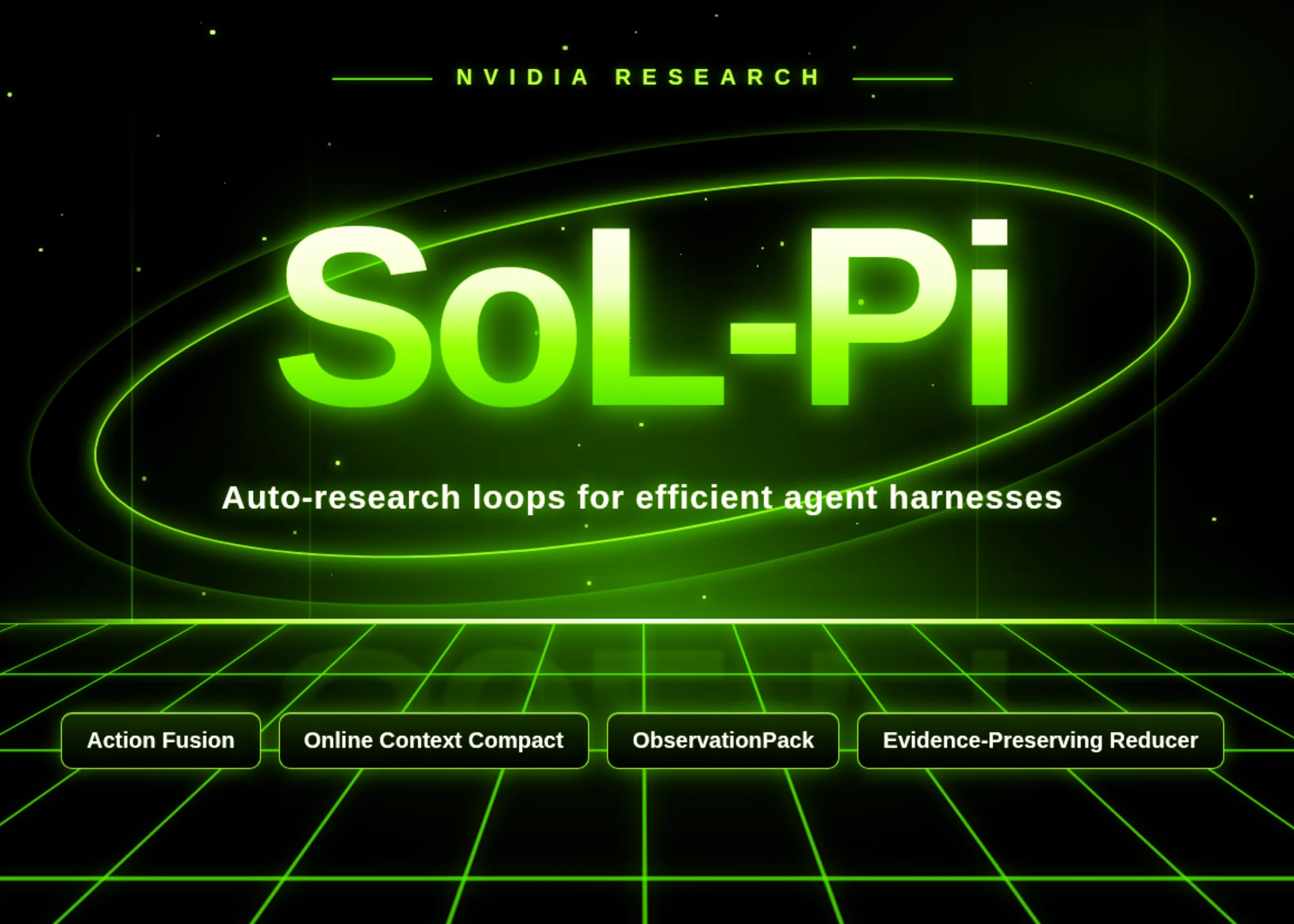
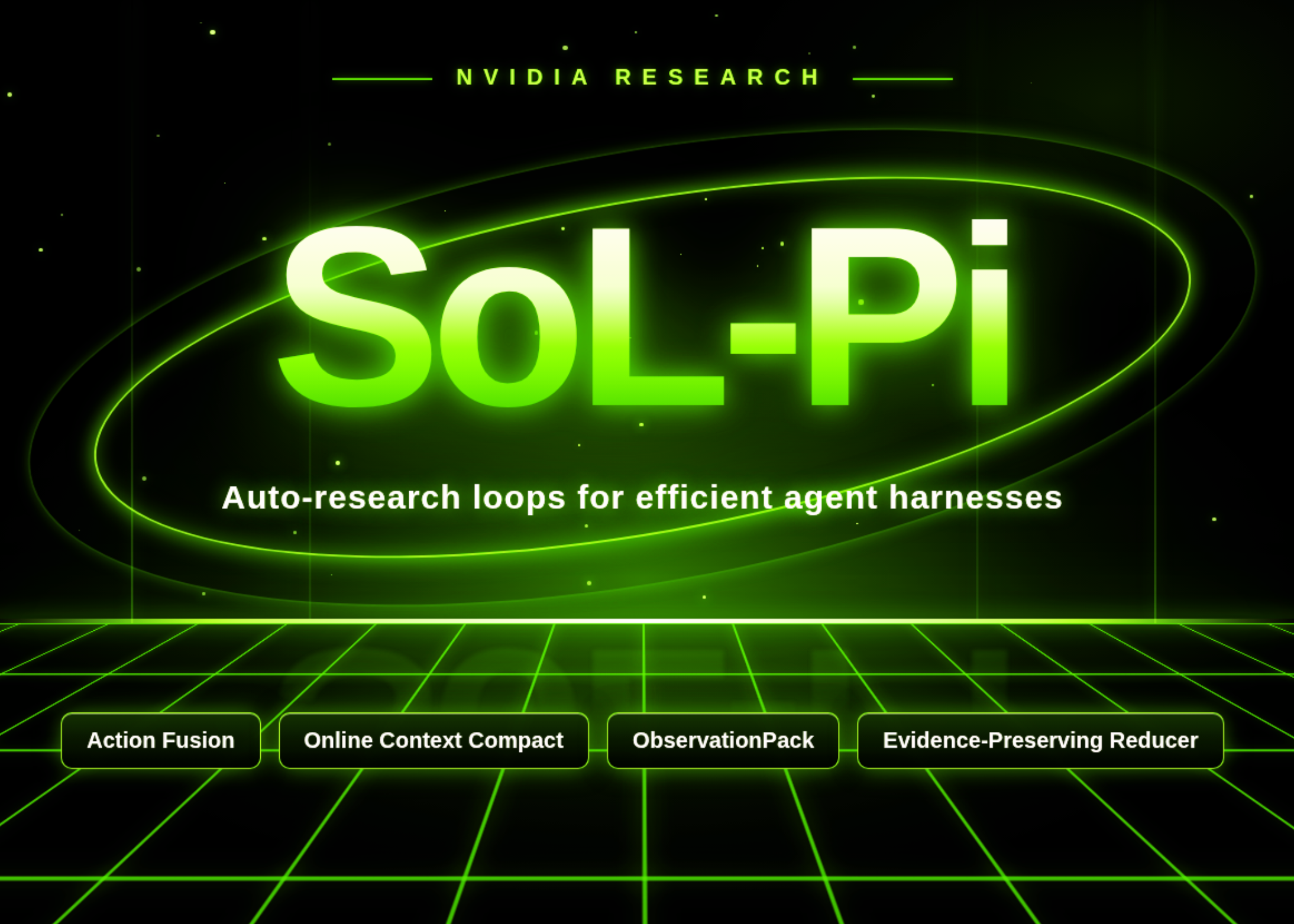
    • A joint research team from NVIDIA, NTU, and MIT has released “SoL-Pi,” an efficiency layer for the open-source Pi coding agent, distributed under the MIT license on GitHub NVlabs
    • SoL-Pi consists of four harness mechanisms, discovered by a separately trained AI running an auto-research loop across 535 environments
    • In evaluation on EdgeBench’s 51 tasks, recorded token traffic vs. Pi was reduced by 44.7–49.0%, with API costs dropping by roughly 33%

    All SoL-Pi figures come from the 40 held-out tasks out of EdgeBench’s 51, making them comparable indicators with overfitting risk controlled — though because the evaluation reflects all four mechanisms applied simultaneously, the individual contribution of each mechanism requires separate analysis

    Table of Contents

    The number that jumps out first is NVIDIA SoL-Pi cutting token traffic by 44.7–49.0% across EdgeBench’s 51 tasks. The layer, released on September 21 by a joint NVIDIA, NTU, and MIT research team, does not involve retraining the model. It is the result of layering four harness mechanisms — discovered by a separately trained AI running an auto-research loop across 535 environments — on top of the Pi coding agent.

    NVIDIA SoL-Pi structure diagram of four harness mechanisms

    The key point is that it reduced “tokens per task,” not “price per token.” The author finds this the most meaningful aspect. The same model handled the same tasks while the system prompt, tool calls, and context compression were simply rewritten. Scores held at roughly 94% of Pi’s on GPT-5.6 Sol and Opus 5, while API costs fell by about 33%.

    EdgeBench 51 Tasks: How the 49% Reduction Was Proven

    Start with the evaluation structure. Of the 51 tasks, 11 are frozen candidate 1-way acceptance tasks, and 40 are held-out. During the search phase, the optimizer cannot modify the acceptance rules of the 11 frozen tasks under any circumstances. And the results of the 40 held-out tasks are not fed back into the search loop.

    In other words, the critique that “evolved harnesses can overfit to search tasks” is blocked directly by the design. Thanks to this separation, the 49% reduction figure can be accepted as a comparable indicator. The verification pattern of separating search and evaluation data aligns with the trend that has repeatedly surfaced in the AI Research Automation September Milestones.

    How NVIDIA SoL-Pi’s Four Harness Mechanisms Work

    NVIDIA SoL-Pi’s four mechanisms focus on tool calls, context, and observation handling. Official naming is not yet finalized based on public materials, but the behavior patterns can be summarized along four axes: (1) branch compression at the tool-call stage, (2) dynamic slimming of the system prompt, (3) deduplication of observation values, and (4) early termination of failure loops. Separated analysis of each mechanism’s individual contribution has not yet been published.

    Structure of the Auto-Research Loop Across 535 Environments

    The loop has three stages: observe, propose, evaluate. It measures baseline Pi’s traffic across 535 environments, proposes a variant harness, and re-measures on the same environments. This cycle is repeated through a Ralph Loop implementation. Because independent reviewers score the search-phase results and held-out results separately, the average reduction rate of the four mechanisms is aggregated identically on both the search and evaluation sides.

    Deployment Requirements and Compatibility

    NVIDIA SoL-Pi runs on an unmodified Pi release with Pi 0.85.1 and Node.js 22.19 or higher. It is distributed under the MIT license on the GitHub NVlabs repository. Since existing Pi users simply layer it on, migration cost is minimal. The repository link and release notes can be found in the MarkTechPost original article.

    Risks and Limitations

    The evaluation is limited to two models: GPT-5.6 Sol and Opus 5. It has not been validated outside the coding agent domain. Because the result reflects all four mechanisms applied simultaneously, a separate ablation is required to know “how much would be saved by stripping out tool-call compression alone.” Whether the 1-way acceptance rule on the 11 frozen tasks would also hold outside the coding domain remains unknown.

    NVIDIA SoL-Pi vs. AWS Strands Harness

    AWS Strands harness, a frequently mentioned comparison target, targets general-purpose agents and reported about 28% lower costs than baseline on ALFWorld, ContextBench, GAIA, WebShop, τ²-bench, and Terminal-Bench 2.1 using the same model. NVIDIA SoL-Pi cut costs by about 33%, limited to coding agents. According to the Strands harness original article, the evaluation set structure also differs beyond the domain difference.

    Category NVIDIA SoL-Pi AWS Strands harness Pi Baseline
    Target Domain Coding agents General-purpose agents Coding agents
    Evaluation Set EdgeBench 51 tasks 6 sets including ALFWorld and GAIA EdgeBench 51 tasks
    API Cost Reduction ~33% ~28% Baseline
    Accuracy Retention ~94% (vs. Pi) Same-model baseline comparison 100% (baseline)
    License MIT Open source (policy to be confirmed) Original Pi policy

    The difference is large: NVIDIA SoL-Pi is domain-specific, while Strands is general-purpose. The question is less about which is better and more about which depends on the agent’s primary use. The broader trend of cost efficiency for agents can also be read alongside other organizational cases in the report that agent-based development handles 70% of PRs.

    What to Try Right Now

    • Clone SoL-Pi into your existing Pi 0.85.1 environment and run 5 tasks on an unmodified Pi with the layer applied.
    • Match Node.js to 22.19 or higher and measure the token count difference in advance.
    • Record average tokens per task, API cost per task, and pass rate before and after applying NVIDIA SoL-Pi in a table.
    • If you focus on non-coding agents, separately verify the compatibility and license of AWS Strands harness.
    • Among the four mechanisms, prioritize reviewing tool-call branch compression to gauge the reduction width.

    Practical Application Points

    If you are an existing Pi user, put NVIDIA SoL-Pi at the top of your adoption list. Thanks to unmodified compatibility, migration cost is nearly zero. However, you must first determine whether the 6% accuracy loss is acceptable for your workload, and only then set the scope of application. If you primarily handle non-coding domains, evaluate candidates like Strands harness and oh-my-pi together, and put license terms and benchmark reproducibility on your checklist. Avoiding tying your evaluation models to a single vendor is also a basic risk-diversification principle.

    Frequently Asked Questions

    Did NVIDIA SoL-Pi retrain the model?

    No. It is a harness layer layered on top of the existing Pi release. A separately trained AI discovered the four mechanisms across 535 environments and reduced token usage; the model weights themselves are unchanged.

    What does the 6% accuracy loss mean?

    It means that on GPT-5.6 Sol and Opus 5, roughly 94% of Pi’s score was retained. It is based on coding task pass rates and represents a 40-task held-out average. Adoption decisions will vary depending on business tolerance thresholds.

    Can it be used for general agents that aren’t coding agents?

    Published evaluation is limited to EdgeBench coding tasks. For general-purpose agents, AWS Strands harness or other efficiency layers must be evaluated separately.

    What is the first environment variable to check when adopting NVIDIA SoL-Pi?

    Verify that Pi version is 0.85.1 or higher and Node.js is 22.19 or higher. Then pre-measure token count and pass rate on up to 5 tasks to check for regressions.

    Reference Source

    This article was written after verifying the following original source: MarkTechPost — NVIDIA Introduces SoL-Pi: Auto-Research Loops That Cut Coding Agent Token Traffic by Up to 49%

  • Saudi Arabia Renews Request to Strike the Houthis — Trump’s 3 Calculations Behind the Hold

    Saudi Arabia Renews Request to Strike the Houthis — Trump’s 3 Calculations Behind the Hold

    Key Summary

    • Saudi Arabia has officially requested the United States to launch military strikes against Yemen’s Houthi rebels for a second time
    • The US side is reported to have already prepared a strike plan targeting the Houthis, but President Donald Trump is reported to have held off on a final decision
    • The United Kingdom is reported to have joined military cooperation by providing side support such as refueling to Saudi Arabia to counter the Houthis

    An analytical piece examining the military and diplomatic tensions between Saudi Arabia, the United States, and the Houthis, interpreting the Trump administration’s hold as a balance between alliance obligations and the burden of another war, and assessing the structural impact of the Houthis’ expanding threat radius on global energy security

    Table of Contents

    Background of the Saudi Houthi strike hold
    Background of the US decision to hold off on a Saudi Houthi strike

    Saudi Arabia’s request to strike the Houthis has landed on the US desk for a second time, but President Donald Trump has not pressed the final button and has instead hit pause. Despite reports that the US administration has already prepared a strike plan targeting the Houthis, the White House’s actions are effectively in “brake” mode. In the meantime, the United Kingdom has made its willingness for military cooperation clear by providing side support such as refueling to Saudi Arabia to counter the Houthis.

    If a strike plan is already on the desk, why is the button not being pressed on a Saudi Houthi strike? The answer lies in a two-faction battle inside the United States and the Strait of Hormuz variable.

    Why Saudi Arabia Is Requesting a Houthi Strike Again

    It is important to look at the background of the request. The Houthis’ threat radius no longer stops at attacks on vessels in the Red Sea. In Saudi Arabia’s southern highlands, the frequency of attacks targeting energy facilities and civilian infrastructure has risen, and the threat zone has reportedly expanded to oil tankers near the Strait of Hormuz.

    The UK’s moves also stand out. By providing side support such as refueling to Saudi Arabia, it has effectively joined an alliance-level Houthi containment operation. While the United States holds off on a decision to strike the Houthis, the UK has made its intention to fill Saudi Arabia’s security gap clear.

    Saudi Houthi Strike on Hold — 3 Reasons Trump Hit the Brakes

    The US military is split into two camps. One camp argues that “the United States should no longer get drawn into another Middle Eastern war,” while the other argues that “ignoring a traditional ally Saudi Arabia’s request would shatter alliance credibility.” These two camps are in a tense standoff, and President Trump’s decision to hold off on striking the Houthis reflects his inability to find a balance point between these two axes.

    The point this author focuses on is the timeline. Saudi Arabia has come forward with its request to strike the Houthis not once, but repeatedly. Yet the US response, unable to act immediately, fuels arguments about a Middle East security vacuum. When an ally makes a request and is met with a hold, that itself sends a message.

    Viewed in a broader context, this decision runs parallel to the Trump administration’s strategic approach to pressuring Iran. The pattern of repeatedly hesitating between coercion and compromise continues.

    The Strait of Hormuz Is the Next Variable

    The risk could deepen further. As the Houthis extend their threat zone toward the Strait of Hormuz, the safety risk to global maritime oil transport routes has escalated by one notch. A Hormuz blockade would send international oil prices soaring, and maritime insurance premiums tend to more than double in a single move. Higher insurance premiums directly translate into higher costs.

    Maritime insurance premiums are not a simple freight line item. They are calculated as a separate item called the War Risk Premium, and in areas near the Strait of Hormuz, instances of premiums reaching 1–2% of the vessel’s value per transit have been observed. This cost is ultimately borne by cargo owners, raising transaction costs for both oil-producing and importing countries.

    The geographic expansion of threats from the Red Sea to the Arabian Sea and toward the Strait of Hormuz simultaneously drives up volatility in the maritime insurance market and major futures markets. From a practitioner’s standpoint, this is the most significant point. This chain reaction becomes clearer when read against the recurring military confrontation context between the US and Iran.

    Stage Trigger Condition Oil Price Impact Maritime Insurance Premium
    Continued Red Sea attacks Currently ongoing Limited volatility 10–30% increase
    Repeated hits on Saudi facilities Precision strikes on energy infrastructure +$5–10 per barrel 30–50% increase
    Threats to tankers near the Strait of Hormuz First reports of transit instability +$15 or more per barrel 50% or more surge
    Strait of Hormuz blockade Attempted military blockade +$30 or more per barrel 2x or more

    4 Things to Watch Right Now

    Ultimately, the core comes down to four things. Whether the US moves its Saudi Houthi strike plan into execution, how Iran responds, how high maritime insurance premiums climb, and how international oil prices react. A tremor in any one of these sends ripples through the global supply chain.

    And these variables are not independent of each other. If the US proceeds with strikes, the likelihood of Iranian retaliation opens up, and if Hormuz-area tankers are chosen as the retaliation target, insurance premiums and oil prices will surge simultaneously. The decision to hold off on a Saudi Houthi strike could either be a delay to break this chain reaction, or a signal that the US is unwilling to bear its consequences.

    Summary of Key Issues

    • Houthi threat expansion: Zone extended from the Red Sea to near the Strait of Hormuz, directly hitting global maritime insurance premiums
    • US domestic dilemma: Burden of another Middle Eastern war vs. Saudi alliance obligations — two axes in tense opposition
    • UK’s alternative intervention: Refueling support partially fills Saudi Arabia’s security gap, but military capability limits are clear
    • Energy security shock: In the event of a Hormuz blockade, oil prices and insurance premiums surge simultaneously, directly striking the global supply chain

    What to Do Right Now

    • Review the weighting of energy and transportation ETFs with high Middle East exposure in your portfolio.
    • Check the crude oil futures volatility index (OVX) and maritime insurance premium trends on a weekly basis.
    • Subscribe via RSS to the disclosures of insurance and shipping companies related to Strait of Hormuz transits.
    • Cross-check diplomatic channel movements between Iran and Saudi Arabia across at least two foreign news sources.
    • Mark US Department of Defense briefings and White House official statements on your calendar and observe the market reaction within one hour of release.

    Frequently Asked Questions

    Is this the first time Saudi Arabia has requested a Houthi strike?

    According to reports, this is the second official request. The UK has already provided side support such as refueling to Saudi Arabia to counter the Houthis, and a movement to partially fill the security gap caused by the hold on a Saudi Houthi strike is being observed.

    Does the fact that the US has prepared a strike plan mean it will be executed?

    No. While reports indicate that the US administration has prepared a plan, President Trump is reported to have held off on a final decision to strike the Houthis. The gap between preparing a plan and executing it is determined by political variables.

    Can the Houthis actually threaten the Strait of Hormuz?

    There are reports that the Houthis’ threat zone has expanded to tankers near the Strait of Hormuz. Even without reaching a full blockade, transit instability and insurance premium increases can take effect immediately, making this a practically significant variable.

    What should ordinary investors do about the Saudi Houthi strike issue?

    Reviewing energy and shipping ETF weightings, checking the crude oil volatility index, and monitoring Hormuz-related insurer disclosures are the most realistic actions. Starting with portfolio weight review is safer than one-off trades.

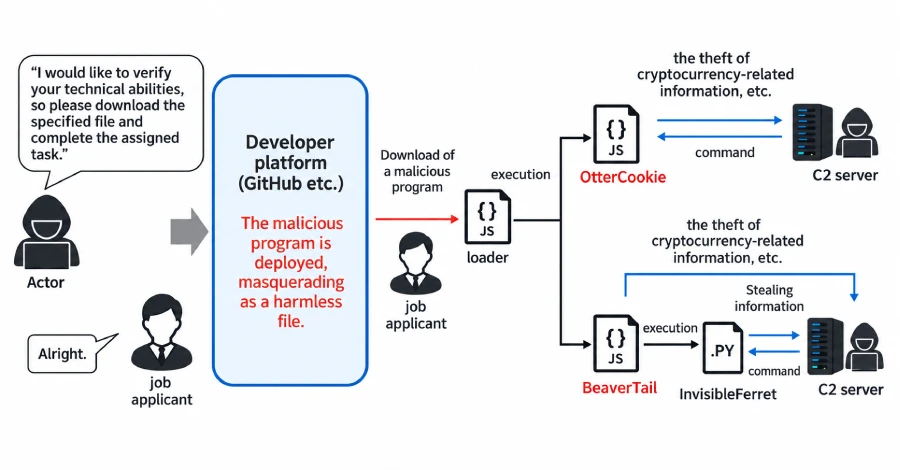
  • Fake Job Interview Scam Infects 30,000 Devices — Why the Contagious Interview Campaign Really Targeted Developers

    Fake Job Interview Scam Infects 30,000 Devices — Why the Contagious Interview Campaign Really Targeted Developers

    Key Summary

    • According to a joint cybersecurity advisory, the Contagious Interview campaign has infected at least 30,000 devices across more than 100 countries
    • Funds or account credentials were exfiltrated from more than 7,000 crypto wallets, with reported damages of approximately $10.71 million (USD 10.71M)
    • The primary targets identified were individual-level freelancers and professionals, including web designers, engineers, and crypto experts

    This article examines, from a threat intelligence perspective, the impact of North Korean targeted threats—exemplified by the fake job interview format—on developers and crypto users, and presents immediately deployable detection and response procedures for practitioners

    Table of Contents

    The ‘Contagious Interview’ campaign, disguised as fake job recruitment, swallowed 30,000 laptops and 7,000 crypto wallets in a single sweep. A joint cybersecurity advisory laid bare the full scale of the damage: more than 100 countries, at least $10.71 million.

    The operation, which began in mid-2024, was classified as ‘WaterPlum.’ Web designers, blockchain engineers, and freelance developers were the primary targets. Under the guise of a coding test during the interview stage, victims were tricked into installing malicious npm packages. The PEEP backdoor, disguised as a browser extension, then siphoned off seed phrases and session cookies.

    What I find most significant about this incident is the ‘industrialization’ of the fake job interview scam. A single infection is enough to drain wallet seeds, GitHub tokens, and cloud keys at once. Developers serve as the external touchpoint for small organizations, making them high-value targets.

    Why the Fake Job Interview Scam Targeted Developers

    From the attacker’s perspective, developers are a goldmine. They are likely to hold main account privileges, access to build pipelines, and internal repository keys. As remote interviews have become commonplace, actions that would normally raise suspicion—such as ‘screen sharing,’ ‘downloading files for a test,’ or ‘installing browser extensions’—have become natural within a hiring context.

    The actual compromise flow is as follows. The attacker initiates contact through a fake job interview message and schedules an interview, then hands over a ‘technical assessment’ repository. One of the dependencies is the PEEP backdoor. The moment it is installed, MetaMask seeds, GitHub tokens, and cloud credentials are transmitted to an external C2 server.

    Stage Action Exfiltrated Data
    1. Initial Contact Fake job interview outreach via LinkedIn and Telegram —
    2. Infiltration Coding test repository delivered; tricked into installing npm package Execution privileges
    3. Collection PEEP backdoor deployed as a browser extension Session cookies, wallet seeds
    4. Exfiltration Credential rotation, cloud key exfiltration GitHub and AWS tokens

    Practical Application Points

    Practical Application Points

    The moment interview tools and assets coexist on the same device, you become the primary target of the fake job interview scam. Separating these two is the first gatekeeper.

    • Use a separate device for interviews. Never take coding tests on a device that holds company assets or your main wallet. Conduct them only on a clean virtual machine or with a disposable account.
    • Clone external repositories in an isolated environment. Run static analysis and SBOM checks before npm install. Even familiar package names can be tampered with.

    What to Do Right Now

    • Separate your interview GitHub account from your primary work account, and revoke all tokens once the interview is over.
    • Move the seed phrase of your main crypto wallet to an offline paper backup, and store it separately from the hot wallet used for daily transactions.
    • Enable hardware security key-based multi-factor authentication on major accounts such as GitHub, AWS, and Vercel, and rotate access keys every 30 days.
    • If an interviewer requests ‘recording’ or ‘screen sharing,’ treat it as a red flag on the spot and verify the legitimacy through a separate channel with the hiring manager.
    • When installing npm dependencies, make npm audit and the --ignore-scripts option your default.

    The Fake Job Interview Scam Never Ends

    The terrifying thing about the fake job interview scam is that there is no ‘end.’ Once a seed phrase is exposed, attackers can trace every wallet address derived from that same seed. The seed that flows into a MetaMask extension is, in itself, a transaction signing key.

    In my view, the real insight this campaign reveals is that the boundary of security responsibility has shifted to the individual endpoint. No matter how thoroughly an organization deploys SSO and EDR, a single developer’s laptop with a sticky note containing a seed phrase is enough to compromise the whole system.

    Frequently Asked Questions

    What channels do fake job interview scams use to make contact?

    LinkedIn DMs and Telegram messenger are the most common. Recently, Telegram-based ‘technical assessment’ DMs have surged sharply. The Hacker News’s initial report also highlighted this channel expansion.

    What are the red flags during the interview stage?

    A typical pattern is when a coding test repository is sent at the last moment and results are demanded right after npm install. Abnormally high urgency, or restricting contact to Telegram only, are also warning signs.

    What should I do if I’ve already installed the npm package?

    Immediately disconnect from the internet and move funds from your main wallet to a cold wallet with a new seed. Then, from a separate device, invalidate session cookies and reissue all cloud keys.

    Is a hardware wallet safe?

    It is relatively safe if the seed phrase has never entered your PC. However, browser-side channels like the PEEP backdoor can intercept the transaction signing itself, so you must always verify the amount and recipient address on the device display right before signing.

    Stage-by-Stage Hiring Security to Block the Fake Job Interview Scam

    To block the fake job interview scam, security gates must be formalized at every stage of hiring. The starting point is breaking the assumption that ‘interview = zone of trust.’

    Hiring Stage Current Practice Improved Approach
    Initial Contact Free communication via email and messenger Use only company domain email; reject Telegram policy
    Technical Assessment Candidate’s personal repository used Assessments only in internal sandbox; repository whitelisting
    Final Interview Unrestricted screen sharing Demonstrations only on interviewer’s device; advance notice of recording policy
    Post-Hire SSO issued immediately 90-day least-privilege; regular key rotation

    100 countries, 30,000 devices, $10.71 million. The fake job interview scam is no longer something that can be stopped by ‘individual caution’ alone. Embedding security into the hiring process and ensuring that interviews and assets never coexist on the same device is the first line of defense.

    If you want to dive deeper into the technical flow, we recommend reading the 8-month WaterPlum attack timeline and how the PEEP backdoor works.

    Reference Sources

    This article was written with reference to the following source: The Hacker News — Contagious Interview Campaign Compromises 30,000 Devices, Steals $10.71M in Crypto