
Key Takeaways
- Director Heo Jin-ho’s “Assassins” drew 1,119,156 viewers over the three-day Chuseok holiday (Sep 25–27), claiming the No. 1 spot on the domestic weekend box office (Korean Film Council’s integrated ticketing network, as of Sep 28).
- The film crossed the 1 million-viewer mark in just four days after its Sep 23 release, with cumulative admissions reaching 1,566,222. More than 1 million viewers flocked to theaters during the three-day holiday weekend alone.
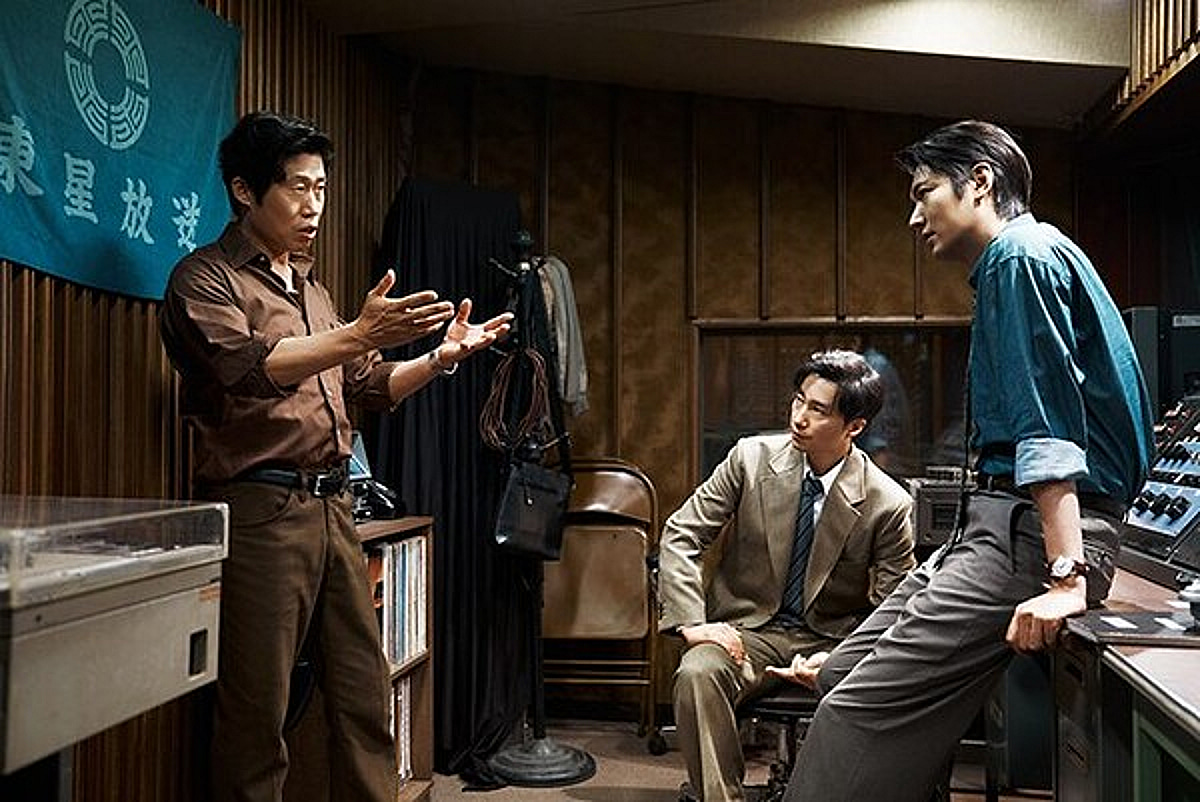
- “Assassins” traces the suspicions and the mastermind behind the August 15, 1974 first-lady shooting incident. The narrative follows detective Cheol-gu (Yoo Hai-jin), newspaper social-affairs chief Jae-hwan (Park Hae-il), and rookie reporter Young-il (Lee Min-ho) as they chase conflicting testimonies and the investigation.
A fact-driven viewer guide that lays out the Chuseok 1–6 box-office scorecard while also examining the hit’s backdrop, holiday box-office dynamics, and the social controversy triggered by the film’s treatment of a real historical event.
Table of Contents
Released on the 23rd, “Assassins” grabbed the No. 1 spot at the Chuseok box office. From the 25th through the 27th, the film drew 1,119,156 viewers over the three days, pushing its cumulative total to 1,566,222. These figures come from the Korean Film Council’s integrated cinema ticketing network (as of the 28th).
More than 1 million viewers packed theaters during the first weekend alone. By comparison, “The Odyssey” attracted 364,763 viewers and “The Intern” drew 206,347 over the same period — making the gap behind the “Assassins” box-office hit strikingly clear.
1. ‘Assassins’ Box-Office Scorecard — 1 Million in 4 Days
Director Heo Jin-ho’s “Assassins” traces the suspicions and the mastermind behind the August 15, 1974 first-lady shooting incident. The narrative follows detective Cheol-gu (Yoo Hai-jin), newspaper social-affairs chief Jae-hwan (Park Hae-il), and rookie reporter Young-il (Lee Min-ho) as they chase conflicting testimonies and the investigation.
What stands out is the three-character structure. With the eyes of the investigation, the press, and a rookie reporter all converging on a single case, the film transcends a simple thriller to engage directly with key debates in modern Korean history. Crossing 1 million viewers in just four days reflects a curve that emerges only when ‘audience draw’ and ‘social conversation’ activate at the same time.
2. Yoo Hai-jin’s ‘Holiday Hit Guarantee’ Formula
Yoo Hai-jin has now carried holiday box-office success for the second time this year. “The Man Standing Next,” which opened during the Lunar New Year holiday, drew 16.93 million viewers. The same actor returning to the top during the Chuseok season suggests the “Assassins” box-office hit is not a coincidence but a trend.
Genre-wise, “The Man Standing Next” is a period political thriller, while “Assassins” carries an investigation-mystery tone. Different genres, but the common denominator is an actor image that absorbs both family audiences and adult viewers simultaneously. From an industry standpoint, opening back-to-back holiday seasons on a single actor variable is a rare feat when planning box-office marketing.
3. Chuseok Weekend Box Office 1–6 at a Glance
Rankings 2 through 6 are as follows (three days from Sep 25–27, KOFIC integrated ticketing network).
| Rank | Title | Director | Weekend Viewers | Cumulative Viewers |
|---|---|---|---|---|
| 1 | Assassins | Heo Jin-ho | 1,119,156 | 1,566,222 |
| 2 | Tazza: The Song of Beolje-bup | Choi Gook-hee | 566,526 | 833,030 |
| 3 | The Odyssey | Christopher Nolan | 364,763 | 11,783,297 |
| 4 | The Intern | Kim Do-young | 206,347 | 756,057 |
| 5 | Possible Love | Lee Chang-dong | 72,022 | 115,938 |
| 6 | Obsession | Curry Barker | 67,619 | 849,155 |
No. 2 “Tazza: The Song of Beolje-bup” is rated R (minor viewing restricted) yet pulled in 566,526 weekend viewers, with cumulative admissions at 833,030 — within reach of the 1 million mark. No. 3 “The Odyssey” has a cumulative 11,783,297 viewers, leaving about 217,000 before the 12 million milestone. With weekend attendance up compared to the previous week, the long-tail curve remains intact.
No. 4 “The Intern” (starring Choi Min-sik and Han So-hee) also drew more than 200,000 viewers over the Chuseok weekend. No. 5 “Possible Love” (starring Jeon Do-yeon, Sol Kyung-gu, Jo In-sung, and Jo Yeo-jeong) is receiving a limited two-week theatrical run ahead of its November 6 Netflix release. No. 6 “Obsession” (starring Michael Johnston and Indy Nevereti) reached a cumulative 849,155 viewers.
4. ‘Assassins’ and the Social Controversy
Alongside its box-office success, “Assassins” has pulled in social discourse. Because the film tackles the real-life August 15, 1974 first-lady shooting incident, reports indicate simultaneous controversy over freedom of expression and historical interpretation from the bereaved family, film critics, and political circles (including the People Power Party).
However, the original source did not compile specific statements by camp. A full mapping of the controversy requires additional verification — the bereaved family’s position, critical reviews of the film, and political statements or legislative responses. The author views this as the most meaningful section. The unusual flow in which box-office success and controversy unfold in parallel is itself a variable as weighty as the “Assassins” box-office scorecard itself.
What to Watch Next
- Whether “Assassins” can add another 1 million viewers after entering its second weekend
- When “The Odyssey” will cross 12 million viewers, and what shape its long-tail trajectory takes
- When the R-rated “Tazza: The Song of Beolje-bup” surpasses 1 million viewers
- The theatrical effect of “Possible Love”‘s two-week limited run ahead of its November 6 Netflix release
Try It Right Now
- Check the daily box office as of the 28th directly on the KOFIC integrated ticketing network
- Compare “Assassins” showtimes and screens across CGV, Lotte Cinema, and Megabox apps
- Pull together one-line summaries of the bereaved family’s position, critic reviews, and political statements from each outlet
- Track “Tazza: The Song of Beolje-bup”‘s path to 1 million viewers on a weekly basis
- Record how many days it takes “The Odyssey” to close the remaining 217,000 viewers on its way to 12 million
FAQ
What is “Assassins” about?
A Korean investigation drama tracing the suspicions and the mastermind behind the August 15, 1974 first-lady shooting incident. The narrative follows a detective, a newspaper’s social-affairs chief, and a rookie reporter as their three perspectives cross while approaching the case, directed by Heo Jin-ho.
Why is Yoo Hai-jin at No. 1 again?
After “The Man Standing Next” drew 16.93 million viewers during the Lunar New Year holiday, Yoo Hai-jin reclaimed the top spot at the Chuseok box office with “Assassins.” An actor image that simultaneously absorbs both family and adult audiences has repeatedly translated into holiday-season box-office success.
Why is “Assassins” controversial?
Because it deals with the real-life first-lady shooting incident, the bereaved family, critics, and political circles are simultaneously voicing positions on freedom of expression and historical interpretation. Specific statements by camp were not compiled in the original source and require additional verification.
What are the Chuseok box-office 1–6 titles?
For the three days from Sep 25–27: 1. “Assassins,” 2. “Tazza: The Song of Beolje-bup,” 3. “The Odyssey,” 4. “The Intern,” 5. “Possible Love,” 6. “Obsession.” Two Korean new releases — “Assassins” and “Tazza” — split the top two spots.
With two Korean new releases — “Assassins” and “Tazza: The Song of Beolje-bup” — splitting the 1–2 spots this Chuseok season, “The Odyssey” was pushed to No. 3. Beyond its box-office tally, the “Assassins” hit is simultaneously driving social discourse, meaning its evaluative weight going forward is heavier than next week’s box-office numbers alone.
Source: View the original Money Today article
Source
This article was prepared with reference to the following original: Google News Korea — Yoo Hai-jin breaks 10 million at Lunar New Year and does it again at Chuseok… ‘Assassins’ takes overwhelming No. 1 [Box Office] – Money Today
Expert Commentary (AI)
Korean Modern Political History Specialist
Reconstructing a ‘mastermind pursuit’ of a real national tragedy is a double-edged sword that carries both civic reflection and the risk of memory distortion
The August 15, 1974 incident is a longstanding tragedy: a shooting that took place at the heart of a state ceremony, killing the first lady. It has left decades of unresolved interpretive space over alleged mastermind orders, intelligence-agency involvement, and Cold War linkages. Set against this soil, constructing an ‘inquiry into suspicion’ through the triple lenses of a detective, the press, and a rookie reporter can be read as an extension of the narrative maturity Korean political thrillers have built up since “The Attorney.” However, re-orchestrating a real event with living survivors through fictional characters’ testimony carries a clear cost: when an image received inside the theater migrates into historical narration, the boundary between fact and reconstruction blurs. The split in reactions from the bereaved and political circles shows that the case remains a touchpoint of camp-based memory politics, and whether it serves as a public forum for reconciliation or a tool for renewed confrontation will be determined by documentary devices such as source attribution for the alleged mastermind’s statements and on-screen labeling. While the defense of freedom of expression is natural, in the field of history the demand for a documentary basis is equally legitimate and unavoidable on the other side — and that is what determines the work’s public standing.
Film Industry Box-Office Analyst
The adult-drama box-office axis linking Lunar New Year and Chuseok is becoming the new constant of the Korean box office
Opening during peak holiday season is a slot-tailored strategy that shifts the consumption unit toward family and couple audiences, and a harmless-yet-weighty actor image is the casting asset optimized for that consumption unit. The succession of a 16 million-tier Lunar New Year hit and a Chuseok No. 1 should be read not as coincidence but as an industry signal that the pairing of an actor variable with the holiday slot has been repeatedly validated. A three-day opening of about 1.11 million is not on the curve of a 10 million-tier blockbuster, but for an adult original drama it is a stable figure, and the decisive factors are the second-week drop-off and managing audience overlap with R-rated franchise films. The counter-intuitive phenomenon in which a long-tail title at No. 3 actually gains weekend attendance suggests that holidays function not as a buffer for new releases but as a verification stage that confirms the floor for anticipated films. The pace of 1.56 million cumulative by day 4 raises the likelihood of breaking even, but whether controversy-driven buzz converts into second-week audience expansion is the inflection point of the final score.
Critical Analyst
Neither the controversy nor the box office is a ‘realized outcome’ — the likelihood that both were on the ledger from the release-planning stage
On the surface it reads as a harmless industry story of a ‘box-office guarantee actor’ and ‘Chuseok family audiences,’ but looking beneath, in a structure that uses suspicion over a real event as a selling point, the parties who profit are on both sides: the production/distribution side and the camp hoping their historical interpretation will be redistributed to the public. It is conventional risk for a work touching a real event to face controversy around release, and the timing in which those controversy stories hit exactly on opening weekend alongside No. 1 box-office coverage likely functioned as free promotional capital. The press framing that translates box-office numbers into a ‘national choice’ is a selective narrative interlocked with distribution announcements and tally timing, and protest statements from political circles, regardless of which side, are converted into free advertising that raises interest. What we should really pay attention to is whether this film becomes a channel that resolves curiosity or one that imprints a specific interpretation on the memory of a million viewers under entertainment packaging — and the criterion is not the numbers, but the future cross-referencing with original records and verification procedures by the bereaved family. In the end, the question worth doubting is not the mastermind behind the incident, but whose anonymity and interests the structure that profits from selling mastermind suspicion was assembled on top of.
Behind-the-Scenes Scenarios
- Even if the bereaved family’s backlash or political reactions were already identified before release, it is possible that the production/distribution side did not adjust the screening timing and kept the Chuseok slot — the conventional industry math is that controversy-driven content maximizes media exposure during opening weekend as a promotional effect.
- The conclusion of the mastermind-pursuit narrative may tilt toward a specific historical interpretation, and the concentration of political statements immediately after release may be less a work-quality debate and more a race to seize the memory-politics frame ahead of the next election cycle — the timing of a real-event film releasing in a season close to the election cycle is hard to read as pure coincidence.
Leave a Reply