Key Summary
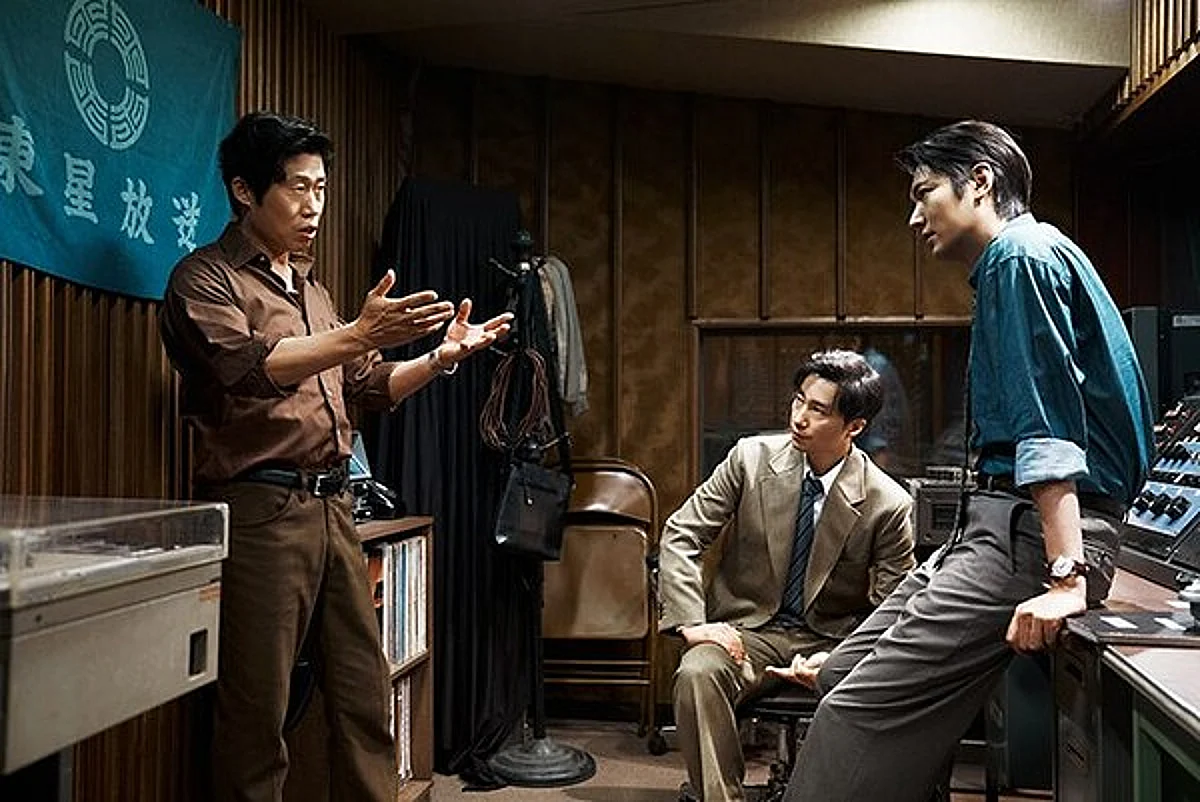
- The film “Assassins” is based on the real-life incident in which First Lady Yuk Young-soo was killed on August 15, 1974, during Mun Se-kwang’s assassination attempt on President Park Chung-hee. The film includes scenes in which certain characters raise the hypothesis that President Park Chung-hee’s side or the Korean Central Intelligence Agency (KCIA) may have been involved in the incident, drawing criticism over historical distortion.
- The People’s Livelihood Countermeasures Committee (Seominwi) filed a complaint with the Seoul Metropolitan Police Agency against six individuals, including Kim Gyeong-ja, Senior Secretary for Social Affairs at the Presidential Policy Office; Choi Hwi-young, Minister of Culture, Sports and Tourism; Kim Byeong-jae, Chairman of the Korea Media Rating Board; Hong Ji-seon, Minister of Land, Infrastructure and Transport; Park Chang-geun, President of the Korea Authority of Land & Infrastructure Safety (KALIS); and Lee Seong-hun, CEO of LH (Korea Land and Housing Corporation), on charges including abuse of authority and dereliction of duty.
- The complaint rests on two main pillars: first, that the Minister of Culture and the Chairman of the Korea Media Rating Board failed to exercise due caution regarding a film mired in historical distortion controversy; and second, that the Ministry of Land and its affiliated agencies (LH and KALIS) organized group viewings of the film.
An analytical article that combines the appropriateness of public-institution group viewings, the government’s regulatory responsibility over films, and the question of who has the authority to determine historical distortion to identify the legal and policy issues at stake.
Table of Contents
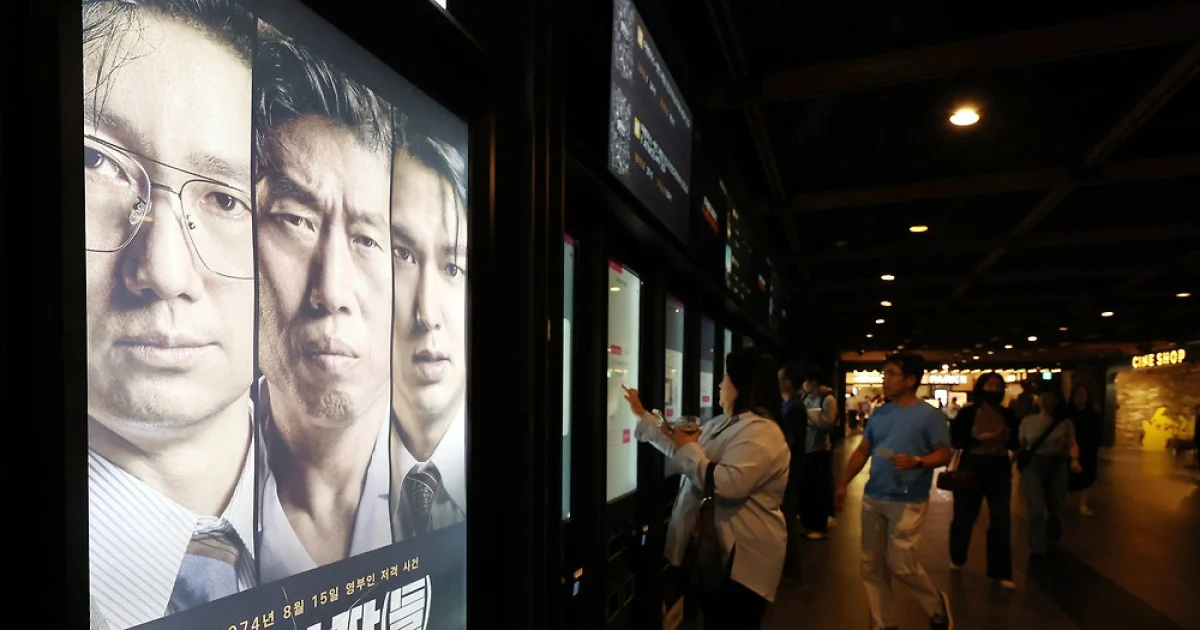
Six individuals have been named in a complaint related to the film Assassins. The work, which depicts the incident in which First Lady Yuk Young-soo was killed during Mun Se-kwang’s assassination attempt on President Park Chung-hee on August 15, 1974, was engulfed in historical distortion controversy immediately after its release on August 23. The civic group People’s Livelihood Countermeasures Committee (Seominwi) filed a complaint with the Seoul Metropolitan Police Agency against six officials, including Kim Gyeong-ja, Senior Secretary for Social Affairs at the Presidential Policy Office; Choi Hwi-young, Minister of Culture, Sports and Tourism; Kim Byeong-jae, Chairman of the Korea Media Rating Board; Hong Ji-seon, Minister of Land, Infrastructure and Transport; Park Chang-geun, President of KALIS; and Lee Seong-hun, CEO of LH, on charges including abuse of authority and dereliction of duty. The detailed first-round facts can be confirmed in the related report.
The complaint rests on two main pillars. The first concerns the Ministry of Culture and the Korea Media Rating Board, which allegedly failed to exercise due caution during the rating review of a film mired in historical distortion controversy. As the film includes scenes in which certain characters raise the hypothesis that President Park Chung-hee’s side or the KCIA may have been involved in the incident, the rigor of the rating review has been placed under scrutiny.
The second pillar concerns group viewings organized by the Ministry of Land and its affiliated agencies. LH and KALIS held group viewings of “Assassins” at a cinema in Jinju, South Gyeongsang Province. The screening rental fees were covered by Mirae Asset Securities, the retirement pension provider for both institutions, and this point became the most accessible thread for the civic group to pull.
As the author, I find the funding source to be the most significant element. The structure in which a retirement pension provider covered group viewing fees is intertwined with Mirae Asset Securities’ explanation that this is “an extension of a marketing program targeting retirement pension customers through group viewings.” The securities firm has run the same program this year for films such as “Shin-chan” and “Odyssey,” so from a business perspective, it reads as a consistent marketing effort.
However, the fact that LH and KALIS chose the specific work “Assassins” for a group viewing must be examined separately. LH has offered an explanation that the film selection was an internal decision of the corporation and unrelated to any political purpose, but the civic group raised the possibility of “suspected mobilization of state affairs.” Ultimately, the political symbolism of a group viewing is determined not by who paid for it, but by which work was chosen.
The 6 Individuals Indicted: How the Logic Differs by Position
| Indicted Individual | Affiliation | Complaint Logic |
|---|---|---|
| Kim Gyeong-ja | Senior Secretary for Social Affairs, Presidential Policy Office | Overall policy oversight; responsibility for film and livelihood policy |
| Choi Hwi-young | Minister of Culture, Sports and Tourism | Overall responsibility for film and visual media policy |
| Kim Byeong-jae | Chairman, Korea Media Rating Board | Failure to exercise due caution in the rating review |
| Hong Ji-seon | Minister of Land, Infrastructure and Transport | Failure to oversee group viewings by affiliated agencies |
| Park Chang-geun | President, Korea Authority of Land & Infrastructure Safety (KALIS) | Direct party that organized the group viewing |
| Lee Seong-hun | CEO, LH (Korea Land and Housing Corporation) | Direct party that organized the group viewing |
As the table shows, three individuals from the Ministry of Culture line and three from the Ministry of Land line were grouped together in the complaint. The rationale based on administrative structure is that the Korea Media Rating Board is a public institution under the Ministry of Culture, and LH and KALIS are public corporations and research institutes under the Ministry of Land. The fact that a public institution held a group viewing of a film dealing with the death of the president’s spouse (at the time) itself reads to the civic group as “an attempt to unify historical recognition in a particular direction.”
The Question of Who Determines “Historical Distortion”
The film rating system is not designed to determine the historical accuracy of a particular work. The Korea Media Rating Board handles age classification and screening eligibility; it does not judge the truth of a narrative. Nevertheless, the civic group’s inclusion of the Rating Board among the defendants appears to be a strategy that leverages its administrative position as a public institution under the Minister of Culture to hold someone accountable. Since its release, the film “Assassins” has spread into a multi-layered controversy with divided views across media outlets, including the cancellation of a free preview screening by the Busan Film Rating Board, criticism from actor Joo Jin-woo, remarks by former MBC president Choi Seung-ho on a “Park Chung-hee conspiracy theory,” YTN’s editorial analysis, and Yonhap News’ coverage criticizing the actor through reader comments. In a situation where different media outlets reach different conclusions about the same work, the weakness lies in the fact that the very term “historical distortion” is not a legally defined concept.
5 Remaining Issues in the Assassins Controversy
1. Authority to determine historical distortion: The civic group argues the Rating Board “looked the other way,” while the film’s side sees it as “a matter of freedom of expression.” 2. Appropriateness of the group viewings: LH and KALIS view it as an employee welfare matter, while the civic group characterizes it as an extension of state-affairs mobilization. 3. Interpretation of the funding source: Mirae Asset Securities frames it from a marketing perspective, while the civic group interprets it as a politically symbolic public-private partnership. 4. Bearers of management responsibility: Whether the Minister of Culture and the Minister of Land can be grouped together under the same complaint rationale. 5. Scope of the subsequent investigation: Whether the police will actually proceed with an investigation on charges of abuse of authority and dereliction of duty.
From a practitioner’s perspective, point 4 stands out. The Ministry of Culture oversees film, arts, and visual media policy, while the Ministry of Land is in charge of construction, transportation, and safety. The complaint rationale linking the two ministries is essentially the single act of “a public institution organizing a group viewing of a specific film,” but each ministry’s scope of authority is different. Therefore, beyond the question of whether a case will be opened, the complaint itself is likely to have been used primarily as a vehicle for delivering a political message. The film’s box-office trajectory is covered separately in the Assassins Chuseok box-office analysis.
What to Watch Going Forward
- The timing of the Seoul Metropolitan Police Agency’s acceptance of the complaint and the launch of an investigation, along with the responsible division
- Whether further disclosures of group viewings by public institutions other than LH and KALIS emerge
- The release timing of Mirae Asset Securities’ review results on its group-viewing marketing and any revised operational standards
- The impact of the complaint on the box-office performance of “Assassins” and changes in weekend audience numbers
What You Can Do Right Now
- Spend five minutes reviewing the Korea Media Rating Board’s review standards and rating classification system on its official website
- Check with your HR team how many group viewings of films, exhibitions, or performances your organization has held this year
- Request your finance team to compile a list of employee welfare programs provided by your retirement pension provider
- Ask your general affairs team whether your organization’s internal rules formally document the criteria for selecting works for viewings
- Search the history of civic-group complaints over specific films or exhibitions and collect at least three similar cases
Frequently Asked Questions
What incident does the film “Assassins” depict?
It is set against the real-life incident in which First Lady Yuk Young-soo was killed alongside President Park Chung-hee on August 15, 1974, when Mun Se-kwang attempted to assassinate the president. The film dramatically reconstructs the political context of the incident and the choices made by the individuals involved.
What criteria did Seominwi use to select the six individuals it reported?
The selection was made based on administrative structure. The Ministry of Culture line (Minister Choi Hwi-young and Rating Board Chairman Kim Byeong-jae) was targeted for rating review responsibility, while the Ministry of Land line (Minister Hong Ji-seon, KALIS President Park Chang-geun, and LH CEO Lee Seong-hun) was targeted for group viewing responsibility. Kim Gyeong-ja, the Senior Secretary for Social Affairs under the Presidential Office, was added to the list, bringing the total to six.
What is the significance of Mirae Asset Securities covering the viewing fees?
Mirae Asset Securities is the retirement pension provider for LH and KALIS. The firm’s explanation is that it has organized group viewings in the same manner for films such as “Shin-chan” and “Odyssey.” The civic group interprets this structure as a politically symbolic public-private partnership.
Can the charges of abuse of authority and dereliction of duty lead to a formal indictment?
Whether the charges are established will be determined through a police investigation. However, the key issues are likely to be whether the film rating review and group viewings clearly fall within the scope of high-ranking officials’ duties, and whether causation and intent can be established.
Source Article
This article was written with reference to the following original report: Google News Korea — [Exclusive] Assassins historical distortion controversy… Culture and Land ministers reported to police