Author: l0cknsec

  • Windows Server 2012/R2 Post-ESU Defense: Why ‘Just Migrate’ Isn’t the Answer for Legacy Boxes — A 3-Layer Isolation Matrix

    Windows Server 2012/R2 Post-ESU Defense: Why ‘Just Migrate’ Isn’t the Answer for Legacy Boxes — A 3-Layer Isolation Matrix

    Key Takeaways

    • Structural cause: Legacy systems persist not because of technical debt but because of business dependencies (proprietary industrial controllers, EOL vendor DBs, authentication and building access systems, and the like). Cloud migration requires a 6–18 month cutover, creating a short-term mismatch with the ESU cutoff. This must be classified as an unstructured problem unsolvable by standard patching processes; a generalized N-2 OS policy alone is impotent in the field.
    • Practical decision criteria: Cross-reference system-level BIA (Business Impact Analysis) with external exposure and data sensitivity to classify into four tiers (A = block and decommission, B = air-gapped VLAN, C = ACL + jump host, D = internal-only + WAF/IPS), then map each tier to an allowed communication whitelist, MFA strength, log retention period, and reassessment cycle. This isolation matrix is the primary decision gate.
    • Critical anti-patterns: ① Believing “one router ACL line” is enough (leaves lateral movement undefended); ② RDPing from a jump host to a legacy OS and then working locally (the jump host itself becomes a lateral movement relay); ③ Maintaining the same backup/snapshot cadence after ESU ends without running recovery drills (unrecoverable during ransomware); ④ Failing to manage client-side EOS like Office 2021 LTSC on a separate track and missing the sudden surge in phishing surface caused by same-Tuesday macro patterns.

    After ESU ends, the safety of a legacy server no longer hinges on patching but on how quickly you map the “visible isolation (network and management plane) + invisible controls (FIM, EDR, and audit logs)” matrix down to the asset level. An isolation design without a migration roadmap becomes permanent technical debt in itself — that is the core point.

    Table of Contents

    The official Extended Security Updates (ESU) lifecycle has reached its final cutoff (October 13, 2026). The vendor’s answer is blunt: “Move to Azure.” But factory-line SCADA is locked to 8-year-old proprietary drivers, employee badge building-access gateways talk to an EOL DBMS that only runs on 2012, and the period-end ERP has seven EOSed third-party components tangled together. A cloud cutover takes a minimum of six months — twelve to eighteen with on-site validation. In between, IT teams must carry boxes that receive zero patches for 90 days. Production environments maintaining legacy line-of-business software often face this exact operational constraint. These boxes persist because of business dependency, not technical debt, and standard migration playbooks don’t apply.

    Post-ESU, legacy server safety is determined not by patching but by how you isolate and control them. Generalized N-2 OS policy documents are useless in the field. The first decision gate IT teams must cross is the system-level BIA (Business Impact Analysis). Cross BIA results with external exposure (direct-internet vs. internal-only) and data sensitivity (PII, trade secrets, or general) to classify into four tiers. Tier A: block and decommission immediately. Tier B: air-gapped VLAN. Tier C: ACL + jump host. Tier D: internal-only + WAF/IPS. Without this isolation matrix, you slide straight into the anti-pattern of “one ACL line is enough.”

    Network Layer: Start by Removing the Default Gateway for Legacy Server Isolation

    The first step when placing a legacy box on a dedicated VLAN is to remove the L3 default gateway itself. L4 ACLs only mean something when routing is impossible. Create a VLAN interface in pfSense or OPNsense, and version-control the source/destination/service three-axis matrix in Git. Changes go through PR review. Specific whitelist examples: DB backup traffic is allowed only to port 1514 on the backup server; authentication server traffic is allowed only to 389/636/88/445 on specific DC IP ranges. Extract ACL rulesets to YAML, commit them to Git, and forbid hand-edits on the firewall console.

    The most commonly missed pitfall in practice is “leave the default gateway in place and only set the ACL,” which leaves internal hosts inadvertently routable — enabling lateral movement without a jump host. The real first gate for legacy server isolation is L3 separation, not ACL. ACL is second. When this order is reversed, the entire isolation matrix collapses.

    Management Plane: The Jump Host + MFA + Session Recording Triangle

    Consolidate all administrative access through Teleport, Apache Guacamole, or a WireGuard-based dedicated jump host. Do not store RDP credentials permanently on legacy boxes. Use a method where the jump host injects one-time credentials (e.g., Teleport’s Windows Desktop plugin), so that even if credentials leak the blast radius is limited to a single jump host session. MFA via YubiKey or TOTP; session recording via asciinema or Teleport’s built-in recorder. The pattern of RDPing from the jump host to the legacy OS and then pulling files locally turns the jump host itself into a lateral-movement relay. File transfers must traverse the jump host, and scp/sftp logs are retained separately.

    Bulk-block SMBv1, NTLMv1, and TLS 1.0/1.1 on the legacy OS via GPO. Leaving protocols that become an exploit surface immediately after EOL means that no matter how well you cut the network, the protocols themselves become lateral-movement paths. Record the fact that ESU has ended in the CMDB and the GPO description field so operators immediately understand “why isn’t this box updating?”

    Host Compensating Controls: Layered FIM + EDR + WAF

    Use the Wazuh agent to unify File Integrity Monitoring (FIM) and Sysmon logs. Adopt the Defender for Endpoint SKU that supports Server 2012 R2 ESU to detect post-exploitation behaviors such as child processes and outbound network calls. Place ARR (Application Request Routing) or nginx as a reverse proxy in front of IIS, and activate the ModSecurity core rule set. Filter exploit payloads at the WAF stage first, then let them reach the backend legacy app.

    The core lesson from configurations I have verified in production is that the “agent is dead” alarm must work in tandem. When a Wazuh agent heartbeat drops, an alert must fire from the jump host within 5 minutes. A box with a dead agent is the most dangerous box, because of the monitoring blind spot. FIM rules watch /Windows/System32/drivers, IIS wwwroot, and dll/exe changes under Program Files 24/7, and when a change occurs it is joined with Sysmon Event ID 1 (Process Create) so that within one minute you can trace which process changed what.

    Operational Governance: 90-Day Reassessment, PR Review, and Client EOS Separation

    Isolation design isn’t a one-and-done exercise. Review ACL change PRs, jump host session logs, and FIM alerts on a quarterly basis. Stamp a “block expiry date” label on every legacy box in the CMDB and GPO description. If migration hasn’t happened by the expiry date, escalate from Tier C to Tier B, or make a decommission decision. Without a 90-day reassessment cycle, the isolation design itself becomes permanent technical debt. This is the essence: an isolation matrix is only a temporary safety net when there is a migration roadmap. An isolation design without a roadmap is closer to a get-out-of-jail-free card.

    Manage Office 2021 LTSC EOS on a separate track. Client-side EOS has a broader surface than the server ESU cutoff, and the same-Tuesday macro pattern causes a sudden spike in phishing surface. Separate the Patch Tuesday for the server track and the client track; on the client track, operate macro-blocking GPO, hardened Outlook mail rules, and AMSI-integrated Defender policies separately. Many operators in the sysadmin thread covering the Server 2012 ESU cutoff report the same mistake of managing these two tracks together.

    A 72-Hour Actionable Guide

    What to Do Right Now

    • Day 1 morning: Export the legacy box inventory. One PowerShell line does it. Get-WmiObject Win32_OperatingSystem -ComputerName (Get-Content servers.txt) | Where-Object { $_.BuildNumber -le 9600 } | Select PSComputerName, Caption, BuildNumber | Export-Csv legacy_inventory.csv -NoTypeInformation
    • Day 1 afternoon: Build the 4-tier matrix. Record BIA score, exposure, and data sensitivity per box in a sheet, and assign a tier (A/B/C/D).
    • Day 2: VLAN-segment the legacy boxes and remove default gateways. Create new VLAN interfaces in pfSense/OPNsense, disable L3 routing, and register the L4 ACL whitelist as a Git YAML PR.
    • Day 2 afternoon: Install the Wazuh agent + Sysmon. Route agent heartbeat-loss alerts to the jump host Slack/Teams channel. A 5-minute heartbeat loss = immediate alarm.
    • Day 3: Open jump host MFA + session recording. Configure Teleport OSS or Guacamole + YubiKey, remove RDP credentials from legacy boxes, and switch to one-time credential injection.

    Frequently Asked Questions

    Jump host deployment cost feels heavy. Can I start for free?

    Teleport OSS Edition runs free in environments with 50 hosts or fewer, and Guacamole + OpenLDAP can be configured at zero cost. Above 50 hosts, evaluate Teleport Enterprise or a Cloudflare Tunnel-based bastion. In either case, compared to the cost of a single credential-leak incident (USD 4.88M average per IBM), the payback period is under one year.

    I’m worried the legacy app will break once I put a WAF in front of it.

    ModSecurity’s core rule set must be enabled in stages. Run in anomaly-scoring mode (accumulate scores only) for two weeks to tune out false positives, then switch to blocking mode. Enabling everything at once breaks legacy apps 100% of the time. The nginx + ModSecurity v3 combination has the most stable compatibility.

    Are there any numbers I can use to persuade the organization?

    Build a comparison table between the average breach cost from the IBM Cost of a Data Breach 2024 report (USD 4.88M) and the isolation-design cost per legacy server (roughly KRW 1–3M per server), and present it to decision makers. Per-server cost numbers work better than abstract risk scores.

    Source Reference

    This article was written after checking the following original thread: r/sysadmin — Next Tuesday is the final cutoff for Server 2012 ESUs. How are you guys isolating the boxes you can’t kill?

  • The Return of ColBERT Embeddings: How to Run a Mixed 0.6B Edge + 9B Index Setup with pplx-embed-v2-late

    The Return of ColBERT Embeddings: How to Run a Mixed 0.6B Edge + 9B Index Setup with pplx-embed-v2-late

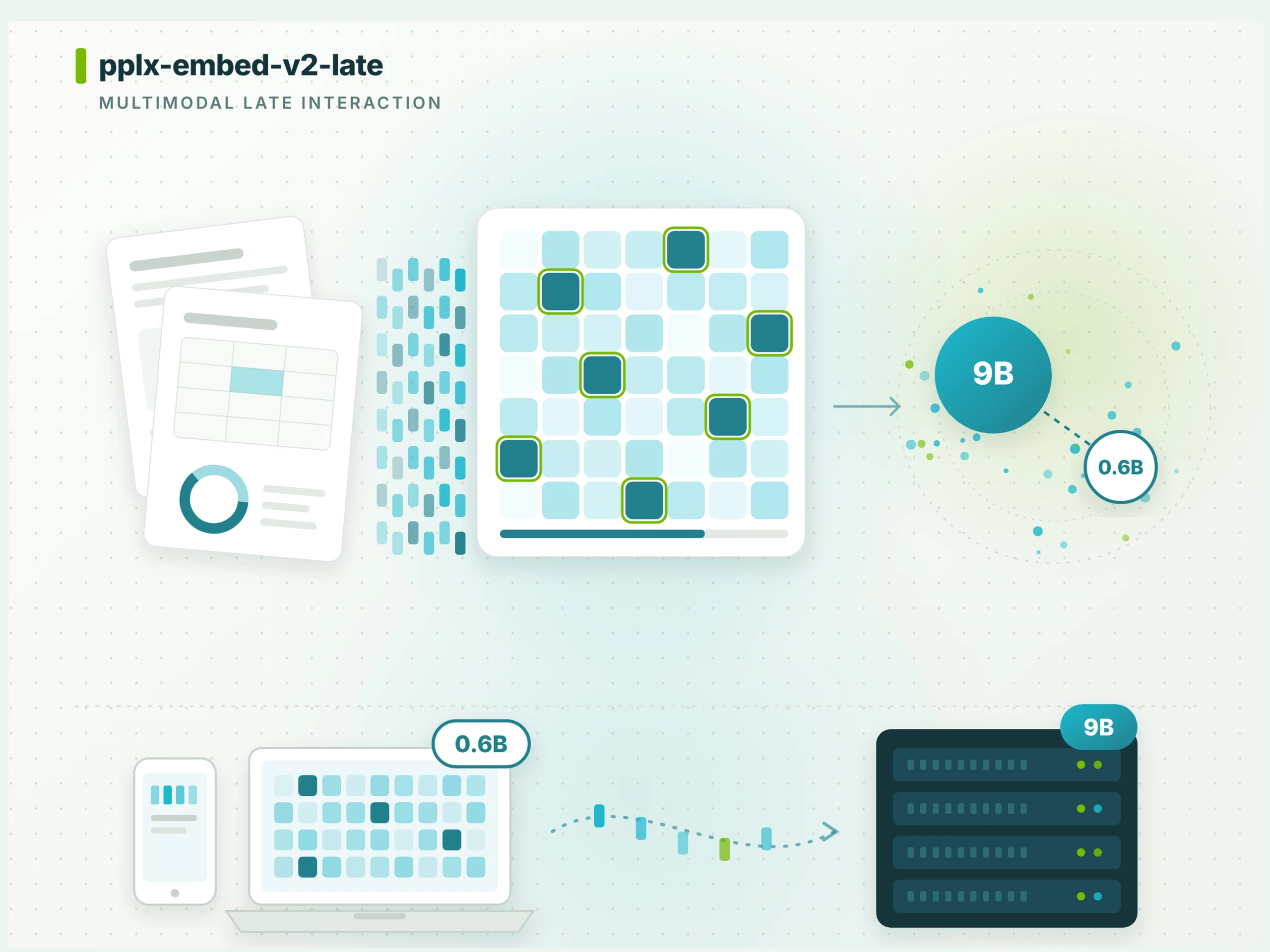
    Released by Perplexity in October 2026, pplx-embed-v2-late is a multimodal model that unifies ColBERT-style late interaction across text, images, and rendered PDF pages within a single embedding space. The 9B model scored 92.4% on the agentic PDF QA benchmark MADQA, while the 0.6B model set the floor at 61.2% on ViDoRe v3 Markdown. Because both models share the same embedding space via LEAF distillation from an 18B teacher, mixed deployment is possible—stacking a 0.6B query encoder on top of a 9B index.

    Table of Contents

    One-Line Summary

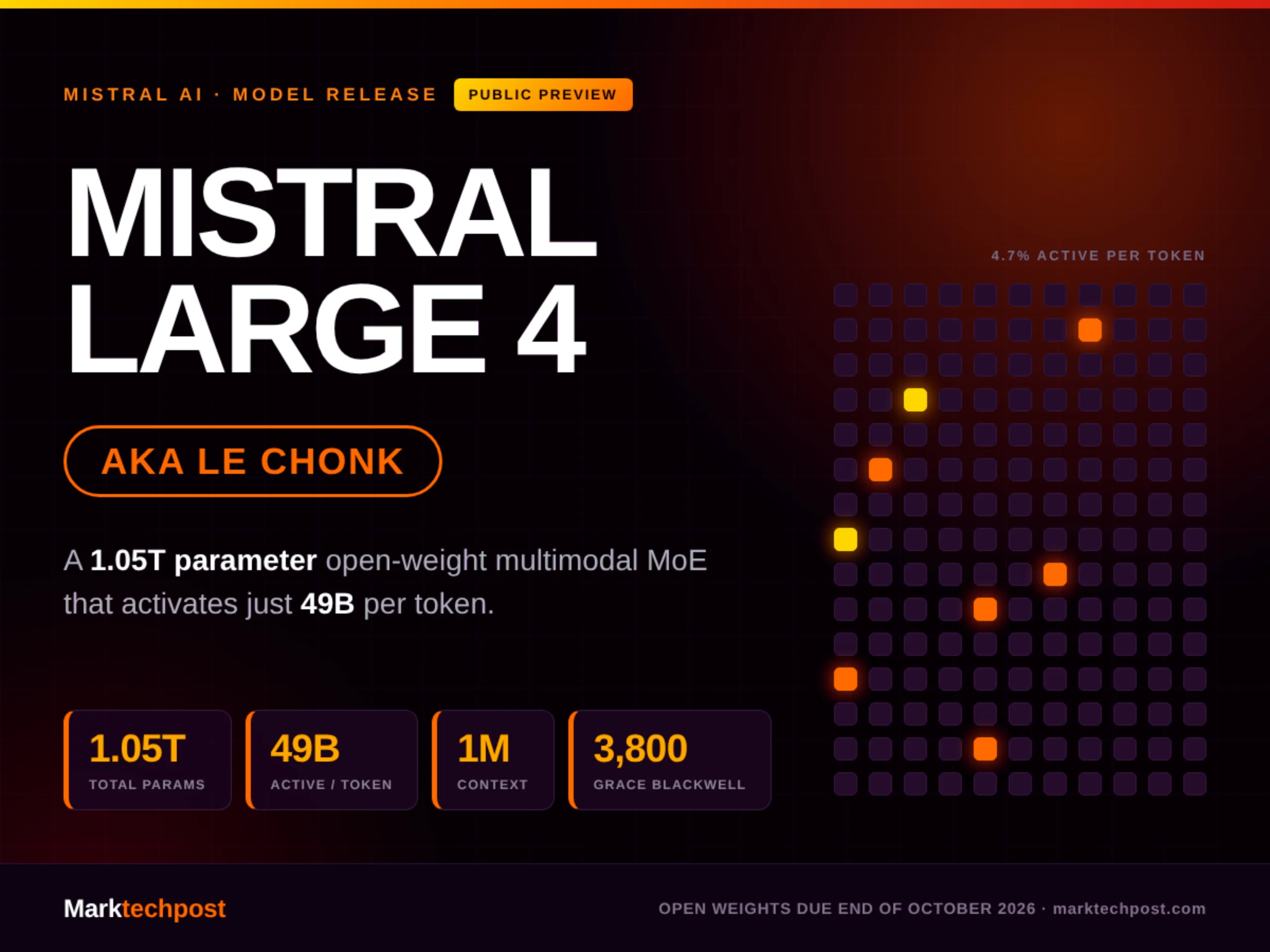
    pplx-embed-v2-late restores the token-level matching that dense embeddings miss using MaxSim, while keeping per-token vector dimensions at 128 to control storage cost. It can be self-hosted on Hugging Face under an MIT license, but no hosted API is available yet, so the adoption decision hinges directly on the operations team’s capabilities.

    Why ColBERT Late Interaction Is Making a Comeback

    Dense embedding models compress an entire document into a single 2,048–4,096-dimension vector. This approach is optimized for first-stage retrieval, where a single cosine similarity sweep narrows down candidates, but precision drops sharply for queries that demand fine-grained alignment between two document passages—questions like “How does exemption clause A modify clause B?” The ColBERT family of late-interaction models solves this with MaxSim: every query token is scored independently against every document token, and the per-token maximum values are summed.

    pplx-embed-v2-late takes the same philosophy and makes two bold reductions. First, it cuts per-token vector dimensions to 128—16 to 32 times smaller than competitors using 2,048–4,096 dimensions. Second, it routes text, images, and PDF pages through the same encoder, collapsing multimodal retrieval into a single pipeline. Because PDFs are encoded as images without an OCR step, scanned documents and slides are absorbed into the same index.

    From my hands-on experience wiring RAG pipelines in production, a two-stage structure—dense model for first-stage candidate filtering, then a ColBERT-style reranker for precision—is becoming the de facto standard. In this trend, 128-dimension late interaction reads as a choice that targets “precision from the first stage.”

    Role Division Between the Two Models: 0.6B for Queries, 9B for the Index

    Perplexity released the 0.6B and 9B simultaneously, but the recommended deployment pattern is asymmetric. Build document indexes with the 9B to lock in retrieval quality, and handle real-time queries with the 0.6B to reduce latency and cost. Because both models share the same embedding space, this mixed deployment is mathematically valid.

    Hardware guidance separates as well. The 0.6B model runs comfortably on a single RTX 3090/4090 at roughly 1.2GB in bf16, while the 9B occupies about 18GB and needs an A100 40GB or H100-class GPU. The 0.6B model activates roughly 340M parameters on image input—meaning it delivers performance comparable to some 8B dense multimodal models on a single GPU.

    The most common mistake in the field is treating the two models as “just different-sized options” and applying the same model to the same workload. Index quality matters only at build time, but the query model is invoked on every request, so the cost–quality curve is asymmetric—a fact that must be clearly separated at the design stage.

    Benchmark Dissection: Between 92.4% and 61.2%

    pplx-embed-v2-late’s published scores show large variance by domain. The most striking is MADQA at 92.4%, where the 9B model set the top score on PDF-based agentic QA. By contrast, the same model falls short of the top tier in domain-specific text retrieval, and the 0.6B model set the floor at 61.2% on ViDoRe v3 Markdown.

    Benchmark 0.6B 9B Notes
    MADQA (Agentic PDF QA) 89.1% 92.4% 9B top score
    ViDoRe v3 Image Retrieval 62.3% 63.5% 9B+0.6B mixed 63.5%
    ViDoRe v3 Markdown (nDCG@10) 61.2% 64.0% 0.6B floor
    BrowseComp+ (Text Retrieval) 73.0% 76.5% 9B ahead

    As the table shows, the gap between the two models is narrow on images and PDFs, while the 9B holds a clear advantage in text domains and Markdown-structured documents. Compared with EVIE, Mixedbread, and Gemini Embedding 2, pplx-embed-v2-late sits in the leading group for multimodal tasks, but it does not fully replace dedicated text embedding models in pure text retrieval.

    Practical Effects of Mixed-Size Indexing

    On ViDoRe v3 Image Retrieval, the 9B index + 0.6B query combination reached 63.5%—1.2 points higher than 0.6B+0.6B (62.3%) and equal to 9B+9B (63.5%). Perplexity claims that in text domains, roughly half of the 9B quality gap can be recovered at 0.6B query cost.

    Two production scenarios make this pattern especially effective. First, corpora where PDFs and slides dominate, such as medical or legal domains. Second, SaaS that must process user queries on edge devices or on-premises. The index is built only once, so it makes natural sense to lock in a heavy model there while keeping the user request path lightweight.

    However, due to the inherent nature of late interaction—storing one vector per token—index size grows linearly with document length. Without compression via a token indexer like PLAID or ColBERTv2, disk usage on a 100,000-page corpus can balloon to dozens of times that of dense embeddings. When using vector databases like Qdrant or Milvus, you also need a schema design that manages token IDs as separate keys.

    Constraints to Know Before Deployment

    Several constraints need to be checked before putting pplx-embed-v2-late into real infrastructure.

    • Checkpoint format: Distributed in F32, doubling download size compared to bf16. The 9B model is about 36GB and the 0.6B is about 2.4GB, so a cache strategy should be designed upfront when building container images.
    • Single-input constraint: Text and images cannot be mixed in a single encoding call. PDF pages are processed only through the image path, and pairing them with per-page text extraction requires a separate post-processing pipeline.
    • Library versions: Requires sentence-transformers 6.0.0 or higher and transformers 5.4.0 or higher. It is not compatible with existing 5.x codebases, so the scope of dependency updates should be reviewed first.
    • Self-reported benchmarks: All scores are Perplexity’s own measurements, and a technical report has not yet been published. Before adoption, it is safer to run A/B regression tests on your internal corpus to verify real-world performance.
    • No hosted API: There is no hosted endpoint, so all operational burden falls on your own team.

    We previously covered the trend of revisiting tool integration design across agentic workflows in Three Critiques of MCP — When Agent Tool Integration Must Be Redesigned, and the embedding stage has now reached the same point: tool contracts need to be redrawn.

    Try This Right Now

    • pip install "sentence-transformers>=6.0.0" "transformers>=5.4.0" to bump dependencies, then load the 0.6B model with model = SentenceTransformer("perplexity-ai/pplx-embed-v2-late-0.6B") and measure peak GPU memory and first-token latency.
    • Build a 9B index and a 0.6B index separately from 100 internal PDFs, then compare nDCG@10 on the same query set. Verify whether the benchmarks from the pplx-embed-v2-late release announcement reproduce on your internal corpus.
    • Compress the 9B index with a PLAID or ColBERTv2 token indexer and measure both disk occupancy and retrieval latency together. Cap token length with something like indexer.encode_for_index(docs, max_document_length=512) to prevent index blow-up.
    • Stack the 0.6B model on the query path and run load tests to confirm whether p95 response latency meets your SLA. Account for the fact that active parameters grow to 340M on image input when sizing concurrent requests.
    • Confirm the MIT license notice on the Hugging Face model card and share the commercial use scope with your legal team. Document the absence of a hosted API in your operations wiki so subsequent teams don’t keep asking the same question.

    Frequently Asked Questions

    Do I need to scrap my existing dense embedding index?

    Not necessarily. A two-stage structure—filtering first-stage candidates with a dense model and reranking with pplx-embed-v2-late—is a realistic migration path. Before rebuilding the entire index, measure the cost-vs-accuracy gains at the reranking stage to build a decision basis; this makes internal buy-in much smoother.

    Is the 0.6B model enough for multimodal retrieval?

    For image and PDF retrieval, the gap with the 9B is narrow, around 1–2 points. But in text domains and Markdown documents, the 9B holds a clear advantage, so model choice depends on corpus composition. For medical-PDF-heavy corpora, the 0.6B works; for mixed legal contracts and technical documents, the 9B index is the safer bet.

    How do I estimate the cost of per-token vector storage?

    The formula is (average token count × 128 × 4 bytes) × document count. 100,000 documents of 100 tokens each is about 5GB; bumping to 512 tokens brings it to about 25GB. Applying PLAID compression reduces this 5–10×, but compression library compatibility and the search-quality tradeoff need to be validated upfront.

    Reference Source

    This article was written with reference to the following original: MarkTechPost — Perplexity AI Releases pplx-embed-v2-late: A 0.6B Edge Model and a 9B Model Scoring 92.4% on MADQA

  • Why JYP’s KRW 75.5B (~$55M) Headquarters Project Fell Apart: The Full Story Behind the Cancellation and Urban Planning Risks

    Why JYP’s KRW 75.5B (~$55M) Headquarters Project Fell Apart: The Full Story Behind the Cancellation and Urban Planning Risks

    Key Summary

    • JYP Entertainment purchased a site in Godeok-dong, Gangdong-gu, Seoul for approximately 75.5 billion KRW and pursued a new headquarters with a total floor area of 69,259㎡, consisting of 5 underground and 17 above-ground floors, before fully scrapping the project. The company had already cleared building permits, traffic impact assessments, and joint architectural and landscape committee reviews, yet abandoned the project just before its scheduled groundbreaking in the second half of this year. This case is analyzed as an example of a project involving significant administrative procedures and design costs that ultimately failed.
    • The core of the conflict lies in the rezoning of a 13,261㎡ parcel of land in front of the headquarters site. When SH Corporation changed the designation of this land from park use to a self-supporting commercial zone (commercial site) and issued a sale announcement, it created structural problems in the views, circulation, and outdoor space planning of the JYP headquarters design. After learning of the rezoning in April, JYP held multiple discussions with SH and the Gangdong-gu Office, but on August 31 received an official response from SH stating that “there were no issues with the rezoning procedure, and restoration of the park was not possible,” leading the company to abandon the project.
    • As the conflict spilled into the public domain, Professor Yoo Hyun-joon (Sherlock Hyun-joon), the architect in charge of the headquarters design, publicly criticized SH and the Seoul Metropolitan Government through his YouTube channel. The architect’s public criticism expanded what was a simple land dispute into a debate in the cultural and public-interest domains.

    Even large-scale development projects that have cleared the permitting stage can see their entire premise collapse due to a single external factor such as the administrative rezoning of adjacent land. This demonstrates the need for a due diligence process that examines in advance whether adjacent land is owned by public institutions and whether changes to urban planning facilities are possible at the site selection stage.

    Table of Contents

    JYP Entertainment’s plan to build a new headquarters on a Godeok-dong site purchased for 75.5 billion KRW—having passed building permits, traffic impact assessments, and joint architectural and landscape committee reviews—collapsed entirely due to the rezoning of a single adjacent parcel. Just before the scheduled groundbreaking in the second half of this year, the company fully scrapped the project, abandoning the 69,259㎡ (total floor area) headquarters plan. Beyond being a simple entertainment real estate story, this case starkly reveals the structural shock that post-hoc changes to urban planning decisions can inflict on private development. The JYP headquarters project cancellation is likely to become a textbook case of Korean development risk.

    1. Project Timeline: From Purchase to Cancellation

    JYP Entertainment purchased the site in Godeok-dong, Gangdong-gu, Seoul for approximately 75.5 billion KRW and designed a new headquarters with 5 underground and 17 above-ground floors and a total floor area of 69,259㎡. The project had cleared building permits, traffic impact assessments, and joint architectural and landscape committee reviews, and was preparing for a groundbreaking in the second half of this year. Given the extensive administrative procedures already underway, industry estimates suggest that design and permitting costs alone reached tens of billions of KRW.

    In commercial real estate development and urban planning, this is often a critical risk factor that projects overlook. There is a common assumption in the field that “once the permit is issued, you can rest easy,” but this case clearly demonstrates that a permit is merely a starting point, not a guarantee of completion. Passing administrative procedures and project stability are entirely separate issues.

    2. The Decisive Turning Point: SH’s Self-Supporting Commercial Zone Conversion

    The starting point of the conflict is a 13,261㎡ parcel of land in front of the headquarters site. When SH Corporation (Seoul Housing & Communities Corporation) rezoned this land from park use to a self-supporting commercial zone (commercial site) and issued a sale announcement, the views, circulation, and outdoor space planning of the JYP headquarters design were all shaken. A self-supporting commercial zone refers to commercial land for living infrastructure within public housing site development. If high-rise commercial facilities are built nearby, the external environment and asset value of the JYP site would change simultaneously.

    After learning of the rezoning in April, JYP held multiple discussions with SH and the Gangdong-gu Office, but on August 31 received an official response from SH stating that “there were no issues with the rezoning procedure, and restoration of the park was not possible.” Unable to maintain the project’s premise any longer, JYP abandoned the project. Five months of discussions were concluded with a single day’s response.

    3. The Urban Planning System: What Operated Within It

    Land use zones are broadly classified into urban planning facilities (parks, roads, etc.), residential zones, commercial zones, and self-supporting commercial zones. Urban planning facility decisions (changes) can be proposed by the landowner or the city/provincial governor and are determined through review by the Local Urban Planning Committee. SH appears to have pursued the conversion to a self-supporting commercial zone in accordance with the policy rationale of recouping public development gains. The intent is to secure living infrastructure near the housing site from an urban management perspective.

    The problem is the ripple effect of this decision on already ongoing adjacent projects. Because changes to urban planning facilities proceed as a separate procedure under administrative law, it is virtually impossible for adjacent landowners to exercise a prior right of refusal. Even if complaints are filed, the degree of reflection is determined during the Urban Planning Committee’s review, so what JYP could demand was limited to verbal consultations.

    4. Why the Headquarters Design Could Not Be Revised

    JYP enlisted architect Professor Yoo Hyun-joon (Sherlock Hyun-joon) for the headquarters design, which placed significant emphasis on views and the use of outdoor space. Because the circulation and exterior landscaping were designed on the premise that a park would be located in front of the site, changing the adjacent land to commercial use would break the circulation and block the views. While the option of redesigning from scratch was considered, considering the costs and schedule already invested, the conclusion was that abandoning the project itself was more rational than starting a new design.

    In practice, the design phase of a large-scale project typically takes 6 to 12 months after site purchase. Given that JYP had cleared all permits, the design is estimated to have been quite advanced. However, when the underlying premise collapses, even the best-designed plans become meaningless.

    5. The Architect’s Public Criticism: Public Opinion Moved, but the Project Did Not

    Professor Yoo Hyun-joon, who had been involved since the design phase, publicly criticized SH and the Seoul Metropolitan Government through his YouTube channel, and the conflict spilled into the public domain. As public attention gathered, a simple land dispute expanded into a debate in the cultural and public-interest domains. However, the architect’s public criticism was effective in shaping public opinion but did not overturn SH’s official response. This moment clearly reveals that in disputes with public institutions, public opinion is merely a negotiation card, not a decision card.

    6. JYP’s Alternative: Purchasing a Nearby Building in Seongnae-dong

    Instead of building a new headquarters, JYP is reviewing options to strengthen its work environment by purchasing a nearby building in Seongnae-dong, close to its existing headquarters. Additional verification is needed on seller price negotiations, tenant eviction issues, remodeling feasibility (building register, structural safety diagnosis), and commercial zone suitability. While initial investment costs are reduced compared to new construction, limitations in location, scale, and image follow.

    Category New HQ (Godeok-dong, Cancelled) Building Purchase (Seongnae-dong, Under Review)
    Investment Scale 75.5B KRW purchase + tens of billions in construction Determined by purchase price negotiations
    Schedule Control 1–2 years to permits and groundbreaking Immediate move-in possible after purchase
    Image & Scale Custom-built HQ, large floor area Limited by existing building constraints
    Risk Vulnerable to administrative changes on adjacent land Separate review of tenants, structure, and use suitability
    Policy Dependence Subject to urban planning decisions Relatively low

    7. Practical Implications: A Due Diligence Checklist for Site Selection

    The following items must be reviewed during the site selection phase of large-scale development projects.

    (1) Current land use designations within a 200–500m radius — Obtain a land use planning confirmation certificate directly from the Urban Planning Information Service (UPIS). (2) Future development plans for publicly-owned land — Check the long-term development roadmaps of adjacent sites held by public corporations such as SH and LH in advance. (3) Possibility of urban planning facility changes — Compare the land register with Urban Planning Committee resolution records to check whether there is a history of decisions (changes) to urban planning facilities such as parks and roads. (4) Include potential change scenarios for adjacent land in the review items during preliminary environmental and traffic impact assessments.

    The most common mistake in practice is looking only at the “current state” and overlooking the “possibility of change.” Urban planning is not permanent once decided. It is safer to run alternative scenarios from the design phase onward, based on the premise that the use of adjacent land may change.

    What to Watch Next

    • Whether SH’s self-supporting commercial zone sale announcement proceeds as scheduled, and who the successful bidder is
    • The timing of an official announcement regarding the candidate site, price, and schedule for JYP’s building purchase in Seongnae-dong
    • The possibility of further official statements from Professor Yoo Hyun-joon and whether the scope of the conflict will expand
    • Whether related administrative appeals or administrative lawsuits will be filed, and debates over the legitimacy of urban planning decisions

    Frequently Asked Questions

    What was the core cause of JYP’s headquarters project cancellation?

    The decisive cause was that the 13,261㎡ parcel of land in front of the headquarters site was rezoned from park to commercial use through SH Corporation’s self-supporting commercial zone conversion. JYP abandoned the project after receiving SH’s official response on August 31 that “restoration was not possible.”

    Did architect Yoo Hyun-joon’s public criticism affect the project’s decision?

    While effective in shaping public opinion, it failed to overturn SH’s administrative decision. This case confirms that in disputes with public institutions, public opinion is merely a negotiation card, not a decision card.

    How can adjacent land risks be reviewed in advance for large-scale development projects?

    The minimum procedure accepted in practice is to obtain a land use planning confirmation certificate from the Urban Planning Information Service (UPIS) to check land use designations within a 500m radius, pre-check the development roadmaps of adjacent public land, and review the history of urban planning facility changes.

    Source: Kyunghyang Shinmun — Following conflict with SH including ‘Yoo Hyun-joon’s public criticism’… JYP’s Godeok-dong ‘75.5B KRW new headquarters’ ultimately cancelled

    Reference Original

    This article was prepared after reviewing the following original source: Kyunghyang Shinmun (경향신문)

  • After “Software Is Over” — 3 Key Issues Raised by AI Clones of 7 Adobe Apps

    After “Software Is Over” — 3 Key Issues Raised by AI Clones of 7 Adobe Apps

    Key Takeaways

    • Background and actors: Software developer Brandon Thomas, with roughly 10 years of experience in large-scale Rust projects, claims to have built clones of 7 Adobe Creative Cloud apps using only Anthropic’s Claude Opus 5.5.
    • Release lineup: 7 apps corresponding to Photoshop, Illustrator, Premiere, Lightroom, After Effects, InDesign, and Acrobat Pro were released under MIT/Apache licensing, alongside WebAssembly-based browser versions.
    • Technical approach: Rather than copying Adobe’s source code directly, the project adopted clean-room reverse engineering to replicate functionality and UI. Reddit and HackerNews responses repeatedly note that the current state remains at a “super early alpha” level.

    As AI coding models have improved dramatically, the economics of clean-room reverse engineering have shifted dramatically as well—enabling a single-developer team to release functional equivalents of major commercial software within months. This new competitive landscape is once again highlighting the legal gray zone between permissible feature replication and the protection afforded by rights such as trade dress.

    Table of Contents

    A declaration to replace the entire Adobe Creative Cloud landed simultaneously on Reddit and HackerNews. Brandon Thomas, a Rust developer with roughly 10 years of experience, released 7 apps through his project Artcraft—corresponding to Photoshop, Illustrator, Premiere, Lightroom, After Effects, InDesign, and Acrobat Pro—under a dual MIT/Apache license. The tagline he chose is unequivocal. “Software is over.”

    The seven apps are no simple visual imitation. They are full-stack applications written in Rust and compiled to WebAssembly, with versions that run directly in the browser. The key differentiator is that the project’s own visual AI model is embedded as a first-class option. As the AI clone absorbs generative workflows, the move reads as an attempt to expand beyond a “free alternative” into the territory of an “AI-native editor.”

    Seven Apps at Once with Just Claude Opus 5.5?

    Thomas stated that he has been coding exclusively with AI tools since February 2026, and that for these 7 apps he used Anthropic’s Claude Opus 5.5 as his sole coding assistant. I also use Claude-family models for pair programming in my own work, but I’m skeptical of the phrase “sole coder.” In stages like writing design specifications, configuring asset pipelines, and designing test scenarios, human judgment ultimately remains decisive.

    In fact, Thomas himself stepped back and revised his timeline. He initially said on Reddit that he would reach “100% parity within one month,” then adjusted on HackerNews to “99% parity on a months-long scale.” The same person lowered his targets within two days. Even with Claude Opus 5.5 writing the code, building Photoshop’s RAW demosaicing or Premiere’s timeline rendering engine from scratch won’t be finished in a month. The realistic model is a “junior–senior pair,” in which the coding model lays the skeleton while a human iteratively fine-tunes and runs regression tests.

    Where the Term “Clean Room” Falls Short

    Thomas emphasizes that he did not directly copy Adobe’s source or binaries. It’s traditional clean-room reverse engineering that reconstructs functionality and UI from specifications. Since ideas and features themselves are not protected by copyright law, this approach is considered legal. However, the most commonly overlooked trap in practice lies elsewhere. If you replicate the tool palette, panel layout, and keyboard-shortcut structure down to the pixel, you cross the threshold into trade dress infringement litigation.

    Trade dress is the concept of “trademark-like appearance,” protected not only under the U.S. Lanham Act but also under Korea’s Unfair Competition Prevention Act. Apple’s iPhone design or the packaging look of luxury brands are textbook examples. If the dark theme, left-side toolbar, and right-side layer panel of the Adobe workspace are reproduced as-is, a lawsuit can be opened on the basis of visual similarity alone—even if the functionality differs. The Artcraft team must intentionally rebuild the UI using a design system that differs from Adobe’s. Not just “not too similar,” but “substantially different.”

    Token Billing Backs the Free Apps

    The 7 apps themselves are free. Revenue comes from charging on a per-token basis for the Artcraft visual AI model and IDE usage fees. Users work in the free apps but pay only for AI generation, upscaling, and inpainting calls. The open source itself isn’t turning a profit—instead, the combination of “open source + AI usage-based billing” generates revenue. Thomas added that a separate “popular software team for filmmakers” is also generating revenue.

    However, for the token billing model to be adopted in B2B creative workflows, the value proposition must be articulated not as a simple comparison with Adobe’s subscription fee, but as a clear “cost per AI call vs. flat monthly rate.” The dual structure of free tools plus paid AI is a model that Figma and Notion have tried, but both built organization-level lock-in to monetize. Whether a single-developer project can build the same lock-in is a separate question. Operations like separating build pipelines into multi-repos/monorepos and configuring a change-detection matrix in GitHub Actions that picks out only the changed packages must be in place to stably operate token pricing and daily call limits.

    The expansion of AI tools’ scope is part of a trend spreading across industries, as seen in cases like the launch of OpenAI’s math advisory group. With the economics of clean-room reproduction having improved, the next target is likely to shift to CAD, office, and ERP domains.

    Why This Isn’t the “End” Yet

    Thomas claims to have “completed the entirety of Photoshop in one shot,” but community reactions repeatedly diagnose it as “super early alpha.” One-shot generation is for demonstration purposes; a production-ready build requires steady QA and regression testing. Maintaining 7 apps simultaneously has clear limits under a single-developer model. An automation pipeline such as automatically blocking license-violating code patterns with Semgrep and daily-scanning dependency CVEs with Trivy must be in place for multi-app maintenance to be feasible. The very fact that the territory where AI writes code and the territory where humans must decide are separating is the most honest conclusion of this project.

    Summary of Key Issues

    • Economics of AI clones: The cost of clean-room reproduction has plummeted thanks to coding models, but functional equivalence and long-term maintainability are separate problems.
    • Trade dress risk: Even if the functionality is legal, looking too similar invites lawsuits. UI differentiation work is a legal safety net.
    • Open-source revenue model: The free-app-plus-token-billing structure differs from that of Figma and Notion, and its sustainability hasn’t been proven without B2B lock-in.
    • Generative AI embedding: Integrating a proprietary AI model—not a simple clone—has emerged as a differentiator, but carries the burden that model quality is directly service quality.

    Frequently Asked Questions

    Can I integrate the source code of an AI clone project like Artcraft into my company’s product?

    Since the project is under MIT/Apache licensing, bringing it into your own codebase is itself permissible. However, if you replicate Adobe’s trade dress as-is and deploy the UI clone as a commercial service, you create a separate litigation risk. OSS usage and design differentiation should be evaluated independently.

    Is it realistic for one person to maintain 7 apps simultaneously using AI?

    Initial scaffolding is possible, but dependency updates, responding to platform changes, and incorporating user feedback must ultimately be distributed by humans. The practical pattern is to broaden the automation scope by combining a multi-repo/monorepo strategy with a GitHub Actions-based change-detection matrix and dependency scanners like Snyk.

    What structure is needed to introduce a token-billing model to similar open-source projects?

    A common approach is to embed a Stripe-based usage metering module inside the app. If the OSS build allows only local inference and you separate only cloud AI calls as usage-based billing, you can clearly differentiate features between free and paying users. Fallback policies for model API outages should also be designed in tandem.

    Source Reference

    This article was written after reviewing the following original source: Ars Technica — “Software is over”: Bold AI developer takes aim at Adobe with open source clones

  • The Day a 20-Year Senior Developer Stopped Writing a Single Line of Code — Change Your Title or Shift Your Center of Gravity

    The Day a 20-Year Senior Developer Stopped Writing a Single Line of Code — Change Your Title or Shift Your Center of Gravity

    Key Takeaways

    • Structural cause: For 20 years, the equation “lines of code written equals impact” held firm—but AI coding agents have absorbed boilerplate, implementation, and test generation, pushing us to a tipping point where code volume and value decouple. The more senior you are, the faster you reach a state of “nothing left to hand-code,” yet your identity, reputation, and compensation remain tied to the old equation—amplifying the sense of being adrift.
    • Practical decision criteria: “AI-replacement resistance” depends on the nature of your skills, not your title. Areas where context and judgment are central—system design, architectural decisions, domain interpretation, risk assessment—are augmented rather than replaced by AI, so their value compounds. Pure implementation, syntax, and CRUD-style work, by contrast, is rapidly absorbed. This makes “stay in DEV or move to PO/SM” a second-order question; the first-order question is “where will you place the center of gravity of your skills?” Specifically: (1) classify the parts of your work that AI already handles substantially; (2) measure the share of your remaining time spent on domain, people, and risk; (3) scenario-plan whether that share will grow over the next several years. This three-step process appears to be the most field-validated way to decide.
    • Anti-patterns to avoid: (1) Fleeing to a title “AI can’t do”—PO and SM roles are also being penetrated by AI tools for backlog grooming, retrospective analysis, and sprint planning, so the assumption that “managers are safe” will likely wobble within five years. (2) The wait-and-see belief that “delaying the decision will reveal the market”—AI tools roll out so fast that delay erodes your negotiating power quickly. (3) The collapsing self-belief that “if I don’t write code, I have no impact”—even when you write less code, if you don’t produce decision artifacts such as ADRs, architecture documents, technical strategy memos, and risk reviews, your organizational value evaporates fast.

    In the AI era, career safety for senior developers doesn’t come from occupying a title AI can’t take—it comes from shifting the center of gravity toward the judgment and context that direct and guarantee the quality of AI-generated output.

    Table of Contents

    Every morning, the hand that used to fire up the IDE and open pull requests came to a stop. Twenty years of hand-coding muscle memory are still there, but the actual time spent typing code barely crosses thirty minutes a day. The next line Cursor suggests, the function signature Copilot fills in, the migration patch Claude Code drafts—everything beyond that is just the question, “Why did we build it this way?” A quiet realization surfaces: the person who answers that question is the real job of a senior developer.

    And yet the company still measures impact by lines written. Colleagues still gauge trust by the number of PR review comments, and the hiring market still chases the title “Architect.” The work you’re best at has changed—but there’s no language left to show it.

    This confusion, shared by a veteran engineer in a career forum, isn’t an isolated case. As AI coding agents absorb boilerplate at speed, the more experience you have, the faster you reach a state of “nothing left to hand-code.” Ironically, they’re the ones making the biggest decisions without writing a line.

    From observing the engineering culture of dozens of teams in the field, this author believes the heart of the confusion isn’t about titles. “Stay in DEV or move to PO/SM” is a surface-level choice; the real decision lurking behind it is “where will you place the center of gravity of your judgment?” A broader treatment of the same dilemma appears in 5 Steps to Redefine the AI Developer Role—here, the focus narrows to a decision framework for where a 20-year senior should shift that center of gravity.

    Why the Coordinates of Value Are Shaking

    For the past 20 years, the SWE market ran on the equation “code written = impact.” More commits, more PRs, a green GitHub graph—these were the evidence of value. Then AI coding agents swallowed the left side of that equation whole, almost overnight.

    To build the same feature, a human now types less than a tenth of the code. The problem is that the market sees the reduction only as “time saved.” If that saved time doesn’t translate into other forms of value, the total impact shrinks rather than stays flat.

    This is where the senior developer’s specific paradox explodes. The deeper your domain knowledge, the wider your view of the system, and the more failure patterns you’ve internalized, the bigger the impact you can make when AI handles the boilerplate. But that impact shows up as “decisions made,” not as code volume. One line in an ADR, one remark in a design review, one call during incident response—these traces don’t register in PR statistics. Seniors feel they’re doing more, yet can’t prove it.

    AI Leverage Matrix — Splitting Your Time into Three Zones

    The first action is to classify your work into three zones: AI-Replaced, AI-Augmented, and AI-Amplified. Use a standard competency framework like IEEE SWEBOK or SFIA as the backbone, and log your tasks over the past month at hourly granularity—patterns will emerge. The Replaced zone is typically boilerplate, simple CRUD, and repetitive test-code generation. The Augmented zone covers refactoring, migrations, and code-review assistance. The Amplified zone is where architecture decisions, trade-off judgment, incident root-cause reasoning, and domain-rule interpretation live.

    If the Replaced zone exceeds half of your working time, that’s a signal that shifting your center of gravity is urgent. Don’t simply adopt a PO/SM title—intentionally shrink the Replaced zone and redistribute the time to Augmented and Amplified work. The measurement tool doesn’t need to be elaborate. Tagging entries in a time tracker like Toggl, or labeling calendar blocks with “A/B/C,” is enough. Two months of records will make it sharply clear where your value compounds and where it evaporates.

    Title vs. Center of Gravity — What the Real Decision Is

    Treating the DEV/PO/SM choice as the first-order decision almost always fails. AI tools are rapidly absorbing PO tasks like automatic Jira ticket classification, retrospective sentiment analysis, and sprint forecasting, while SMs already see persona-based coaching suggestions and auto-generated session guides. Within five years, the assumption that “managers are safe” will wobble. The real first-order decision is: “Which kind of judgment will I spend more time on?”

    Concretely, the question compresses into three prompts. First, what share of my work involves interpreting domain context? Second, will that share grow over the next 18 months? Third, if so, what artifacts will I use to demonstrate that judgment? The title follows naturally once you answer these.

    If the domain share is large and growing, you’re effectively performing PO decision work under a DEV title. If the systems-and-risk share is growing, you’re on the path to tech lead or architect. This connects to the stages discussed in The 4-Step Survival Procedure for AI Developer Replacement.

    Artifacts of Judgment — A Portfolio Beyond Code

    Even if you write less code, leaving no trace of your judgment makes your organizational value evaporate fast. The core artifacts a senior developer should leave behind are ADR (Architecture Decision Record), the C4 model, Wardley Maps, and Event Storming outputs. ADRs in particular become far less burdensome once standardized with tools like GitHub’s adr-tools or Log4brains—a single markdown page per major decision capturing context, options considered, trade-offs, and outcome.

    The overall shape of the system is best conveyed through the C4 model. Managing container and component diagrams alongside code with Structurizr DSL compresses the answer to “what responsibilities does this service carry, and how does it communicate with whom?” into a single view. For technology-component positioning against business change, Wardley Maps are intuitive: visualize which components flow from “Custom Built” toward “Product,” and where next quarter’s leverage will concentrate. All three artifact types are hard for AI to generate directly—they’re the area where human judgment and context are best preserved.

    Domain depth is reinforced through Event Storming or Domain Storytelling workshops. Operating a Developer Portal or Internal Developer Platform on Backstage and defining the “standard interfaces that AI agents call” is another concrete move that converts a senior’s leverage from code volume to “platform-constraint design.” In a portfolio, these artifacts send a far stronger signal than credentials like PMP or PSPO.

    Why Fleeing to PO/SM Isn’t Safe

    The idea that “AI writes the code now, so I’ll become a manager” gets dangerous within five years. In some teams, AI already summarizes sprint retros, auto-prioritizes backlogs, and drafts user stories. Pure coordination work by SMs is the first target for automation. As explored in When 11 AI Agents Share a Single Account, tools themselves are stacking rapidly, pulling even the human approval and verification steps into the automation zone.

    The trap most often missed in practice is the wait-and-see belief that “delaying the decision will reveal the market.” AI tool adoption moves so fast that delay sharply erodes negotiating power. The realistic path is to keep roughly 70% of your current role while distributing 30% into adjacent areas: contribute to security, data, or platform projects, and experiment with the responsibility scope of a PO or tech lead on a single-cycle basis. Once you’ve accumulated experiences where “my decision changed the team’s direction” within six months, the title will follow on its own.

    What to Do Right Now

    • Tag a month of time-tracker entries with “A·B·C.” In Toggl or Clockify, set tags for “A (Replaced),” “B (Augmented),” and “C (Amplified)” and classify every task for four weeks. Spend 30 minutes each Friday aggregating whether the Replaced zone exceeds 50%.
    • Write your first ADR within 48 hours. Create docs/adr/0001-record-architecture-decisions.md in a GitHub repository and document the biggest decision you’ve made in the past month in the context-options-outcome format. adr-tools‘s adr new "Title" command auto-generates the template.
    • Draw one C4 diagram with Structurizr DSL. Install the tool with brew install structurizr-cli or docker run -it structurizr/cli and define the container view for the service you currently own. Export it to PNG with structurizr export and attach it to a PR.
    • Create one Wardley Map board. Using an online tool, place the components of a system you own on the “Genesis·Custom Built·Product·Commodity” axes. Draw arrows showing where each will flow over the next 18 months.
    • Sign up for one adjacent-role experiment. Add an experiment item to your quarterly goals—e.g., “Lead one sprint planning session” or “Author one technical-debt cleanup backlog”—and review the outcome 90 days later.

    Frequently Asked Questions

    Won’t writing ADRs pile too much extra work onto PR reviews?

    ADRs don’t need to be written per PR—3 to 5 per quarter is plenty. In fact, once decision context is documented, the next person spends less time asking “why was it built this way?” and reviews themselves speed up. adr-tools handles file-naming conventions and link automation for you.

    Does moving to a PO or SM title hurt salary negotiations?

    In the short term, an embedded engineer title can be advantageous, but within five years even PO/SM titles will split into “decision-maker” vs. “facilitator” based on center of gravity. Salary is determined by artifact scarcity and sphere of influence, not by title—so judgment made visible through ADRs and platform design is a stronger signal.

    What if the team is resistant to adopting AI tools?

    Writing an ADR that says “we choose not to adopt” is itself a starting point. Specifying the decision’s context—risk tolerance, performance measurement plan, rollback conditions—builds trust in the team. Establishing the practice of “leaving a record of this decision” must come before pushing any specific tool.

    Source Reference

    This article was written with reference to the following original post: r/cscareerquestions — The future of SWE. How to prepare?

  • 58 Polls, 270 Million Won — The New Standard for Political Funds Law Set by Yoon’s Appellate Acquittal

    58 Polls, 270 Million Won — The New Standard for Political Funds Law Set by Yoon’s Appellate Acquittal

    Key Summary

    • Criminal Division 7 of the Seoul High Court acquitted former President Yoon Suk-yeol of charges under the Political Funds Act, overturning the first-trial verdict of two years in prison and a forfeiture of 13.96 million won.
    • Co-defendant and political broker Myung Tae-kyun was also acquitted on appeal, reversing his first-trial sentence of one year and six months, meaning both defendants walked free at the appellate level.
    • The charges alleged that between June 2021 and March 2022, Yoon received 58 polls valued at approximately 270 million won free of charge from Myung, alongside Kim Keon-hee. The first trial recognized a ‘sequential and implicit meeting of the minds’ and found the defendants guilty.

    By characterizing the polls as ‘political advice’ rather than a ‘property benefit,’ the appellate court reaffirmed that the core of a donation under the Political Funds Act hinges not on the economic value of the item provided but on a quid pro quo agreement and the possibility of economic disposition between the parties.

    Table of Contents

    Criminal Division 7 of the Seoul High Court acquitted Yoon Suk-yeol of charges that, between June 2021 and March 2022, he received 58 polls valued at approximately 270 million won free of charge from Myung Tae-kyun alongside Kim Keon-hee, overturning the first-trial verdict of two years in prison and a forfeiture of 13.96 million won. The first-trial sentence of one year and six months for co-defendant and political broker Myung Tae-kyun was also reversed into an acquittal. The result—Yoon’s appellate acquittal—is not simply a case that determined one man’s fate; it is a precedent that redraws the boundary of how far the Political Funds Act can reach.

    First vs. Second Trial: Same Facts, Different Conclusions

    The first-trial court invoked an evidentiary technique known as ‘sequential and implicit meeting of the minds.’ Despite the absence of an explicit agreement document or evidence of payment, the court inferred that a de facto agreement had been formed through a cumulative series of actions. To support this reasoning, connecting links regarding ‘who provided what, and why’ were necessary—but the appellate court found insufficient evidence to confirm that inference.

    The point where courts can reach different conclusions from the same evidence is precisely the standard of proof for quid pro quo and intent. This is one of the most common legal misconceptions encountered when examining campaign finance case materials. When no direct flow of money is visible, it is easy to read the situation as ‘free of charge,’ but the court asks again, ‘Why was it free?’

    The appellate court bundled the polling results with other data and evaluated them as part of ‘public opinion analysis’ and ‘political advice.’ It also drew on the fact that personal circumstances—Myung’s ‘desire to have his existence recognized’—played a role in the provision process. The bottom line is that what was provided may be interpreted as a ‘political message’ rather than a ‘property benefit.’ The two courts’ assessments of the same facts vividly illustrate how much the outcome of Political Funds Act cases is determined at the stage of fact-finding. The first trial emphasized the 58 instances and the 270 million won valuation, while the appellate court repackaged the same evidence within a ‘political context.’

    The Structure of a ‘Donation’ Under the Political Funds Act — Property Benefit and Quid Pro Quo

    The Political Funds Act prohibits political fund donations by anyone, and whether a ‘donation’ exists turns on whether a property benefit was provided. Current statutes and Supreme Court precedent have not limited the concept of ‘donation’ to mere goods or cash but have extended it to encompass any benefit with economic value. However, academic doctrine and case law have consistently debated how far that scope should extend. The appellate court’s ruling came from a narrow reading of whether the provision of information in the form of polls could be assessed as ‘property’ with the potential for economic disposition, and whether that economic value could be converted in a market.

    Valuing polls in the marketplace is one of the most difficult areas in practice. Even for identical surveys, prices can vary several-fold depending on the timing of the request, the credibility of the polling organization, and the depth of the result interpretation. The 270 million won valuation presented by the prosecution at the first trial was an estimate that applied standard outsourcing rates as a benchmark table, and the appellate court directly countered that estimate with the alternative interpretation of ‘political advice.’ The same number served as the core of proof on one side and became an inflated market value on the other. MBC News reporting also repeatedly analyzed that this valuation method was at the heart of the dispute.

    Myung Tae-kyun’s ‘Criminal Compensation Claim’ and the Next Steps

    Immediately after the verdict, the Myung side stated, ‘We must file a criminal compensation claim,’ signaling the possibility of moving forward with compensation procedures under the Act on Criminal Compensation and Restoration of Honor. The criminal compensation system provides compensation for days of pre-trial detention, legal fees, and solatium upon a final acquittal. However, filing a compensation claim does not guarantee approval. Whether compensation is granted depends on the solatium calculation standards, the calculation of pre-trial detention days, and whether subsequent procedures such as a retrial are pursued.

    The most frequently overlooked point in practice is that an ‘acquittal’ is not a sufficient condition for a compensation claim. Under the Criminal Compensation Act, solatium is largely a compensation for the deprivation of physical liberty without illegality or fault. Periods during which the suspect was investigated as a suspect but was not subjected to coercive measures such as detention or arrest may fall outside the scope of compensation. Therefore, for Myung to receive substantial compensation, meticulous preparation of materials regarding the calculation of pre-trial detention days and the scope of solatium recognition must follow. Appellate legal analysts have also categorized the possibility of a criminal compensation claim as a separate issue.

    The Supreme Court Appeal and the Direction of the Evidentiary Standard

    Because the prosecution had adopted the first trial’s ‘sequential and implicit meeting of the minds’ theory, the appellate reversal was likely an unexpected result. The decision on whether to appeal is the biggest variable going forward. If the prosecution appeals, the Supreme Court will have to address three issues: ① whether the polls have recognized property value; ② whether the defendants’ personal circumstances (such as personal desires) alone can negate quid pro quo; and ③ the limits of the expansive interpretation of ‘donation’ under the Political Funds Act. These issues affect the overall effectiveness of the Political Funds Act beyond the parties in this case.

    In practice, the provision of free polls and consulting in Political Funds Act cases has emerged as a key dispute over proving quid pro quo and intent. The appellate ruling can be assessed as having raised the bar of proof by one more level. However, whether the Supreme Court will maintain this standard as is, or take a more active stance in recognizing the ‘economic value of information provision,’ is a separate matter.

    The internal decision-making structure of the prosecution is also a variable. Under the current system where investigation and prosecution are separated as one axis, how the decision to appeal is regularized following the appellate outcome is intertwined with prosecution reform and personnel issues. Whether to forgo an appeal is both a matter of prosecutorial face and a discretionary judgment, so it may not simply follow the logic of ‘we won at the first trial, so we will appeal.’

    What to Watch

    • The timing and grounds of the prosecution’s decision to appeal to the Supreme Court — whether the standard for interpreting ‘donation’ under the Political Funds Act will be revisited by the highest court
    • Whether Myung Tae-kyun proceeds with a criminal compensation claim and how pre-trial detention days are calculated — the scope of solatium recognition could become a benchmark for future acquittals in Political Funds Act cases
    • How the economic valuation of the 58 polls is cited in subsequent Political Funds Act cases — whether the first trial’s market-value standard will be reassessed
    • Procedural interaction with other criminal cases involving former President Yoon (such as insurrection charges) being tried separately — the bundling of appellate schedules and its impact on subsequent trial strategy

    Frequently Asked Questions

    Has Yoon Suk-yeol’s appellate acquittal been finalized?

    Not yet. The appellate ruling overturned the first trial, but a Supreme Court appeal remains, so the final outcome will depend on whether the prosecution appeals and on the Supreme Court’s decision. If the prosecution does not appeal, or if the appeal is dismissed, the acquittal will be finalized at that point.

    If the polls were received free of charge, why is it not considered a ‘property benefit’?

    The appellate court assessed the polling results as a means of ‘political advice.’ It noted that Myung’s personal circumstances (such as a desire for recognition of his existence) came into play, and that the polls were bundled with other survey results to serve more as a vehicle for message delivery, making it difficult to convert them into a tradable economic value. The first trial did not accept this same logic.

    Is a criminal compensation claim automatically approved?

    Even with an acquittal, a criminal compensation claim is not automatically granted. The number of pre-trial detention days, whether coercive measures such as detention or arrest were exercised, and the solatium calculation standards are all subject to review. Since solatium is assessed as compensation for the deprivation of personal status without illegality or fault, if the evidentiary preparation is not meticulous, the scope of compensation may be reduced.

    Source Reference

    This article was prepared after reviewing the following source: MBC News

  • Church Data Breach: Major Megachurch Network Hit by Cyberattack, Exposing Member Records and ERP Privileges

    Church Data Breach: Major Megachurch Network Hit by Cyberattack, Exposing Member Records and ERP Privileges

    Key Takeaways

    • Following the financial sector, two major South Korean churches have been exposed to cyberattacks, with approximately 1 million congregant personal records and offering details confirmed to have been leaked. The incident shows that religious institutions are emerging as the new primary targets of cyberattacks.
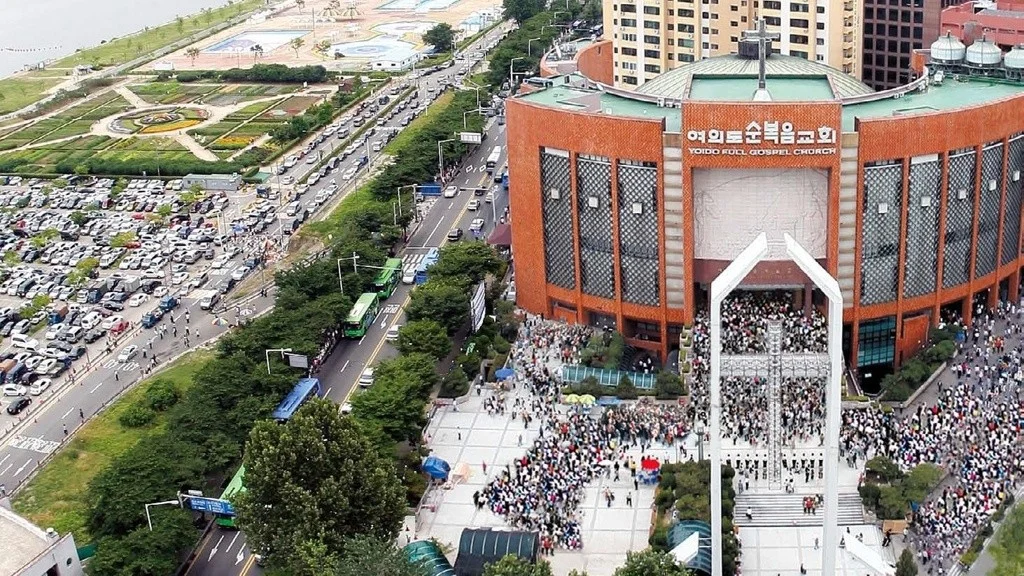
    • While tracking suspected hacking IPs, Oasis Security discovered a large overseas attacker server containing data believed to have been exfiltrated in August from the integrated information systems and groupware of Seoul’s Yeouido Full Gospel Church and Seocho-gu’s Sarang Church.
    • Analysis shows that Yeouido Full Gospel Church’s servers were breached via a web shell, through which attackers obtained ERP database administrator privileges, exfiltrating 47.3GB of data in total: 960,000 updated congregant records from the past two years, 330,000 offering-related entries, and 68,000 electronic approval documents.

    Religious and nonprofit organizations, which have traditionally not been primary targets of cyberattacks, have effectively become prime targets in their own right, holding data assets on par with financial and public institutions within their integrated ERP and groupware environments. The classic intrusion paths of web shells and pre-stolen credentials, combined with AI agent-driven automated attacks, are lowering the cost of this target expansion and driving up attack success rates.

    Table of Contents

    Before the shock of financial-sector breaches has even faded, church hacking is now in the crosshairs. In August, the integrated information systems of Seoul’s Yeouido Full Gospel Church and Seocho-gu’s Sarang Church were breached in quick succession. The Korea Internet & Security Agency (KISA) traced 47.3GB of data believed to have been exfiltrated from the two churches to an overseas attacker server, and the findings were publicized through a Boan News report. Personal information on close to 1 million congregants, along with offering and electronic approval documents, was siphoned out in a single sweep. This is no ordinary data breach. It is a signal that religious institutions have become primary targets of cyberattacks.

    Why Are Churches the Next Stage After the Financial Sector?

    Across enterprise incident response investigations, attackers systematically prioritize the path of least resistance. Religious institutions are operated primarily around worship and missions, so their security staffing and budgets are often shockingly thin compared with public and financial institutions. And yet inside they run ERP, groupware, electronic approval, offering management, and congregant DBs, all tightly integrated. On the surface they are nonprofit, but the density of their data assets is no different from that of financial institutions. As shown in recent AI-driven breach analyses targeting the financial sector, attackers are already shifting the stage toward “cost-effective targets.” Religious institutions were the next candidates on that list.

    Yeouido Full Gospel Church Intrusion Path: From Web Shell to ERP Admin Privileges

    Looking at the Yeouido Full Gospel Church case, the attacker got their first foothold through a web shell. A web shell is a small script uploaded to a vulnerable web application to enable remote command execution, typically containing functions such as eval, base64_decode, system, and passthru. In this incident, the web shell was used to infiltrate the server and then obtain administrator privileges on the Enterprise Resource Planning (ERP) database. As a result, 960,000 congregant records updated over the past two years, 330,000 offering records, and 68,000 electronic approval documents were all exfiltrated at once.

    Why did this happen? Most web shell intrusions are difficult to block with a single WAF rule. Attackers interleave file upload requests within normal traffic, and once a file is uploaded, they split their commands across multiple calls. The most commonly missed trap in the field is the change in file size of 200 OK responses logged in IIS and Apache access logs. If you miss patterns in which a normal image file suddenly drops to 0 bytes, or a new .php or .jsp file is created disguised as .jpg, initial response is delayed.

    Improvements must be made along two axes. First, use a static analysis tool such as Semgrep to check during the PR stage whether calls to eval, base64_decode, system, passthru, or assert are mixed into the web application’s storage paths. Second, enable File Integrity Monitoring (FIM) across the entire web root through a HIDS solution such as Wazuh or OSSEC, and route any create or modify events straight to Slack as alerts. The rule set I recommend is as follows.

    <syscheck>
      <directories check_all="yes" realtime="yes">/var/www/html</directories>
      <ignore>/var/www/html/wp-content/uploads/</ignore>
    </syscheck>

    With this configuration, the moment a .php file is uploaded, a log entry is written at the OS level and the EDR layer can take over for automatic blocking. Web shells are a threat you have to cut off at “just now” rather than “yesterday.”

    Sarang Church Intrusion Path: Pre-Stolen Credentials and the SSO Trap

    The situation at Sarang Church is different. Rather than an external web shell, account credentials already stolen from somewhere else were reused directly on the groupware server. After logging into the groupware, the attacker exploited the Single Sign-On (SSO) functionality to expand the reach into ERP. The names, addresses, and phone numbers of 286 staff members, including senior pastors, and 89,000 congregants were exposed.

    SSO dramatically improves user convenience, but once a user passes authentication, every system behind it is bound to the same level of trust. The mistake I frequently see in the field is configuring MFA only at the front of the unified login while skipping authentication on backend ERP APIs on the grounds that they are internal IPs. Attackers target exactly this single-line allow rule. The same trap surfaced repeatedly in the parameter tampering analysis where missing authorization was the decisive variable. The key is to enforce re-validation of the SSO token’s issuer, audience, and exp claims on the backend.

    Account-side controls must go hand in hand. Integrate dark web monitoring and Indicator of Compromise (IoC) feeds into your SIEM so that when a login is detected at an unusual time, from an unusual location, or with an unusual User-Agent, the session is forcibly terminated and a password reset plus MFA re-registration is required automatically. The following Splunk SPL rule can be run once a day to surface abnormal patterns.

    index=auth action=success user=*
    | stats values(src_ip) as ips values(user_agent) as ua by user
    | where mvcount(ips) > 3 OR mvcount(ua) > 2

    AI Agents Automated the Attack Documentation

    The most noteworthy change in this incident is the evidence of AI usage. The attack process documents obtained by Oasis Security include references to “sub-agents,” and hundreds of attack handoff reports that synthesize system architecture and account information have been found. These are traces of attackers personally leaving notes for each stage. It is estimated that a separate, lower-cost AI model, different from the one used in the financial-sector hacks, was deployed.

    This goes well beyond “using AI to write polished phishing copy.” It means an agent loop was operating in which the AI took in system structures, decomposed them into sub-tasks, fed back the execution results, and documented them. Because command execution, file discovery, permission checks, and data extraction were all automated, the manpower and time required per attack dropped dramatically. What would take a human several days can be compressed into a matter of hours by an AI agent.

    The response must move toward behavior-based detection. Use UEBA to catch patterns in which large numbers of commands are executed in a short window, or large files are compressed and sent outbound through unusual paths, and use DLP to block outbound exfiltration traffic. Collecting EVE logs with Suricata and deploying the rule below alongside it is highly effective.

    alert http $HOME_NET any -> $EXTERNAL_NET any (msg:"LARGE outbound zip upload"; flow:established,to_server; http.content_type; content:"application/zip"; byte_test:1,>,5242880; sid:2024101501; rev:1;)

    This single-line rule catches outbound zip transfers of 5MB or more, and when combined with normal office traffic patterns, it can surface abnormal exfiltration with very little noise.

    Second-Stage Damage Scenarios: Smishing and Phishing Armed with Leaked Data

    The first-stage breach is not the end. KISA’s Boho Nara service has warned of the possibility of second-stage attacks using the leaked congregant rosters and offering details as bait. According to the phishing advisory from Boho Nara, malicious URLs and search-result manipulation techniques using keywords such as “subsidy application,” “damage compensation payment,” and “leaked information check” have already been confirmed. Even if a real text message arrives, user education should include the fact that “KISA and financial institutions do not request installation of remote control apps via phone or text.”

    When malicious app infection is suspected, the manual should be prepared in advance to guide users through this sequence: switch to airplane mode → run an approved antivirus scan → reissue public certificates and security cards. For mobile payment damages, the sequence is: obtain a carrier micropayment confirmation certificate → visit a police cyber investigation unit to obtain a case fact-confirmation certificate. If there is no incident response manual, cases repeat in the field where victims approve two or three payments within 24 hours.

    What to Do Right Now

    • Enable File Integrity Monitoring from Wazuh or OSSEC across the entire web root, and automate Slack alerts whenever new .php, .jsp, or .aspx files are created.
    • Add Semgrep rules (p/php, p/java, p/python rules detecting eval, base64_decode, system, passthru, and assert) to the CI pipeline to block suspected web shell code at the PR stage.
    • Enforce issuer, audience, and exp validation on every SSO backend API call, and combine MFA re-authentication with the internal IP whitelist.
    • Integrate dark web monitoring and IoC feeds into the SIEM, and automate session termination plus password reset whenever a login is detected at an unusual time, from an unusual location, or with an unusual User-Agent.
    • Use Suricata and EDR rules to behaviorally detect outbound transfers of 5MB or more and bursts of many commands in a short window, and use DLP to immediately block outbound exfiltration traffic.

    A New Threat Built on Target Expansion and AI Automation

    This church hacking incident redrew the line for “where the primary target ends.” Every non-financial, non-public institution that bundles ERP, groupware, approval, and donation DBs is already inside the target zone. Add AI agents to that, and attackers can try more places at lower cost while also lifting their success rate. The security team’s job is clear: block web shells at the code level, treat account trust as a per-request verification rather than a permanent state, and re-audit ERP backend authorization. Those three things form the first control line you can start drawing today.

    Frequently Asked Questions

    Small and mid-sized religious organizations have limited security budgets. Can tools like Wazuh and Semgrep really be operated for free?

    Wazuh is an open-source HIDS that provides FIM and log aggregation features free of charge. The Semgrep community edition also includes core rules for detecting eval, base64_decode, and similar patterns. However, initial rule tuning and operational staffing are required, so a division-of-labor model in which detection rule operation is outsourced to an external MSSP while the in-house team handles only log collection and policy management delivers the best cost-to-effectiveness ratio.

    Legacy ERP systems are hard to modify at the API level. How far can SSO backend validation realistically be enforced?

    If you cannot directly modify the legacy ERP code, a realistic approach is to add a filter in front of the API Gateway that validates the JWT’s issuer, audience, and exp claims. Narrow the network boundary so that only traffic passing the authentication filter can reach the ERP, and leave backend call logs in the WAF for use as a post-incident audit trail. It is a key path for raising the control level without changing code.

    Can AI agent-style attacks be stopped by EDR alone?

    Not on its own. EDR catches process-level behavior, but data exfiltration rides inside normal HTTPS traffic. EDR plus UEBA plus DLP plus Network Detection and Response (NDR) must be operated together so that judgment is made through correlation rather than a single signal. Using EDR as the first line of blocking and DLP as the second is the most stable division of roles in practice.

    Source Reference

    This article was prepared with reference to the following original source: Boan News — “No Sanctuary from Cyberattacks”… Hacking Attacks Targeting the Religious Sector on High Alert

  • When 11 AI Agents Share One Account — An Instant Revocation System Built on 5-Step Identity Separation

    When 11 AI Agents Share One Account — An Instant Revocation System Built on 5-Step Identity Separation

    Key Takeaways

    • Structural cause: A structure where 11 agents share 2 service accounts creates a permission pooling phenomenon. When permissions granted to one agent are automatically propagated to other agents using the same account, the permission set of a single account converges over time to the union of permissions all agents need. The original case (an agent that needed only 30 days of data but accessed 3 years of customer records and was caught only when the query timed out) directly demonstrates this mechanism. Shared accounts also erase “which agent did it” from audit logs, so even when anomalies are detected, it becomes impossible to determine which identity to block. The fact that permission revocation is tied to redeployment cycles, slowing incident response, is another consequence of the same structure.
    • Practical resolution steps and decision criteria: Step 1: Issue one service principal or OAuth client per agent at the IdP level (Entra ID, Okta, Auth0, AWS IAM, etc.). A practitioner report in the original thread noting “set up in Entra in a single day” establishes the realistic adoption cost baseline for this step. Step 2: Define least-privilege scopes aligned with each agent’s task specification (repositories, data range, time range, target APIs) and default-deny resources used by other agents. Step 3: Replace static API keys with short-lived tokens (STS, Workload Identity Federation, Vault dynamic secrets) so credentials never appear in prompts or environment variables. Step 4: Build a system where identity revocation completes immediately with a single IdP API call, removing dependence on redeployment. Step 5: Enhance the logging pipeline so audit logs retain agent ID, user context, and resource scope. The decision criterion is: “When you revoke one identity, are other agents affected?” — if yes, permissions are still pooled.
    • Critical anti-patterns: First, incremental permission management where you keep adding permissions to a single service account. Over time, it becomes impossible to track which agent actually uses which permission. Second, agent code that hardcodes long-lived API keys in environment variables or config files, which forces redeployment for key revocation. Third, designs that bind permission revocation to IaC changes and deployment pipelines, requiring tens of minutes in situations that demand blocking within minutes. Fourth, treating agent permissions the same as human permissions. Agents process data faster and in larger volumes than humans, so applying human permission models directly always results in excessive permissions. Fifth, IdP integrations that “work in demo but not in production” — frequently adopted without verifying whether identities actually appear in production logs or whether revocation commands propagate within seconds.

    When each agent is issued an independent identity and permissions are scoped to task units, a single IdP API call can revoke that identity during an incident without redeployment — and the basic unit of security operations shifts from “deployment” to “identity.”

    Table of Contents

    There is a scene that organizations deeply integrating agent-based automation into their internal infrastructure tend to encounter at some point. An analytics agent that needs only 30 days of data, a monitoring bot handling 90 days of logs, an assistant calling external APIs — more than ten AI agents running, yet when you open the IdP, there are only two or three service accounts. When you add a permission needed by one agent, it affects other agents sharing the same account, and the permission set inflates over time to the union of everything every agent needs.

    Permission accumulation is not the whole problem. When an incident occurs and you open the SIEM, the logs don’t show which agent made the call. Under a shared account, all activity is flattened to a single subject. When an abnormal call is detected, blocking that identity stops other agents, and leaving it alone lets the incident continue. When permission revocation is tied to redeployment cycles, incident response stretches to tens of minutes, and other automations are affected in the meantime.

    The Audit Blind Spot Created by Permission Pooling

    The reason shared account structures repeatedly cause problems is a mechanism called permission pooling. When you grant Agent A’s permissions to one account, Agent B using the same account automatically gains those permissions as well. The principle of least privilege only has meaning when applied at the agent level, and shared accounts blur that boundary. The case where an agent that needed only 30 days of data accessed a 3-year customer table and triggered a query timeout is a precise example — it wasn’t blocked because of a missing permission; the permission was too broad, so the abnormal call was invisible as a signal.

    Identity loss in audit logs comes from the same root. Cloud audit logs record the subject only down to which service account made the call. If ten agents are sharing that account, the logs show the same name repeated, and you can only determine which call originated from which agent by separately merging code metadata. The moment that integration breaks, tracing becomes practically impossible.

    Case 1 — Entra ID App Registration Adopted in a Single Day

    The fastest applicable model is issuing one service principal per agent at the IdP level. The procedure for Microsoft Entra ID is as follows. In Azure Portal’s App registrations, create an app object per agent via New registration, and issue a client secret under Certificates & secrets. In the agent code, use MSAL’s ConfidentialClientApplication to run the OAuth 2.0 client credentials flow.

    from msal import ConfidentialClientApplication
    app = ConfidentialClientApplication(
        client_id="<agent-app-object-id>",
        client_credential="<client-secret>",
        authority="https://login.microsoftonline.com/<tenant-id>"
    )
    token = app.acquire_token_for_client(scopes=["https://graph.microsoft.com/.default"])

    Apps issued this way are recorded in Entra audit logs with their unique app object ID, so which agent accessed which resource is immediately visible in the logs. Revocation is completed by simply deleting the app in the Portal — no need to touch the deployment pipeline. A report of one operator completing app registration for 11 agents in Entra in a single day remains in the operator case thread, and given that this time investment immediately restores audit traceability, it is worth attempting.

    Case 2 — Runtime Identity and Dynamic Secrets

    The model of hardcoding static API keys in environment variables has a critical weakness: it forces redeployment for key revocation. Runtime identity models such as Akeyless’s Runtime Identity or HashiCorp Vault’s Database Secrets Engine issue short-TTL temporary credentials at call time. Configuration with Vault looks like this:

    vault write database/roles/agent-data-30d \
        db_name=mydb \
        creation_statements="CREATE LOGIN ..." \
        default_ttl="30m" max_ttl="2h" \
        REVOKE_STATEMENTS="REVOKE SELECT ON dbo.customers_3yr TO ..."

    Here, REVOKE_STATEMENTS is a policy that blocks access to tables outside the 30-day data view at the row level. Agent revocation is completed with a single line — vault token revoke <accessor> — and other agents’ tokens are unaffected. The 30-day vs 3-year case is exactly the scenario blockable by this mechanism — short TTL, row-level filtering, and permission accumulation cannot occur at the code level.

    The 5-Step Resolution Framework

    First, issue one service principal or OAuth client per agent at the IdP. Second, define each agent’s task specification — accessible repositories, data range, time range, target APIs — and default-deny resources used by other agents. Third, replace static API keys with short-lived tokens (STS, Workload Identity Federation, Vault dynamic secrets) so credentials are not exposed in environment variables or prompts. Fourth, build a system where identity revocation completes with a single IdP API call. Fifth, enhance the logging pipeline so audit logs retain agent ID, user context, and resource scope.

    The decision criterion for this framework is simple. If the answer to “When you revoke one identity, are other agents affected?” is yes, that is a signal that permissions are still pooled. In a healthy state, revoking one identity should not cause disruption to other agent calls. Ultimately, the value of AI agent identity separation is determined by this instant revocability.

    Technology Stack Selection Criteria

    Category Tool Adoption Speed Revocation Speed Multi-Cloud Recommended Scenario
    IdP App Registration Entra ID / Okta / Auth0 A few hours Instant (app deletion) Limited Single cloud, quick start
    Runtime Identity Akeyless / Vault 1–2 weeks Instant (token revoke) Supported Environments with high credential exposure risk
    Workload Standard SPIFFE / SPIRE 2–4 weeks Immediate on policy change Excellent Kubernetes, multi-cloud
    Cloud-Native AWS IAM Roles Anywhere / GCP WIF / Azure Managed Identity 1–3 days Immediate on trust policy removal Respective cloud Cloud-resource-centric calls

    If you stay within a single IdP and single cloud, Entra ID app registration alone is sufficient. For multi-cloud and multi-Kubernetes environments, SPIFFE/SPIRE SVID issuance provides the most consistent identity system. For cloud-centric calls, IAM Roles Anywhere is the natural choice, and for organizations already operating Vault, dynamic secrets fit naturally.

    4 Anti-Patterns

    First, incremental permission management. The approach of gradually adding needed permissions to a single service account makes it impossible over time to track which agent actually uses which permission, and infrequently used permissions can be invoked for dangerous operations — quarterly reviews cannot resolve this either.

    Second, hardcoding long-term API keys in environment variables or .env files forces a full redeployment for key revocation. Third, binding permission revocation to IaC changes and deployment pipelines requires tens of minutes in situations where blocking within minutes is needed. Fourth, porting human permission models directly to agents always results in excessive permissions due to agents’ fast data processing characteristics.

    The most frequently encountered case during infrastructure security audits is the second anti-pattern. Many agents with AWS access keys hardcoded in .env files are found, and revoking these keys requires rebuilding container images from scratch, leading to repeated situations where the key is left in place as a temporary measure. When system-level controls fail to block key exposure, human-level controls (key rotation schedules, access review meetings) are effectively neutralized.

    Validation and Checklist

    There are metrics that must be validated after adopting the framework. With a simulated incident, revoke one identity and measure two things: the time until the last call made by that identity appears in the SIEM, and whether calls by other agents using the same account continue to function normally. The pass line is: log reflection within 5 seconds of revocation, with no impact on other agent calls. If it takes more than 30 seconds or other agents stop, permissions are still pooled.

    If the number of agents exceeds 5 and service accounts are fewer than 3, you are already in the danger zone. If there has ever been an incident where revocation took more than 5 minutes, if you have ever operated in a state where audit logs do not record which agent made the call, if static API keys are hardcoded in environment variables, if agents are included in human IAM groups, if key revocation requires code changes, or if adding an agent requires existing regression tests — if three or more of these apply, identity separation should be raised to next quarter’s priority list.

    Shifting the Basic Unit of Operations from Deployment to Identity

    The ability to revoke one identity instantly with a single IdP API call, where that revocation does not affect other agents — this is the minimum operational foundation for the multi-agent era. AI agent identity separation is not a tool selection decision; it is a decision to shift the basic unit of operations from deployment to identity. The principle that system-level controls take precedence over human-level controls leads to the same conclusion in designs that replace phishing simulation with system-level controls.

    What to Do Right Now

    • In the IdP console, count the number of service accounts currently shared by agents and the number of agents. If the ratio is 1:5 or higher, register identity separation as a quarterly priority.
    • Pick one shared account with the broadest permissions, extract 7 days of agent call logs, and classify which resources those permissions actually touch. If more than 30% of permissions go unused, make them immediate revocation targets.
    • Create one dynamic secret endpoint in Vault or AWS Secrets Manager, and replace the highest-frequency agent from a static key to a dynamic token. Start with a TTL of 30 minutes to 2 hours.
    • Write one revocation script that calls the IdP API. Use commands like az ad app delete --id <app-object-id> and measure the time from revocation to SIEM reflection.
    • Verify whether an agent ID field is recorded in audit logs; if not, enhance the logging pipeline. Most cloud SIEMs do not accept agent-level IDs as default fields, so explicit tagging is required.

    Frequently Asked Questions

    Do I need to implement identity separation right now if I only have 3–4 agents?

    At a small scale, operations won’t be immediately impacted even without adoption, but agent additions tend to outpace infrastructure cost growth. Implementing identity separation now means no migration cost later. Reviewing adoption around 5 agents is realistic.

    If I separate existing shared accounts all at once, won’t other agents stop working?

    Don’t switch all at once — separate agent by agent. Move one agent to a new identity, confirm call logs are normal, then move to the next. Bulk transitions are not recommended.

    SPIFFE/SPIRE adoption costs are burdensome in multi-cloud environments.

    For small-scale multi-cloud, a per-cloud Managed Identity combination has lower adoption cost. SPIFFE’s value grows when the number of agents exceeds several dozen and you need to reduce IdP dependency.

    Source Reference

    This article was written after reviewing the following original source: r/AskNetsec — Best way to give AI agents their own identity instead of sharing service accounts in 2026?

  • Mistral Large 4 (Le Chonk) Preview: Mid-Tier Pricing and a Refusal-Free Security Option, Powered by a 1.05T MoE

    Mistral Large 4 (Le Chonk) Preview: Mid-Tier Pricing and a Refusal-Free Security Option, Powered by a 1.05T MoE

    Key Takeaways

    • Mistral AI launched Mistral Large 4 (internal codename Le Chonk) in public preview on October 6, 2026. It is a granular MoE model with 1.05T total parameters, 49B active parameters per token (roughly 4.7% of the total), a 1.6B-parameter vision encoder, and a 1M-token context window.
    • Training was carried out from scratch on Mistral’s own European data centers using 3,800 NVIDIA Grace Blackwell GPUs. The training corpus covers 160+ languages and includes every official EU language.
    • At launch, only the API is available; weights are scheduled for release at the end of October 2026, so self-hosting is not yet possible. Pricing is set at $1.36 per 1M input tokens, $4.18 per 1M output tokens, and $0.14 per 1M cached input tokens.

    Mistral Large 4 shows that a granular MoE design that activates only 4.7% of parameters per token can deliver a trillion-parameter-scale model through a mid-priced API, and the fact that it secures a defensible lead in cybersecurity tasks where closed frontier models effectively score near zero due to task refusal makes it a meaningful option for practitioners.

    Table of Contents

    Launch Context and One-Line Summary

    On October 6, 2026, Mistral AI exposed its new flagship model Mistral Large 4 (internal codename Le Chonk) via API first, in a public preview. It is a granular MoE multimodal model with 1.05T total parameters, 49B active parameters per token (roughly 4.7% of the total), a 1.6B-parameter vision encoder, and a 1M-token context window. Training was carried out from scratch on Mistral’s own European data centers using a cluster of 3,800 NVIDIA Grace Blackwell GPUs, and the training corpus spans 160+ languages, including every official EU language.

    When I read a model card on the job, the first things I look at are the training infrastructure and the data provenance, and the 3,800 Grace Blackwell scale signals that Mistral did not build this as a prompt-engineering toy — it trained a trillion-parameter-scale model from scratch. Read alongside our analysis of OLMo Core 3’s sparse training stack, released around the same time, the fact that this model can be trained on European-owned infrastructure is itself a signal of shifting market structure.

    Architecture — How Granular MoE Drives the Price

    The core idea is that despite a 1.05T memory footprint, only 49B parameters are activated per token, which pulls inference cost into a mid tier. A typical dense 1T model mobilizes all parameters for every token, so pricing per 1M input tokens is essentially infeasible. A granular MoE, by contrast, lets the router pick a small subset of experts per token, which separates compute (49B) from memory residency (1.05T). That separation is precisely what makes Mistral’s public price of $1.36 input / $4.18 output per 1M tokens possible.

    That said, the number of experts, the top-k routing configuration, and the layer layout remain undisclosed until the weight release scheduled for late October 2026. The gap looks small from an operations seat, but once weights drop, you will want to independently verify router behavior and expert skew, which means capturing routing logs separately as a safety net. When routing distribution collapses onto a single expert, throughput looks healthy while only that expert’s responses swing wildly in quality — and post-hoc debugging that pattern is brutally expensive.

    The vision encoder is decoupled at 1.6B parameters and accepts native image input. Because a single model handles text and images without a separate multimodal adapter, you can build document QnA inside a RAG pipeline without an OCR stage. Whether vision tokens share the 1M context or live in a separate slice, however, needs to be confirmed in the body of the model card (public materials alone are not enough to settle it).

    API Pricing and What You Can Use Right Now

    At launch, the API is priced at $1.36 per 1M input tokens, $4.18 per 1M output tokens, and $0.14 per 1M cached input tokens. The ability to reuse a cached prefix at $0.14/1M rather than paying the full 1M context on every call is decisive for agent loops: a coding agent that ships an 800K-token codebase plus its conversation history every turn is one where cached pricing drives more than 70% of total cost.

    The API surface bundles function calling, structured output (JSON Schema enforcement), document QnA, batch processing, and Agents and Conversations endpoints under a single API key. The integration flow you can run today looks like this:

    curl -s https://api.mistral.ai/v1/chat/completions \
      -H "Authorization: Bearer $MISTRAL_API_KEY" \
      -H "Content-Type: application/json" \
      -d '{
        "model": "mistral-large-4",
        "messages": [
          {"role":"system","content":"You are a SOC analyst."},
          {"role":"user","content":"Summarize the last 24h of alerts."}
        ],
        "tools": [{"type":"function","function":{
          "name":"open_ticket",
          "parameters":{"type":"object","properties":{
            "severity":{"type":"string","enum":["low","med","high","crit"]},
            "cve":{"type":"string"}},
            "required":["severity"]}}}],
        "response_format":{"type":"json_schema","json_schema":{"name":"alert","schema":{...}}}
      }'

    Enforcing a JSON Schema via response_format in the call above lets downstream code validate straight into a Pydantic model, which then flows into Airflow or Dagster tasks without glue code. Self-hosting is blocked until the late-October weight release, so it is operationally safer to acknowledge API dependency from day one and provision regional failover paths.

    Cybersecurity Performance and Task Refusal in Closed Models

    Mistral Large 4 recorded 93% on Cybench and 82% on CyberGym-E2E, which puts it in the global top 5 of the Artificial Analysis Cyber Index. Mistral used these numbers to point out that some closed frontier models effectively score near zero on benchmarks because they refuse to generate exploit PoCs or privilege-escalation code. The trap that most security automation teams miss is that when the LLM refuses a legitimate payload-generation request, the cascade also halts every downstream step — exploit verification, log analysis, IOC extraction.

    Where this gap shows up in production is automated malware sandbox triage. In a workflow that takes Cuckoo Sandbox output, summarizes the decoded payload, and proposes YARA rule candidates, a model refusal empties out the rule-generation step and pushes a human back into the loop. Being able to deliver legitimate analysis results without refusal has a direct effect on SOC operating cost. That said, until weights ship, there may be an output gap between API mode and self-hosted mode on the same scenario, so organizations whose security policy mandates air-gapped deployment should pin the weight release date to a checkpoint on their roadmap.

    Coding and General Quality, Plus Reproducibility Caveats

    On agentic coding benchmarks the model posted 61.7% on DeepSWE v1.1, 59.4% on SWE-Atlas-QnA, and 28.3% on Terminal-Bench 4.0, which combine into a 49.8% Artificial Analysis Coding Agent Index. In Surge AI’s blind human evaluation it scored 3.74 out of 5, ranking second out of five models — behind Claude Opus 5 (4.22) and ahead of GLM-5.3 (3.60) and Kimi K3 (3.59). On the coding-agent harness side, compared with our deep dive on four NVIDIA SoL-Pi harnesses, this model appears to lean on the model’s own code-understanding capability rather than on token-saving tricks at the harness layer. Put differently, teams that prioritize coding-agent token efficiency should optimize the harness first, before swapping the model.

    Benchmark Mistral Large 4 (Le Chonk) Task Type
    Cybench 93% Cybersecurity agent
    CyberGym-E2E 82% Vulnerability analysis, end-to-end
    DeepSWE v1.1 61.7% Agentic coding
    SWE-Atlas-QnA 59.4% Repository QnA
    Terminal-Bench 4.0 28.3% Terminal tasks
    Surge AI blind eval 3.74 / 5 2nd of 5 models
    Lakera B3 93.3% Prompt injection resistance

    Keep in mind that every one of these numbers was collected in pre-release, undisclosed evaluation rounds, and independent reproduction will not be possible until weights are released. Operations teams that swap tools based purely on benchmark figures and then see different results on their internal reference set is a familiar story. A defensive rollout for the first two weeks — keep A/B routing against your existing model and ramp Mistral Large 4’s share gradually — is the safer move.

    Safety Metrics and Comparison Set

    On the safety side, Mistral Large 4 posted a 93.3% resistance rate on Lakera B3 and 1.691 / 2.0 on KORABench. Its prompt-injection resistance is on par with closed frontier models, which means it can stand in as a first line of defense in tool-calling agent scenarios where external payloads are mixed into the prompt. Because Lakera B3 is a single benchmark, however, running your own injection regression tests on an internal RAG dataset is the move that meaningfully raises real-world confidence.

    What Has Not Been Published Yet and What Comes Next

    The number of experts, the top-k routing configuration, and the layer layout will be disclosed at weight release. In the days after the late-October drop, expect the community to quickly surface findings on routing skew, expert dropout, and fine-tuning stability, and the self-hosting TCO will be set by those results. It is also worth deciding at the same time whether you will run 1M context raw, layer it with sliding windows or hierarchical compression, and how you will set cache prefix expiry. Mistral Large 4 widens the option set on three axes — price, performance, and refusal policy — and whether to adopt it comes down to how your organization weights those three.

    What to Do Right Now

    • Issue an API key from the Mistral dashboard and run a single document QnA call with response_format enforced via curl to measure your token unit cost.
    • Pull 50 existing SOC payload-generation workloads and count model refusal rates on identical prompts.
    • Add an Airflow or Dagster task that validates model output with Pydantic, and compare downstream failure rates between the JSON-Schema-enforced call and legacy free-form output.
    • Reflect the 1M context + cache prefix combination in your internal pricing model and back out a per-10K-call unit cost for Mistral Large 4 versus your current model on the same input.
    • Reserve an air-gapped PoC slot aligned with the late-October weight release, and pre-stage a routing log capture template plus an expert-skew monitor.

    Frequently Asked Questions

    Can we adopt Mistral Large 4 for internal evaluation before weights ship?

    If your workload can accept API dependency, you can adopt it right away. That said, because the gap between API and self-hosted responses can show up during evaluation, you should re-run internal regression tests in the second sprint after the initial rollout, aligned with the weight release date.

    If refusal drops on cybersecurity workloads, where does liability sit?

    The boundary becomes clearer between the territory where model refusal prevents an incident and the territory where refusal-free responses keep the analysis pipeline running. When refusal decreases, operations teams should explicitly design a secondary safety net (for example, Trivy for static verification of generated YARA rules, Semgrep rules for static scanning of PoC code).

    If a 1M-context call fails, how is it billed?

    Under the official price list, calls that use the cached prefix are billed at $0.14/1M, and failed context processing is settled at the standard input rate of $1.36/1M. A fail-open policy can kick in during traffic spikes, so cost alarms should be split between cache hit rate and failure rate to stay operationally safe.


    Reference: MarkTechPost’s report on the Mistral Large 4 (Le Chonk) launch

    Source Article

    This article was prepared by verifying the following original source: MarkTechPost — Mistral AI Releases Mistral Large 4 (Le Chonk): A 1.05T Parameter Multimodal MoE Model

  • 5 Key Issues Exposed by JYP’s Park Jin-young’s Witness Appearance: PhenomeNon Trademark Sole Filing and the President’s Apology

    5 Key Issues Exposed by JYP’s Park Jin-young’s Witness Appearance: PhenomeNon Trademark Sole Filing and the President’s Apology

    Key Summary

    • Park Jin-young, co-chair of the Presidential Committee on Popular Culture Exchange, appeared as a witness at the National Assembly’s state audit of the Ministry of Culture, Sports and Tourism on the 7th and disclosed his position regarding the trademark filing for the global K-pop festival ‘PhenomeNon.’ The trademark was filed solely under JYP Entertainment’s name, and Bae Hyun-jin, a lawmaker of the main opposition People Power Party, publicly questioned this on Facebook on the 30th of last month, calling it a ‘trademark monopoly’ and asking, ‘Was this designed to boost the profits of ultra-large entertainment agencies like JYP with massive taxpayer money?’ Chairman Park appeared on SBS Radio’s ‘Kim Tae-hyun’s Political Show’ on the 6th and said, ‘We set the goal of pursuing the public interest, but if our sincerity is questioned—whether the real purpose is private profit—it becomes extremely difficult,’ and added that although a witness/reference person (참고인) has no oath obligation and therefore no risk of perjury charges, he chose to appear as a sworn witness. The day before, President Lee Jae-myung posted on X (formerly Twitter): ‘I am sorry to Chairman Park,’ ‘He is dedicating his time and personal resources without any compensation to advance the export of Korean culture, and I am deeply sorry and apologetic that we could not provide the proper courtesy he deserves,’ and ‘Please convey our gratitude on behalf of the people.’ The Park Jin-young side addressed the controversy over the existence of compensation, stating, ‘I didn’t know I was receiving 2 million won,’ and reportedly explained, ‘I want to return it immediately, but…’ According to MBC reporting, President Lee made remarks to the effect of ‘I am sorry for the lack of proper courtesy’ and conveyed ‘gratitude on behalf of the people.’ Chairman Park had previously taken a commemorative photo with President Lee and First Lady Kim Hye-kyung at the Stray Kids concert at GNP Stadium in Mexico City on the 25th of last month.

    In publicly funded projects entrusted to the private sector, three mechanisms—trademark attribution, compensation disclosure, and committee governance—must be designed before the project begins to prevent sincerity disputes, and a presidential apology message risks being read as defense of the individual involved, intensifying criticism.

    Table of Contents

    At the National Assembly’s state audit of the Ministry of Culture, Sports and Tourism on the 7th, JYP Entertainment CEO Park Jin-young appeared as a witness in his capacity as co-chair of the Presidential Committee on Popular Culture Exchange, and the fact that the global K-pop festival PhenomeNon trademark was filed solely under JYP’s name was placed back on the table. On the same day, President Lee Jae-myung posted an apology on X (formerly Twitter) saying, ‘I am sorry to Chairman Park,’ and with the explanation surrounding the actual receipt of 2 million won in fees, the issue moved beyond simple cultural diplomacy to governance design for public-private partnership projects. Based on my tracking of policy projects and private entrusted agreements, this type of sincerity suspicion is blocked more than 80% through pre-emptive design rather than after-the-fact explanations.

    1. Why the PhenomeNon trademark became the trigger

    ‘PhenomeNon’ is a global K-pop festival brand filed solely under JYP’s name. The structure in which Chairman Park, who provided consulting and on-site network support for the culture exchange project promoted by the Ministry of Culture, Sports and Tourism, pre-empted the trademark under his own company’s name gives the impression that the intellectual property (IP) of a project supported by taxpayer money has solidified as an asset of a specific entertainment agency. People Power Party lawmaker Bae Hyun-jin defined this on Facebook on the 30th as a ‘trademark monopoly’ and publicly criticized, ‘Was this designed to boost the profits of ultra-large entertainment agencies like JYP with massive taxpayer money?’ Chairman Park himself stated on SBS Radio’s ‘Kim Tae-hyun’s Political Show’ on the 6th, ‘We set the goal of pursuing the public interest, but if our sincerity is questioned—whether the real purpose is private profit—it becomes extremely difficult.’

    There is a technical detail being overlooked here. Trademark attribution in culture exchange projects differs from ordinary private acts. In the case of projects with government budget input, the standard practice is to attribute the IP to the ‘public IP pool’ held by the Korea Copyright Commission and the Korea Creative Content Agency, recovering royalties through non-exclusive licensing arrangements. In contrast, the PhenomeNon trademark was filed under JYP’s sole name from the project inception stage, and the licensing terms, sub-licensing rights, and trademark royalty attribution path have not been transparently disclosed. This structure began with a built-in vulnerability that enabled the opposition’s ‘trademark monopoly’ framing.

    2. The strategy of volunteering as a sworn witness rather than a reference person

    Chairman Park, who was not a subject of the state audit, was notified as a reference person (참고인), but he rejected that status—where there is no oath obligation—and volunteered to appear as a sworn witness (증인). Taking the oath increases the potential applicability of perjury charges, but it is also read as a declaration of intent to dispel the sincerity doubts on his own. Chairman Park stated directly in the radio interview on the 6th, ‘A reference person has no possibility of perjury charges, yet I volunteered to appear as a sworn witness.’

    In practical terms, the cost-benefit of this choice is clear. The judgment is that the negative spillover effects of the opposition’s ‘private profit pursuit’ framing on brand value and future project participation are greater than the risk of perjury, justifying direct explanation on the floor of the National Assembly. However, the transition from reference person to sworn witness requires a separate legal resolution and simultaneously creates room for opposition committee members to actively use the witness status to intensify questioning.

    3. The double-edged effect of the president’s apology message

    On the 6th, President Lee posted on X: ‘I am sorry to Chairman Park,’ ‘He is dedicating his time and personal resources without any compensation to advance the export of Korean culture, and I am deeply sorry and apologetic that we could not provide the proper courtesy he deserves,’ and ‘Please convey our gratitude on behalf of the people.’ According to MBC reporting, it is confirmed that President Lee made remarks to the effect of ‘I am sorry for the lack of proper courtesy.’ The trigger itself traces back to the 25th of last month, when President Lee, First Lady Kim Hye-kyung, and Chairman Park took a commemorative photo together at the Stray Kids concert at GNP Stadium in Mexico City.

    However, the president’s apology was instead read as ‘defense of a specific committee member,’ fueling opposition criticism. The success and failure of policy projects are directly tied to political accountability, and a president expressing ‘I’m sorry’ about a specific private individual through an official channel is difficult to reduce to a universal expression of gratitude for the K-culture export project as a whole. The stronger the political symbolism, the greater the room for opposing forces to interpret it accordingly.

    4. The opacity in committee operations exposed by the 2 million won fee explanation

    JYP’s side reportedly addressed the controversy over the existence of compensation by stating, ‘I didn’t know I was receiving 2 million won,’ and explaining, ‘I want to return it immediately, but…’ The collision between the narrative of personal expense depicted by Chairman Park as if there were no compensation and the actual fact of receiving 2 million won revealed that there is effectively no public disclosure standard for compensation, allowances, transportation costs, or activity expenses of the Presidential Committee on Popular Culture Exchange. A pattern I frequently observe in practice is that when committee operations run in a ‘concurrent appointment’ format, this kind of compensation perception gap almost invariably occurs.

    Given that the Culture Exchange Committee is not a full-time secretariat but an advisory and consultative body, a basic mechanism is needed to disclose compensation, transportation costs, activity expenses, and meeting attendance allowances together with the meeting minutes. Looking at the operations manuals of policy advisory bodies such as the Korea Institute of Public Administration and the National Assembly Research Service, standardization requires that written consent and receipt confirmation be retained at the time of compensation payment. Whether such standard procedures were applied to the PhenomeNon project is itself a follow-up issue.

    5. Five upcoming issues and checkpoint items

    From this case, five checkpoint items emerge that determine the sincerity of public projects and private partnerships. First, the pre-emptive design of the trademark attribution method. It must be publicly disclosed which of the three options—public IP pool attribution, joint filing, or non-exclusive license—was chosen, and the rationale. Second, transparent disclosure standards for compensation, allowances, and activity expenses.

    Third, strategic analysis of the choice between reference person and sworn witness. Fourth, measurement of the spillover effects of the president’s apology message on the policy project. Fifth, the governance vacuum issue. It has been pointed out that there is no mechanism for ex-post audit of the PhenomeNon festival’s decision-making structure, budget execution, revenue distribution, and licensing conditions.

    In particular, the fifth item is a weakness that applies equally to other K-culture policy projects. In the case of private entrusted projects with government budget input, it should become standard to disclose project-specific performance indicators and revenue distribution in real time through the Korea Public Finance Information Service and the e-National Indicator system. After this case is closed, whether the Ministry of Culture, Sports and Tourism discloses a standard guideline for culture exchange projects will be the actual checkpoint.

    What to Watch

    • Whether further explanations on ‘trademark attribution method’ and ‘committee compensation disclosure standards’ emerge from Chairman Park Jin-young’s witness appearance
    • Whether the Ministry of Culture, Sports and Tourism will post the PhenomeNon festival’s budget execution, revenue distribution, and licensing conditions on e-National Indicator or the public finance information disclosure system
    • The intensity of the opposition’s ‘political accountability’ offensive after the president’s apology message and the ruling party’s response framework
    • Whether future K-culture export projects will shift to a public IP pool attribution method, or whether the current practice of sole-name filing will be maintained
    • Whether disclosure of compensation, allowances, and activity expenses of the Presidential Committee on Popular Culture Exchange is standardized through meeting minutes and public data

    Frequently Asked Questions

    Why was the PhenomeNon trademark filed solely under JYP’s name?

    The exact reason cannot be confirmed based solely on currently disclosed information. However, the structure in which a global K-pop festival brand is filed solely by a private entity is generally chosen for efficiency in managing intellectual property rights. The problem is that when the IP of a project with government budget input solidifies as the asset of a specific corporation, criticism arises that the boundary between public interest and private profit becomes blurred.

    Why is it problematic for the president to apologize about a private committee member?

    The success and failure of policy projects are directly tied to political accountability. When a president expresses ‘I’m sorry’ about a specific private individual through an official channel, it creates room for interpretation as political protection or defense of that individual, producing a double-edged effect that intensifies opposition criticism. This is a sensitive area because it is difficult to reduce it to a universal policy-level message of gratitude.

    What mechanisms are needed to prevent trademark disputes in culture exchange projects in advance?

    At the project inception stage, four items must be included in the agreement: (1) determination of the IP attribution entity (public institution, joint, or private sole), (2) written specification of licensing terms and sub-licensing rights, (3) establishment of disclosure standards for compensation, allowances, and activity expenses, and (4) IP return conditions after project completion. These are procedures already presented in the standard entrusted project guidelines of the Korea Copyright Commission and the Korea Creative Content Agency.

    This case is a governance controversy over K-culture export policy that has expanded to include a presidential apology. The collision between the opposition’s ‘trademark monopoly’ criticism and the president’s ‘lack of proper courtesy’ apology is another example of what checkpoint items public-private partnership projects must establish in advance. It follows the same trajectory as cases of sincerity controversies in other content areas that led to the redesign of project structures. The first focal point in the next two weeks will be how additional explanations from the Park Jin-young side and follow-up measures from the Ministry of Culture, Sports and Tourism unfold.

    Original article: Park Jin-young’s PhenomeNon trademark filing controversy and the president’s apology message

    Reference Original

    This article was prepared after reviewing the following original: Google News Korea — JYP testifies as witness at today’s state audit… President Lee says, ‘I’m sorry and apologetic’