
Key Summary
- The Ministry of Science and ICT (MSIT) and KISA jointly released the results of the public-private investigation into the TVING breach on the 3rd.
- The initially reported 39.54 million leaked accounts include many duplicates; the precise scope will be confirmed by the Personal Information Protection Commission (PIPC) investigation.
- During the first attack attempt, a CPU 100% spike alarm was triggered, but MSIT Director-General for Information Protection Network Policy Lim Jeong-gyu acknowledged at the briefing that it was classified at the time as a routine system error rather than a cyberattack, and no follow-up security measures were taken.
Analysis
Table of Contents
The number that first made headlines for the TVING breach was 39.54 million. Not all of these were unique accounts. According to the joint public-private investigation results released on the 3rd by MSIT and KISA, the reported 39.54 million figure includes many duplicates. The precise scope of the breach will be determined through the PIPC’s investigation.
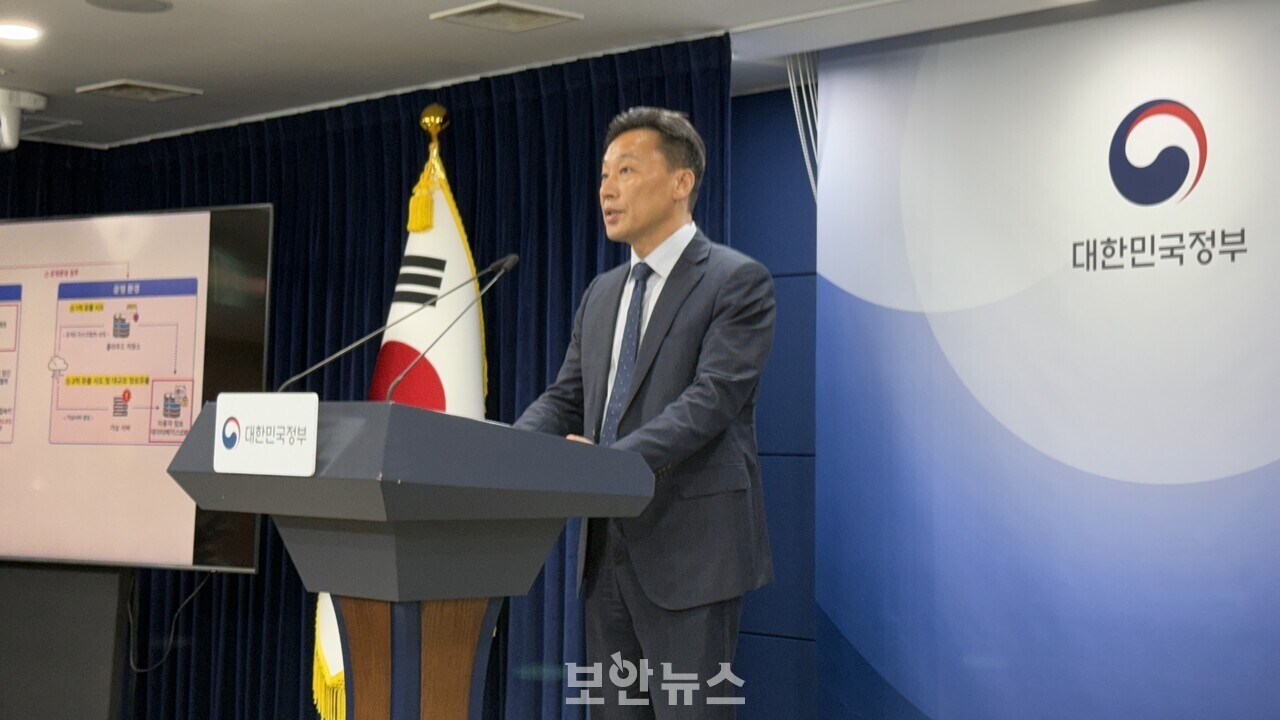
While the joint investigation team officially confirmed this fact, it also drew a different line from the “inflated figures” controversy that erupted immediately after the announcement. At the briefing, MSIT’s Lim Jeong-gyu answered, “The initially reported figure includes duplicates, and the actual scope of damage will be confirmed through the PIPC investigation.” KISA’s spokesperson, Park Yong-gyu, Head of the Digital Threat Response Division, added at the same podium, “The exact number will come out once the investigation is concluded.”
What I found most significant in that room was not simply the fact that the numbers were inflated. The real takeaway is that the presenters and questioners started over from the shared premise that “the exact scope is still unknown” while sitting in the same room. When a data breach occurs, the pattern repeats itself: the first day’s figure draws the loudest headlines, followed by corrections and clarifications the next day. The TVING breach has followed the same pattern.
However, there was a heavier question beyond the numbers. The questions concentrated in the Q&A were: “Why was the initial alarm ignored?” According to the investigation team, a CPU 100% spike alarm was triggered on TVING’s system during the first attack attempt. Yet Director-General Lim directly acknowledged, “At the time, this was judged to be a routine system error rather than a cyberattack, and no follow-up security measures were taken.”
This single sentence captures the essence of the TVING breach incident. The alarm sounded, but no one read it; even if it was read, it was misjudged; and there was no procedure to correct that misjudgment. In incident response, the most expensive mistake is not the response after a breach, but missing the very moment of breach. From a practitioner’s perspective, what stands out is that this is not just TVING’s problem — it reflects a structural weakness across major domestic OTT and platform operators that fail to maintain proper monitoring systems and escalation rules.
In the latter part of the Q&A, the level of sanctions and responsibility emerged as key issues. Under the current Information and Communications Network Act, fines and criminal penalties are possible for violations, but if the initial figure of 39.54 million is adjusted, the scale of sanctions could also change. The joint investigation team only reiterated its position that “the level of sanctions will be decided after reviewing the PIPC’s results.”
These investigation results officially indicate insufficient early detection and response capabilities in the TVING breach. It is not merely a hacking incident — it is a case where “the alarm sounded but was not heard.” In this respect, the TVING breach raises the need for the industry as a whole to re-examine its incident response matrix. It should also be clearly remembered that the 39.54 million figure announced on September 3rd may not be the confirmed number. The initial announcement figure, the measured value after excluding duplicates, and the PIPC’s final confirmed value — whether these three numbers will match to a single digit is still unknown.
What to Do Right Now
- Change your TVING account password immediately to a combination of 12+ characters including letters, numbers, and special symbols.
- Also change passwords separately for any other services (email, banking, shopping) that share the same password as your TVING account.
- Enable ‘Login Notifications’ and ‘Two-Factor Authentication (if available)’ in the TVING app settings.
- Check whether the email you use is included in leaked datasets at haveibeenpwned.com.
- Review your payment card transaction history registered with TVING on a 7-day cycle, and request an immediate card suspension from the issuer if you detect any suspicious transactions.
Key Issues
- Actual scope of the breach: 39.54 million is the initial figure including duplicates and will be finalized through the PIPC investigation.
- Initial alarm misjudgment: Circumstances in which the CPU 100% alarm was classified as a system error have been officially confirmed.
- Responsibility: The level of fines and criminal penalties for detection and response failures will be determined after the figure is confirmed.
- Industry implications: Platforms that do not operate an alarm-escalation-response matrix are exposed to the same pattern.
- Individual control: Users should trust the initial announcement figure but simultaneously carry out password changes and payment monitoring until the confirmed figure is released.
Frequently Asked Questions
How can I directly check whether my TVING account was leaked?
TVING officially operates a leaked account lookup page. You can also instantly check whether your registered email is included in external breach datasets by searching it at haveibeenpwned.com.
How many actual victims are there among the 39.54 million reported accounts?
This has not yet been confirmed. The 39.54 million figure is the initial count including duplicates, and the precise scope of the breach will be disclosed through the PIPC’s additional investigation.
Is it safe to delete my TVING account?
The leaked data is already out in the wild, so deletion is not a direct solution. Instead, changing your password, separating payment methods, and enabling two-factor authentication are more effective.
What sanctions may be imposed on TVING in the future?
Fines, corrective orders, and criminal penalties are possible for violations of the Information and Communications Network Act. However, the level of sanctions depends on the PIPC’s final investigation results and cannot be predicted at this time.
Reference Source
This article was prepared by reviewing the following original source: BoanNews — MSIT and KISA: “39.54 million TVING leaked accounts include many duplicates”… Precise scope to be determined by PIPC investigation
Expert Commentary (AI)
Cybersecurity Expert
The gap between detection working and response working is the essence of this incident
A CPU usage spike is the most basic detection signal for credential stuffing and brute-force login attempts, yet classifying it as a routine system error and closing the case demonstrates a typical maturity gap between detection tools and Security Operations (SecOps). The fact that an alarm was generated means monitoring infrastructure existed, but without documented triage criteria, escalation paths, and misjudgment adjudication procedures, tools alone do not equal defense — that is the core lesson of this incident. Major OTTs operate in environments where legitimate traffic spikes from new releases and events resemble attack patterns, so without baseline modeling, misjudgments will structurally repeat. On a positive note, the public acknowledgment of the misjudgment circumstances can serve as a precedent that imprints on the industry the necessity of a monitoring-classification-escalation matrix. However, if we become mired in individual or organizational blame, practical controls such as automatic blocking, login rate limiting, and MFA-by-default may be pushed to the back burner; regardless of the final breach scope, all platforms must adopt credential stuffing defense as a standard.
Personal Information Protection Law Expert
Scale uncertainty undermines sanction proportionality — the legal challenge left by pre-verification disclosure practices
The dual structure where the joint investigation team determines the cause and the PIPC confirms the scale and sanctions is reasonable from a specialization-of-labor perspective, but the sequence of unverified figures being released first and corrected afterward reveals the absence of breach disclosure standards. Under the Information and Communications Network Act, fines and criminal penalties are calculated based on the number of leaked records and whether unique identifying information is included, so releasing duplicate-inclusive figures prolongs debates over sanction proportionality and amplifies user uncertainty. The weight of the legal issues should lie not in how many records were leaked, but in whether recognizing the alarm and failing to respond constitutes a breach of duty of care and foreseeability — but the legal framework on this point is still in its early stages. A desirable direction would be a protocol mandating that initial approximate figures be clearly labeled as pre-confirmation, along with incentive designs that favorably recognize prompt remediation in sanction calculations. Compared to the European GDPR system, which independently evaluates notification obligation violations themselves, the current Korean structure that waits for number confirmation before sanctions move forward needs supplementation in terms of regulatory effectiveness.
Critical Analyst
The number 39.54 million was not a result of investigation but a narrative tool — the real issue is the disclosure sequence and ambiguity of responsible parties
The official narrative is that the investigation was launched after confirming a large-scale breach, but reversing the timeline, the first question that remains is how a figure not yet cleaned of duplicates ended up at the forefront. When a large number appears first, the government’s image of swift response and public sense of crisis both intensify simultaneously, but when the number is reduced, it is handled with low-intensity language such as “correction” — so the benefits of initial announcement and the costs of correction appear to be designed asymmetrically. The official statement keeps ambiguous whether the entity that classified the CPU alarm as a system error was the operator’s SOC or a related agency’s advisory body, and the weight of responsibility shifts entirely depending on this boundary. While sanctions are delayed until after the figure is confirmed, public interest wanes and memory fades, so the time gap itself may function as a structure that weakens post-hoc sanctions. The real question is not how deeply TVING was breached, but who knew what and when, and why it was disclosed in that order — tracking the hand that designed that sequence is where the truth of this incident begins.
Behind-the-Scenes Scenarios
- The unverified 39.54 million figure emerging as the first headline may be because combining a large number with the news of an investigation launch simultaneously maximizes both the investigating entity’s presence and the swift-response narrative.
- Considering the calculation structure whereby the scale of fines and criminal penalties shrinks as the final figure is reduced, the duplicate-inclusion correction discourse could serve as a foothold to soften post-hoc sanctions, and the ambiguity of the alarm-misjudgment entity could also be read as a device to distribute responsibility across multiple parties and dilute the final burden.
Leave a Reply