
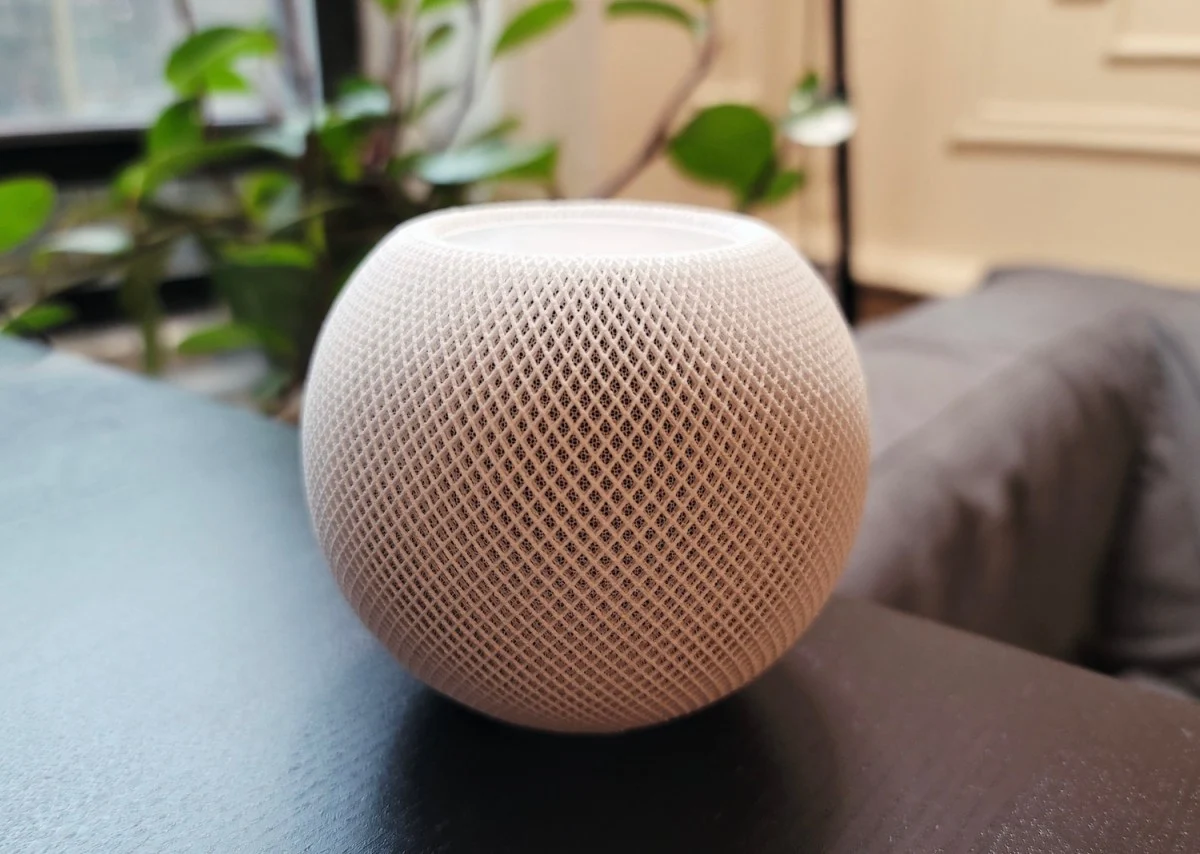
According to Bloomberg’s Mark Gurman, who reported on the 11th (local time), Apple is set to officially announce a new smart home hub called ‘HomeView’ on Tuesday (scheduled for October 13, local time), TechCrunch reported. The device, featuring an A18 chipset and display, is expected to launch in two models—one for countertops and one for wall-mounting—with updated versions of the Apple TV set-top box and HomePod mini also being unveiled at the same event. Gurman reportedly described this series of moves as “Apple’s most serious smart home challenge following HomeKit and HomePod’s failure to deliver sufficient results.”
Gurman’s Hints — Signals Just Before the Announcement
Since last week, Gurman has been hinting through his newsletter that Apple has been preparing a new smart home device under the codename ‘HomeView.’ The inclusion of ‘View’ in the name suggests the company has adopted a screen as its core interface rather than remaining a voice speaker. Ahead of the scheduled October 13 announcement, specs and pricing remain unconfirmed, and the market is awaiting the official reveal without knowing the product’s official name, launch date, or regional launch markets.
The Two Structural Challenges Left by HomeKit and HomePod
Apple’s serious push into the smart home market dates back to the announcement of HomeKit in 2014. However, even now, 10 years later, HomeKit continues to face two recurring criticisms from industry insiders: ‘lack of certified accessories’ and ‘absence of a control interface.’ User complaints have consistently been raised that Siri-based voice control alone makes it difficult to check the status of multiple devices at a glance or set up complex automation rules.
The subsequent HomePod (2018) and HomePod mini (2020) also remained in voice-centric speaker positions. Although priced at a premium ($349 for HomePod and $99 for HomePod mini) compared to Amazon Echo and Google Nest, they failed to function as ‘control hubs’ because they didn’t provide the visual interface that’s key to integrated control. Siri’s own natural language understanding accuracy, as well as recognition issues in non-English languages like Korean and Japanese, have also been cited as reasons why the HomePod lineup remained in the ‘sound device’ position.
What the A18 Chipset and Display Bring to the Table
The most prominent differentiator of the new product is the inclusion of the A18 chipset. The fact that the A18, which belongs to the mobile processor line, is being included in a smart home hub means significantly superior computing power compared to typical voice speakers. It provides a foundation for simultaneous control of multiple accessories, as well as future on-device AI inference and complex multitasking—a different dimension from Amazon Echo Show and Google Nest Hub, which use low-power custom chips.
The display integration is also significant. As information delivery and UI-based control, which were insufficient with voice alone, are supplemented, users will be able to intuitively check lighting, temperature, security camera feeds, and more on a single screen. The countertop model is expected to be used for displaying living room and kitchen information, while the wall-mounted model will serve as a home automation control panel, supporting various installation scenarios in the home. Offering two form factors simultaneously in the same category is read as Apple’s intent to segment user scenarios.
What the LG Partnership Means for Ecosystem Expansion
Reports also indicate that Apple and LG are jointly developing smart locks, thermostats, and doorbells. This marks a strategic expansion of Apple’s smart home ecosystem into dedicated countertop and wall-mounted screen hubs, directly addressing the hardware gap that previously limited HomeKit’s presence in been criticized for by leveraging the capabilities of an external appliance maker. LG is also reportedly exploring integration possibilities with its own smart home platform ThinQ, going beyond simple OEM.
Both Apple and LG are expanding the reach of their own ecosystems while trying to quickly close the ‘actual appliance lineup’ gap they’ve had compared to Amazon and Google. However, since the scope of the partnership and product launch timing have not been officially confirmed, the actual pace of market expansion will need to be gauged by future quarterly schedules.
Position vs. Amazon and Google, and Remaining Risks
Compared to Amazon Echo Show and Google Nest Hub, this hub’s strengths lie in the A18 chipset’s computing power and solid device integration spanning iOS, macOS, Apple Watch, and Apple TV. The weaknesses include a relatively narrow pool of HomeKit-compatible accessories, the scope of Matter standard adoption, and as-yet-unannounced pricing. Matter is a cross-cutting standard led by the CSA (Connectivity Standards Alliance) and determines the breadth of interoperability with non-HomeKit devices. The extent to which Apple supports Matter with this launch is expected to be a turning point for ecosystem competitiveness.
| Category | Apple HomeView (Expected) | Amazon Echo Show | Google Nest Hub |
|---|---|---|---|
| Processor | A18 | Custom (AZ2, etc.) | Amlogic low-power IoT SoC |
| Core Interface | Display + Siri | Display + Alexa | Display + Assistant |
| Form Factor | Countertop & Wall-mounted | Countertop focused | Countertop focused |
| Appliance Lineup | Expanding via LG partnership | In-house Ring, Blink, etc. | In-house Nest lineup |
| Ecosystem Lock-in | iOS & Apple ID centered | Amazon account & Prime | Google account & GMS |
The fact that updates to the Apple TV set-top box and HomePod mini are being announced on the same day reveals a blueprint for a distributed smart home infrastructure. With the three axes of living room video (Apple TV), voice and spatial audio (HomePod mini), and display (HomeView) playing distinct roles at home, there’s potential to form a different shape from the ‘single hub + multiple accessories’ model that Amazon and Google have built. Three variables—the pace of expanding device partnerships beyond LG, the actual pricing of the new product, and the scope of Matter support—will determine the bright and dark sides of Apple’s future smart home strategy.
Reference Source
This article was prepared by reviewing the following original source: TechCrunch — Will the HomeView be Apple’s first smart home success?
Leave a Reply