Category: Hot Tech Issues

  • Samsung, SK Hynix Shift More eSSD Supply to US Customers

    Samsung, SK Hynix Shift More eSSD Supply to US Customers

    On November 12, 2026, Samsung Electronics, SK Hynix and other memory manufacturers were reportedly preparing to allocate additional enterprise SSD (eSSD) volume that they had been discussing with Chinese customers to US buyers. The impact of China’s reduced eSSD orders may emerge as a higher share of supply for the US market rather than spread across the entire storage memory market.

    Why Chinese AI companies are reducing eSSD orders

    Major Chinese AI companies including Alibaba, Baidu and Tencent have decided to reduce their eSSD order volumes by more than expected, and memory manufacturers are aware of the change.

    The reduction is attributed to tighter US export controls on high-performance AI semiconductors and high-bandwidth memory (HBM). The US government has effectively prohibited exports of advanced AI semiconductors from major companies such as Nvidia and AMD to China, and HBM used with AI chips is also subject to restrictions.

    Chinese companies have tried to bypass the controls through overseas subsidiaries or by disassembling products, but those workarounds have been blocked, disrupting some investment plans. Their storage requirements have also fallen as the amount of memory installed alongside AI chips has decreased, leading them to adjust planned eSSD purchases.

    How Samsung Electronics and SK Hynix are changing US supply

    Samsung Electronics and SK Hynix have adjusted their supply plans to allocate some eSSD volume that had been designated for Chinese customers to US buyers. The reduced China-bound volume is expected to be absorbed by US data center companies.

    Shortages of high-capacity, high-efficiency eSSD have continued as data processing volume increases at data centers that process images and train AI models. An eSSD is a NAND-based memory module installed mainly in data centers and serves as secondary storage for data. Product lines suited to high-capacity storage, such as Samsung Electronics’ ninth-generation QLC V-NAND technology, are being used to address the shortage.

    Industry sources said the supply plan for China has been adjusted, although the volume is already shifting to US cloud service providers (CSPs). The specific volume and percentage of reductions by Chinese customers, as well as the exact additional volume and customer names assigned by the two memory manufacturers, have not been disclosed.

    Why this is unlikely to signal a broader decline in SSD demand

    Reports suggest that the reduction in eSSD orders will not have a major effect on overall NAND and SSD demand. NAND supply shortages continue in global markets including the US, allowing US data centers to absorb some of the decline in Chinese demand.

    Memory demand for US data centers remains firm, and shortages are likely to continue through next year and the year after. The adjustment is therefore closer to memory companies reassigning regional demand and supply volumes affected by export controls than a decline in total storage memory demand.

    Further details are available in ZDKorea’s original article.

    Source article

    This article was prepared after reviewing the following source: China, AI chip shortage drives eSSD ‘order cuts’… Samsung and SK increase US supply

    Sources cross-checked:

  • AI complaints surge, straining UK public bodies

    AI complaints surge, straining UK public bodies

    Businesses, local authorities, courts, schools and public bodies across the UK are facing heavier workloads as AI-generated complaints, letters and legal challenges increase. Holly Wickins, who works in the office of a Labour MP, said half of the emails she receives appear to have been written by AI. This trend is being called an “AI complaint surge,” with the gap between document generation and processing times adding to workload pressures on public bodies.

    AI complaints increase workloads

    Until the year before last, writing a complaint or applying for a local planning review required research, completing forms and specialist knowledge. As generative AI tools such as ChatGPT, Claude, Copilot and Gemini became widely accessible, members of the public began using free legal advice and action tools as everyday resources. These documents can be produced in seconds, but staff spend much longer reading them, checking the facts and requests, and preparing replies.

    The Information Commissioner’s Office said that several public bodies received more freedom of information requests in 2025. It explained that AI-written requests tend to be long and repetitive, often including irrelevant opinions and demands directed at the wrong issue, making the actual request difficult to identify. Before AI became widely used, complaints received by local authorities averaged about two pages, but most are now ten times longer, according to Deborah Evans. The longest document currently known runs to about 200 pages.

    Complaint types concentrating public attention

    Complaints received by local authorities cover issues including adult social care, missed refuse collections, parking violations, planning application appeals and parking ticket appeals. Alessandro Georgiou, a councillor on Enfield Council, said parking appeals had increased sharply as more residents challenged council decisions. Deborah Evans, who represents Lawyers in Local Government, said similar problems were appearing across every industry.

    Researchers from the Hertie School’s Center for Digital Governance in Berlin, the Cooperative AI Foundation and GovAI called the practice of overwhelming public bodies with AI-generated requests “agentic flooding”. The sharp increase in complaints consumes existing staff time and resources in local authorities, which have not received additional funding.

    Accuracy risks in AI legal documents

    AI can treat complaints as legal arguments and cite statutes and court cases, but it may apply precedents outside an authority’s jurisdiction or invent facts. Cases from other jurisdictions, such as Canada, may also be cited as grounds. Some business owners said they were concerned that AI could be overly supportive of users, give them false confidence in their position and encourage them to take legal action without proper verification. One technology startup founder said a former employee submitted what appeared to be an AI-generated document in an employment tribunal dispute over their dismissal.

    According to UK government figures, single cases initiated at employment tribunals from April to June increased 28% year on year, reaching 14,000. The number of cases concluded during the same period fell, leaving 70,000 single cases outstanding at the end of June. With a substantial backlog already in place, the founder was expected to spend about £30,000 on tribunal hearings and legal fees. However, publicly available information cannot confirm whether AI designed the legal strategy in every case.

    Responsibility when handling AI requests

    The Information Commissioner’s Office cautioned that requests appearing to be written by AI may still contain errors, but that people remain responsible for handling and answering them directly. However, the source did not set out specific criteria for determining whether all AI requests could be classified in the same way or which requests could be processed automatically.

    The Information Commissioner’s Office cautioned that requests appearing to be written by AI may still contain errors, but that people remain responsible for handling and answering them directly. However, the source did not set out specific criteria for determining whether all AI requests could be classified in the same way or which requests could be processed automatically. The AI complaint surge is adding to the burden of ensuring legal accuracy and answering responsibility.

    The impact on UK public bodies from AI-generated complaints and legal response letters is examined in The Guardian’s report on AI clog.

    Source article

    This article was prepared by reviewing the following source: The Guardian Tech, “AI clog”: UK public bodies battle onslaught of chatbot-generated complaints

  • Fake job interview led to $6.3 billion Binance hack

    Fake job interview led to $6.3 billion Binance hack

    A multistage attack that began with a fake job interview at Binance resulted in the theft of $6.3 billion worth of cryptocurrency. After taking control of an engineer’s computer, the attackers used internal AI tools and other engineers’ laptops to withdraw cryptocurrency from wallets.

    Fake job interview through a legitimate recruiting platform

    According to Binance, one engineer was contacted through a legitimate recruiting platform and invited to a job interview conducted by a supposed company representative. The attackers built trust through more elaborate deception, including sharing a social media account with a personal photo.

    During a second interview, the engineer was told to download what appeared to be a job assignment but contained malicious code. Obfuscation techniques make it harder for detection engines to identify the characteristic patterns of malicious code. This is a typical form of social engineering that uses human trust and software execution in sequence, rather than attacking an external service.

    From one infected computer to other engineers’ laptops

    After the malicious code ran, the attackers combined the infected engineer’s computer with compromised internal AI tools to take control of two other engineers’ laptops. The involvement of internal AI tools shows how attackers repurposed internal permissions and tools that were already trusted. The specific internal permission structure and the identity of the individual attackers were not disclosed.

    The attackers then emptied cryptocurrency wallets through the compromised devices. The incident showed that organizations need to manage internal tool permissions and software execution controls, rather than relying only on perimeter defenses.

    Withdrawal suspension and loss recovery

    After the hack, Binance suspended withdrawals for customers worldwide to prevent cryptocurrency from leaving the platform. The company apologized for the disruption to customers, partners, and the cryptocurrency industry, and said it had secured more than the full amount of funds needed for recovery.

    Binance said it had replenished 98% of affected token assets by Saturday. The company also said it was working with law enforcement to trace and freeze the affected assets. Among the US law enforcement agencies, the FBI and Secret Service participated in efforts to track the stolen cryptocurrency.

    North Korea attribution claim and its response

    US law enforcement agencies, including the FBI and Secret Service, and several cyber analysts assessed that the hack showed signs of an attack coordinated by North Korea, as in previous cases. In a statement published two days later, Binance said that, based on the latest FBI information, the Democratic People’s Republic of Korea was responsible for the incident.

    North Korea denied the allegation. Kim Yo Jong rejected the accusation and called it another sinister attempt to damage the United States’ national image.

    The FBI’s current assessment that North Korea was responsible and the country’s official denial remain contradictory. Binance did not answer an earlier BBC request about whether North Korea was involved, but later cited the FBI’s announcement. The FBI and Secret Service’s assistance with asset tracing and freezing is separate from any final legal determination of who carried out the attack.

    Security measures confirmed after the attack

    Binance said it would increase investment in AI tools that detect security threats after the attack and bring in external cyber experts to review the entire incident. The company also said it was considering establishing a security research fund and would pursue focused projects with major AI and security companies. For more on the additional access points and security issues in the Binance hack, see additional breach points and security concerns in the Binance hack.

    Binance said asset tracing and freezing by the FBI and Secret Service would continue, and that it would expand investment in AI for detecting security threats and bring in external experts for a comprehensive security review.

    Source article

    This article was prepared using the following source: BBC Tech — Binance says fake job interviews used as part of $6.3bn crypto hack

  • Google Extends School AI Blocks to Search, Sparking Debate

    Google Extends School AI Blocks to Search, Sparking Debate

    Google’s school AI policy is designed to give administrators control over the use of generative artificial intelligence in American elementary, middle, and high schools. However, at schools that do not permit generative AI, ordinary Google Search may also be disabled for student accounts, bringing both institutional choice and dependence on search services into focus.

    School Choice Expanded, but Search Was Blocked Too

    Is Google relevant to education across the United States?

    On the 3rd local time, Google announced on its official blog that it would disable Gemini, Gemini Notebook, Gemini in Google Classroom, and Google Search by default for K-12 student accounts spanning kindergarten through high school until school administrators explicitly permit their use. Gemini is Google’s AI model, Gemini Notebook is a tool for analyzing educational materials, and Google Classroom is a platform through which teachers manage student assignments and other tasks online.

    Google justified the measure by arguing that schools must be given control so they can manage AI in the classroom and oversee how students access it. The measure followed an earlier decision to enable Gemini chatbot features by default in Google Classroom at schools that allow generative AI, which prompted objections from schools and parents.

    This approach aligns with the argument that schools should decide when and how students may use AI. New York City limited generative AI use among elementary and middle school students for one year to protect their capabilities, while the Los Angeles Unified School District also prohibited generative AI use on school-provided devices for one year. The decision was reportedly made after Google consulted schools, teachers, and policy advocates.

    Why an AI Ban Leads to a Search Block

    The central technical issue behind school AI restrictions is that generative AI features are deeply integrated into Google Search. Google Search currently includes AI Overviews, which summarizes search results, and AI Mode, which allows users to find information through conversations with AI. Using search now requires accepting these AI features.

    Chris Phillips, Google’s vice president of education, explained that “search and AI are deeply integrated.” He said that if a school prohibits AI, students lose access to the search service. In other words, a school’s decision to block Gemini alone may also restrict students’ ordinary web browsing.

    Google said it plans to improve its services by offering educational features that guide students toward solving problems step by step rather than simply presenting them with answers through AI Overviews and AI Mode. However, it maintained that the AI features built into Google Search cannot be removed separately.

    The Clash Between Market Power and Educational Control

    This policy sits between the argument that it expands schools’ autonomy and criticism that it effectively coerces the adoption of AI.

    Josh Golin, executive director of the children’s rights organization Fairplay, also said Google’s effort to push its own AI products on schools is highly likely to backfire. The argument that Google is bundling search and AI while also narrowing the range of choices available to schools is drawing attention from an antitrust perspective.

    As the controversy grew, Google clarified through X that the decision expands schools’ autonomy. There is clear tension between handing control to school administrators and tying access to search services to the same choice. Hankyoreh’s related report also provides insight into the scope of the debate this decision has generated within education.

    When Schools Need to Establish New Adoption Standards

    When redesigning school AI policies, schools need to assess generative AI use separately from the use of search services. Unless they define the range of tools permitted during learning, assignments requiring teacher review, and activities designed to develop independent thinking, policies may become blurred into formal administrator approval or prohibition.

    Schools also need to distinguish between school-provided and personal devices, classroom instruction and assignment submission, and levels of risk based on students’ ages and cognitive abilities. The one-year restrictions adopted by the New York City and Los Angeles education authorities are useful examples of setting a temporary adoption principle, but schools need standards that include a process for reassessing the rules when the period ends.

    Pressure is also likely to grow on service providers not to treat AI features and conventional search as a completely inseparable package. Even while Google develops search features suited to learning, schools must also consider conventional search alternatives that they can disable; otherwise, restrictions on AI may undermine access to learning resources themselves.

    School AI restrictions must address both the need to protect students’ independent thinking and access to information required for learning. Giving administrators explicit control is significant, but a structure that simultaneously limits choice at two levels—whether AI may be used and whether search may be used—requires additional explanation in both education policy and antitrust enforcement.

    Source

    This article was written based on the following source: Hankyoreh — Google Blocks Search for Schools That Reject AI, Sparking ‘AI Upselling’ Controversy in the US

    Cross-checked sources:

  • Cyberattack Targets European Supermarket Freezers

    Cyberattack Targets European Supermarket Freezers

    As suspicious cyberattacks targeting refrigerators and freezers have affected several European supermarkets, the security vulnerabilities of internet-connected appliances and industrial equipment have become central to a major debate. Following this incident, discussions have called for a thorough qualitative safety review to determine whether everyday devices such as humidifiers, heaters, and washing machines share the same risks as vehicles and energy infrastructure. However, a device does not become immediately hackable simply because it is connected to the internet, and major manufacturers have also invested significant resources in security.

    Connected-Device Attack Surface Revealed by Freezer Attack

    Smart devices connected to the internet offer convenience and operational efficiency through remote control, but they can also become targets for abuse by malicious actors. Security researchers demonstrated in 2015 that vulnerabilities in a Samsung smart refrigerator could be exploited to intercept internet traffic, illustrating that real-world exploitation may also be possible with consumer appliances. However, there is still no confirmed evidence that the appliances themselves were targeted in the November attack against European supermarkets.

    The UK’s National Cyber Security Centre (NCSC) is working with international partners and industry collaborators to understand the incident in advance, but it has not identified any impact in the United Kingdom. Researchers found that more than 800 refrigeration and building-control interfaces connected to UK retailers were accessible over the public internet. While public accessibility does not necessarily mean the systems can be hacked, the warning is that weak passwords or software vulnerabilities could leave them exposed as an attack surface if exploited.

    Boundaries of Equipment Ownership and Repair Responsibility

    The central issue is where responsibility for equipment security should lie. SentinelOne researcher Tom Hegel said retailers need to clarify who owns the security of the relevant equipment, rather than merely identifying the organization responsible for repairs. As connectivity provides convenience, security must keep pace, and a warning cautioned that if attackers seize legitimate control functions, even ordinary functions such as defrosting could be turned into a tool for disruption. Assessments also concluded that configuration changes could cause physical damage to actual inventory, beyond simply disrupting computer systems.

    Retailers in the UK have previously held security discussions with the government and major food distributors about cyber resilience in preparation for incidents. Helen Dickinson of the British Retail Consortium emphasized that cyber incidents are a major concern for retailers and that companies are sharing information and strengthening their defenses with the NCSC. After M&S and Co-op were targeted by ransomware attacks in May 2025, fresh deliveries ran short on some shelves, prompting customers to voice dissatisfaction with empty shelves.

    Infrastructure Risks Spreading Beyond the Home

    Outside the home, connected technologies are used to remotely manage industrial machinery and vehicles, while equipment at power plants and in water-supply chains is also monitored through mobile connectivity. Security expert Ken Munro cited a 2015 demonstration in which researchers remotely hacked a Jeep through an internet-connected entertainment system, saying the incident led to improvements in vehicle security. He assessed that connected security at UK utility companies was generally sound, but that global standards vary.

    Small, cash-strapped utility companies that may depend on older and vulnerable equipment were identified as the greatest source of concern. Olivier Daloy, a cybersecurity expert at Zscaler, said that without adequate protection, every internet-connected factory and piece of equipment could face similar risks, extending from automobile manufacturing to power and transport infrastructure. This goes beyond inconvenience or information leakage from appliances and demonstrates the possibility that a loss of control could result in physical harm.

    Security Standards and Consumer Responses

    UK law has required manufacturers of some consumer smart devices to meet minimum cybersecurity standards, including passwords and security updates, since April 2024. Former NCSC chief executive Ciaran Martin noted that there is much to demand of big technology companies to create safer devices and products, and recommended that consumers update their devices and enable multifactor authentication (MFA) where possible. He said that enabling multifactor authentication takes only a few seconds but can still be inconvenient, illustrating the practical barrier that security convenience poses to widespread adoption.

    This incident shows that connected-device cybersecurity must be treated as an essential requirement at the design stage rather than an optional added feature. Manufacturers should go beyond merely meeting minimum security standards and clearly define responsibility for equipment, update periods, and remote-control access. Retailers should check that refrigeration and building-control interfaces are not unnecessarily exposed to the public internet, while consumers should make updating older devices and configuring authentication part of their everyday security habits. Further reporting is needed to establish the technical scope of the attack and where responsibility lies.

    Source

    This article was prepared with reference to the following source: BBC Tech — If hackers can take control of a supermarket freezer, how vulnerable is other tech?

  • Hive Data Breach: Attack Surface and Affiliate Security

    Hive Data Breach: Attack Surface and Affiliate Security

    It has emerged that the Hive data breach exposed personal information belonging to current and former employees and partner representatives. The leak included resident registration numbers and card numbers as well as passport numbers and medical information, heightening concerns about information security management.

    Two Attacks and the Confirmed Access Surface

    During an internal security review, Hive discovered abnormal external access through an external vendor’s document preview solution, which was linked to the electronic approval system. A further investigation found similar access to the expense processing system. Some internal documents and personal information stored in the two systems are understood to have been exposed.

    The personal information leak occurred twice: from 1:16 p.m. on September 12 until 11:14 a.m. the following day, and from 10:41 p.m. on October 5. The exposed data included names, resident registration numbers, foreign registration numbers, passport numbers, account numbers, card numbers, mobile phone numbers, email addresses, addresses, medical information, dates of birth, IP addresses, employee identification numbers, and affiliated department names. The items exposed for each individual varied, and the total number of victims and the scale of the breach were not disclosed.

    The specific IP addresses and access paths used in the attacks were not made public, but Hive said it had blocked them. The company reported the breach to the Korea Internet and Security Agency and the Personal Information Protection Commission, adding that it was notifying affected individuals individually. Hive also said it would strengthen access controls and security monitoring across its internal systems, determine the cause, and improve its security framework to prevent recurrence.

    Victim Remedies and Misuse of Exposed Information

    Hive said no cases suggesting misuse of the exposed information had been reported as of the time of the announcement. Those who suffered harm may seek compensation for damages or statutory damages under the Personal Information Protection Act and may apply for dispute mediation through the Personal Information Dispute Mediation Commission. The key issues will be whether the total number of victims and the scale of the breach are disclosed and how the relevant agencies’ investigations establish the method of access and where responsibility lies.

    It is also notable that the externally connected solution identified in this incident and the company’s internal work systems were repeatedly identified as attack surfaces. Areas that require verification include how far internal systems trusted and connected to external vendors’ components and whether similar access to the expense processing system was related to the same cause. The Hive data breach remains a case that requires examination not only of external attack prevention, but also of integration management, access controls, and systems for detecting signs of anomalies.

    Recurring Affiliate Incidents and Remaining Challenges

    The exposed information included internal identification numbers, payment methods, purchase and cancellation amounts, and purchase and refund dates and times. At the time, the company explained that it had identified a security vulnerability through an external report, strengthened access controls, and notified the relevant authorities.

    Affiliates have experienced not only external hacking but also unauthorized disclosure by internal employees and exposure caused by past development errors. In 2021, a system development error exposed 137 pieces of personal information to others, leading the Personal Information Protection Commission to impose a KRW 7 million fine and an order to take corrective measures. As external attacks, internal leaks, and development flaws continue to occur, the need to verify the entire information protection management framework has grown.

    The final scale of the Hive data breach remains unknown. It remains to be seen whether cases of misuse of the exposed information, victim reports, agency investigation results, and security improvements across the affiliates will be disclosed together. Following confirmation of the initial path and response measures in Hankyoreh’s initial report on the incident, scrutiny will continue regarding responsibility and measures to prevent recurrence.

    Source Article

    This article was prepared with reference to the following original source: Hankyoreh — [Exclusive] Hive also stole account, passport, card and resident numbers, along with medical information

  • Binance Could Face CLARITY Act Transaction Hold Provisions

    Binance Could Face CLARITY Act Transaction Hold Provisions

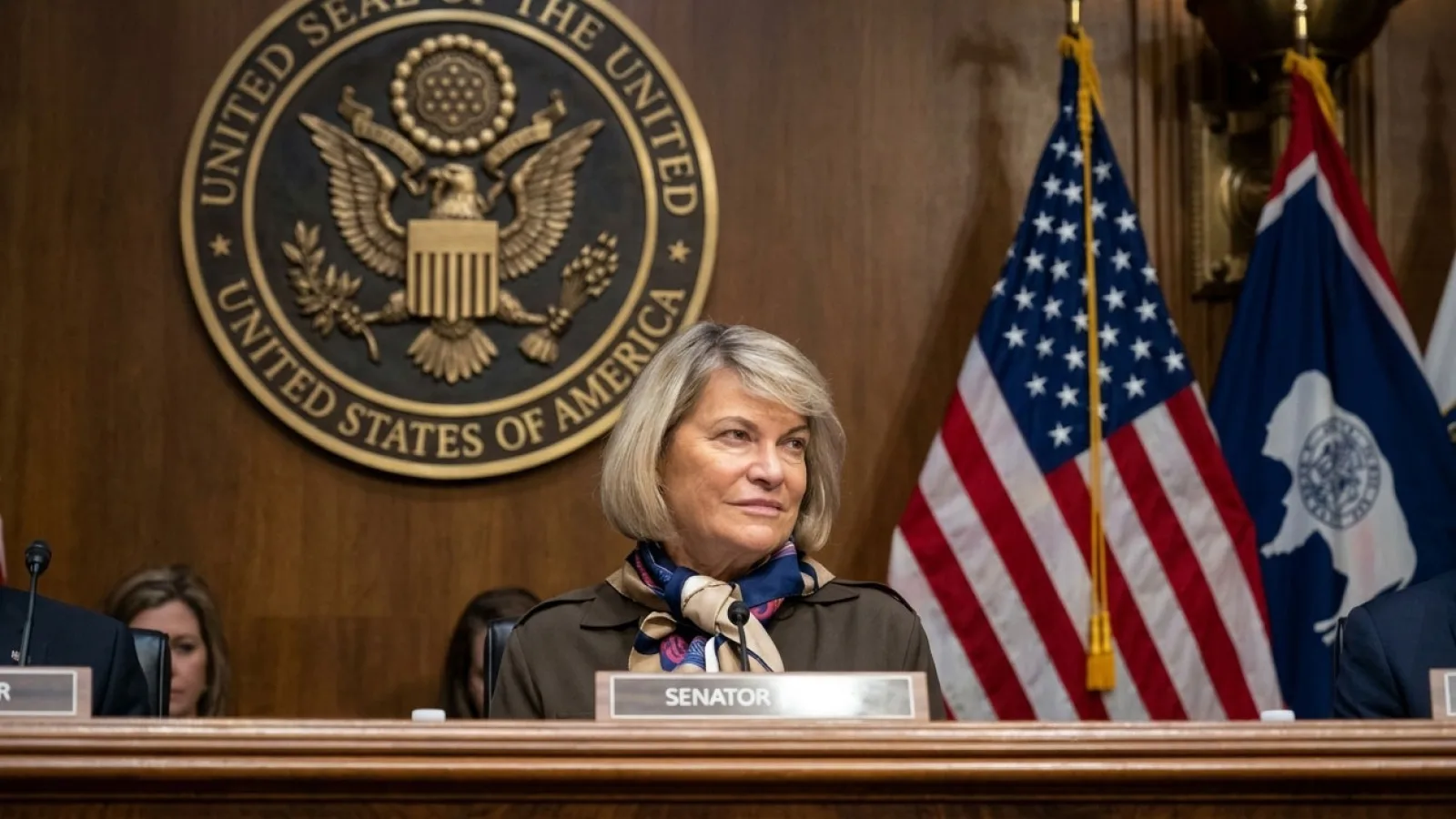
    U.S. Senator Cynthia Lummis said Binance may be included among the ‘covered persons’ subject to the CLARITY Act. This reflects an interpretation of provisions allowing certain digital asset transactions to be temporarily held, and does not mean that action against Binance has been finalized. The possibility that Binance qualifies as a digital asset service provider was cited as grounds for the interpretation.

    ## Covered Persons and Actual Enforcement Are Different

    Article 10305 of the final draft released by Lummis’s office for Senate consideration addresses the ‘temporary hold of certain virtual asset transactions’. Covered persons under the provision include licensed payment stablecoin issuers, foreign payment stablecoin issuers registered with the Office of the Comptroller of the Currency (OCC), and digital asset service providers.

    The draft does not name Binance. Therefore, Lummis’s remarks constitute an interpretation that applies the categories of business operators established by the bill to Binance. This provision does not establish a single regulatory status that applies uniformly to every exchange. The term ‘covered person’ in this context is distinct from ‘covered party’ under the stablecoin rewards provision.

    ## Hold Requirements Established by Article 10305

    A transaction hold does not automatically halt all transactions. An operator may hold a transaction when it reasonably believes the transaction is connected to an unlawful act, or after receiving a qualified written request.

    A qualified written request must be issued by an authorized representative of a state or federal law-enforcement agency. The request must identify the wallet, address, account, or transaction involved; specify the action required from the operator; and provide agency contact information. The hold must be limited to specific wallets, addresses, accounts, or transactions that the operator reasonably suspects are connected to an unlawful act.

    The action may include delaying the execution, conversion, or withdrawal of a virtual asset transaction. A ‘temporary hold’ is a procedure through which an operator delays transaction execution, asset conversion, or withdrawals for a specified period. The standard hold period is up to 30 days, with an additional extension of 150 days available if a qualified written request is received.

    ## Liability Protections Require Customer Notice and Recordkeeping

    An operator that acts in good faith to hold a transaction and reasonably believes the transaction is connected to a legal violation, or that receives a qualified written request, may be protected from federal or state civil damages. To qualify for this protection, the operator must make reasonable efforts to notify affected customers of the hold and, unless it received a written request, notify the relevant law-enforcement agency or the Federal Trade Commission (FTC) as soon as possible. Exceptions may apply when customer notification could interfere with an investigation or when a law-enforcement agency asks the operator not to provide notice.

    Records related to a transaction hold must be retained for three years and submitted if requested by law-enforcement agencies or the FTC. The draft states that the provision should not be interpreted as imposing new asset freezing, seizure, or blocking obligations not found in existing federal or state law. It also does not limit the authority of government agencies under existing law or the effect of lawful orders.

    ## Senate Procedure and Remaining Practical Issues

    The CLARITY Act, a bill intended to establish a federal regulatory framework for the virtual asset market, passed the House of Representatives. The U.S. Senate failed to advance it by a vote of 49 in favor and 50 against at the conclusion of debate on the bill’s consideration at 3:19 a.m. Korea time on September 16. This vote did not determine the bill’s final passage.

    Accordingly, the possibility that Binance may be covered is legally distinct from the possibility that specific transactions could actually be held. Assessing whether enforcement may occur requires verifying not only whether Binance falls within the operator categories in Article 10305, but also whether a qualified written request exists, whether there is a reasonable basis for connecting the transactions to unlawful conduct, and the scope of the transactions involved. This interpretation is based on TokenPost’s related report.

    Source Article

    This article was prepared based on the following source: TokenPost — Lummis: Binance Could Also Be a ‘Covered Person’ Under CLARITY Act

  • Binance Hack: $6.3B Loss Reveals Security Gaps

    Binance Hack: $6.3B Loss Reveals Security Gaps

    The Binance hack affected $6.3 billion worth of digital assets, drawing attention as the largest security incident involving a cryptocurrency exchange in history. The exchange initially did not disclose that a compromised engineer laptop was the starting point of the incident, but its acknowledgment that additional entry points had been identified made it difficult to explain the full sequence of the attack through the initial account alone.

    $6.3B in Losses: Tracking Must Continue After Asset Freezes

    Binance said it had frozen roughly half of the affected assets. Nevertheless, the attacker still holds a significant amount of stolen assets, and the company said it would compensate all losses. The freezes do not necessarily mean that the attack has been contained or that the underlying infrastructure for withdrawals has been blocked. Instead, it shows that the process of tracing where the funds moved remains unfinished.

    Tether and Circle said they had frozen a combined total of approximately $2.4 billion in assets in response to the incident. World Liberty Financial said it was working with partners to freeze the stolen assets. Coinbase said it had not been affected by the incident and was monitoring the situation.

    A Multi-Stage Attack From Laptop to Withdrawal Environment

    Binance co-CEO Richard Teng said the initial investigation found that the attack began on a compromised engineer laptop. He explained that the attacker used the laptop to access service containers and submit unauthorized withdrawal transactions.

    The attack was not a simple, one-time click carried out using a single engineer’s credentials. Teng emphasized that it involved a complex, multi-stage attack and said no evidence of a wallet private-key compromise had been found as of the latest update. Jayant Dave of Check Point pointed to similarities with the recent Bitget hack, analyzing that attackers may target the systems and people authorized to use vault keys rather than the keys themselves.

    This structure reveals why the operational environment cannot be considered secure based solely on the safety of private keys. If the process for creating, approving, and executing withdrawal requests is concentrated in a single account or piece of credential information, an attacker who gains control of those privileges could cause widespread losses. To limit the potential scope of an internal breach, organizations must verify that laptop endpoints, administrative privileges, service containers, and the withdrawal approval system are not connected through a single attack path.

    Analysis and Official Positions Diverge Over a TraderTraitor Link

    Check Point and TRM Labs analyzed the attack as connected to the activities of TraderTraitor, a hacking group linked to North Korea. Check Point described the group as also being known in the industry as the Lazarus Group, the organization widely blamed for the 2025 Bybit hack. TRM Labs likewise reported that the incident shared several similarities with previous North Korea-linked cases, including the Bybit hack.

    Chainalysis also assessed with high confidence that a North Korea-linked organization was involved in this hack. Ari Redbord, global head of policy at CipherTrace, characterized the Binance hack as a turning point the industry had not previously seen. Binance, however, has not officially identified the perpetrators and said it is working with law enforcement to determine who was responsible and bring them to justice.

    Withdrawal Suspension and the Remaining Post-Incident Challenges

    Binance suspended withdrawals until it could verify the security environment. Co-CEO Yi He explained that the decision to suspend withdrawals was made because safety had to come first. The suspension is currently an available defense against further damage, but it must lead to verification that the entry points are genuine and proof that the incident cannot recur.

    Binance said it plans to release a detailed post-incident review once the investigation is complete. In the meantime, the company has said it is continuing to gather facts and will share more specific information immediately as it is discovered. The core of strengthening exchange security lies in distributing withdrawal privileges, continuously detecting anomalous activity across operational environments, and rechecking the intrusion path after an attack. The $6.3 billion hack will remain a stark example of how a combined path linking operational privileges with the execution environment can cause damage on a much broader scale than private-key exposure alone.

    Source Note

    This article was written with reference to the following source: BBC Tech — Crypto giant Binance hit by $6.3bn hack suspected to be largest in history

  • Nvidia Explores $2,000-per-GPU Subscriptions for AI Agents

    Nvidia Explores $2,000-per-GPU Subscriptions for AI Agents

    Nvidia has outlined a plan to offer software for running AI agents at about $2,000 per GPU annually, introducing a new direction for Nvidia subscriptions. Nvidia CEO Jensen Huang discussed the potential of a software licensing business that could generate recurring revenue beyond hardware sales at a GTC event held in Berlin, Germany, on October 22, 2026.

    The core of the proposal is the total cost of operating all the Nvidia software required to run agents in an AI factory. It is a strategy to bundle security, access management, and infrastructure operations into a single platform, extending Nvidia’s hardware-focused revenue model into a subscription-based structure.

    The $2,000 Figure Is Not a Final Product Price

    The announced $2,000 figure appears to be an example offered to explain the licensing model rather than a confirmed selling price. Nvidia has not disclosed when the pricing would take effect, the specific software configuration, or the licensing terms. It also remains unclear how the offering would be distinguished from existing products.

    Nvidia’s enterprise AI software platform, AI Enterprise, is currently sold for $4,500 per GPU annually. It is unclear whether the newly mentioned amount covers a narrower agent-specific package or represents a separate licensing system, making it difficult to interpret the figure as a price reduction for existing offerings.

    The Scale of Recurring Revenue and Its Unconfirmed Assumptions

    If subscriptions are introduced on a large scale, they could generate recurring revenue independent of GPU sales cycles, which is the primary commercial value of Nvidia subscriptions. If five million GPUs are covered by paid licenses, the annual revenue would amount to $10 billion, or $50 billion cumulatively if the subscriptions are maintained for five years.

    However, these figures do not represent an actual revenue forecast. Nvidia has not disclosed the number of GPUs eligible for paid licenses or provided a revenue outlook, so the five-million-GPU and five-year figures should be understood as a hypothetical scenario. It is therefore difficult to determine the size of the market based solely on the $2,000 announcement.

    OpenShell and Sentry-Managed Agent Security

    AI agents can access external tools and data and autonomously perform multiple tasks, so large-scale deployment in enterprise environments requires a management system capable of controlling their execution scope and permissions. On October 21, 2026, Nvidia unveiled an open-shell reference architecture that supports isolating AI agent execution environments and restricting access.

    OpenShell is based on Vera Rubin computing infrastructure, the Vera CPU, and the BlueField-4 data processing unit, and it monitors agent activity through Nvidia Sentry. Sentry can isolate agents that attempt to cross configured security boundaries. The key is that control is implemented at the infrastructure layer rather than relying solely on the model’s built-in safeguards.

    Integration with external companies is also beginning. Anthropic is working to integrate OpenShell and BlueField hardware with managed Claude agents to manage access permissions for enterprise agents, while Salesforce is developing administrative capabilities for reviewing agents’ access requests in Slack and approving or rejecting them. These examples show that the security management layer can be applied to real services rather than remaining merely a reference design. A related report from The AI Times also highlighted Nvidia’s subscription expansion and its broader ecosystem impact.

    From Hardware to Full Stack, With Lock-In Risks Remaining

    Nvidia CEO Jensen Huang said people may eventually stop viewing Nvidia as merely a chip company. His remarks emphasized Nvidia’s direction of providing a technology stack that includes software and systems, alongside semiconductors, to industries ranging from healthcare and automotive to telecommunications and life sciences.

    As enterprises build security and management systems on Nvidia’s infrastructure, the cost and effort required to migrate to another platform may increase. Recurring revenue and high switching costs are both advantages of Nvidia subscriptions and factors that could accelerate ecosystem lock-in. As the AI agent market expands, the value of the security layer will also grow. However, a meaningful evaluation of Nvidia’s business plan will require clarity on the rollout timeline, eligible GPUs, included software, licensing units and terms, and whether the offering overlaps with AI Enterprise.

    Source Article

    This article was written with reference to the following original source: The AI Times — Nvidia Considers $2,000 Annual Software Subscription per GPU…Accelerating Ecosystem ‘Lock-In’

  • Chery Unveils Mobo Humanoid Robot for the Home

    Chery Unveils Mobo Humanoid Robot for the Home

    Chery Automobile, China’s largest automobile exporter, has unveiled the home humanoid robot Mobo for the first time. Standing 90 centimeters tall, Mobo handles medication reminders, English education, and caregiving tasks while remembering family members, marking an effort to apply the company’s accumulated artificial intelligence expertise and mass-production capabilities to home robots.

    From Medication Reminders to Long-Term Memory: Home Features Unveiled

    At an event, iMoo demonstrated Mobo’s caregiving and parenting functions, including talking with a grandmother to remind her to take her medication, playing hide-and-seek with a child, and teaching English and dancing. The company staged a scenario in which a robot enters a three-generation household to provide a more concrete picture of the product’s potential uses.

    Mobo distinguishes between people’s faces and remembers conversations and daily life information involving family members so that it can use them in subsequent conversations. It operates through voice commands and supports more than 20 languages, teaching English to children, reading fairy tales, and providing medication and schedule reminders for older adults. Data sent externally is designed to undergo anonymization and security checks inside the device.

    A “Dual Brain” Designed for Multiple Tasks and Unexpected Events

    iMoo Executive Vice President Zhang Peng said Mobo can process up to 16 tasks in parallel and respond to interrupted work situations within 0.2 seconds. In a demonstration, Mobo answered an unexpected question while handling meeting notifications and patrol duties, then resumed its previous tasks.

    iMoo employees explained that Mobo was designed not merely to react to human commands, but also to perceive its surroundings and independently plan multi-stage tasks. Its dual-brain structure combines long-term task planning with immediate responses to unexpected situations.

    Reusing the Automotive Supply Chain for Robot Manufacturing

    Chery highlighted that automobiles and robots can share camera- and sensor-based environmental perception, AI route decision-making, and voice recognition technologies. The company is pursuing a strategy of reducing manufacturing costs and establishing a mass-production system through joint purchasing and standardization of production practices for vehicle components.

    Chery is considering component sharing from the robot design stage onward and standardizing component specifications across product lines to expand joint purchasing volumes. Zhang Yuibing, Chery vice president and president of iMoo, said the company must apply automotive manufacturing cost-management principles to achieve mass production and profitable operations. Its technology organization is also being reorganized into an industrialization system that separates platform research from validation in real-world operating environments.

    Global Commercialization Still Faces Price and Launch Schedule Questions

    iMoo’s cumulative global robot sales have surpassed 3,000 units, while its products and services have entered more than 60 countries and regions and are being used in over 100 fields. After joining a pilot for a global robot leasing brand in Wuhu, the company plans to expand overseas.

    Mobo recognizes people and obstacles, adjusts its route, and slows down or yields when a person approaches. However, its official sales price and specific launch schedule have not yet been announced. Whether services that require memory and emotional interaction can take root in everyday life remains a challenge to be verified in terms of price, safety, and data management.

    Read Hankyung’s on-the-ground report for more on Chery Automobile’s transition into robotics and Mobo’s initial capabilities.

    Source Article

    This article was written after consulting the following source: Hankyung — “It’s time to take your medicine”… The special ‘helper’ who looks after Grandma [China Watch]