
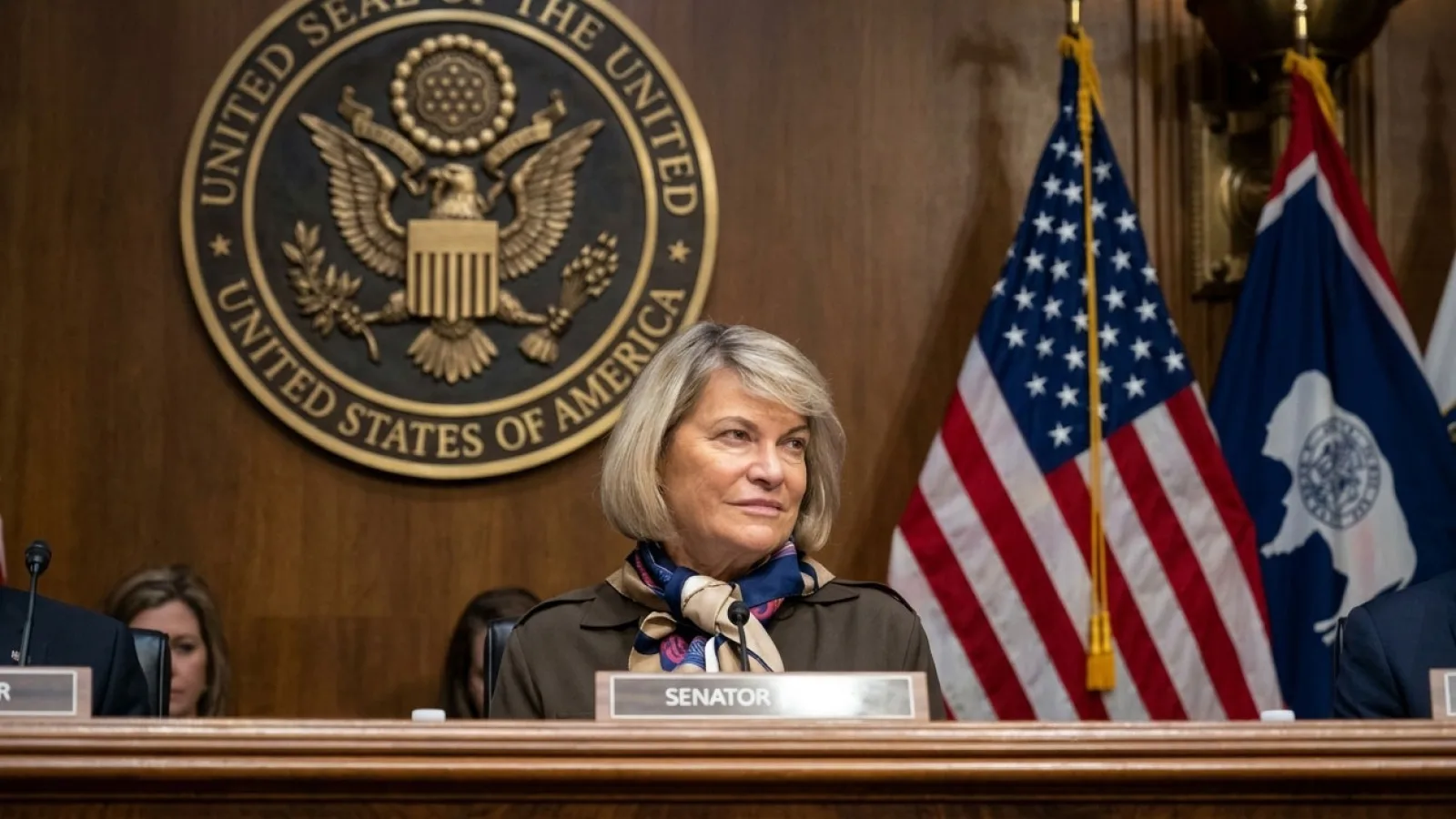
U.S. Senator Cynthia Lummis said Binance may be included among the ‘covered persons’ subject to the CLARITY Act. This reflects an interpretation of provisions allowing certain digital asset transactions to be temporarily held, and does not mean that action against Binance has been finalized. The possibility that Binance qualifies as a digital asset service provider was cited as grounds for the interpretation.
## Covered Persons and Actual Enforcement Are Different
Article 10305 of the final draft released by Lummis’s office for Senate consideration addresses the ‘temporary hold of certain virtual asset transactions’. Covered persons under the provision include licensed payment stablecoin issuers, foreign payment stablecoin issuers registered with the Office of the Comptroller of the Currency (OCC), and digital asset service providers.
The draft does not name Binance. Therefore, Lummis’s remarks constitute an interpretation that applies the categories of business operators established by the bill to Binance. This provision does not establish a single regulatory status that applies uniformly to every exchange. The term ‘covered person’ in this context is distinct from ‘covered party’ under the stablecoin rewards provision.
## Hold Requirements Established by Article 10305
A transaction hold does not automatically halt all transactions. An operator may hold a transaction when it reasonably believes the transaction is connected to an unlawful act, or after receiving a qualified written request.
A qualified written request must be issued by an authorized representative of a state or federal law-enforcement agency. The request must identify the wallet, address, account, or transaction involved; specify the action required from the operator; and provide agency contact information. The hold must be limited to specific wallets, addresses, accounts, or transactions that the operator reasonably suspects are connected to an unlawful act.
The action may include delaying the execution, conversion, or withdrawal of a virtual asset transaction. A ‘temporary hold’ is a procedure through which an operator delays transaction execution, asset conversion, or withdrawals for a specified period. The standard hold period is up to 30 days, with an additional extension of 150 days available if a qualified written request is received.
## Liability Protections Require Customer Notice and Recordkeeping
An operator that acts in good faith to hold a transaction and reasonably believes the transaction is connected to a legal violation, or that receives a qualified written request, may be protected from federal or state civil damages. To qualify for this protection, the operator must make reasonable efforts to notify affected customers of the hold and, unless it received a written request, notify the relevant law-enforcement agency or the Federal Trade Commission (FTC) as soon as possible. Exceptions may apply when customer notification could interfere with an investigation or when a law-enforcement agency asks the operator not to provide notice.
Records related to a transaction hold must be retained for three years and submitted if requested by law-enforcement agencies or the FTC. The draft states that the provision should not be interpreted as imposing new asset freezing, seizure, or blocking obligations not found in existing federal or state law. It also does not limit the authority of government agencies under existing law or the effect of lawful orders.
## Senate Procedure and Remaining Practical Issues
The CLARITY Act, a bill intended to establish a federal regulatory framework for the virtual asset market, passed the House of Representatives. The U.S. Senate failed to advance it by a vote of 49 in favor and 50 against at the conclusion of debate on the bill’s consideration at 3:19 a.m. Korea time on September 16. This vote did not determine the bill’s final passage.
Accordingly, the possibility that Binance may be covered is legally distinct from the possibility that specific transactions could actually be held. Assessing whether enforcement may occur requires verifying not only whether Binance falls within the operator categories in Article 10305, but also whether a qualified written request exists, whether there is a reasonable basis for connecting the transactions to unlawful conduct, and the scope of the transactions involved. This interpretation is based on TokenPost’s related report.
Source Article
This article was prepared based on the following source: TokenPost — Lummis: Binance Could Also Be a ‘Covered Person’ Under CLARITY Act
Leave a Reply