
Key Summary
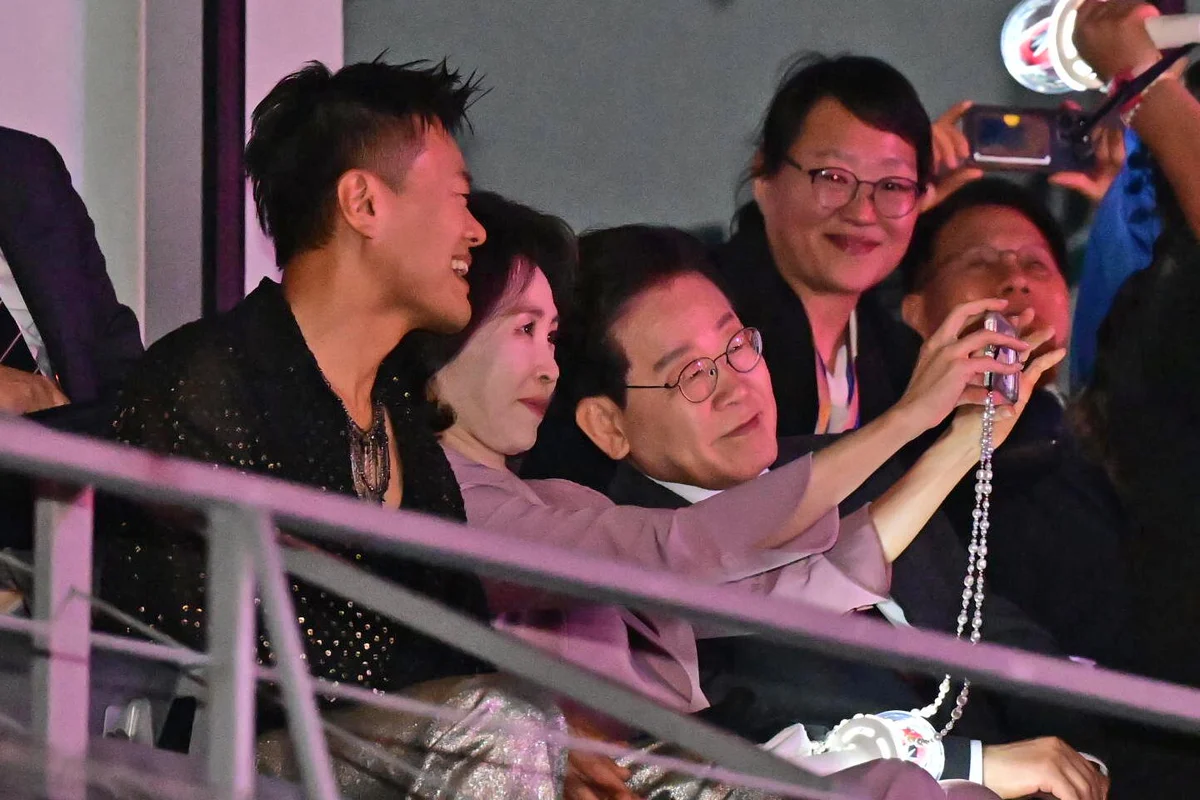
- Park Jin-young, co-chair of the Presidential Committee on Popular Culture Exchange, appeared as a witness at the National Assembly’s state audit of the Ministry of Culture, Sports and Tourism on the 7th and disclosed his position regarding the trademark filing for the global K-pop festival ‘PhenomeNon.’ The trademark was filed solely under JYP Entertainment’s name, and Bae Hyun-jin, a lawmaker of the main opposition People Power Party, publicly questioned this on Facebook on the 30th of last month, calling it a ‘trademark monopoly’ and asking, ‘Was this designed to boost the profits of ultra-large entertainment agencies like JYP with massive taxpayer money?’ Chairman Park appeared on SBS Radio’s ‘Kim Tae-hyun’s Political Show’ on the 6th and said, ‘We set the goal of pursuing the public interest, but if our sincerity is questioned—whether the real purpose is private profit—it becomes extremely difficult,’ and added that although a witness/reference person (참고인) has no oath obligation and therefore no risk of perjury charges, he chose to appear as a sworn witness. The day before, President Lee Jae-myung posted on X (formerly Twitter): ‘I am sorry to Chairman Park,’ ‘He is dedicating his time and personal resources without any compensation to advance the export of Korean culture, and I am deeply sorry and apologetic that we could not provide the proper courtesy he deserves,’ and ‘Please convey our gratitude on behalf of the people.’ The Park Jin-young side addressed the controversy over the existence of compensation, stating, ‘I didn’t know I was receiving 2 million won,’ and reportedly explained, ‘I want to return it immediately, but…’ According to MBC reporting, President Lee made remarks to the effect of ‘I am sorry for the lack of proper courtesy’ and conveyed ‘gratitude on behalf of the people.’ Chairman Park had previously taken a commemorative photo with President Lee and First Lady Kim Hye-kyung at the Stray Kids concert at GNP Stadium in Mexico City on the 25th of last month.
In publicly funded projects entrusted to the private sector, three mechanisms—trademark attribution, compensation disclosure, and committee governance—must be designed before the project begins to prevent sincerity disputes, and a presidential apology message risks being read as defense of the individual involved, intensifying criticism.
Table of Contents
- Key Summary
- 1. Why the PhenomeNon trademark became the trigger
- 2. The strategy of volunteering as a sworn witness rather than a reference person
- 3. The double-edged effect of the president’s apology message
- 4. The opacity in committee operations exposed by the 2 million won fee explanation
- 5. Five upcoming issues and checkpoint items
At the National Assembly’s state audit of the Ministry of Culture, Sports and Tourism on the 7th, JYP Entertainment CEO Park Jin-young appeared as a witness in his capacity as co-chair of the Presidential Committee on Popular Culture Exchange, and the fact that the global K-pop festival PhenomeNon trademark was filed solely under JYP’s name was placed back on the table. On the same day, President Lee Jae-myung posted an apology on X (formerly Twitter) saying, ‘I am sorry to Chairman Park,’ and with the explanation surrounding the actual receipt of 2 million won in fees, the issue moved beyond simple cultural diplomacy to governance design for public-private partnership projects. Based on my tracking of policy projects and private entrusted agreements, this type of sincerity suspicion is blocked more than 80% through pre-emptive design rather than after-the-fact explanations.
1. Why the PhenomeNon trademark became the trigger
‘PhenomeNon’ is a global K-pop festival brand filed solely under JYP’s name. The structure in which Chairman Park, who provided consulting and on-site network support for the culture exchange project promoted by the Ministry of Culture, Sports and Tourism, pre-empted the trademark under his own company’s name gives the impression that the intellectual property (IP) of a project supported by taxpayer money has solidified as an asset of a specific entertainment agency. People Power Party lawmaker Bae Hyun-jin defined this on Facebook on the 30th as a ‘trademark monopoly’ and publicly criticized, ‘Was this designed to boost the profits of ultra-large entertainment agencies like JYP with massive taxpayer money?’ Chairman Park himself stated on SBS Radio’s ‘Kim Tae-hyun’s Political Show’ on the 6th, ‘We set the goal of pursuing the public interest, but if our sincerity is questioned—whether the real purpose is private profit—it becomes extremely difficult.’
There is a technical detail being overlooked here. Trademark attribution in culture exchange projects differs from ordinary private acts. In the case of projects with government budget input, the standard practice is to attribute the IP to the ‘public IP pool’ held by the Korea Copyright Commission and the Korea Creative Content Agency, recovering royalties through non-exclusive licensing arrangements. In contrast, the PhenomeNon trademark was filed under JYP’s sole name from the project inception stage, and the licensing terms, sub-licensing rights, and trademark royalty attribution path have not been transparently disclosed. This structure began with a built-in vulnerability that enabled the opposition’s ‘trademark monopoly’ framing.
2. The strategy of volunteering as a sworn witness rather than a reference person
Chairman Park, who was not a subject of the state audit, was notified as a reference person (참고인), but he rejected that status—where there is no oath obligation—and volunteered to appear as a sworn witness (증인). Taking the oath increases the potential applicability of perjury charges, but it is also read as a declaration of intent to dispel the sincerity doubts on his own. Chairman Park stated directly in the radio interview on the 6th, ‘A reference person has no possibility of perjury charges, yet I volunteered to appear as a sworn witness.’
In practical terms, the cost-benefit of this choice is clear. The judgment is that the negative spillover effects of the opposition’s ‘private profit pursuit’ framing on brand value and future project participation are greater than the risk of perjury, justifying direct explanation on the floor of the National Assembly. However, the transition from reference person to sworn witness requires a separate legal resolution and simultaneously creates room for opposition committee members to actively use the witness status to intensify questioning.
3. The double-edged effect of the president’s apology message
On the 6th, President Lee posted on X: ‘I am sorry to Chairman Park,’ ‘He is dedicating his time and personal resources without any compensation to advance the export of Korean culture, and I am deeply sorry and apologetic that we could not provide the proper courtesy he deserves,’ and ‘Please convey our gratitude on behalf of the people.’ According to MBC reporting, it is confirmed that President Lee made remarks to the effect of ‘I am sorry for the lack of proper courtesy.’ The trigger itself traces back to the 25th of last month, when President Lee, First Lady Kim Hye-kyung, and Chairman Park took a commemorative photo together at the Stray Kids concert at GNP Stadium in Mexico City.
However, the president’s apology was instead read as ‘defense of a specific committee member,’ fueling opposition criticism. The success and failure of policy projects are directly tied to political accountability, and a president expressing ‘I’m sorry’ about a specific private individual through an official channel is difficult to reduce to a universal expression of gratitude for the K-culture export project as a whole. The stronger the political symbolism, the greater the room for opposing forces to interpret it accordingly.
4. The opacity in committee operations exposed by the 2 million won fee explanation
JYP’s side reportedly addressed the controversy over the existence of compensation by stating, ‘I didn’t know I was receiving 2 million won,’ and explaining, ‘I want to return it immediately, but…’ The collision between the narrative of personal expense depicted by Chairman Park as if there were no compensation and the actual fact of receiving 2 million won revealed that there is effectively no public disclosure standard for compensation, allowances, transportation costs, or activity expenses of the Presidential Committee on Popular Culture Exchange. A pattern I frequently observe in practice is that when committee operations run in a ‘concurrent appointment’ format, this kind of compensation perception gap almost invariably occurs.
Given that the Culture Exchange Committee is not a full-time secretariat but an advisory and consultative body, a basic mechanism is needed to disclose compensation, transportation costs, activity expenses, and meeting attendance allowances together with the meeting minutes. Looking at the operations manuals of policy advisory bodies such as the Korea Institute of Public Administration and the National Assembly Research Service, standardization requires that written consent and receipt confirmation be retained at the time of compensation payment. Whether such standard procedures were applied to the PhenomeNon project is itself a follow-up issue.
5. Five upcoming issues and checkpoint items
From this case, five checkpoint items emerge that determine the sincerity of public projects and private partnerships. First, the pre-emptive design of the trademark attribution method. It must be publicly disclosed which of the three options—public IP pool attribution, joint filing, or non-exclusive license—was chosen, and the rationale. Second, transparent disclosure standards for compensation, allowances, and activity expenses.
Third, strategic analysis of the choice between reference person and sworn witness. Fourth, measurement of the spillover effects of the president’s apology message on the policy project. Fifth, the governance vacuum issue. It has been pointed out that there is no mechanism for ex-post audit of the PhenomeNon festival’s decision-making structure, budget execution, revenue distribution, and licensing conditions.
In particular, the fifth item is a weakness that applies equally to other K-culture policy projects. In the case of private entrusted projects with government budget input, it should become standard to disclose project-specific performance indicators and revenue distribution in real time through the Korea Public Finance Information Service and the e-National Indicator system. After this case is closed, whether the Ministry of Culture, Sports and Tourism discloses a standard guideline for culture exchange projects will be the actual checkpoint.
What to Watch
- Whether further explanations on ‘trademark attribution method’ and ‘committee compensation disclosure standards’ emerge from Chairman Park Jin-young’s witness appearance
- Whether the Ministry of Culture, Sports and Tourism will post the PhenomeNon festival’s budget execution, revenue distribution, and licensing conditions on e-National Indicator or the public finance information disclosure system
- The intensity of the opposition’s ‘political accountability’ offensive after the president’s apology message and the ruling party’s response framework
- Whether future K-culture export projects will shift to a public IP pool attribution method, or whether the current practice of sole-name filing will be maintained
- Whether disclosure of compensation, allowances, and activity expenses of the Presidential Committee on Popular Culture Exchange is standardized through meeting minutes and public data
Frequently Asked Questions
Why was the PhenomeNon trademark filed solely under JYP’s name?
The exact reason cannot be confirmed based solely on currently disclosed information. However, the structure in which a global K-pop festival brand is filed solely by a private entity is generally chosen for efficiency in managing intellectual property rights. The problem is that when the IP of a project with government budget input solidifies as the asset of a specific corporation, criticism arises that the boundary between public interest and private profit becomes blurred.
Why is it problematic for the president to apologize about a private committee member?
The success and failure of policy projects are directly tied to political accountability. When a president expresses ‘I’m sorry’ about a specific private individual through an official channel, it creates room for interpretation as political protection or defense of that individual, producing a double-edged effect that intensifies opposition criticism. This is a sensitive area because it is difficult to reduce it to a universal policy-level message of gratitude.
What mechanisms are needed to prevent trademark disputes in culture exchange projects in advance?
At the project inception stage, four items must be included in the agreement: (1) determination of the IP attribution entity (public institution, joint, or private sole), (2) written specification of licensing terms and sub-licensing rights, (3) establishment of disclosure standards for compensation, allowances, and activity expenses, and (4) IP return conditions after project completion. These are procedures already presented in the standard entrusted project guidelines of the Korea Copyright Commission and the Korea Creative Content Agency.
This case is a governance controversy over K-culture export policy that has expanded to include a presidential apology. The collision between the opposition’s ‘trademark monopoly’ criticism and the president’s ‘lack of proper courtesy’ apology is another example of what checkpoint items public-private partnership projects must establish in advance. It follows the same trajectory as cases of sincerity controversies in other content areas that led to the redesign of project structures. The first focal point in the next two weeks will be how additional explanations from the Park Jin-young side and follow-up measures from the Ministry of Culture, Sports and Tourism unfold.
Original article: Park Jin-young’s PhenomeNon trademark filing controversy and the president’s apology message
Reference Original
This article was prepared after reviewing the following original: Google News Korea — JYP testifies as witness at today’s state audit… President Lee says, ‘I’m sorry and apologetic’
Leave a Reply