
Key Summary
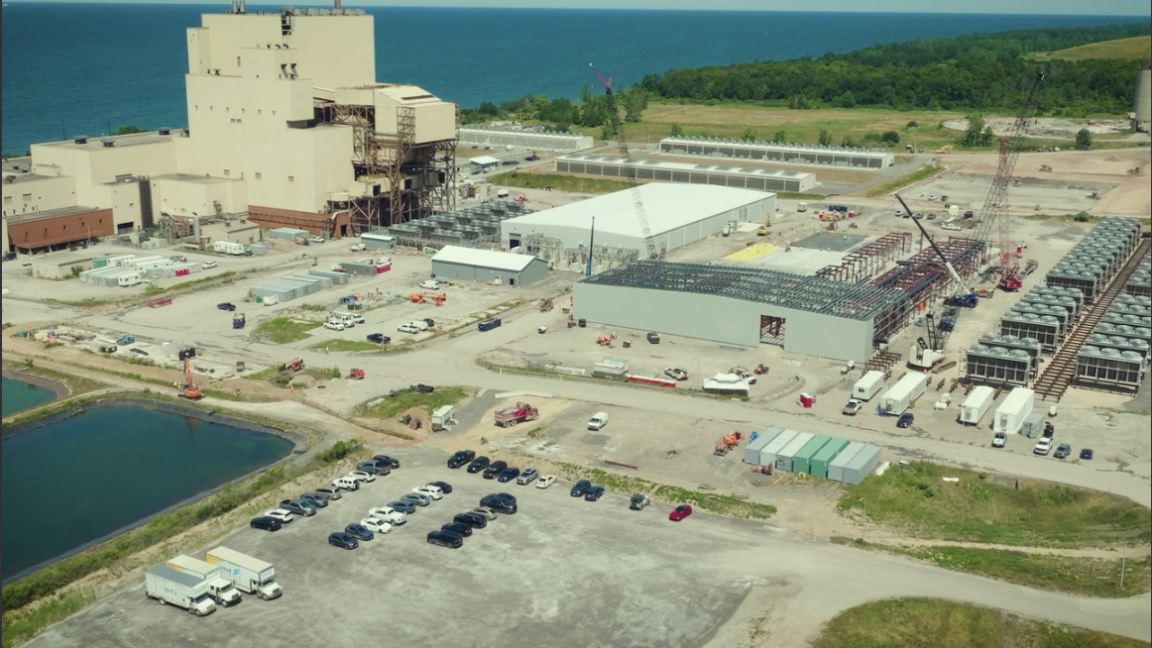
- In early June 2026, a fire broke out at a new Lake Mariner data center building in Somerset, New York. The facility is part of a $3.2 billion AI data center campus.
- Fire Chief Steve Matisz of the Barker Fire Department stated that there were no functioning fire alarms, extinguishing equipment, or operational hydrants at the time of suppression efforts, and that safety documents legally accessible to firefighters were reportedly destroyed in the fire.
- The site is located on a former coal mining area along the shores of Lake Ontario and is one of the largest AI data center construction projects in New York State.
Analysis
Table of Contents
In early June 2026, a fire broke out at a new Lake Mariner AI data center building in Somerset, New York. Fire Chief Steve Matisz of the Barker Fire Department, who was deployed to the scene, stated that not a single fire alarm, extinguishing system, or hydrant was operational. What began as an incident at a $3.2 billion campus is not merely a fire; it is a case that lays bare the accountability vacuum within multi-corporate AI data center structures.
At least four companies are involved in this campus. TeraWulf owns and operates the land and buildings, the UK-based AI company Fluidstack handles operations, Google guarantees Fluidstack’s lease payments and holds warrants for a future 14% equity stake, and Anthropic is included as a compute customer. From a practitioner’s perspective, what stands out is the land lease structure. It is reported that a company owned by TeraWulf’s own CEO leased the land to TeraWulf — a mechanism that appears to blur who holds operational safety obligations.
| Company | Role | Stated Safety Obligations |
|---|---|---|
| TeraWulf | Owner/operator, campus operating company | Acknowledged in official response |
| Fluidstack | Operating entity (UK AI company) | No separate statement |
| Lease guarantor + 14% warrant | No separate statement | |
| Anthropic | Compute customer | No separate statement |
TeraWulf’s Chief Strategy Officer Kerri Langlais officially responded that TeraWulf assumes responsibility for operational safety, emergency response, essential safety equipment, and coordination with local fire authorities. It is a glamorous acknowledgment of responsibility. However, the report that firefighters were unable to access safety documents during the fire and that those documents were destroyed in the blaze plainly illustrates the gap between “having responsibility” and “actually fulfilling that responsibility.”
The author considers this point to be the most significant. Accountability does not refer to a device that prevents a fire; it refers to the channel through which firefighters and the local community can receive information after a fire. In a state where it is not even specified who locks that channel within a multi-corporate AI data center structure, the statement that “TeraWulf takes responsibility” amounts to little more than a legal shield.
The original story was covered in detail in an Ars Technica analysis, and reports that RAM price surges are simultaneously driving up AI infrastructure expansion costs are cross-verified in The Verge’s supply chain analysis.
Where Does the Problem of Singly Attributing AI Data Center Safety Responsibility Originate?
Lake Mariner encapsulates the contradictions of multi-corporate AI data center structures. TeraWulf states it is the responsible party, but what obligations does Google — with its funding guarantees and equity warrants — bear? What about Fluidstack, which holds operational authority, or Anthropic, which generates the demand? If no single company is explicitly legally obligated to contact frontline firefighters directly, then it becomes unclear who to call when a report comes in. This is not a problem unique to Lake Mariner. Nearly every large AI data center campus being built across the United States adopts a similar multi-corporate structure.
Key Issues
- The single entity contractually responsible for operational safety must be clearly designated within multi-corporate AI data center structures.
- Where land leases are arranged with companies owned by the operating firm’s own CEO, conflict-of-interest disclosure obligations should follow.
- Pre-construction fire department awareness and remote access systems for safety documentation should be mandated.
- The scope of emergency response contributions from funding and demand-side players such as Google and Anthropic needs to be defined in advance.
What You Can Do Right Now
- Identify the list of participating companies at AI data center campuses under construction or set to operate near your residence.
- Submit a written request to the operator asking which entity holds safety responsibility and what the emergency contact network looks like.
- Map the locations of data centers within your local fire department’s jurisdiction and subscribe to fire service notification channels.
- Where lease structures overlap with companies owned by the firm’s own executives, raise the disclosure status as an agenda item at shareholder meetings.
- Check whether corporate ESG reports separate data center safety metrics into their own dedicated category.
Frequently Asked Questions
When and where did the Lake Mariner AI data center fire occur?
In early June 2026, a fire broke out at a new Lake Mariner building in Somerset, New York. The facility is part of a $3.2 billion campus being constructed on a former coal mining site along the shores of Lake Ontario.
Why is TeraWulf’s claim of safety responsibility insufficient?
Statements emerged that the safety documents firefighters were legally required to access were destroyed during the fire, and that there were no operational alarms or hydrants. Identifying who the responsible party is and ensuring that responsibility is actually carried out are two separate matters.
What is Google’s and Anthropic’s relationship to this fire?
Google guarantees Fluidstack’s lease payments and holds warrants for a future 14% equity stake. Anthropic participates as a compute customer. Neither company has made any official statement regarding safety obligations.
Why is a land lease structure with a company owned by the firm’s own CEO problematic?
When the lessor is the same individual as the operating company’s CEO, a conflict of interest arises between lease terms and operational decision-making. It becomes difficult for external audits to determine who bears the cost of emergency response funding and who sets facility investment priorities.
Source Article
This article was prepared by verifying the following original source: Ars Technica — The complex corporate web behind a $3.2 billion AI data center
Leave a Reply