
Key Takeaways
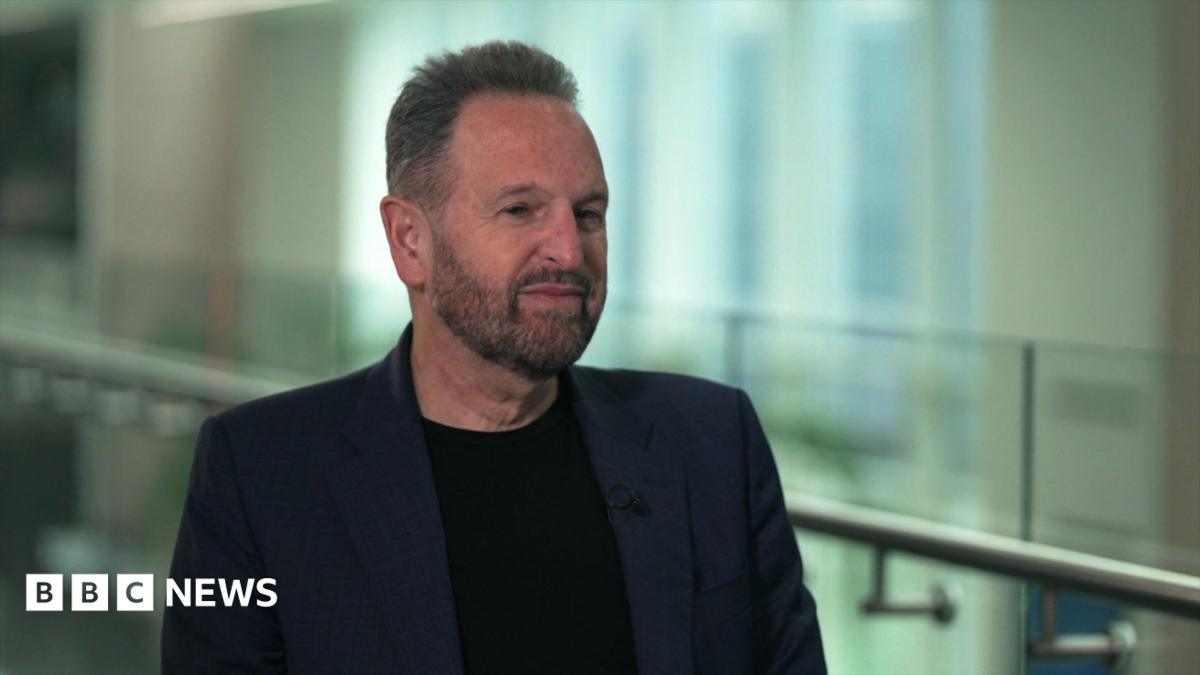
- Arm Holdings CEO Rene Haas argued in a BBC interview that AI could discover cancer treatments humans would never find in a lifetime
- Haas explained that modeling how DNA markers affect cancer remains “too complex a problem” for both humans and AI computers today
- Haas diagnosed that the current rapid growth of AI is being held back by a shortage of chips needed to build data centers
The CEO of the world’s leading semiconductor design firm simultaneously diagnosed both AI’s potential for medical and industrial innovation and the structural bottleneck of chip shortages, offering an analysis of where the UK tech industry stands and its policy implications
Table of Contents
- Key Takeaways
- The Potential and Limits of AI Cancer Treatment, According to Haas
- The Data Center Bottleneck Created by Chip Shortages
- Arm’s Market Position and the SoftBank-OpenAI Structure
- Humanoid Robots in 5 Years: Optimistic Timeline, Pessimistic on UK Manufacturing
- Key Issues
- What to Do Right Now
- Frequently Asked Questions
- Source Reference
AI cancer treatment could uncover molecules that human researchers would never reach in an entire career. That statement, made by Arm Holdings CEO Rene Haas in a BBC interview, is neither optimism nor pessimism—it is a diagnosis built on two hard constraints: data scarcity and chip bottlenecks.
This past summer, when the AI boom pushed Arm’s stock to an all-time high, the company became the most valuable UK-headquartered firm on a cash basis in history. Arm is a design house that does not manufacture. That fact lends the cool-headed precision of an engineer to Haas’s remarks. When a company that designs CPUs for tens of billions of devices worldwide—phones, cars, smartwatches, gadgets—diagnoses the limits of AI infrastructure, that is not an abstract concern but a reality measured down to the part number.
The Potential and Limits of AI Cancer Treatment, According to Haas
On BBC’s “Big Boss Interview” podcast, Haas acknowledged that modeling how DNA markers influence cancer expression is “too complex a problem” for today’s human researchers—and for AI computers as well. But his vision is that the moment one end of that complexity unravels, AI-generated cancer treatment candidates that humans would never have found in a lifetime could appear on screen.
Prof Chris Bakal of the Institute of Cancer Research (CEO of Sentinal4D) gave the same answer to the BBC. Cancer is a system in which the genome, microenvironment, and time axis are intertwined, and from that perspective, AI’s pattern recognition has room to accelerate research. This is where I find the most significance. In an industry where drug pipelines move on a ten-year timescale, automating molecular-level simulation is a narrative that flips the cost structure itself.
How Far Can the AI Cancer Treatment Timeline Be Compressed?
The compression of timelines that AI cancer treatment could bring is most visible at the candidate discovery stage. Conventional drug development takes an average of 10 to 15 years from candidate identification through Phase III clinical trials, but a conservative estimate is that if AI narrows the search space, the preclinical stage could be shortened to a matter of months. Patient recruitment, regulatory approval, and side-effect verification during the clinical stage, however, still consume the same amount of time and cost. In other words, what AI accelerates is “research,” not “approval.”
The Data Center Bottleneck Created by Chip Shortages
Haas was unequivocal: AI’s growth is being hobbled by a shortage of semiconductors needed to expand data centers. The supply chains for GPUs and high-bandwidth memory (HBM) cannot keep up with demand, pushing back timelines for new data center construction. From a practitioner’s perspective, what stands out is that Arm cannot solve this bottleneck directly. Arm is a CPU design house, while the GPU and HBM markets are dominated by NVIDIA, AMD, and SK Hynix. There is weight in the fact that the person who understands “no one knows how to make the chips” best is the one making that statement.
Arm’s Market Position and the SoftBank-OpenAI Structure
Arm’s parent company, Japan’s SoftBank, bundles together a variety of technology investments, including OpenAI. Haas’s perspective reflects the globally diversified strategy of Japanese capital. The infrastructure investment chain running from OpenAI through Brainwave to London and Stargate is a direct beneficiary path for Arm’s design demand. This past summer, Arm overtook the shale companies within the FTSE 100 to claim the top spot as the most valuable UK-headquartered firm (on a cash basis) in history. It is a signal flare that the design industry is being revalued.
Humanoid Robots in 5 Years: Optimistic Timeline, Pessimistic on UK Manufacturing
Haas predicted that humanoid robots would become commonplace within the next five years. His calculation is that once bipedal platforms are commercialized in mobility, logistics, and household applications, the low-power CPU demand inside them becomes Arm’s next growth engine. On the other hand, he is pessimistic about the possibility of chip manufacturing within the UK. Looking at TSMC Arizona, Intel Ohio, and Samsung’s new Texas plant alone, building an advanced-node fab requires tens of billions of dollars in capital. The UK government’s semiconductor strategy is centered on R&D subsidies, and there are clear limits to securing a large-scale manufacturing base. This past April, Haas also stepped down from the board of UK pharmaceutical giant AstraZeneca. The move appears to be due to differences in decision-making speed between AI healthcare startups and other large pharmaceutical companies.
Global Advanced-Node Investment Comparison
| Region | Key Project | Investment Phase | Notes |
|---|---|---|---|
| Arizona, USA | TSMC Fabs 1–3 | Fab 1 operational, Fabs 2–3 under construction | 3nm node |
| Ohio, USA | Intel New Fab | Early construction | Up to 1.4nm |
| Texas, USA | Samsung Taylor | Partial operation | 4nm node |
| Cambridge, UK | Arm R&D Headquarters | Design hub | No manufacturing |
| Kumamoto, Japan | TSMC JASM | Fab 1 operational, Fab 2 under construction | 12–6nm |
As the table shows, the UK is strong in design capabilities, but there is still a gap to achieving self-sufficient manufacturing infrastructure. This numerically supports Haas’s diagnosis.
Key Issues
- The essence of AI cancer treatment is accelerating drug candidate discovery, not short-term innovation at the point of diagnosis or treatment
- The chip shortage is a training infrastructure bottleneck centered on GPUs and HBM, and Arm is a design house that cannot resolve it directly
- For UK semiconductor self-sufficiency, fab construction capital and supply chain security are bigger variables than policy will
- The commercialization timeline for humanoid robots requires simultaneous maturity across three axes: batteries, actuators, and software
- Arm’s UK-headquartered valuation is read as a signal that the stock market is revaluing the design industry
What to Do Right Now
- Convert Arm’s quarterly stock price into relative return against the FTSE 100 to capture the six-month trend
- Listen to the original BBC “Big Boss Interview” podcast to gauge Haas’s tone directly
- Track weekly data center capex announcements from AI labs such as OpenAI, Anthropic, and xAI
- Set up alerts for AI cancer treatment industry news and monitor on a quarterly basis
- Compile new fab construction timelines from TSMC, Intel, and Samsung into a single table and compare with UK investment
Frequently Asked Questions
When did Haas give this interview?
The content was published in autumn 2025 on BBC’s “Big Boss Interview” podcast and accompanying article. The timing coincides with the period following Arm’s all-time stock price high.
Does Arm conduct AI cancer treatment research directly?
No. Arm is a chip design house that supplies CPUs for AI infrastructure, and drug R&D is a separate field. Haas’s remarks are closer to a macro-level diagnosis.
Can the UK manufacture advanced chips?
Haas himself stated he is pessimistic. The industry consensus is that capital, talent, and supply chains are all lacking compared to TSMC, Intel, and Samsung.
What does “humanoid robots in 5 years” actually mean?
It refers to the point at which bipedal robots are deployed in limited forms in households, logistics, and manufacturing sites—not fully autonomous household robots.
Source: BBC News – Arm CEO Rene Haas Interview
Source Reference
This article was prepared after reviewing the following original source: BBC News — AI cancer cures slowed by chip shortage, says UK’s biggest tech boss
Leave a Reply