
Key Summary
- The US launched a second airstrike against Iran within just two days
- President Trump warned that any Iranian retaliation would trigger a larger-scale attack
- Iran immediately announced a ‘Decisive Operation’ and moved to respond
An analysis-driven international politics and security briefing examining the resurgent US-Iran military clash and the rising geopolitical risk surrounding the Strait of Hormuz
Table of Contents
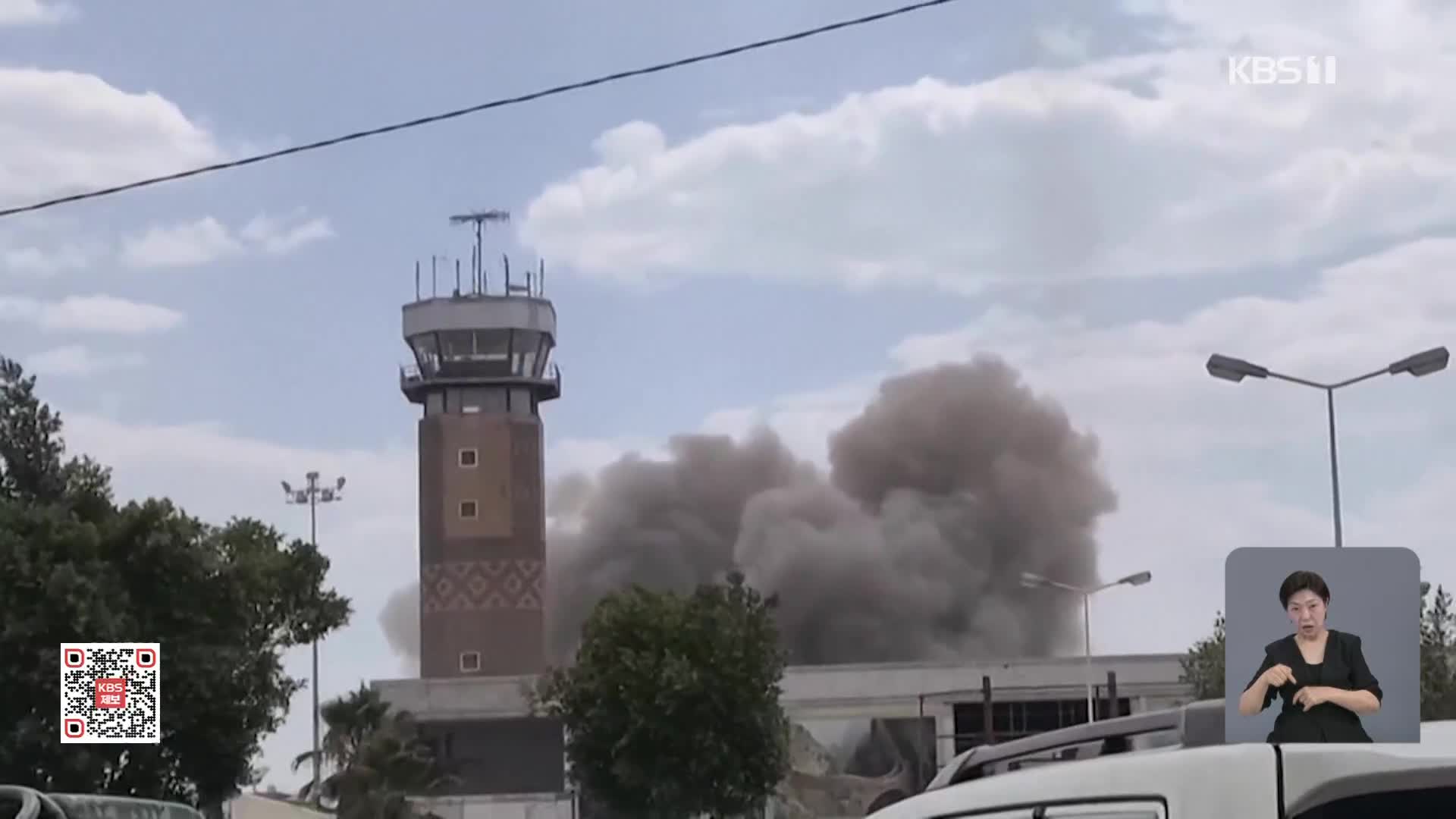
The second US airstrike on Iran was carried out within just two days. Before the dust from the first strike had even settled, Washington delivered a second blow to Tehran. Iran immediately announced a ‘Decisive Operation,’ signaling retaliation, and the US Treasury Secretary raised the Strait of Hormuz, ratcheting up the pressure on global supply chains and energy markets.
The core of this second US airstrike on Iran is not a simple escalation — it is a time-limited threat. President Trump publicly warned that any Iranian retaliation would be met with a larger-scale attack. This is an evolved form of maximum pressure that wields diplomatic coercion and military action simultaneously. What I note at this point is that the warning is not a one-sided tough talk — it is engineered like a fuse for the next action.
Iran’s moves in response to this second US airstrike are also calculated. The phrase ‘Decisive Operation’ simultaneously signals firm resolve to its domestic audience and the potential for gradual escalation to the outside world. In other words, Iran is promising retaliation while deliberately leaving the timing and intensity open. Given that the US administration has explicitly stated ‘if you strike, we hit back harder,’ the character of the clash changes entirely depending on whether Iran’s retaliation targets US military facilities directly or is carried out through proxies along shipping lanes near Hormuz.
In this context, the Strait of Hormuz — the biggest variable after the US airstrike on Iran — is decisive. The strait is a chokepoint through which roughly 20% of the world’s seaborne crude oil passes. The Treasury Secretary’s direct mention of the strait is not mere background — it signals an intent to bundle Iran’s energy exports and global maritime insurance premiums into a single pressure point. If Iran stages proxy maritime attacks near Hormuz, the US Navy will respond with escort operations, while international maritime insurance premiums will multiply overnight. The cost of war is being passed on not to the direct combatants but to oil-importing nations and the global insurance market.
The impact on Korea is not direct, but the indirect ripple effects are significant. The Ministry of Foreign Affairs officially confirmed that the vessel struck near the Strait of Hormuz was not a Korean ship and that no Korean crew members were on board. That is fortunate, but the real problem is the chain reaction in insurance premiums and freight rates.
As the Hormuz risk premium rises, maritime shipping costs on Korea’s Middle East routes, crude import prices, and aviation fuel costs all come under pressure in succession. Given Korea’s economic structure, with crude oil import dependency exceeding 90%, the short-term shock to the exchange rate and prices is not trivial. According to a KBS News report, the clash surrounding this US airstrike on Iran is expanding beyond the military dimension into a geopolitical collision linking energy, shipping, and finance in a single chain.
From a practitioner’s perspective, what stands out is the direction of the signals. The US is not seeking direct escalation so much as laying a frame that says, ‘if Iran provokes first, we secure legitimacy.’ Iran is rallying its domestic base with a ‘Decisive Operation’ while carefully selecting its actual military actions. Both sides likely want to avoid full-scale war, but a single incident near Hormuz could overturn every scenario. The texture differs from the weight of the Trump administration’s coercive diplomacy on Korea, but the larger axis of the ‘automation of great-power agendas’ is shared — meaning this US airstrike on Iran is not merely a Middle East issue but reads as a stress test for the entire global geopolitical landscape.
Issue Breakdown
- The significance of the second US airstrike on Iran — The automation of ‘time-limited threats.’ A form that has publicly disclosed the trigger for the next move.
- The interpretation of the ‘Decisive Operation’ — A two-sided message: firm declaration of resolve, while timing and intensity are left deliberately undefined.
- The weight of the Strait of Hormuz — About 20% of global seaborne crude passes through; pressure consolidation is immediately reflected in insurance premiums and freight rates.
- Korea’s exposure — Direct military risk is low; indirect energy, shipping, and exchange-rate ripple effects are immediate.
What to Do Right Now
- Check the Lloyd’s Joint War Committee listed areas near the Strait of Hormuz weekly, and factor the rise in maritime shipping costs into export quotations in advance.
- Review the Hormuz risk exposure of your crude/refined-oil ETFs and energy-importing stocks portfolio, and raise your currency-hedge ratio by one notch.
- For Middle East route bookings, pre-calculate the cost of the Cape Town diversion route to prepare for sudden order cancellations and insurance refusals.
- Check consular protection channels and the Ministry of Trade, Industry and Energy / Ministry of Foreign Affairs energy security briefings at least once a week, and reassess Middle East transit in business travel and dispatch schedules.
- Run your cash flow again with a scenario assuming a 10–15% rise in freight costs built into your company’s vehicle and logistics pricing tables.
Frequently Asked Questions
Why did the second US airstrike on Iran happen in just two days?
It is analyzed that after the first strike, signs of Iranian retaliation were detected, and Washington carried out the second blow under a ‘preemptive, firm-response’ frame. At the same time, a public warning of a larger-scale attack in the event of retaliation accompanied the action, making the trigger for further action explicit.
Why is the Strait of Hormuz so important?
About 20% of the world’s seaborne crude oil passes through this strait. Any maritime attack in this area would simultaneously send international maritime insurance premiums and crude prices soaring, rattling the entire global supply chain in a short time. The combination of this US airstrike on Iran with the Hormuz variable has expanded the blast radius further.
Is there a direct military impact on Korea?
Korea’s Ministry of Foreign Affairs officially confirmed that the vessel struck near Hormuz was not a Korean ship and that no Korean crew were on board. The risk of direct military engagement is low, but with crude oil import dependency exceeding 90%, Korea cannot avoid the indirect ripple effects on energy prices and the exchange rate.
What does Iran’s ‘Decisive Operation’ mean?
It is a two-sided message: firm resolve internally, while deliberately leaving when, where, and at what intensity retaliation will come. With the US having explicitly stated ‘strike back and we hit harder,’ Iran’s calculation is to keep options open while avoiding full-scale great-power confrontation.
Reference Source
This article was prepared after reviewing the following original source: KBS News — US strikes Iran again within two days… Iran responds with ‘Decisive Operation’
Expert Commentary (AI)
International Security & Military Strategy Expert
A collision between a public-trigger escalation warning and strategic ambiguity — elegant as a deterrence design, but the ‘blanks’ both sides leave open become a time bomb of uncontrollable escalation the moment an accident near Hormuz fills them in
The combination of a second strike within two days and the public warning of ‘we will hit back harder if you retaliate’ is not a simple escalation but an automated threat strategy that forces the opponent’s choices — from a deterrence-theory perspective, it reads as a design that simultaneously secures cost imposition and a diplomatic escape ramp. Iran’s ‘Decisive Operation’ is also a textbook strategic-ambiguity tactic that deliberately leaves timing, target, and intensity undefined, with the calculation of handling domestic mobilization and external deterrence in a single sentence. The weakness of this structure, however, is clear. A public trigger raises the political cost of retreat for both sides, so if Iran settles for symbolic retaliation, US deterrence credibility cracks, and if it retaliates in substance, the US is forced into a commitment trap to deliver on its warning. The real maximum risk is not full-scale war, but a gray-zone incident — such as a proxy maritime attack near Hormuz — triggering the escalation ladder beyond both sides’ designs; historically, single incidents of attack in the Gulf have played that role on multiple occasions. Ultimately, the success of this phase hinges on either side exercising ‘the patience not to fill in the blanks,’ but as the second strike within 48 hours shows, both sides’ margin for that patience is shrinking — which is the most concerning point.
Energy & International Maritime Economics Expert
War-risk premiums move before the bullets do — Hormuz pressure is not a military event but a financial-channel event that is immediately reflected in oil prices, insurance premiums, and freight rates
The Strait of Hormuz is the largest chokepoint through which roughly one-fifth of the world’s seaborne crude passes, and even without a physical blockade, the risk premium in these waters is structurally reflected simultaneously in insurance premiums, freight rates, and crude futures prices. During the 2019 Gulf tanker attacks, the actual supply disruption was limited, yet war-risk insurance rates spiked several-fold, immediately driving up transport costs and landed prices — a precedent that applies here as well, and in this phase, the expansion of Lloyd’s Joint War Committee listed areas will set prices before the actual scale of engagement does. The Treasury Secretary’s direct mention of the military chokepoint is the completion of an economic coercion design that bundles Iran’s energy exports and global maritime insurance into a single pressure point, amplifying the effect of military operations through financial channels — a textbook design. The structural flaw of this approach, however, is the externality by which the cost of war is passed on not to the combatants but to neutral importing nations such as Korea, Japan, and India, and to the global insurance market — the higher the pressure intensity, the more asymmetrically the third-country burden grows. Korea, with its double exposure of over 90% crude oil import dependency and concentration on Middle East routes, cannot avoid short-term exchange-rate, price, and logistics-cost ripple effects, so scenarios using strategic petroleum reserves and alternative sourcing / currency hedging need to be incorporated as standing mechanisms rather than post-hoc responses.
Critical Analyst
A second strike within two days and the Treasury Secretary’s strait remarks — behind the surface of military operations lies a design for ‘economic asphyxiation’ and an under-the-surface architecture for preempting the justification of escalation
The official explanation is ‘preemptive, firm response to the detection of Iranian retaliatory moves,’ but looking beneath the surface, the timing of a second strike within 48 hours raises the possibility that the operation was on a pre-set schedule independent of Iran’s response — the core question is why the specific grounds for the second strike have not been disclosed. The public trigger of ‘we hit back harder if you retaliate’ reads as a frame pre-engineered, before any deterrence warning, to convert any Iranian response into a justification for escalation. The real point worth focusing on is not the military leadership but the fact that the Treasury Secretary raised Hormuz — suggesting that economic warfare, not a naval blockade, through insurance and shipping regulations to ‘privatize’ the strangulation of Iranian crude exports, may already be coordinated. In addition, since there are actors who benefit from oil-price volatility and the war-risk insurance and futures markets during every escalation cycle, the possibility that the continuation of tension itself is a profit structure for some cannot be ruled out. Ultimately, the real question is not ‘Did the US strike Iran?’ but ‘Whose schedule and whose P&L is this tension staged to?’ and in the next phase, we should watch which market’s positions moved first, rather than the timing of retaliation.
Under-the-Surface Scenarios
- The second airstrike may have been on a pre-set schedule independent of Iran’s response, with ‘detection of retaliatory moves’ as a justification attached after the fact — the circumstantial evidence is the second strike coming before the effects of the first could even be verified, and the absence of publicly disclosed specific threat grounds.
- The Treasury Secretary’s reference to Hormuz may not be a naval blockade but a ‘privatized blockade’ through a spike in war-risk insurance premiums — a pre-signal of economic warfare designed to make insurers themselves refuse to handle Iranian crude shipments.
- Since the cycle of escalating tensions repeatedly produces a structure in which advanced positions in energy futures, insurance, and shipping markets profit, the possibility that the timing of the escalation phase has overlapped with certain financial players’ P&L calculations cannot be ruled out.
Leave a Reply