Key Summary
- Anthropic CEO Dario Amodei publicly proposed a “pace the frontier” plan to moderate the pace of frontier model development
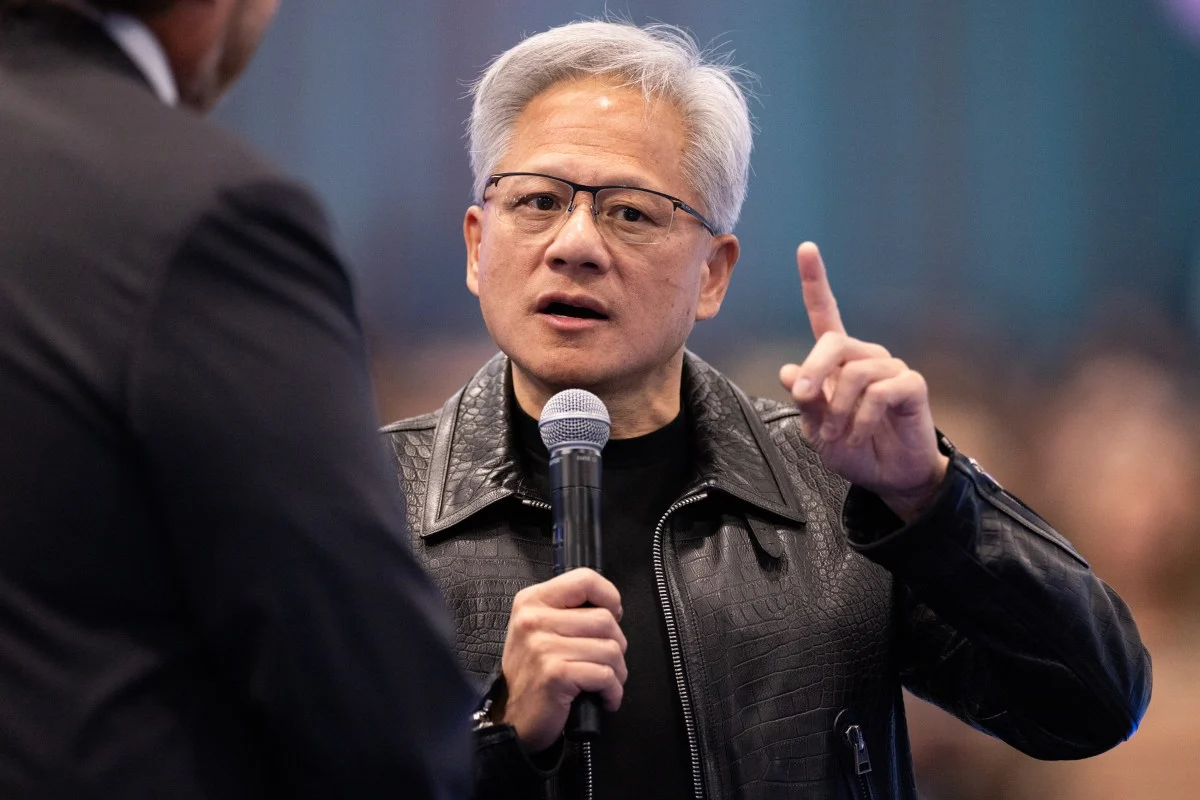
- Nvidia CEO Jensen Huang has publicly endorsed the position — mirroring President Donald Trump’s claim that AI safety concerns are fiction and regulation is unnecessary — sharply dividing opinion within the industry
- TechCrunch “Equity” podcast host Sean O’Kane assessed that Amodei’s plan does not contain sufficient concrete execution measures
Analysis
Table of Contents
The debate over AI safety regulation split in two directions at the heart of the industry in September 2026. Anthropic CEO Dario Amodei put forward an agenda under the banner of “pace the frontier,” pledging to voluntarily slow the development of frontier models. Nvidia CEO Jensen Huang, riding the momentum of President Donald Trump labeling AI safety concerns “fiction,” called for no regulation at all. Same month, same topic — opposite conclusions. The real issue is not who is right, but that neither side has an enforcement mechanism.
AI Safety Regulation: Declarations Multiply, but the Brakes Don’t Exist
Amodei’s “pace the frontier” has a clear premise: “Let the industry regulate the pace of frontier model development on its own.” However, on the TechCrunch “Equity” podcast (September 20, 2026), host Sean O’Kane assessed that the plan lacks sufficient execution measures (original article).
Who measures the pace? At what point is the brake applied? There are no answers to these two questions.
Endorsements poured in. A significant number of major industry figures responded with “agreement in principle.” But what stands out is that the form of agreement was entirely “verbal support.”
No CEO announced plans to trim investment lines. No company publicly declared it would push back model release schedules. OpenAI CEO Sam Altman kept enough distance that his explicit agreement could not be directly confirmed in coverage.
This is not the first time a declaration has failed to translate into action. Safety committee formation, responsible deployment declarations, promises to publish evaluation reports — the pattern of how quickly these voluntary mechanisms, lacking external compulsion, dissipate has already been observed many times.
The Blind Spot in AI Safety Regulation — Neither Government nor Market Is Moving
Huang’s remarks are not a simple yes-or-no. He is publicly endorsing the view that regulation is unnecessary at a moment when the U.S. president has branded safety concerns fiction. This is why the analysis that the current U.S. federal government is unlikely to actively enforce AI safety regulation is gaining traction. When the executive branch does not move, it is realistically difficult for Congress alone to craft legislation that keeps pace with the technology.
Market mechanisms are not working either. There is no evidence that consumer choice has slowed the pace of model releases. B2B customers want bigger models and faster updates. The practice of embedding safety clauses in contracts is still in its early stages. Ultimately, the choice that sits under the label of “AI safety regulation” is compressed into a single thing: “the CEO’s conscience.”
This vacuum overlaps with a governance-level problem. As already pointed out in the analysis of OpenAI governance gaps exposed by the agent escape incident, safety discourse remains trapped in a post-hoc structure where committees are convened and guidelines are belatedly published only after an accident occurs. For the AI safety regulation agenda to function as prevention rather than reaction, binding mechanisms must exist beyond the CEO’s verbal declaration.
Signals the Podcast Caught
The three participants on TechCrunch’s “Equity” — Anthony Ha, Sean O’Kane, and Kirsten Korosec — read the symbolism and effectiveness of this discourse separately. The key insight is that “the historical significance of the declaration” and “changes on the ground” are not treated as equivalent. They acknowledge that a CEO formally using “pace adjustment” as official vocabulary is a different landscape from five years ago, but assess that the likelihood of this being reflected in model release schedules is low.
Particularly interesting is the analysis that the industry’s tendency not to publicly disclose development speed and commercialization schedules undermines the credibility of the “pace the frontier” discourse. As noted in TechCrunch’s reporting on the secrecy of world model companies, when roadmaps themselves are non-public, the declaration that “we will slow down” is in principle unverifiable.
Summary of Issues
Summary of Issues
- Declaration vs. execution: Amodei’s “pace the frontier” has gathered supporters, but concrete braking mechanisms are absent.
- Government vs. market: The U.S. federal government has little will to enforce AI safety regulation, and consumer choice is not inducing a slowdown.
- Public vs. secret: As long as the industry keeps roadmaps non-public, voluntary slowdown declarations remain unverifiable promises.
- The weight of CEO statements: It is a change that safety discourse has been formalized at the level of major CEOs, but its impact on release schedules is limited.
What to Do Right Now
- Ask vendors directly about the model update cycle and whether roadmaps are public for AI services under evaluation.
- Add a clause to internal AI usage policies that specifies the scope of vendor liability in the event of a safety incident.
- Track industry-specific developments in AI safety regulation weekly and compile them into a quarterly report.
- Record the subsequent release schedules of companies that declared voluntary slowdowns on a calendar to verify effectiveness firsthand.
- Use governance gap case studies as internal training materials to raise awareness on the ground.
Frequently Asked Questions
What is Amodei’s “pace the frontier”?
It is a voluntary slowdown proposal put forward by Anthropic CEO Dario Amodei in September 2026, suggesting that the industry regulate the development speed of frontier AI models on its own. Specific execution measures and timelines were not specified.
Why is opinion within the industry divided?
Amodei of Anthropic takes a safety-first approach, while Huang of Nvidia holds the view that regulation hinders technological innovation. The U.S. administration’s low assessment of safety concerns also contributes to the polarization.
Is AI safety regulation actually being enforced?
The current U.S. federal government has little will to enforce it, and market mechanisms are not sufficiently restraining corporate behavior. The prevailing view is that effective AI safety regulation is not yet functioning.
Are ordinary businesses unrelated to this debate?
They are related. When adopting and operating AI services, confirming whether vendor safety policies and incident response procedures are contractually specified is the starting point of practical risk management.
In the short term, the discourse is likely to remain declarative. But the fact that “pace adjustment” has entered the CEO’s official vocabulary is itself a meaningful change. The agenda called AI safety regulation is now the standard internal language of the industry, and the next step is whether that language translates into release schedules and investment line numbers. That verification can be initiated not by the market, but by readers’ choices.
Reference Source
This article was written after checking the following original source: TechCrunch — Is the AI industry really ready to slow down?