Category: Hot News & Entertainment

  • Apple CEO Change: A New Chapter After 15 Years — Tim Cook’s Legacy and What Awaits Ternus

    Apple CEO Change: A New Chapter After 15 Years — Tim Cook’s Legacy and What Awaits Ternus

    Key Summary

    • John Ternus succeeds Tim Cook as Apple’s new CEO
    • Outgoing CEO Tim Cook will remain with the company as executive chair, stepping back from day-to-day operations while retaining influence at the board level
    • According to the NYT report, the incoming CEO takes the helm at a moment when Apple faces major shifts on both the technology and business fronts simultaneously

    Analytical — Examining the organizational and strategic significance of a Big Tech CEO transition and tracing the axes of change that will shape Apple’s next decade

    Table of Contents

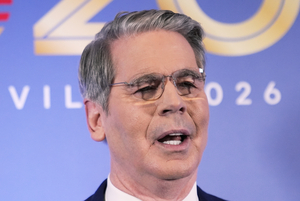
    On September 1, 2026, the official announcement of Apple’s CEO change was made. Tim Cook will move to the executive chair position, and John Ternus, who led hardware engineering for 15 years, will take over as the new CEO. As first reported by the NYT, this decision carries particular weight because it marks the departure of one of the longest-serving sitting CEOs among Big Tech companies.

    Tim Cook became CEO in August 2011, succeeding Steve Jobs. Over 15 years, he grew the company’s market capitalization from several hundred billion dollars to the 3-trillion-dollar range and expanded the share of services revenue from single digits to the mid-20% range. During the same period, criticism that “innovation has stalled” followed consistently. This writer believes these 15 years cannot be read as a simple binary of success or failure.

    Apple CEO Change: The Key Facts Confirmed by the NYT

    The Apple CEO change can be distilled into two facts. One is the inauguration of John Ternus; the other is Tim Cook’s remaining as executive chair. This effectively formalizes a dual-leadership structure, distinct from the one-person system of the Jobs era when the board chair also served as CEO. The detailed timeline, changes in board composition, and the timing of the new CEO’s first official remarks fall outside the scope of verification and remain gaps to be filled by follow-up reporting.

    What It Means That Tim Cook Remains as Executive Chair

    It is easy to read this as an honorary role, but operationally it is different. The executive chair holds a voice in designing the board’s agenda and in reviewing CEO succession, personnel, and strategy. Cook has stepped back from the front line of decision-making, but he will remain in the meetings that set the major direction. The key question is the degree of autonomy the successor CEO will have within this structure.

    If the chair position steps up to play a strategic guiding role, the new CEO’s hands will be tied; if it self-restrains to the level of advisor, synergy emerges. The next year will be the focal point of where this balance settles.

    The Four Axes of Change Ternus Will Inherit at Once

    The NYT described the incoming CEO as “facing major shifts on both the technology and business fronts simultaneously.” Unpacked, four overlapping axes emerge.

    Axis Current Situation Ternus’s Year-One Task
    Hardware Lineup iPhone market share stagnant, new category absent Set direction for next-gen form factors and AR glasses
    Services Share Revenue in the mid-20% range, signs of growth deceleration Redesign revenue model across subscriptions, ads, and fintech
    AI Competition Post-Apple Intelligence roadmap undisclosed Make on-device and cloud AI strategy visible
    Supply Chain & China Risk U.S.–China tensions, exchange-rate and tariff variables Calibrate pace of expanding production share in India and Vietnam

    The four axes are intertwined. If the AI strategy is weak, new-category hardware loses its persuasiveness, and if services revenue wobbles, defending market capitalization becomes difficult. Rather than solving all of these at once, the new CEO’s first-year tone will most likely reveal which axis is being prioritized.

    Tim Cook’s 15 Years: Legacy and Unfinished Tasks

    Tim Cook’s 15 years were a textbook case of operational efficiency and global supply chain optimization. At the same time, they left intact a product portfolio disproportionately weighted toward the iPhone. A structure in which more than half of revenue comes from a single lineup is the first area the new CEO must address.

    What stands out from a practitioner’s perspective is the “pace of decision-making.” Under the Cook era, decisions were made public only after conservative review. In areas where time itself is competitive advantage, such as AI and AR, how quickly Ternus can make decisions will be the test of his first quarter.

    The Apple CEO Change and the Trade-offs of Dual Leadership

    This Apple CEO change also contrasts with succession models at other Big Tech firms. When Microsoft replaced its CEO with Satya Nadella in 2014, the outgoing CEO departed completely. When Sundar Pichai became CEO of Alphabet in 2019, Google likewise chose board chair separation. Apple alone has kept its outgoing CEO in the executive chair seat. Whether this choice becomes a source of stability or a ball and chain will be judged by the personnel and strategic messages that follow.

    Outlook: Short-term Signals and Long-term KPIs

    The signals that investors, developers, and consumers need to confirm within a year are different. Investors should watch the guidance personally shaped by the new CEO in the first earnings call; developers should watch the breadth of AI and toolchain at WWDC 2027’s keynote; consumers should watch the launch timing of new-category candidates (AR, foldables, home robots). Long-term KPIs worth tracking are three: iPhone dependency, services revenue share, and the ratio of AI-related R&D spending to revenue.

    Summary of Key Issues

    • How much the outgoing CEO’s retention as executive chair constrains the successor’s autonomy is the biggest variable for the next year.
    • With three tasks — iPhone dependency, services growth deceleration, and the pace of AI transition — all open at once, priority selection itself becomes the face of leadership.
    • Compared with Microsoft and Google, which chose chair separation, it is necessary to watch closely what signals Apple’s dual structure sends.

    What to Do Right Now

    • Mark Apple’s first earnings call date after September on your calendar via the investor relations page.
    • Set keyword alerts for “John Ternus” on the NYT, Bloomberg, and Reuters to receive follow-up reporting immediately.
    • Download the last four quarters of the Tim Cook era as PDFs and build a comparison table against the next two quarters’ numbers.
    • Create a personal watchlist note to track WWDC 2027 schedule and 10-K filings.

    Frequently Asked Questions

    When was the Apple CEO change announced?

    It has been confirmed that the official announcement was made based on the NYT report on September 1, 2026. Detailed timing may be updated as follow-up reporting comes in.

    Is Tim Cook leaving the company entirely?

    No. He will remain as executive chair, retaining influence at the board level. He steps out of the front line of decision-making, but does not fully depart.

    Who is John Ternus?

    He is the head of Apple’s hardware engineering division and has led the design and supply chain of the product lineup for 15 years. He had been mentioned as the leading internal candidate for this Apple CEO change.

    What impact will this Apple CEO change have on Apple’s stock price?

    In the short term, it is being read as an event that resolves uncertainty, and in the medium to long term, the direction will be determined by the speed at which the new CEO makes the AI and services strategy visible.

    Source Article

    This article was written after reviewing the following original source: NY Times Tech — John Ternus Replaces Tim Cook as Apple CEO

  • 5 Analyses of Kim Yong-beom’s Resignation — The Control Tower That Crumbled Just Two Days After the Cabinet Reshuffle

    5 Analyses of Kim Yong-beom’s Resignation — The Control Tower That Crumbled Just Two Days After the Cabinet Reshuffle

    Kim Yong-beom's resignation
    Analysis of the sudden resignation of Blue House Policy Chief Kim Yong-beom under the Lee Jae-myung administration and its background

    Key Summary

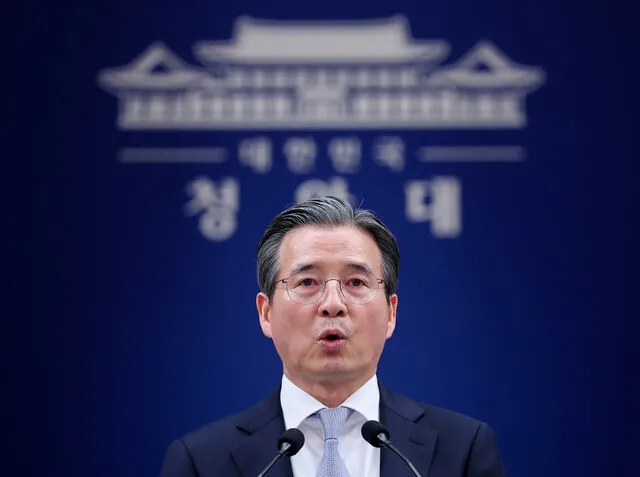
    • Blue House Policy Chief Kim Yong-beom expressed his intention to resign on the 1st, and President Lee accepted the resignation the same day, making it official. Kang Yu-jeong, senior Blue House spokesperson, held an unscheduled briefing that morning to announce the news.
    • This replacement is the first high-level Blue House staff change in the 1 year and 3 months since the Lee Jae-myung administration took office, and is regarded as the first reshuffle of senior secretaries and secretaries-general level personnel.
    • The timing of Chief Kim’s resignation came just two days after the President replaced key economic and housing policy officials on the 30th, including Deputy Prime Minister Koo Yun-cheol (who also serves as Minister of Economy and Finance) and Minister of Land, Infrastructure and Transport Kim Yoon-deok. This is interpreted as a signal that the administration is also replacing the command center of economic policy to shift the course of governance.

    A cross-verification analysis examining the timing, background, and policy implications of the Blue House policy chief’s resignation immediately following the cabinet reshuffle, while simultaneously checking the room for and limits of personnel changes spreading across the entire economic policy spectrum

    Table of Contents

    Kim Yong-beom’s resignation was officially announced through an unscheduled morning briefing on the 1st. The Blue House policy chief expressed his intention to resign that day, and President Lee immediately accepted the resignation. It is the first high-level staff replacement in the 1 year and 3 months since the Lee Jae-myung administration took office, and comes just two days after the preceding reshuffle of economic ministries. This is not a simple personnel change; it is a signal showing how the ruling camp reads the current situation in which public sentiment and policy credibility are being shaken simultaneously.

    The point I find most significant in this event is timing. Just one day before resigning, at the final daily issue inspection meeting, Chief Kim said, “It was an honor to serve as the first policy chief, and this is a time when the Lee Jae-myung administration needs new energy.” That same evening, a Facebook post appeared reading, “There is still much to do, but I believe the time has come for me to step aside so that the next people can take on their share.” That is far too composed for someone packing up. It means he had already made peace with his decision.

    What Happened in the 5 Days Before Kim Yong-beom’s Resignation

    Let’s rewind the timeline.

    • August 27 — Democratic Party of Korea Rep. Kim Young-jin publicly criticized, saying “Those who introduced leveraged ETFs must bear a certain degree of responsibility.” This marks the point at which calls for policy accountability within the ruling party began to take formal shape.
    • August 29 — One day before the cabinet reshuffle announcement. Chief Kim reiterated his policy resolve on Facebook, writing, “If the three mega projects were an investment for the great leap forward of Korea’s industry, now we must also begin investing in the re-leap of each and every citizen.”
    • August 30 — Replacement of key economic and housing policy personnel, including Deputy Prime Minister Koo Yun-cheol and Minister of Land, Infrastructure and Transport Kim Yoon-deok. The opposition and some media outlets sharply criticized the move, saying “They left the control tower in place and merely swapped out the ministers.”
    • August 31 — Chief Kim was absent from the National Assembly’s Special Committee on Budget and Accounts review of non-economic ministries, citing an “emergency meeting” as his reason. His scheduled events were canceled one after another.
    • September 1 — Senior spokesperson Kang Yu-jeong officially announced the resignation at an unscheduled morning briefing. That same evening, the expression of intent to resign, the acceptance of the resignation, and the Facebook post were all released at once.

    Why Did Three Lines of Responsibility Erupt Simultaneously

    The Blue House explained, “The average tenure of Blue House staff ranges from about 1 year and 2 months to 1 year and 6 months, and a kind of staff rotation is part of providing smooth momentum for policy execution.” But the picture painted by the political circle is different. Three lines of discontent had been building up.

    First, controversy over housing supply policy. With the presale market in Seoul and the metropolitan area slowing, frustration among the middle class and actual demanders grew simultaneously as the pace of deregulation and the timing of housing supply were repeatedly adjusted. Second, the expansion of stock market volatility caused by the introduction of single-stock leveraged ETFs. As individual investors — so-called “ants” — crowded into high-volatility stocks, losses accumulated, which directly fed into Rep. Kim Young-jin’s call for accountability.

    Third, the downward trend in President Lee’s approval ratings. With no clear means of recovering public sentiment beyond personnel cards, replacing the control tower effectively functioned as a last-resort option.

    A ruling party official predicted, “The direction of economic policy is decided by the president; it doesn’t change just because a working-level official changes,” and forecast no major immediate shift in policy direction. However, what stands out from a working-level perspective is the fact that housing, ETFs, and approval ratings are all intertwined. Because three issues overlapped — not just one — the weight of responsibility converged on a single designer.

    Summary of Key Issues

    • Where does the boundary of responsibility lie? — The line of responsibility between the policy designer (policy chief) and the executor (minister) is ambiguous. This replacement is a case in which the designer’s side stepped down first, and it is likely to set a precedent in similar future situations.
    • Will the policy direction be maintained? — The ruling party draws a firm line, saying “the direction is decided by the president” and that there will be no major change, but the execution speed and priorities of financial, supply, and three mega project policies in practice have ample room to be readjusted.
    • Is this the beginning of a Year Two reorganization? — With the subsequent appointment of senior secretary and secretary-general level personnel expected, Kim Yong-beom’s resignation may not be a one-off event but rather the starting gun for a full-scale Blue House personnel overhaul.
    • The cost of a control tower vacuum — While the deputy prime minister and ministers have been replaced, decision-making across the budget, finance, and housing tracks may be temporarily dispersed during the policy chief vacancy period.

    Who Are the Candidates to Replace the Blue House Policy Chief

    No official list of candidates has been announced yet, but given the need to address three issues simultaneously — housing, ETFs, and approval ratings — the successor profile narrows down to three types. This is because three criteria must work at the same time: policy continuity, prevention of political isolation, and recovery of public sentiment.

    Successor Type Strengths Risks
    Fiscal and financial expert (former or current vice-minister level) Ensures continuity of budget and financial policy, immediate deployment of follow-up measures for ETFs and housing Lack of political communication skills, weak coordination with the National Assembly and ruling party
    From the National Assembly or ruling party (former ministers, former senior secretaries) Secures bipartisan consensus lines, prevents political isolation Expertise in economic and industrial policy needs to be verified
    From civic or social circles (economic civic groups, labor, academia) Image of public sentiment recovery, policy diversification Period needed to adapt to Blue House working-level operations, potential resistance from the bureaucratic organization

    Which additional variables are reflected in the actual selection process will be important. Because the three issues of housing, ETFs, and approval ratings were intertwined, if the successor is a single-track expert, a second shock could come quickly.

    Policy Tasks Left Behind by Kim Yong-beom’s Resignation

    The Blue House and the ruling party’s explanation is: “The direction of policy is decided by the president, and the direction doesn’t change just because a working-level official changes.” That is correct. Major tasks such as the three mega projects, investment in the United States, next year’s budget, the expansion of housing supply, and tax reform are all agendas that the president himself has emphasized. However, with the working-level execution layer having changed, the “speed” and “messaging” will inevitably differ.

    In particular, regarding the single-stock leveraged ETF, the question of “who forced the introduction through” has not yet been resolved. The fact that Chief Kim was the designer is hard to deny, and Hankyoreh’s analysis also identified “housing and leverage responsibility” as the direct background for the resignation. According to JTBC reporting, the dominant assessment is that ETF public sentiment was the biggest weight in the decision to accept the resignation.

    In my view, the real test of this personnel change lies not in whether short-term shocks are absorbed, but in how quickly a follow-up policy package is put together. With voices within the ruling party publicly calling for someone to “take responsibility,” as seen in Rep. Kim Young-jin’s remarks on August 27, the Blue House’s personnel explanation alone will not be enough. As shown in the controversy over Rep. Yong Hye-in’s retention of her seat, which revealed the internal ruling party blame game, the possibility of this devolving into a partisan political battle must also be left open. In comparison with global cases, it is worth referencing Apple’s first CEO change in 15 years — how long a leadership change takes to restore public sentiment ultimately depends on the follow-up cards.

    What You Can Do Right Now

    • Check your holdings in single-stock leveraged ETFs and set principles in advance for adjusting your allocation during periods of market volatility.
    • Hold off on purchase decisions until a follow-up policy package on housing supply and tax reform is announced, and separately track subscription schedules and any changes in the DSR regulation.
    • When the successor senior secretary and secretary-general level appointments are announced, verify their official career history and compare what expertise is coming into the economic and financial track.
    • Check national approval ratings and KOSPI and housing transaction volume indicators on the same cycle, and numerically verify how quickly policy cards are reflected in actual markets.

    Frequently Asked Questions

    What is the official reason for Kim Yong-beom’s resignation?

    The Blue House explained it as “part of efforts to provide smooth momentum for policy execution.” In contrast, the political circle sees it as the result of overlapping housing and leveraged ETF responsibility issues and declining approval ratings. The gap between these two explanations is the essence of this event, and how quickly the follow-up policy package fills that gap will be key.

    Why did single-stock leveraged ETFs become a problem?

    As cases of individuals crowding into high-volatility stocks and suffering daily losses accumulated, a logic was formed that “the policy designer who forced the introduction through bears responsibility.” Rep. Kim Young-jin’s remark about “a certain degree of responsibility” was the signal that formalized this framework, and the dominant assessment is that it directly contributed to the background of Kim Yong-beom’s resignation.

    Will the policy direction change?

    The ruling party signaled that the direction will be maintained, saying “the direction is decided by the president.” However, the execution speed and messaging of housing supply, financial policy, and the three mega projects have ample room to be adjusted depending on the successor policy chief. The first policy package after Kim Yong-beom’s resignation will effectively serve as the market’s test.

    What type of successor is most likely?

    Three candidate groups are mentioned: fiscal and financial experts, those from the National Assembly or ruling party, and those from civic and social circles. Because three issues — housing, ETFs, and approval ratings — must be addressed simultaneously, the prevailing view is that a multi-track figure is more likely than a single-track expert. A visible signal of the selection is expected within about two weeks after Kim Yong-beom’s resignation.

  • 3 Flashpoints in Rep. Yong Hye-in’s Seat Retention — ‘Cheating’ vs. ‘Extra-Parliamentary Party Crisis’ Showdown

    3 Flashpoints in Rep. Yong Hye-in’s Seat Retention — ‘Cheating’ vs. ‘Extra-Parliamentary Party Crisis’ Showdown

    Yong Hye-in seat

    Key Summary

    • Rep. Yong Hye-in of the Basic Income Party, nominated as Minister of Gender Equality and Family, reversed her resignation announcement and declared she would keep her seat, igniting a new controversy.
    • Yong cited the difficulty of the Basic Income Party becoming an extra-parliamentary party if she resigned as the rationale for retaining her seat.
    • Former Justice Party Rep. Jang Hye-young appeared on CBS Radio’s “Park Sung-tae News Show” on January 1 and labeled the seat-retention decision a “sophistry” wrapped in the “special circumstances of a satellite party.”

    An analytical piece that decomposes the controversy along four axes: the legitimacy of satellite-party seats, the principles of seat succession for minor parties, the constitutional and institutional questions surrounding a minister’s dual office-holding, and the moral vetting of nominees. It includes intra-progressive criticism to avoid one-sided partisan commentary.

    Sharp criticism is mounting that Rep. Yong Hye-in’s decision to keep her seat amounts to a “seat obtained by cheating.” Appearing on CBS Radio’s “Park Sung-tae News Show” on January 1, former Justice Party Rep. Jang Hye-young described the seat-retention plan of Yong — the Basic Income Party leader nominated as Minister of Gender Equality and Family — as a sophistry disguised by the “special circumstances of a satellite party.” According to a Hankyoreh report, former Rep. Jang took aim in turn at the legitimacy of the seat, the minister’s capabilities, and the inconsistency of Yong’s stated positions.

    1. The Facts — From the January 16 Luncheon to the Seat-Retention Reversal

    Walking through the events in order makes things simple. President-elect Lee Jae-myung held a luncheon with party leaders, including the floor leaders of both the ruling and opposition parties, on January 16 to discuss minister- and vice-minister-level personnel. At that meeting, Rep. Yong Hye-in, a proportional representation lawmaker of the Basic Income Party, was floated as a candidate for Minister of Gender Equality and Family.

    Yong reportedly expressed her intention to resign immediately after being nominated, but reversed course the following day, arguing that “if I resign, the Basic Income Party will become an extra-parliamentary party,” and announced she would retain her legislative seat. This Yong Hye-in seat-retention reversal is the starting point of the saga. Once it hardened into the party’s official position, uncomfortable glares began emerging even from figures within the same political camp.

    2. The Three Points Raised by Former Rep. Jang Hye-young

    Former Rep. Jang’s criticism splits into three threads. The first is the legitimacy of the seat. Given the original purpose of satellite-party seats, the argument goes, the logic of using a seat as a weapon to secure a ministerial post and then holding onto that very seat is a sophistry disguised as “the special circumstances of a satellite party.”

    The second is the minister’s capacity to perform the job. Former Rep. Jang defined the role as “one that requires the ability to take a stand against the government,” then added, “This person is far too quick to read the room.” The implication is that a “politically savvy appointee” in a ministry like Gender Equality and Family, which must chart an independent line on policy issues, becomes a wild card depending on the choices she makes.

    The third is consistency of position. Yong previously welcomed the abolition of the prosecution’s supplementary investigation authority, and former Rep. Jang pointed out that such an attitude amounts to “shifting one’s stance on the rights of the socially vulnerable according to personal political interest.” It carries weight that even a fellow party figure has been unable to narrow down an “official position.”

    3. The Structure of the Satellite-Party Seat and the ‘Cheating’ Debate

    Proportional representation satellite-party seats were introduced to compensate for a structural weakness: it is difficult for voters to reflect party intent through the candidate list itself. In other words, because satellite-party candidates are elected on a separate slate from the parent party, the use of those seats after election should also be bound by a separate commitment from the parent party.

    Given that Yong has broken that commitment by taking a ministerial post while keeping her seat, the criticism that she is “participating in state affairs but refusing to bear responsibility as a lawmaker” follows naturally. The Justice Party previously turned down a similar satellite-party participation offer, so it is worth noting that former Rep. Jang’s criticism this time does not conflict with her former party’s official line.

    4. Progressive Self-Reflection and the Conservative Legislative Offensive

    Criticism of Yong Hye-in’s seat-retention decision has also emerged from within the progressive camp. Rep. Park Ji-hyun made her opposition to dual office-holding clear, saying “you have to put down one of the two rice cakes in your hands,” and even called on President Lee Jae-myung to reconsider the nominee. The fact that words like “deception of the public” and “inappropriate” have come from within the same camp is evidence of strong social pressure on personnel vetting.

    The conservative side is more hard-line. People Power Party Rep. Kim Jae-won announced he would introduce a bill cutting off state subsidies to any party whose lawmaker performs ministerial duties without first resigning from the National Assembly. Rep. Na Kyung-won quickly followed with a “state-subsidy cutoff” bill that explicitly targets the Basic Income Party. Because party subsidies are the lifeblood of minor-party survival, passage of such legislation could effectively shake the Basic Income Party’s standing. Viewed as a so-called “institutional squeeze” to block a personnel pick, it is an attempt not at partisan squabbling but at rewriting the rules of the game itself.

    5. The Author’s View — The Void Where the ‘No Dual Office-Holding’ Principle Should Be

    The author views the essence of the Yong Hye-in seat-retention saga as lying less in “the morality of the individual” and more in “the institutional absence of a no-dual-office-holding principle.” A minister nominated by the president must go through a National Assembly confirmation hearing, and in practice the only realistic option short of resignation is something close to a suspension of legislative duties. The more frequently this pattern repeats — a parent party lending out a seat and a satellite party walking away with a ministerial post — the more glaringly that void is exposed.

    Ultimately, the Yong Hye-in seat-retention controversy is a collision between the party-interest logic of “avoiding extra-parliamentary status” and the constitutional intuition that “representative legitimacy and executive-branch responsibility cannot be held simultaneously.” Whichever way the choice falls, any inconsistent decision will come back as a political cost.

    Closing — Two Timelines Going Forward

    There are two paths ahead. The first is for the nominee to voluntarily resign her seat and devote herself to the ministerial role. In that case, the party-subsidy dispute is unlikely to surface, and the confirmation hearing has room to proceed relatively smoothly. The second is to hold onto the seat and face the hearing anyway. In that scenario, intra-progressive discontent is likely to surface, conservative bill introductions will accelerate, and the political burden on the president will grow.

    If the reader takes away just one thing, the author hopes it is this: the real issue is not simply “should Yong Hye-in keep her seat,” but an institutional question of who bears the cost when satellite-party seats and ministerial dual office-holding combine. As long as that answer remains unsettled and similar cases keep piling up, the word “cheating” will be heard more and more often.

    Issue Summary

    • The core of Yong Hye-in’s seat-retention logic is “extra-parliamentary party avoidance,” but the prevailing view is that it conflicts with the original purpose of satellite-party seats.
    • Former Rep. Jang Hye-young’s characterization of the move as “sophistry” aligns with the official line of fellow progressive figures, giving it significant political weight.
    • With progressive self-reflection and the conservative legislative offensive advancing in parallel, the president’s room to reconsider the personnel pick is shrinking.
    • The institutional absence of a no-dual-office-holding principle is the recurring structural cause, and the party-subsidy cutoff bill is emerging as a proposed fix.

    What You Can Do Right Now

    • Check the National Assembly’s legislative pre-announcement system directly for the schedule and sponsors (the offices of Reps. Kim Jae-won and Na Kyung-won) of the party-subsidy cutoff bills.
    • Compare cases of satellite-party seat retention side by side with foreign cases where dual office-holding is permitted (e.g., the United Kingdom’s cabinet ministers suspending their House of Commons duties).
    • Look up the Basic Income Party’s 2024 financial statement and 2025 party-subsidy receipts in public disclosures from the National Election Commission to gauge its subsidy dependency.
    • Collect Rep. Yong’s past statements on the rights of the socially vulnerable in chronological order and verify for yourself whether her positions have shifted.
    • Track the confirmation hearing schedule and the list of those subject to confirmation through the National Assembly website to prepare for any schedule changes.

    Frequently Asked Questions

    What does it mean for Yong Hye-in to keep her seat?

    It means she will not resign from her proportional representation seat in the Basic Income Party and will simultaneously serve as Minister of Gender Equality and Family. She cited as her reason the burden that the party would face if it became an extra-parliamentary party upon her resignation.

    Why does the satellite-party seat legitimacy debate keep recurring?

    Although satellite-party proportional representation lawmakers are elected on a slate separate from the parent party, there is only weak social consensus on how those seats should be used after election. The more the combination of “state-affairs participation + seat retention” repeats, the louder the “cheating” controversy grows.

    Why is former Rep. Jang Hye-young, a fellow progressive, criticizing the decision?

    The Justice Party has previously refused to participate in a satellite party, and it has maintained the principle that satellite-party seats must be exercised with legitimacy. Because the criticism comes from within the same political camp, it carries greater political weight.

    How likely is the party-subsidy cutoff bill to pass?

    It is currently at the introduction stage, and passage will depend on whether it makes it onto the plenary agenda through negotiation between the ruling and opposition parties. Because the issue concerns the survival of minor parties, both the legislative calendar and the president’s will will affect the outcome.

  • Three BOJ Rate Hike Signals — The Weight of Bessent’s G20 Remarks on the September Meeting

    Three BOJ Rate Hike Signals — The Weight of Bessent’s G20 Remarks on the September Meeting

    BOJ Rate Hike

    Key Summary

    • At an interview during the G20 Finance Ministers and Central Bank Governors Meeting held in Asheville, North Carolina on August 31, US Treasury Secretary Bessent stated that the Japanese government and the BOJ will take measures to induce yen strength
    • Secretary Bessent said he ‘has information the market does not know,’ hinting at the possibility of a Bank of Japan policy rate hike in September
    • When asked about the rate hike, he answered ‘I believe the market has already priced this in,’ suggesting that a further rate hike scenario has been substantially reflected in market pricing

    With the US Treasury Secretary effectively pressuring Japan toward a monetary policy shift on the G20 stage, this analytical piece highlights the simultaneous emergence of the September BOJ rate hike, yen-strengthening measures, the US-Japan rate gap, and the limits of joint intervention as key issues in international monetary policy coordination

    On August 31, the dollar-yen pair was trading around 159.73 yen, brushing right up against the 160-yen line that Japanese authorities consider their psychological intervention threshold. That same day, in Asheville, North Carolina, the G20 Finance Ministers and Central Bank Governors Meeting was underway. In that setting, US Treasury Secretary Bessent added a single sentence — the assertion that ‘the Japanese government and the BOJ will take measures to induce yen strength.’ That sentence put fresh weight on the BOJ rate hike scenario for September.

    The most significant aspect of his remarks, in my view, is the phrase ‘information the market doesn’t know.’ Moving beyond mere words to invoke ‘information the market doesn’t know’ reads as a signal that a currency policy coordination channel is already active between Washington and Tokyo.

    The Level of Pressure Signaled by ‘Information the Market Doesn’t Know’

    In the interview, Secretary Bessent answered the question about a BOJ rate hike by saying, ‘I believe the market has already priced this in.’ In other words, whether or not the BOJ moves at its September 17–18 meeting, the market has placed a certain amount of bets on it. The issue is that the Secretary judges this ‘pricing-in’ to be insufficient.

    Equally striking is his remark to BOJ Governor Kazuo Ueda to ‘do the right thing.’ Diplomatically, this is a phrase that respects the operational independence of monetary policy, but with the qualifier that it is paired with ‘responding to yen weakness,’ the message is effectively a call to action. Follow-up reports that a separate meeting is being scheduled during the G20 period reinforce this reading.

    The BOJ Rate Hike Scenario — A Second Move Since June, and an ‘Aggressive’ Option

    The BOJ also raised its policy rate by one notch back in June. If the September BOJ rate hike materializes, it would mark the second adjustment of the year. The market, however, has gone a step further, absorbing reports that the BOJ is considering raising rates more aggressively than the standard twice-a-year pace following the September hike.

    The premise of this ‘aggressive’ scenario is straightforward. The yen is lingering near the 160-yen line, and the long-term yen weakness has not reversed even after the July 31 US-Japan joint buying intervention. Going at the usual pace would take too long to stabilize the exchange rate — this judgment is the most natural reading of the backdrop to the Secretary’s remarks.

    159.73 Yen, the 160-Yen Line, and the Flow Right After the Remarks

    In the immediate aftermath of Secretary Bessent’s remarks, the dollar-yen pair showed a slight move toward yen strength. As of August 31, it was trading around 159.73 yen, essentially pinned against the 160-yen line that Japanese authorities view as their psychological red line. The one-yen range is not large, but given that the July 31 joint intervention ultimately failed to reverse the trend, the market is leaning toward the view that ‘this time will have its limits as well.’

    The structural cause of yen weakness is well known: the large interest rate gap with the United States. As long as that gap does not narrow, the pressure of carry-trade flows will persist. The market is solidifying its view that the July joint intervention was a one-off event. Since the September BOJ rate hike result can directly inject a variable into this US-Japan rate gap, the market’s attention is fixed on September 17–18.

    The Limits of Joint Intervention and Japan’s Domestic Inflation Burden

    Yen weakness has pushed up Japan’s import prices. Rising energy and food costs have increased the burden on households, and this is also why the BOJ has had no choice but to accelerate the normalization of its monetary policy. The July 31 US-Japan joint buying intervention was an exceptional measure, but it failed to turn the exchange rate trend. Secretary Bessent’s reference to ‘information the market doesn’t know’ fits squarely with the context that the United States is aware of these limits.

    I see this point as actually strengthening the case for a BOJ rate hike. If foreign exchange market intervention alone cannot solve the problem, there is no choice but to use the essential tool of policy interest rates. The ‘image’ the market has already priced in is that the BOJ itself recognizes this. However, even if a BOJ rate hike is carried out, if the magnitude is limited, the market may judge it as ‘not enough’ and refrain from widening the yen’s gains.

    What the ‘Not Disorderly’ Assessment Leaves Behind

    Secretary Bessent noted that yen movements are ‘not disorderly.’ This is not a mere observation. It is a signal that the United States will not immediately join in any additional market intervention. In other words, the message is that primary responsibility for exchange rate stability lies with Japan (and the BOJ). The meeting schedule reported by Financial News shows that such a message is being carried through into an actual channel.

    That said, this does not close the door on US-Japan interest rate gap negotiations. It reads as a foreshadowing that the United States could join the intervention if the yen is judged ‘disorderly.’ The one-yen margin Secretary Bessent left open is a variable for the upcoming schedule. Herald Business’s analysis also flagged this point as a core variable in the BOJ rate hike scenario.

    Checkpoints After the September BOJ Rate Hike

    The remaining schedule is clear. The BOJ Monetary Policy Meeting on September 17–18, a Ueda-Bessent meeting during the G20 period, and then a test of the 160-yen line on the exchange rate. All three are interlocking.

    The center of gravity shifts depending on the timing. Just before the meeting, watch the Ueda-Bessent meeting remarks; on the day of the meeting, watch the size of the BOJ rate hike and follow-up adjustments; after the meeting, watch whether the exchange rate returns to the 160-yen line. As with the analysis of the Trump administration’s trade pressure patterns, the G20 remarks should be read not as a one-off event but as a signal of channel activation.

    Key Issues

    • Secretary Bessent’s ‘information the market doesn’t know’ remark reads as a signal that a currency policy coordination channel between Washington and Tokyo is now active
    • The September BOJ rate hike would be the second since June, with parts of the market betting on an even more aggressive pace of follow-up adjustments
    • The dollar-yen pair is near 160 from 159.73, with the limits of the July joint intervention now in the spotlight
    • The structural cause of yen weakness is the US-Japan rate gap, which cannot be resolved without the essential tool of policy interest rates
    • The US has judged the situation ‘not disorderly,’ holding off on immediate additional intervention and placing primary responsibility on the Japanese side

    What to Do Right Now

    • Mark the September 17–18 BOJ meeting on your calendar and note the time of the policy statement release in advance
    • Track the dollar-yen exchange rate in the 159–161 range and separately log the moment the 160-yen line is breached
    • Check the US-Japan 10-year government bond yield spread weekly and keep a chart of the rate flow
    • Read the G7 and Japanese Ministry of Finance statements from the July 31 joint intervention to verify for yourself the definition of the ‘disorderly’ baseline
    • Follow the official channels of both finance ministries and the BOJ to compare post-G20 Bessent and Ueda remarks

    Frequently Asked Questions

    Has the BOJ rate hike been confirmed?

    It has not been confirmed yet, but the market is betting that a hike is likely at the September meeting. Betting intensity has stepped up after Secretary Bessent’s remarks.

    Why does Japan see the 160-yen line as a red line?

    Crossing 160 yen raises concerns about accelerating import price increases and household burden, and the line served as a psychological threshold even during the July 31 US-Japan joint intervention. However, there is also the view that it is limited in preventing structural weakness.

    Can a US-Japan joint intervention happen again?

    Given that Secretary Bessent judged the situation ‘not disorderly,’ the immediate possibility of an additional joint intervention is low. However, if the exchange rate moves sharply and is judged ‘disorderly,’ the room remains for the US to join the intervention.

    Will the yen strengthen from a BOJ rate hike alone?

    Even if it is carried out, if the magnitude is limited, the market may judge it as ‘not enough’ and the yen’s gains could be capped. The prevailing view is that a trend shift to a stronger yen is difficult unless the US-Japan rate gap narrows sufficiently.

  • Trump’s 7 Pressure Points on Korea — How ‘We’ll Remember’ Rewrote the Next 30 Days of the US-Korea Alliance

    Trump’s 7 Pressure Points on Korea — How ‘We’ll Remember’ Rewrote the Next 30 Days of the US-Korea Alliance

    Trump's Pressure on Korea

    Key Summary

    • President Trump publicly stated in an interview that Korea refused a US request for cooperation regarding Iran, reportedly using the firm expression “we’ll remember that.”
    • The remarks, made during a broadcast interview coinciding with the US political calendar, have been edited and amplified by conservative outlets such as Fox News under the framing of “Korea and NATO security free-riding.”
    • Major Korean media outlets including the Hankyoreh, JoongAng Ilbo, Yonhap News, MoneyToday, and Munhwa Ilbo have provided simultaneous coverage, focusing on the context of the remarks, the Foreign Ministry’s response, and the potential ripple effects.

    Analysis

    Trump’s pressure on Korea has once again surfaced on a public channel — this time triggered by a single interview. He confirmed that “Korea refused a US cooperation request regarding Iran” and added, “we’ll remember that.” That single line reads less like an emotional outburst and more like a deliberate pressure to rewrite the price tag of US-Korea security cooperation.

    The Hankyoreh and JoongAng Ilbo reported that Fox News, a US conservative outlet, edited and amplified the remarks under the framing of “Korea and NATO security free-riding.” The Korean Foreign Ministry issued an official comment without delay, while the National Assembly and expert groups called for a consistent response strategy.

    Issue 1. The Facts Behind the Remarks — How Much of the Iran Cooperation Refusal Is True?

    No specific details have been released about the type of cooperation the US requested from Korea. JoongAng Ilbo reported the explanation from a senior Korean government official alongside the US position, stressing that fact-checking must come first. The core message of the Yonhap News summary of the Foreign Ministry’s comment focuses on “reaffirming the current state of US-Korea security cooperation.”

    From a practitioner’s perspective, what stands out is that the scope of the cooperation request (command-level intelligence sharing, safety of round-trip shipping routes, deployment of non-combat assets, etc.) and the reasons for refusal remain unclear. This vacuum is highly likely to be filled by the US “free-riding” framing going forward.

    Issue 2. The Evolution of the ‘Security Free-Riding’ Frame

    According to Munhwa Ilbo’s analysis, Fox News’ coverage of Korea functions not as simple reporting but as a strategic rhetoric targeting the Korean Peninsula. The “security free-riding” expression was repeated during the first Trump administration, but this time it carries different weight because it is tied to the practical interests of tariff negotiations.

    Republican hardliners are moving to link this framing to a hike in SMA (Stationing of US Forces Korea) cost-sharing and higher tariffs on Korean automobiles and steel. Meanwhile, traditional diplomatic experts remain skeptical about coupling the Iran-Middle East issue directly with US-Korea security. A recent column on why US-Korea alliance trust is being shaken again also highlighted the recurrence of the same fracture pattern.

    Issue 3. US-Korea Tariff Negotiations — The Variable Created by Trump’s Pressure on Korea

    MoneyToday analyzed that Trump’s latest pressure on Korea will directly affect tariff negotiation variables. The likelihood that SMA and tariff negotiations will be bundled into a single package — rather than handled on separate tracks — has grown significantly.

    From Korea’s perspective, its negotiation leverage could weaken. If the “security free-riding” frame gains legitimacy in the US Congress and public opinion, Korea will face the burden of not simply “paying more” but of demonstrating “what it contributes and how.”

    Issue 4. North Korea Policy Coordination — The Iran-Ukraine-North Korea Connection

    A structure in which Korea’s Middle East policy produces a counterproductive effect on Korean Peninsula security has come into view. If Korea remains passive on Iran sanctions coordination, it opens the door to expanded interpretations regarding its willingness to support Ukraine or participate in North Korea sanctions. US hardliners are applying a “linked alliance” test that places these three axes on equal footing.

    Issue 5. The Korean Government’s Response Options Matrix

    In the short term, it is critical not to stop at surface-level explanations. The options, organized along a timeline, are as follows.

    • Short term (1–2 weeks): Alongside a Foreign Ministry-level fact-check, explicitly enumerate the areas where Korea can contribute within the Iran-Middle East cooperation scope (e.g., non-combat support for escort operations, humanitarian aid).
    • Medium term (1–3 months): Time the presentation of a security contribution package (joint training participation, expanded combined exercises, advanced technology cooperation) to coincide with the resumption of SMA negotiations.
    • Long term (1 year): Build an independent diplomatic line to create a diplomatic portfolio with broader options between the US, China, and Japan.

    The author views this as the most meaningful point. If it ends with a short-term explanation, the “we’ll remember” remark will reappear as the next negotiation card, but if a security contribution package follows, it could instead become an opportunity to redefine the alliance.

    Issue 6. Scenario Analysis — Three Paths After Trump’s Pressure on Korea

    The baseline scenario is managed by both sides. The US adjusts the intensity of its remarks while shifting pressure to the SMA negotiation table, and Korea patches the fracture with an additional contribution proposal. This is the most likely path.

    The risk scenario occurs if the framing by the US Congress and conservative media becomes entrenched, with tariffs and cost-sharing presented as a single bundle. This opens the door to sector-specific tariff strikes on Korean automobiles and semiconductors.

    The opportunity scenario points in an unexpected direction. If Korea presents a “comprehensive security contribution roadmap” linking Iran-Middle East-North Korea, it could become an opportunity to redefine the US-Korea alliance from a cost-sharing arrangement to a value-based partnership. Follow-up reporting by the Hankyoreh also hints at this direction.

    Issue 7. Monitoring Checkpoints for the Next 30 Days

    The five immediate checkpoints for practitioners are as follows.

    • Korea’s Foreign Ministry follow-up official position (within 1 week)
    • US Department of Defense and National Security Council (NSC) briefing content (1–2 weeks)
    • Announcement of the next SMA meeting schedule (within 2 weeks)
    • Timing of Korea’s announcement of additional Iran-Middle East measures (2–3 weeks)
    • Tone of US congressional hearings and follow-up coverage by Fox and other conservative media (ongoing)

    Conclusion — Read It as a Request to Reset the Price Tag

    The essence of Trump’s pressure on Korea is not emotion but a price tag. The signal should be read as a renewed question about what contributions and roles Korea should take on — not just viewing the cost of the US-Korea alliance in monetary terms alone. If Korea stops at short-term explanations, the “free-riding” framing will become entrenched, but if it puts forward a package-type proposal, its negotiation leverage can actually come alive. The next 30 days are likely to be the turning point.

    Summary of Issues

    • Facts of the remarks: The lack of specificity in the US request creates a vacuum that will be filled by future framing.
    • The ‘security free-riding’ frame: Its weight has shifted from rhetoric to a negotiation card.
    • Tariff-SMA linkage: Security issues are being directly connected to the trade track.
    • North Korea coordination: The Iran-Ukraine-North Korea linkage test has begun.
    • Response options: A medium- to long-term contribution package preserves negotiation leverage better than a short-term explanation.

    What to Do Right Now

    • Check the Foreign Ministry’s official comments and follow-up positions weekly and organize them on a timeline.
    • Verify Korea’s current status regarding Iran-related exports and sanctions participation using data from the Korea International Trade Association and the Korea Customs Service.
    • Track US congressional hearing schedules and coverage by Fox, WSJ, and other conservative outlets via RSS.
    • Obtain the latest industry and outlook reports on SMA negotiations (KDI, KIEP).
    • Set up internal KPIs for the share of Korean exports to the US by sector, including automobiles and semiconductors.

    Frequently Asked Questions

    What exactly did Trump say regarding pressure on Korea?

    During a broadcast interview, Trump publicly stated that Korea refused a US request for cooperation regarding Iran, adding “we’ll remember that.” The US side has not disclosed the specific details of the request.

    Why is the ‘security free-riding’ frame resurging?

    Conservative outlets such as Fox News have been editing their coverage to bundle US-Korea alliance cost-sharing and tariff negotiations together, shifting the weight from simple rhetoric to a negotiation card. This is reinforced by Republican hardliners’ demands to link SMA and tariffs.

    How far has the Korean government’s response progressed?

    The Foreign Ministry issued an official comment reaffirming the current state of US-Korea security cooperation. However, if it stops at a short-term explanation, the US “free-riding” framing could become entrenched, and the formulation of a medium- to long-term contribution package is being raised as the next move.

    What is the most important variable in the next 30 days?

    The next SMA meeting schedule and the timing of Korea’s announcement of additional Iran-Middle East measures. The content of US Department of Defense and NSC briefings, along with the tone of US congressional hearings, must be monitored simultaneously.