
Key Summary
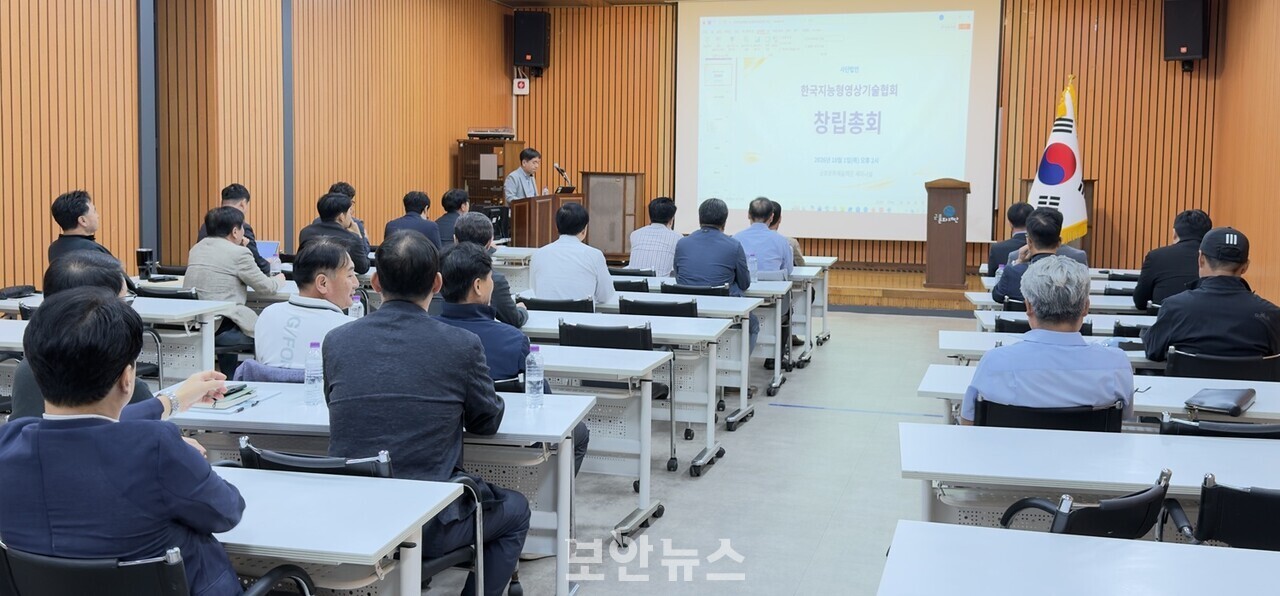
- The inaugural general meeting of the Korea Intelligent Video Technology Association, an incorporated body established to promote the development and advancement of the intelligent video technology industry, was held on October 1 in the seminar room of the Gunpo Culture & Arts Center in Gunpo, Gyeonggi Province.
- Around 40 association officials and member company representatives attended the inaugural general meeting, where more than 10 agenda items were discussed, including adoption of the founding statement, review of the articles of incorporation, appointment of the chairman and executives, and review of the business plan and budget.
- Under the leadership of the new executive board, which took office in March this year, the organization dissolved and succeeded the existing Apartment Housing Communication (CCTV) Construction Council to pursue formal incorporation, a process that took approximately six months to complete.
This case illustrates how a council of small and medium-sized companies and experts in the intelligent video technology field obtained a legal status as an incorporated body in an effort to raise the industry’s standing and secure a channel for external communication. This analytical article examines the association’s future role in industry promotion, standardization, and public safety applications, as well as its policy implications.
Table of Contents
- Key Summary
- Inaugural General Meeting Concludes with Bulk Approval of 10-Plus Agenda Items
- SMA CEO Kim Seong-tae Appointed as Founding Chairman
- Six Business Areas of the Intelligent Video Technology Association
- Practical Differences Brought by Incorporation
- Key Issues at a Glance
- What You Can Do Right Now
- Frequently Asked Questions
- Reference Source
The Korea Intelligent Video Technology Association, an incorporated body in the intelligent video technology field, officially launched on October 1. Around 40 association officials and member company representatives attended the inaugural general meeting held in the seminar room of the Gunpo Culture & Arts Center in Gunpo, Gyeonggi Province.
The new executive board, which took office in March this year, dissolved and succeeded the existing Apartment Housing Communication (CCTV) Construction Council to pursue formal incorporation. The most significant change is that activities previously impossible at the council stage, such as external negotiations on behalf of the intelligent video technology industry, government policy proposals, and participation in standardization projects, are now possible with corporate legal status.
Inaugural General Meeting Concludes with Bulk Approval of 10-Plus Agenda Items
More than 10 agenda items were addressed in a single session, including adoption of the founding statement, review of the articles of incorporation, appointment of the chairman, appointment of executives, and review of the business plan and budget. Decision-making, which previously required written consent from dozens of member companies during the council era, will be streamlined through the board of directors and general meeting structure following incorporation.
From a practitioner’s perspective, what stands out is the six business areas explicitly defined in the articles of incorporation. By including industry promotion and public safety applications alongside simple networking and exchange activities, the scope of activities has been significantly expanded compared to the council era.
SMA CEO Kim Seong-tae Appointed as Founding Chairman
Kim Seong-tae, CEO of SMA, was appointed as the founding chairman, serving as the representative of the founding group. Five directors and two auditors were also appointed, with terms of three years. The association reports that, as the first incorporated entity in the field, it placed particular emphasis on accounting transparency and external audit functions.
What makes the chairman’s remarks particularly noteworthy is that he personally acknowledged that the association’s launch will not immediately change the realities of the industry. He presented a roadmap to create a decisive turning point, starting with information sharing and internal training programs.
Six Business Areas of the Intelligent Video Technology Association
The association’s business focus for the next three years is summarized below. The intelligent video technology standardization initiative is likely to serve as a reference standard not only for member companies but also for public-sector procurement agencies.
| Business Area | Key Activities |
|---|---|
| Industry promotion and technology exchange in intelligent video technology | Technology sharing among member companies, joint R&D, participation in exhibitions and conferences |
| Workforce development and training | Certification programs and field training for installation, operation, and maintenance personnel |
| Policy and institutional research | Monitoring regulations such as the Information and Communications Network Act and the Personal Information Protection Act, and proposing policies |
| Standardization of intelligent video technology and quality/reliability improvement | Development of equipment and solution standard guidelines and quality certification systems |
| Domestic and international trend research | Publication of reports on global intelligent video technology market and technology trends |
| Application and expansion of intelligent video technology in the public safety sector | Identifying use cases in the public sector such as public security, disaster response, and transportation, and proposing pilot projects |
As shown in the table, the six areas are divided into ‘industrial competitiveness’ (promotion, education, standardization) and ‘external communication’ (policy research, trend analysis, public safety). The author views the expansion into public safety as the variable that will determine the association’s future standing. For the association’s opinions to be reflected in government-procured projects, standardization initiatives and policy research must advance in parallel.
Practical Differences Brought by Incorporation
Several procedures change when a council becomes an incorporated body. First, the association can participate in public institution bids under its own name. Second, it holds legal standing when submitting policy recommendations to government ministries and local governments. Third, member company dues and external sponsorship funds can be managed transparently through corporate accounting.
However, incorporation also entails costs. Fixed expenses that did not exist during the council era, such as incorporation registration, accounting audits, tax filings, and secretariat operating costs, arise every year. Chairman Kim Seong-tae’s remark about starting with internal training programs likely reflects this practical financial burden.
The first year of the intelligent video technology association will be a period for building external trust. Achieving both member expansion and financial self-sufficiency is essential for a smooth handover to the next executive board. Detailed coverage of this launch can be found in the Boannews report on the inaugural general meeting.
Key Issues at a Glance
- The success of the first year of incorporation will hinge on the structure of member rights and obligations and on accounting transparency
- Standardization initiatives will only be effective if the association secures the standards that government and public institutions want in advance
- Expansion into the public safety sector may conflict with personal information protection and AI ethics regulations, making association-level guidelines essential
- Within the founding board’s three-year term, the Standardization Guidelines 1.0 must be produced as an industry consensus document to become a reference standard for public procurement agencies
What You Can Do Right Now
- Request the association’s articles of incorporation and business plan from the secretariat to confirm the membership application process and dues structure
- Propose to the board of directors that your company’s technology and solutions be included in the standardization guidelines draft
- Volunteer as a practitioner instructor for the association’s training programs to enter its workforce development network
- Prepare reference case studies in advance before public safety pilot project announcements are released
- Subscribe to the association newsletter at least once per quarter and share policy updates with your company
Frequently Asked Questions
What is the Korea Intelligent Video Technology Association?
It is an incorporated entity formed by transitioning a council of small and medium-sized companies and experts in the intelligent video technology field into a legal corporation. It officially launched on October 1 with an inaugural general meeting after dissolving and succeeding the existing Apartment Housing Communication (CCTV) Construction Council.
How do I join the association?
Companies that meet the membership requirements defined in the association’s articles of incorporation are registered as members after board review. Specific procedures and dues should be inquired about directly through the Korea Intelligent Video Technology Association secretariat.
Do existing members of the Apartment Housing Communication Construction Council automatically become association members?
Because the transition was carried out by dissolving and succeeding the previous council, existing members will benefit from a simplified new membership process. However, the distinctions between full members and associate members under the corporate articles of incorporation will be reapplied.
What are the association’s core businesses?
The association operates across six areas: industry promotion, professional workforce training, policy and institutional research, standardization, domestic and international trend research, and public safety applications. Standardization and public safety applications are expected to carry the greatest weight going forward.
Reference Source
This article was prepared with reference to the following source: Boannews — Korea Intelligent Video Technology Association Inaugural General Meeting
Expert Commentary (AI)
Information Security Expert
Securing legal status for the video security industry is a critical gateway to entering the public safety market, but the association’s success will depend on its capacity to address personal information and AI ethics regulations
The transition of the CCTV and video analytics industry from a council to an incorporated body represents meaningful progress, as it provides legal standing in standardization and policy proposals. In particular, explicitly including monitoring of the Information and Communications Network Act and the Personal Information Protection Act in the association’s business reflects a response to the growing regulatory pressure on video data collection, storage, and disposal. However, as video technology expands into AI-based facial recognition and behavior analysis, structural conflicts between public safety applications and personal information protection will inevitably arise, and if the association is composed solely of industry stakeholders, there is a risk that guidelines will lean toward a ‘surveillance-friendly’ direction. For the standardization initiative to become a practical reference for public procurement agencies, alignment with existing frameworks such as KISA and the Ministry of the Interior and Safety’s video information processing device security standards (public-sector personal information protection guidelines) is a prerequisite. The founding board’s emphasis on accounting transparency is essential for building public credibility, and whether guidelines are produced within the next three years will determine the industry’s overall capacity to respond to regulation.
Public Procurement and Standardization Expert
Incorporation provides access to public bidding qualifications and policy advocacy rights, strengthening small and medium video companies’ negotiating power in the procurement ecosystem, but closing the gap with large enterprises and national agencies in the race to set de facto standards remains a challenge
Access to public institution bidding qualifications and policy advocacy rights is a gateway to the procurement ecosystem that individual small and medium video equipment and solution companies find difficult to secure on their own, and the association providing these through a single channel is a positive development from an industry organization perspective. Among the six business areas, the establishment of standardization and quality certification systems can reduce equipment verification costs in public procurement and serve as a foundation for mutual recognition of multi-party certifications. However, Korea has already handled video security standards through TTA, KSA, and the Korean Agency for Technology and Standards, so for the newly formed association’s standardization efforts to avoid overlap and conflict with existing systems, role allocation discussions must take place from the outset. The training and certification programs are likely to contribute to addressing workforce supply and demand challenges for installation and maintenance personnel in line with the expansion of HomeQurt and smart city procurement. Achieving financial self-sufficiency while simultaneously bearing fixed costs and member expansion pressure is a stringent condition, and in this process there is a concern that the growing influence of large member companies may overshadow the voices of small and medium members.
Critical Analyst
Behind the timing of the council’s dissolution and succession and the ‘first incorporated body’ framing lies a realignment of interests surrounding eligibility to enter the procurement market
The official narrative is ‘voluntary incorporation for industry promotion,’ but what incorporation actually opens up is exclusive benefits such as eligibility to participate in public institution bids and the right to submit policy recommendations to the government. When asked ‘why now,’ the answer is that at a time when HomeQurt, smart city, and AI video analytics public procurement is rapidly increasing, whether an incorporated entity that meets the establishment requirements exists or not determines whether it is selected as a consultation partner by procurement agencies. The dissolution and succession of the existing Apartment Housing Communication (CCTV) Construction Council is a procedural choice that can be completed within a few months, but it also reads as a structure that grants the ‘first incorporated body’ title to a specific executive board. Given that the chairman and directors are likely composed of representatives of specific equipment and solution companies, there is a sufficient risk that the standard guidelines produced by the association will be designed to favor particular technology stacks without fair procedures. What we should truly pay attention to is whether conflict-of-interest disclosures are made during the draft development process, and if this is not verified, we will be consenting to market preemption in the name of ‘standardization.’
Underlying Scenarios
- The composition of the founding group appears to be centered on specific equipment distribution channels and regional installation company networks, and the timing of incorporation may have been aligned with the public CCTV replacement project budget execution cycle (year-end) — circumstantial evidence includes the fact that the inaugural general meeting was held on October 1, immediately before the end of the fiscal year’s major budget execution period
- If the conditions for the succession of dues and assets in the existing council’s dissolution and succession process were unclear, it is possible that only some of the former council’s member companies were incorporated as full members of the new entity while others were excluded — the official explanation that the articles of incorporation’s full member and associate member reclassification process will be applied does not disclose the substantive criteria for this realignment
Leave a Reply