
Key Summary
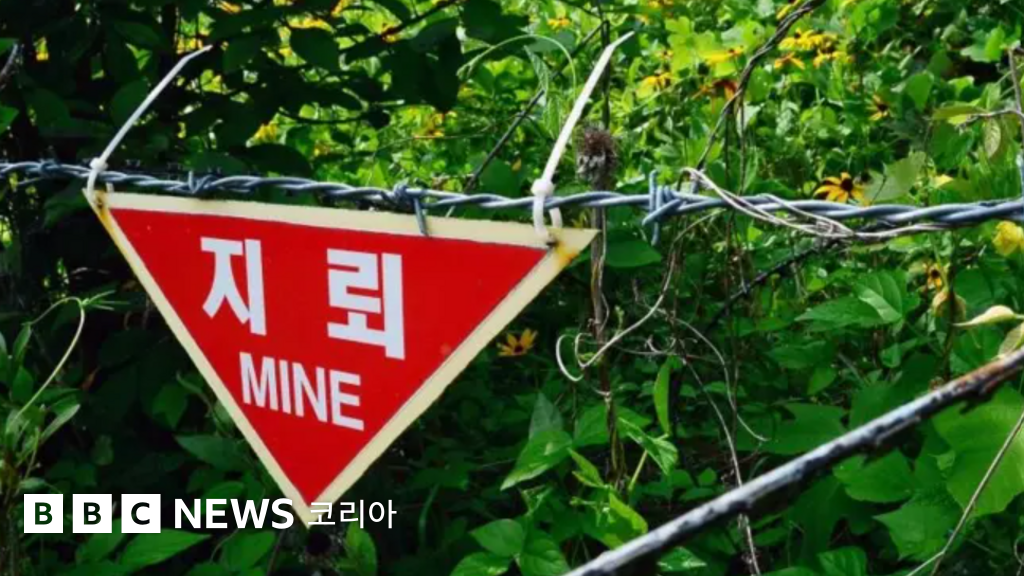
- South Korea’s Joint Chiefs of Staff (JCS) announced on the morning of the 21st that three South Korean military officers on operations were injured by an unidentified explosion at a point south of the Military Demarcation Line (MDL) in the western front DMZ.
- The accident site was confirmed to be under the jurisdiction of the Army’s 25th Division. Two of the injured were urgently evacuated by emergency helicopter, and the remaining one was transported by helicopter after moving overland.
- Military authorities are investigating the type of explosive and the precise circumstances of the accident. If it was a landmine, it has not yet been confirmed whether it was one buried by South Korean forces in the past, one newly buried by North Korean forces, or one that drifted in from the northern side.
As the cause of the South Korean military injury incident in the DMZ is presumed to be a landmine, the North Korean military’s ‘border fortification’ work and changes in terrain south of the MDL are proceeding simultaneously, bringing military security issues to the fore. This article organizes the facts, compares the case with similar past incidents, examines the context of North Korean military activity, and discusses the South Korean military’s response tasks, offering implications for troop morale and armistice management.
Table of Contents
Three South Korean military officers were injured in a landmine explosion in the western front DMZ. On the morning of the 21st, an unidentified explosion occurred at a point south of the Military Demarcation Line (MDL) under the jurisdiction of the Army’s 25th Division while operations were underway. Two of the injured were urgently evacuated by emergency helicopter, and the remaining one was transported by helicopter after moving overland. The Joint Chiefs of Staff stated that they are investigating the type of explosive and the precise circumstances of the accident.
The most striking aspect of this case, in the author’s view, is the disclosure by Rep. Yoo Yong-won that the accident site is near a minefield zone on the southern side of the northern MDL. On August 4, 2015, in the Paju DMZ in Gyeonggi Province, search team members were injured in successive explosions caused by wooden-box mines buried by the North Korean military, resulting in two non-commissioned officers losing their legs. This DMZ landmine incident should not be dismissed as a simple unidentified explosion.
Three Scenarios for the DMZ Landmine
If the device turns out to be a landmine, the scenarios under review are past burial by South Korean forces, new burial by North Korean forces, and drift from the northern side. The JCS said it has not yet confirmed which scenario applies. The possibilities and investigative leads are summarized in the table below.
| Scenario | Likelihood Assessment | Key Evidence | Investigative Lead |
|---|---|---|---|
| Past burial by South Korean forces | Low | Periodic inspection of patrol routes south of the MDL, existing burial maps | Cross-referencing maps with on-site excavation |
| New burial by North Korean forces | High | ‘Border fortification’ work underway since 2024 | Detailed analysis of video and satellite data |
| Drift from the northern side | Medium | Natural drift possible due to heavy rain and rockfalls | Physical trace forensics and shell-type comparison |
The Link Between North Korea’s ‘Border Fortification’ and DMZ Landmines
The JCS stated that it had identified changes in terrain in some areas south of the MDL on the 11th and is consulting with the United Nations Command (UNC) on the possibility that North Korea buried DMZ landmines. In other words, the possibility that the burial range has extended south of the Military Demarcation Line has been raised. Since 2024, the North Korean military is known to have deployed troops to frontline areas on the northern side of the DMZ to carry out the so-called ‘border fortification’ work, including mine burial, creation of barren zones, reinforcement of tactical roads, and installation of structures believed to be barriers. This DMZ landmine incident is read as an extension of that work.
The 2015 Paju Case Casts a Shadow Over DMZ Landmines Again
The Ministry of National Defense’s joint investigation team concluded at the time of the August 4, 2015 Paju incident that the North Korean military had crossed the Military Demarcation Line and buried three wooden-box mines in front of and behind the Korean side’s approach fencing gate. With the same DMZ landmine pattern apparently repeating itself ten years later, the safety of search operations itself has come up for re-examination.
From a practitioner’s perspective, the most painful aspect is the fact that a helicopter had to be deployed to urgently evacuate a soldier who had his ankle amputated. The immediate medical evacuation in the special terrain of the DMZ carries a different meaning than in ordinary operations. The time it takes for medical personnel to enter, possible helicopter landing points, and the stockpiling of blood and antibiotics were all put to the test at once.
Issues Left by the DMZ Landmine
There are three main issues. First, whether this incident constitutes a violation of the 1953 Korean Armistice Agreement. The burial of DMZ landmines south of the MDL could be interpreted as military activity by the opposing side in the armistice crossing the armistice line.
Second, the consultation procedure between South Korea, the United States, and the United Nations Command. Since the DMZ is a space jointly managed by U.S. Forces Korea and the UNC, unilateral conclusions have their limits.
Third, troop morale. Search operations are missions carried out quietly on an invisible front line, so the psychological impact on fellow soldiers is not insignificant.
There are also variables that have not been officially announced. The specific type of DMZ landmine (anti-personnel mine, wooden-box mine, or anti-personnel defensive mine), the estimated timing of burial, whether the accident was a single occurrence or carried the risk of a chain of explosions, the injured areas of the wounded, and the possibility of their return to military service. While the JCS repeats only the phrase “under investigation,” the political sphere and the press are adding speculation. The fact that Rep. Yoo Yong-won pinpointed the accident site as being near a minefield zone on the southern side of the northern MDL is part of the same flow.
This case well illustrates why transparent disclosure of the circumstances of an accident is important. In 2015, after a months-long precise investigation by the joint investigation team, the conclusion that “North Korean forces buried mines south of the MDL” was reached. Unless the same level of investigation is conducted, improvements to safety procedures, diplomatic responses to the North, and troop morale management all risk amounting to superficial prescriptions.
Summary of Issues
- Whether the Armistice Agreement was violated: Burial of DMZ landmines south of the MDL can be interpreted as a violation of the armistice line
- Consultation between South Korea, the U.S., and the UNC: The limits of unilateral conclusions are exposed in the joint DMZ management system
- Impact on troop morale: Concerns about damage to the psychological safety of soldiers participating in search operations
- Transparent disclosure of circumstances: A precise investigation at the level of the 2015 joint investigation team is required
What to Do Right Now
- Check the official Ministry of National Defense and JCS briefings daily to track any changes in announcements
- Secure the joint investigation team report on the 2015 Paju DMZ wooden-box mine incident as a reference for comparison
- Cross-verify official statements from the United Nations Command (UNC) through separate channels
- Search the minutes of National Assembly Defense Committee meetings for any disclosure of safety manuals for search operations south of the MDL
Frequently Asked Questions
Has another DMZ landmine accident occurred?
On September 21, 2026, three South Korean soldiers were injured by an unidentified explosion in the western front DMZ. The JCS is investigating the exact cause, including the possibility of a landmine, and the case is being assessed as a similar incident to the 2015 Paju accident, ten years later.
Was the DMZ landmine buried directly by North Korea?
This has not yet been confirmed. Three scenarios are under review: new burial by North Korean forces, past burial by South Korean forces, and drift from the northern side. The JCS has announced that it identified changes in terrain south of the MDL on the 11th.
Can DMZ landmines be buried as far south as the southern side of the MDL?
In the 2015 Paju case, it was confirmed that the North Korean military crossed the MDL and buried three wooden-box mines on the Korean side. Since this accident also occurred near a minefield zone south of the MDL, the possibility of the same pattern has been raised.
What is the condition of the injured?
Two of the three were evacuated by emergency helicopter, and one was transported by helicopter after moving overland. Specific details of the injuries and the possibility of return to military service will be additionally disclosed by the Ministry of National Defense.
Reference Original
This article was prepared after checking the following original: Google News Korea — Three South Korean Soldiers Injured by Western Front DMZ Explosion… Presumed to Be Landmines
Expert Commentary (AI)
Korean Peninsula Military Security Expert
The landmine accident south of the MDL is the manifestation of an inevitable risk created by North Korea’s ‘border fortification,’ and the key to the response is the redesign of surveillance systems
Since 2024, the North Korean military’s mine burial on the northern side of the DMZ, reinforcement of tactical roads, and installation of barrier structures are deliberate efforts not simply to strengthen defenses but to reshape the frontline terrain itself, and the dominant assessment is that physical spread to the southern side of the MDL was only a matter of time. This injury accident is a signal showing that such spread has already become a reality, and if the South Korean military’s search and reconnaissance rotations and safety rules are designed based on outdated minefield zones, an immediate review is needed. However, until the cause is identified as new North Korean burial, possibilities such as residual mines buried by South Korean forces in the past or drift due to rainfall cannot be ruled out, and evidence-based procedures such as shell-type forensics and cross-referencing with burial maps must precede any conclusion. The risk factor is that, the longer the investigation drags on, the more likely it is that the political sphere will seize on a ‘North Korean provocation’ frame and pressure the speed of the military’s fact-finding. As remedies, priority allocation of satellite and imagery reconnaissance assets capable of real-time monitoring of terrain changes south of the MDL and the formalization of an immediate-response evacuation system in the standard operating procedures for search operations are urgently needed. If North Korea’s fortification accelerates further, the entire DMZ could effectively turn into a ‘killing zone,’ making the establishment of a multilateral verification mechanism through the UNC a strategic option that is coming to the fore.
Armistice Regime International Law Expert
If burial of landmines south of the MDL is confirmed, it would constitute a violation of Article 2 of the Armistice Agreement; the problem is that the substantive procedures to verify this have been eroded within the UNC system
Under the Armistice Agreement, hostile military activity and the installation of obstacles south of the Military Demarcation Line constitute a clear violation, and the precedent from the 2015 Paju wooden-box mine incident, in which the UNC concluded that the North was responsible and which led to the resumption of propaganda broadcasts toward the North, remains valid as a legal and procedural precedent. However, the Armistice Agreement has been operated for decades as a de facto bilateral management system, with the Military Armistice Commission, the standing supervisory body, effectively in a vacuum, and carries a structural weakness in that the weight of violation judgments depends on the political judgment of the UNC. The legal issue in this case is not so much whether a violation occurred as who verifies it. If South Korea reaches a conclusion on its own, the North’s rebuttal and the limits of international effectiveness immediately become issues, and a UNC-led investigation carries the ripple effect of a redefinition of the role of U.S. Forces Korea. As countermeasures, photo, video, and shrapnel evidence at the accident site should be preserved in a form that can be verified internationally, and procedures available under the armistice, such as the participation of the Neutral Nations Supervisory Commission from Switzerland and Sweden, should be examined. In outlook, this case could serve as a trigger for discussions on reform of the armistice regime, or alternatively it could become a turning point that is once again buried in unilateral interpretive disputes between the two sides.
Critical Analyst
The ambiguity of the term ‘unidentified explosion’ is itself the most valuable asset in this case
The official announcement is thoroughly defensive, with the phrase “type of explosive and circumstances under investigation,” but looking behind the scenes, this ambiguity yields different benefits to different actors. For North Korea, having the obvious fortification work south of the MDL defined as an ‘accident’ is the best-case scenario, and for domestic politics, the frame of a similar provocation ten years later functions as an opportunity to seize the security agenda. The timing with which Rep. Yoo Yong-won disclosed that the accident site was ‘near the northern minefield zone’ ahead of the JCS announcement calls for a review of which came first: the military’s information control procedures or the National Assembly’s access to information. What we should really pay attention to is the fact that the JCS had already identified changes in terrain south of the MDL on the 11th. If search operation safety rules were not updated for the ten days between the identification of the terrain change and the injury accident on the 21st, then the question of responsibility for the ‘ten days of negligence despite knowing’ should be a follow-up to the investigation of the cause of the accident, not just the cause identification itself. Discussions about reinvoking the 2015 joint investigation team model are conveniently packaged as ‘securing international trust,’ but if we remember that investigation was used as justification for a policy shift toward the resumption of propaganda broadcasts and stronger pressure on the North, we cannot rule out the possibility that the direction of the conclusions of this investigation has already been decided. In the end, it will not be physical evidence but who announces the conclusion first that will determine the narrative of this case.
Hidden Scenarios
- There is a possibility that frontline search procedures were not updated between the JCS identification of terrain changes on the 11th and the injury accident on the 21st – cited as evidence are the ten-day gap between the date of the terrain change announcement and the date of the accident, and the fact that no announcement of safety rule changes has been made even immediately after the accident.
- There is a possibility that North Korea has prepared in advance a card to counter with a ‘drift due to rain’ claim should the fact of burial south of the MDL be revealed – circumstantial evidence includes the North’s communication pattern of using natural disasters as an excuse throughout its fortification work since 2024, and the fact that the terrain of the accident site is one that can also be explained by drift due to heavy rain and rockfalls.
Leave a Reply