
Key Summary
- China reportedly allowed limited foreign media access to Tibet, a region devastated by a mega-flood, marking a temporary adjustment to its normally strict entry-control stance toward the area
- The move is being interpreted as a response to allegations of information control, and assessed as an attempt at information disclosure aimed at both the international community and domestic public opinion
- The devastating damage at the Gyirong site in Tibet was revealed publicly for the first time, with rescue operations reportedly struggling to make progress
A current-affairs analysis piece that addresses both disaster reporting and information disclosure. It cross-references hard casualty figures with a policy and issue-oriented look at the shift in China’s information-control posture.
Table of Contents
- Key Summary
- 1. Tibet Mega-Flood Damage Status — What the Numbers Reveal
- 2. ‘Limited’ Foreign Press Access — What Actually Changed
- 3. Issues Lurking Behind the ‘Permission’
- 4. Remaining Questions and Future Challenges
- Issue Summary
- What You Can Do Right Now
- Frequently Asked Questions
- Reference Source
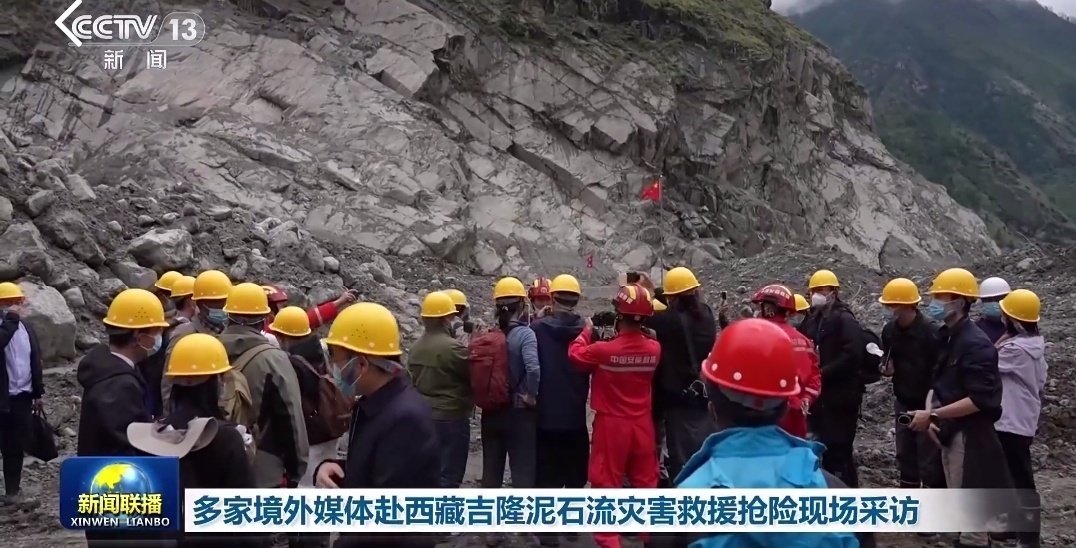
As the human toll of the Tibet mega-flood grows to nearly incomprehensible scale, the Chinese government has partially allowed foreign journalists into Tibet, a region it has long kept in effective lockdown. According to reports from Dong-A Ilbo and YTN, the measure is being read as a stopgap response to allegations of information control, and assessed as a move designed to appeal to both international and domestic audiences. In this writer’s view, the scope of the access and the level of escort control carry far more meaning than the word “permission” itself.
1. Tibet Mega-Flood Damage Status — What the Numbers Reveal
According to figures cross-checked by Newsis and No Cut News, the total death toll from the Tibet mega-flood stands at 1,387, with 5,406 people reported missing. Within the Tibet Autonomous Region of China, 43 deaths and 519 missing persons have been tallied, while three people have been rescued on the Nepalese side. The numbers alone suggest that damage near Nepal is overwhelmingly greater than inside the Tibet Autonomous Region, but because external verification of conditions inside Tibet is typically difficult, the actual scale of damage within Tibet may be larger.
Among the affected areas from the Tibet mega-flood, the Gyirong site was revealed to the public first in the most devastating state. Reports indicate that landslides swept away homes, roads, and bridges, and that joint search operations involving rescue teams, the military, and militia have been deployed — but progress has been slow due to difficult terrain and significant concerns about secondary damage. For those watching the situation on the ground, this is the most meaningful point. The fact that on-site images have been released from a region where even routine reporting is normally prohibited is itself evidence of the gravity of this disaster.
2. ‘Limited’ Foreign Press Access — What Actually Changed
China’s access controls on Tibet have long operated in a direction that effectively barred independent entry by foreign journalists. Allowing partial access during this Tibet mega-flood situation is, in name, an exceptional case. However, because the word “limited” is attached, the process reportedly comes with escort controls, designated shooting locations, and prior vetting of interview subjects. In other words, the door to reporting access has been opened only a crack.
From the perspective of foreign media, the essential task is to gauge what lies behind this unusual move. A related Dong-A Ilbo report notes that the government framed the permission as a purely humanitarian measure, while observers have pointed out the possibility that access will revert to tight controls once disaster coverage wraps up.
3. Issues Lurking Behind the ‘Permission’
Behind the label of information disclosure, three substantive control mechanisms — escort, censorship, and selective editing — still have plenty of room to operate. First, when escort controls determine which sites reporters can access, the images transmitted may be limited to the scenes the government wants shown, rather than the full picture of the damage. Second, footage deemed disadvantageous may be blocked at the censorship stage just before broadcast. Third, when interview subjects are pre-vetted, only one side’s voice — from rescue teams, victims, or witnesses — may be reflected in reporting. In cases like the Tibet mega-flood, where early coverage shapes the figures, the influence of these three factors only grows.
International scrutiny of the Tibet mega-flood is also not simple. Opening up disaster reporting is welcome on humanitarian grounds, but it simultaneously ties into human rights and information-access issues, and may end up setting a baseline for reporting environments in other conflict zones in the future. The same YTN report indicates that interpretations are divided over whether this permission is a one-off fix or a signal of a shift in China’s information-disclosure posture.
4. Remaining Questions and Future Challenges
The most essential question is this: is this “limited permission” merely a one-time measure specific to a disaster situation, or a substantive change in China’s information-disclosure posture toward Tibet? If the latter, journalist access may expand in other cases in the future; if the former, there is a high likelihood that control levels will revert to status quo once this Tibet mega-flood ends.
At present, the methods available to outside observers to verify this are limited. However, recalling the patterns that typically govern Chinese disaster coverage, there have been few cases in which an initial signal of openness translated into a lasting shift in posture. The weight of this move, therefore, rests less on immediate reporting access and more on what follow-up measures China puts in place.
Issue Summary
- Asymmetric scale of damage: Damage near Nepal is overwhelmingly greater than the 43 deaths reported within the Tibet Autonomous Region, but external verification of conditions inside Tibet is difficult, leaving room for undercounting
- Reality of the ‘permission’: Three procedural control mechanisms — escort control, designated shooting locations, and pre-vetting of interviews — effectively determine the substance of what is reported
- One-off vs. policy shift: Interpretations diverge because there are few prior cases in China where an initial signal of openness led to a lasting change in information disclosure
- International baseline: This permission may end up setting a standard for disaster reporting environments in other conflict zones in the future
What You Can Do Right Now
- Cross-check casualty figures across sources — monitor whether the numbers shift in reports from Dong-A Ilbo, YTN, Newsis, and No Cut News
- Examine the scope of ‘permission’ directly in foreign press originals — look at how cues related to escort, censorship, and selective editing are framed in the body text
- Track follow-up reporting in 7–14 day intervals — observe whether initial access reverts to status quo or expands to other regions
- Periodically review the gap between official Chinese announcements and foreign press reports — record changes in death/missing figures and the timing of reporting
- Check follow-up statements from international human rights and disaster-reporting NGOs — track how external evaluations evolve
Frequently Asked Questions
What is the exact human toll of the Tibet mega-flood?
Within the Tibet Autonomous Region of China, 43 deaths and 519 missing persons have been tallied. Combined figures for Nepal and Tibet stand at 1,387 deaths and 5,406 missing, though external verification inside Tibet is limited, so the actual numbers may be higher.
Why did China allow foreign press access this time?
It is being interpreted as a stopgap measure responding to the international community’s and domestic public’s scrutiny of the massive human toll, as well as to allegations of information control. However, because the reporting environment differs from the norm, the possibility that it is a one-time measure is also being raised.
How does ‘limited permission’ work in practice?
It is generally accompanied by escort controls, designated shooting locations, and pre-vetting of interview subjects. The result is that the scenes the government wishes to show are more likely to be transmitted first.
Could this permission signal a real shift in China’s information-disclosure posture?
The possibility is open, but given the rarity of past cases in Chinese disaster reporting where an initial opening translated into a lasting change, it should be interpreted with caution.
Reference Source
This article was written after reviewing the following source: Google News Korea — China ‘limitedly allows’ foreign press access to ‘mega-flood’-hit Tibet; responds to information-control allegations
Expert Commentary (AI)
Disaster Management & Rescue Systems Specialist
The situation in the high-mountain gorge is close to a worst-case chain-disaster scenario, and the success of searches for over 5,000 missing persons will be determined not by personnel but by aerial and satellite resources and cross-border early-warning coordination
A scale of 1,387 dead and 5,406 missing suggests not an ordinary seasonal flood, but a high-energy event that scours an entire watershed in moments, such as a glacial lake outburst flood or the breach of a large landslide dam. In areas like Gyirong, where settlements and roads are densely packed along the steep Himalayan gorges, secondary landslides and slope collapses continue for days to weeks after the initial surge, meaning that ground-level searches by the military and militia alone cannot handle a missing-person count of 5,000, and helicopters, drones, and satellite imagery analysis must be deployed in parallel. Because this is a transboundary watershed disaster, upstream information dictates downstream damage, so whether the early-warning system between China and Nepal actually functioned will be a direct cause of the human toll. The asymmetry between 43 deaths tallied within the Tibet Autonomous Region and the combined figure of 1,387 is a textbook case of how administrative boundary-by-boundary reporting practices can simultaneously distort survey resource allocation and damage assessment in cross-border disasters. The key task at this stage is not to expand the rescue perimeter but to avoid missing the transition point toward a missing-persons response system and a dynamic investigation of the disaster’s cause, and given the nature of high-mountain disasters, a substantial portion of the golden rescue window has already been spent.
Chinese Politics & Information Control Researcher
Tibet’s ‘limited’ foreign press permission is more accurately read as a preemptive reconfiguration of control, not as a signal of openness
Since the 2008 Lhasa unrest, Tibet has been one of the most closed regions in China, where even independent foreign press coverage of natural disasters was effectively impossible, and by that standard, this measure is clearly an exception. However, an opening that combines escorted reporting, designated shooting locations, and pre-screening of interview subjects amounts to curation of narrative, not the disclosure of information — a structure in which the government selects the scenes to show while absorbing criticism over information-control allegations. Considering the precedent of the 2008 Sichuan earthquake, where an initial opening led to a return to control within months, there is insufficient basis for interpreting this measure as a shift in information-disclosure posture. That said, it is worth noting as a substantive change that China is shifting its tactics from blocking to preemptive narrative management, in an environment where satellite imagery and SNS diffusion have made after-the-fact blocking difficult. The substantive criteria for judgment narrow to three: whether access shrinks within the next two weeks, whether the casualty figures are revised, and whether press permission extends to other matters within Tibet.
Critical Analyst
The real puzzle is not the ‘permission’ to report but the asymmetry of the tallies and the boundary lines of opened areas — the move reads as after-the-fact damage control for a control failure
Following who stands to benefit, the biggest winner of this move is China’s propaganda and diplomatic system, which absorbs international criticism of information control while maintaining narrative initiative. The issue is timing. Site records diffused via satellite imagery and SNS, combined with reports from the Nepalese side, had very likely already leaked the information, and the switch to openness at the moment control became untenable reads as a natural next step rather than a change of conviction. The extreme gap between 43 deaths tallied within the Tibet Autonomous Region and the combined 1,387 cannot be explained by administrative boundary divisions alone, and the possibility that damage in specific zones was deliberately stratified cannot be ruled out. Given that Gyirong is a strategic point on the China-Nepal border trade route, circumstantial grounds exist for suspecting a motive to keep out of view the extent to which infrastructure damage undermines the corridor project’s credibility. What we should really be watching is not how far access was permitted, but where the line was drawn — that is, the boundary between permitted and excluded zones.
Underlying Scenarios
- Because total information blocking had already been neutralized by satellite imagery and SNS diffusion, there is a possibility the government switched to limited openness to seize the narrative — circumstantial evidence supports that this took a preemptive form of guiding reporters and designating their routes, rather than post-hoc permission in response to foreign press requests
- Gyirong is a key border crossing on the China-Nepal economic corridor, and if the disaster’s damage to roads, bridges, and logistics was large enough to damage the credibility of the corridor project, there is a possibility the reporting focus was fixed on human casualties and rescue activities to keep this out of the spotlight
Leave a Reply