
Key Summary
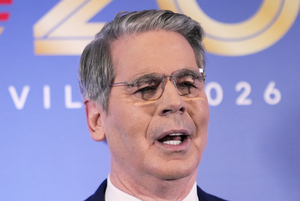
- At an interview during the G20 Finance Ministers and Central Bank Governors Meeting held in Asheville, North Carolina on August 31, US Treasury Secretary Bessent stated that the Japanese government and the BOJ will take measures to induce yen strength
- Secretary Bessent said he ‘has information the market does not know,’ hinting at the possibility of a Bank of Japan policy rate hike in September
- When asked about the rate hike, he answered ‘I believe the market has already priced this in,’ suggesting that a further rate hike scenario has been substantially reflected in market pricing
With the US Treasury Secretary effectively pressuring Japan toward a monetary policy shift on the G20 stage, this analytical piece highlights the simultaneous emergence of the September BOJ rate hike, yen-strengthening measures, the US-Japan rate gap, and the limits of joint intervention as key issues in international monetary policy coordination
On August 31, the dollar-yen pair was trading around 159.73 yen, brushing right up against the 160-yen line that Japanese authorities consider their psychological intervention threshold. That same day, in Asheville, North Carolina, the G20 Finance Ministers and Central Bank Governors Meeting was underway. In that setting, US Treasury Secretary Bessent added a single sentence — the assertion that ‘the Japanese government and the BOJ will take measures to induce yen strength.’ That sentence put fresh weight on the BOJ rate hike scenario for September.
The most significant aspect of his remarks, in my view, is the phrase ‘information the market doesn’t know.’ Moving beyond mere words to invoke ‘information the market doesn’t know’ reads as a signal that a currency policy coordination channel is already active between Washington and Tokyo.
The Level of Pressure Signaled by ‘Information the Market Doesn’t Know’
In the interview, Secretary Bessent answered the question about a BOJ rate hike by saying, ‘I believe the market has already priced this in.’ In other words, whether or not the BOJ moves at its September 17–18 meeting, the market has placed a certain amount of bets on it. The issue is that the Secretary judges this ‘pricing-in’ to be insufficient.
Equally striking is his remark to BOJ Governor Kazuo Ueda to ‘do the right thing.’ Diplomatically, this is a phrase that respects the operational independence of monetary policy, but with the qualifier that it is paired with ‘responding to yen weakness,’ the message is effectively a call to action. Follow-up reports that a separate meeting is being scheduled during the G20 period reinforce this reading.
The BOJ Rate Hike Scenario — A Second Move Since June, and an ‘Aggressive’ Option
The BOJ also raised its policy rate by one notch back in June. If the September BOJ rate hike materializes, it would mark the second adjustment of the year. The market, however, has gone a step further, absorbing reports that the BOJ is considering raising rates more aggressively than the standard twice-a-year pace following the September hike.
The premise of this ‘aggressive’ scenario is straightforward. The yen is lingering near the 160-yen line, and the long-term yen weakness has not reversed even after the July 31 US-Japan joint buying intervention. Going at the usual pace would take too long to stabilize the exchange rate — this judgment is the most natural reading of the backdrop to the Secretary’s remarks.
159.73 Yen, the 160-Yen Line, and the Flow Right After the Remarks
In the immediate aftermath of Secretary Bessent’s remarks, the dollar-yen pair showed a slight move toward yen strength. As of August 31, it was trading around 159.73 yen, essentially pinned against the 160-yen line that Japanese authorities view as their psychological red line. The one-yen range is not large, but given that the July 31 joint intervention ultimately failed to reverse the trend, the market is leaning toward the view that ‘this time will have its limits as well.’
The structural cause of yen weakness is well known: the large interest rate gap with the United States. As long as that gap does not narrow, the pressure of carry-trade flows will persist. The market is solidifying its view that the July joint intervention was a one-off event. Since the September BOJ rate hike result can directly inject a variable into this US-Japan rate gap, the market’s attention is fixed on September 17–18.
The Limits of Joint Intervention and Japan’s Domestic Inflation Burden
Yen weakness has pushed up Japan’s import prices. Rising energy and food costs have increased the burden on households, and this is also why the BOJ has had no choice but to accelerate the normalization of its monetary policy. The July 31 US-Japan joint buying intervention was an exceptional measure, but it failed to turn the exchange rate trend. Secretary Bessent’s reference to ‘information the market doesn’t know’ fits squarely with the context that the United States is aware of these limits.
I see this point as actually strengthening the case for a BOJ rate hike. If foreign exchange market intervention alone cannot solve the problem, there is no choice but to use the essential tool of policy interest rates. The ‘image’ the market has already priced in is that the BOJ itself recognizes this. However, even if a BOJ rate hike is carried out, if the magnitude is limited, the market may judge it as ‘not enough’ and refrain from widening the yen’s gains.
What the ‘Not Disorderly’ Assessment Leaves Behind
Secretary Bessent noted that yen movements are ‘not disorderly.’ This is not a mere observation. It is a signal that the United States will not immediately join in any additional market intervention. In other words, the message is that primary responsibility for exchange rate stability lies with Japan (and the BOJ). The meeting schedule reported by Financial News shows that such a message is being carried through into an actual channel.
That said, this does not close the door on US-Japan interest rate gap negotiations. It reads as a foreshadowing that the United States could join the intervention if the yen is judged ‘disorderly.’ The one-yen margin Secretary Bessent left open is a variable for the upcoming schedule. Herald Business’s analysis also flagged this point as a core variable in the BOJ rate hike scenario.
Checkpoints After the September BOJ Rate Hike
The remaining schedule is clear. The BOJ Monetary Policy Meeting on September 17–18, a Ueda-Bessent meeting during the G20 period, and then a test of the 160-yen line on the exchange rate. All three are interlocking.
The center of gravity shifts depending on the timing. Just before the meeting, watch the Ueda-Bessent meeting remarks; on the day of the meeting, watch the size of the BOJ rate hike and follow-up adjustments; after the meeting, watch whether the exchange rate returns to the 160-yen line. As with the analysis of the Trump administration’s trade pressure patterns, the G20 remarks should be read not as a one-off event but as a signal of channel activation.
Key Issues
- Secretary Bessent’s ‘information the market doesn’t know’ remark reads as a signal that a currency policy coordination channel between Washington and Tokyo is now active
- The September BOJ rate hike would be the second since June, with parts of the market betting on an even more aggressive pace of follow-up adjustments
- The dollar-yen pair is near 160 from 159.73, with the limits of the July joint intervention now in the spotlight
- The structural cause of yen weakness is the US-Japan rate gap, which cannot be resolved without the essential tool of policy interest rates
- The US has judged the situation ‘not disorderly,’ holding off on immediate additional intervention and placing primary responsibility on the Japanese side
What to Do Right Now
- Mark the September 17–18 BOJ meeting on your calendar and note the time of the policy statement release in advance
- Track the dollar-yen exchange rate in the 159–161 range and separately log the moment the 160-yen line is breached
- Check the US-Japan 10-year government bond yield spread weekly and keep a chart of the rate flow
- Read the G7 and Japanese Ministry of Finance statements from the July 31 joint intervention to verify for yourself the definition of the ‘disorderly’ baseline
- Follow the official channels of both finance ministries and the BOJ to compare post-G20 Bessent and Ueda remarks
Frequently Asked Questions
Has the BOJ rate hike been confirmed?
It has not been confirmed yet, but the market is betting that a hike is likely at the September meeting. Betting intensity has stepped up after Secretary Bessent’s remarks.
Why does Japan see the 160-yen line as a red line?
Crossing 160 yen raises concerns about accelerating import price increases and household burden, and the line served as a psychological threshold even during the July 31 US-Japan joint intervention. However, there is also the view that it is limited in preventing structural weakness.
Can a US-Japan joint intervention happen again?
Given that Secretary Bessent judged the situation ‘not disorderly,’ the immediate possibility of an additional joint intervention is low. However, if the exchange rate moves sharply and is judged ‘disorderly,’ the room remains for the US to join the intervention.
Will the yen strengthen from a BOJ rate hike alone?
Even if it is carried out, if the magnitude is limited, the market may judge it as ‘not enough’ and the yen’s gains could be capped. The prevailing view is that a trend shift to a stronger yen is difficult unless the US-Japan rate gap narrows sufficiently.
Expert Commentary (AI)
Macroeconomic & Monetary Policy Expert
The direction of a rate hike aimed at the structural yen weakness is sound, but normalization proceeding under external pressure is the single biggest risk to monetary policy credibility
If a September hike materializes, it would be the second adjustment of the year following June, and in a situation where import inflation is eroding household real incomes, using the fundamental tool of the policy rate rather than exchange rate intervention is a rational path consistent with the basic economic equation. The decisive weakness, however, lies in procedural independence — a hike delivered right after public remarks by the US Treasury Secretary risks being branded in markets and among the public as ‘interest rate policy dictated by political instructions,’ which could undermine the credibility the BOJ has built over decades in anchoring inflation expectations. If the hike size is kept modest, the assessment of ‘not enough’ will be paired with a repeat of yen weakness and import price burdens; if it is pushed aggressively, the narrow corridor could re-enact a 2024-style carry-trade unwinding shock and bond valuation losses at financial institutions. With the resilience of consumption not yet fully verified, moving at a pace beyond twice a year is a forceful choice that takes on the risk of a domestic demand downturn, so a gradual, phased normalization is the reasonable balance at this point. The key going forward is not the timing or the size of the hike, but whether the decision can preserve procedural legitimacy so that it looks like Japan’s own voluntary judgment.
FX & International Capital Markets Expert
As the failed joint intervention proved, exchange rate trends are set by rate differentials, and defending 160 yen only buys time, not a trend change
The fact that the dollar-yen pair returned to the 159 range even after the July 31 US-Japan joint buying intervention reaffirmed the textbook proposition that foreign exchange intervention is a tool for easing volatility and adjusting speed, not for trend reversal. As long as the US-Japan rate gap does not narrow, carry-trade inflows will continue, and burning through foreign reserves with one-sided interventions is a strategy that actually chips away at currency credibility. The two-track structure in which the US is holding off on immediate intervention by calling the situation ‘not disorderly’ and placing primary responsibility on Japan is within the allowable scope of the G7 consensus spirit, but singling out a specific country’s monetary policy on the multilateral G20 stage is a point of caution given the politicization of currency issues. Even if a hike is delivered, a 25bp move is small relative to the rate gap and the market reaction is likely to be temporary; conversely, if an aggressive hike path is signaled, the volatility from unwinding global carry-trade positions remains a standing risk. In the end, the 160-yen line is a psychological defense line, not an economic equilibrium, and the true equilibrium exchange rate will only be discovered after the rate paths of both countries are settled.
Critical Analyst
What Washington wants is not BOJ rates, but a ‘proxy adjustment’ that lets the US get a dollar-weakening effect without cutting its own rates
The official explanation carries an altruistic tone — ‘yen weakness is a burden on Japanese households, so Japan should solve it on its own’ — but if you look at the other side, the biggest beneficiary is the US side, which seeks a recovery in export price competitiveness and a dollar-weakening trend. Yet a dilemma hides here — if the BOJ raises rates, repatriation of Japanese institutional money can be triggered, and a demand gap from the largest overseas holder of US Treasuries could push up US long-term yields. The phrase ‘I have information the market doesn’t know’ is highly likely to be a deliberate signal announcing the existence of a Washington-Tokyo coordination channel, and the follow-up ‘it has already been priced in’ reads as an expectations-management device that front-loads the hike probability into market pricing to absorb the announcement-day shock. The ‘not disorderly’ assessment is not modesty but a declaration of ownership of the intervention trigger — it means the US holds the judgment over when to join. What we should really pay attention to is how far this remark is bundled with trade and tariff negotiation cards, and whether, at the moment the yen crosses 160, Treasury funds will flow into US Treasury selling.
- The possibility that the US is using Japan’s monetary policy as a ‘proxy’ to obtain a dollar-weakening effect without cutting its own rates — the timing and manner in which the Treasury Secretary, who has publicly championed a dollar-weakening trend, singled out Japan’s monetary policy on the multilateral G20 stage meshes precisely with that orientation.
- The possibility that an implicit coordination between Ueda’s and Bessent’s sides was already concluded before the remarks, and that the public statement is a firewall intended to have the market pre-price the hike probability ahead of the September meeting, absorbing announcement-day shocks — the ‘already priced in’ remark closely resembles the classic central bank–finance ministry pattern of expectations management that avoids surprises.
Leave a Reply