
Key Takeaways
- Background and actors: Software developer Brandon Thomas, with roughly 10 years of experience in large-scale Rust projects, claims to have built clones of 7 Adobe Creative Cloud apps using only Anthropic’s Claude Opus 5.5.
- Release lineup: 7 apps corresponding to Photoshop, Illustrator, Premiere, Lightroom, After Effects, InDesign, and Acrobat Pro were released under MIT/Apache licensing, alongside WebAssembly-based browser versions.
- Technical approach: Rather than copying Adobe’s source code directly, the project adopted clean-room reverse engineering to replicate functionality and UI. Reddit and HackerNews responses repeatedly note that the current state remains at a “super early alpha” level.
As AI coding models have improved dramatically, the economics of clean-room reverse engineering have shifted dramatically as well—enabling a single-developer team to release functional equivalents of major commercial software within months. This new competitive landscape is once again highlighting the legal gray zone between permissible feature replication and the protection afforded by rights such as trade dress.
Table of Contents
A declaration to replace the entire Adobe Creative Cloud landed simultaneously on Reddit and HackerNews. Brandon Thomas, a Rust developer with roughly 10 years of experience, released 7 apps through his project Artcraft—corresponding to Photoshop, Illustrator, Premiere, Lightroom, After Effects, InDesign, and Acrobat Pro—under a dual MIT/Apache license. The tagline he chose is unequivocal. “Software is over.”
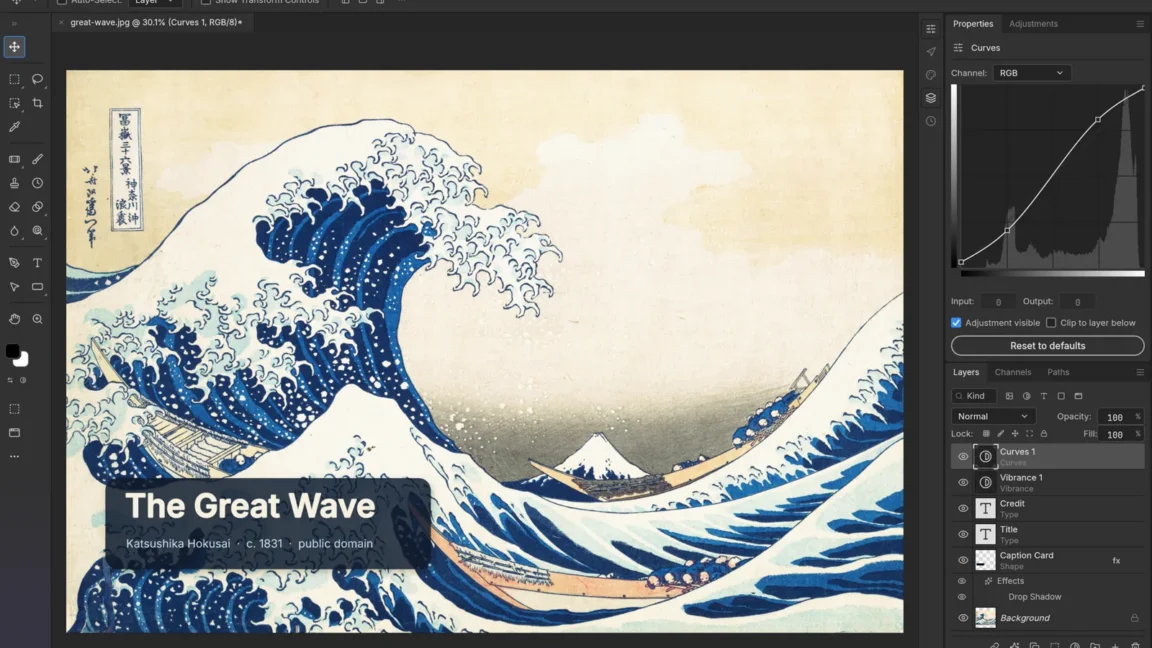
The seven apps are no simple visual imitation. They are full-stack applications written in Rust and compiled to WebAssembly, with versions that run directly in the browser. The key differentiator is that the project’s own visual AI model is embedded as a first-class option. As the AI clone absorbs generative workflows, the move reads as an attempt to expand beyond a “free alternative” into the territory of an “AI-native editor.”
Seven Apps at Once with Just Claude Opus 5.5?
Thomas stated that he has been coding exclusively with AI tools since February 2026, and that for these 7 apps he used Anthropic’s Claude Opus 5.5 as his sole coding assistant. I also use Claude-family models for pair programming in my own work, but I’m skeptical of the phrase “sole coder.” In stages like writing design specifications, configuring asset pipelines, and designing test scenarios, human judgment ultimately remains decisive.
In fact, Thomas himself stepped back and revised his timeline. He initially said on Reddit that he would reach “100% parity within one month,” then adjusted on HackerNews to “99% parity on a months-long scale.” The same person lowered his targets within two days. Even with Claude Opus 5.5 writing the code, building Photoshop’s RAW demosaicing or Premiere’s timeline rendering engine from scratch won’t be finished in a month. The realistic model is a “junior–senior pair,” in which the coding model lays the skeleton while a human iteratively fine-tunes and runs regression tests.
Where the Term “Clean Room” Falls Short
Thomas emphasizes that he did not directly copy Adobe’s source or binaries. It’s traditional clean-room reverse engineering that reconstructs functionality and UI from specifications. Since ideas and features themselves are not protected by copyright law, this approach is considered legal. However, the most commonly overlooked trap in practice lies elsewhere. If you replicate the tool palette, panel layout, and keyboard-shortcut structure down to the pixel, you cross the threshold into trade dress infringement litigation.
Trade dress is the concept of “trademark-like appearance,” protected not only under the U.S. Lanham Act but also under Korea’s Unfair Competition Prevention Act. Apple’s iPhone design or the packaging look of luxury brands are textbook examples. If the dark theme, left-side toolbar, and right-side layer panel of the Adobe workspace are reproduced as-is, a lawsuit can be opened on the basis of visual similarity alone—even if the functionality differs. The Artcraft team must intentionally rebuild the UI using a design system that differs from Adobe’s. Not just “not too similar,” but “substantially different.”
Token Billing Backs the Free Apps
The 7 apps themselves are free. Revenue comes from charging on a per-token basis for the Artcraft visual AI model and IDE usage fees. Users work in the free apps but pay only for AI generation, upscaling, and inpainting calls. The open source itself isn’t turning a profit—instead, the combination of “open source + AI usage-based billing” generates revenue. Thomas added that a separate “popular software team for filmmakers” is also generating revenue.
However, for the token billing model to be adopted in B2B creative workflows, the value proposition must be articulated not as a simple comparison with Adobe’s subscription fee, but as a clear “cost per AI call vs. flat monthly rate.” The dual structure of free tools plus paid AI is a model that Figma and Notion have tried, but both built organization-level lock-in to monetize. Whether a single-developer project can build the same lock-in is a separate question. Operations like separating build pipelines into multi-repos/monorepos and configuring a change-detection matrix in GitHub Actions that picks out only the changed packages must be in place to stably operate token pricing and daily call limits.
The expansion of AI tools’ scope is part of a trend spreading across industries, as seen in cases like the launch of OpenAI’s math advisory group. With the economics of clean-room reproduction having improved, the next target is likely to shift to CAD, office, and ERP domains.
Why This Isn’t the “End” Yet
Thomas claims to have “completed the entirety of Photoshop in one shot,” but community reactions repeatedly diagnose it as “super early alpha.” One-shot generation is for demonstration purposes; a production-ready build requires steady QA and regression testing. Maintaining 7 apps simultaneously has clear limits under a single-developer model. An automation pipeline such as automatically blocking license-violating code patterns with Semgrep and daily-scanning dependency CVEs with Trivy must be in place for multi-app maintenance to be feasible. The very fact that the territory where AI writes code and the territory where humans must decide are separating is the most honest conclusion of this project.
Summary of Key Issues
- Economics of AI clones: The cost of clean-room reproduction has plummeted thanks to coding models, but functional equivalence and long-term maintainability are separate problems.
- Trade dress risk: Even if the functionality is legal, looking too similar invites lawsuits. UI differentiation work is a legal safety net.
- Open-source revenue model: The free-app-plus-token-billing structure differs from that of Figma and Notion, and its sustainability hasn’t been proven without B2B lock-in.
- Generative AI embedding: Integrating a proprietary AI model—not a simple clone—has emerged as a differentiator, but carries the burden that model quality is directly service quality.
Frequently Asked Questions
Can I integrate the source code of an AI clone project like Artcraft into my company’s product?
Since the project is under MIT/Apache licensing, bringing it into your own codebase is itself permissible. However, if you replicate Adobe’s trade dress as-is and deploy the UI clone as a commercial service, you create a separate litigation risk. OSS usage and design differentiation should be evaluated independently.
Is it realistic for one person to maintain 7 apps simultaneously using AI?
Initial scaffolding is possible, but dependency updates, responding to platform changes, and incorporating user feedback must ultimately be distributed by humans. The practical pattern is to broaden the automation scope by combining a multi-repo/monorepo strategy with a GitHub Actions-based change-detection matrix and dependency scanners like Snyk.
What structure is needed to introduce a token-billing model to similar open-source projects?
A common approach is to embed a Stripe-based usage metering module inside the app. If the OSS build allows only local inference and you separate only cloud AI calls as usage-based billing, you can clearly differentiate features between free and paying users. Fallback policies for model API outages should also be designed in tandem.
Source Reference
This article was written after reviewing the following original source: Ars Technica — “Software is over”: Bold AI developer takes aim at Adobe with open source clones
Leave a Reply