Key Summary
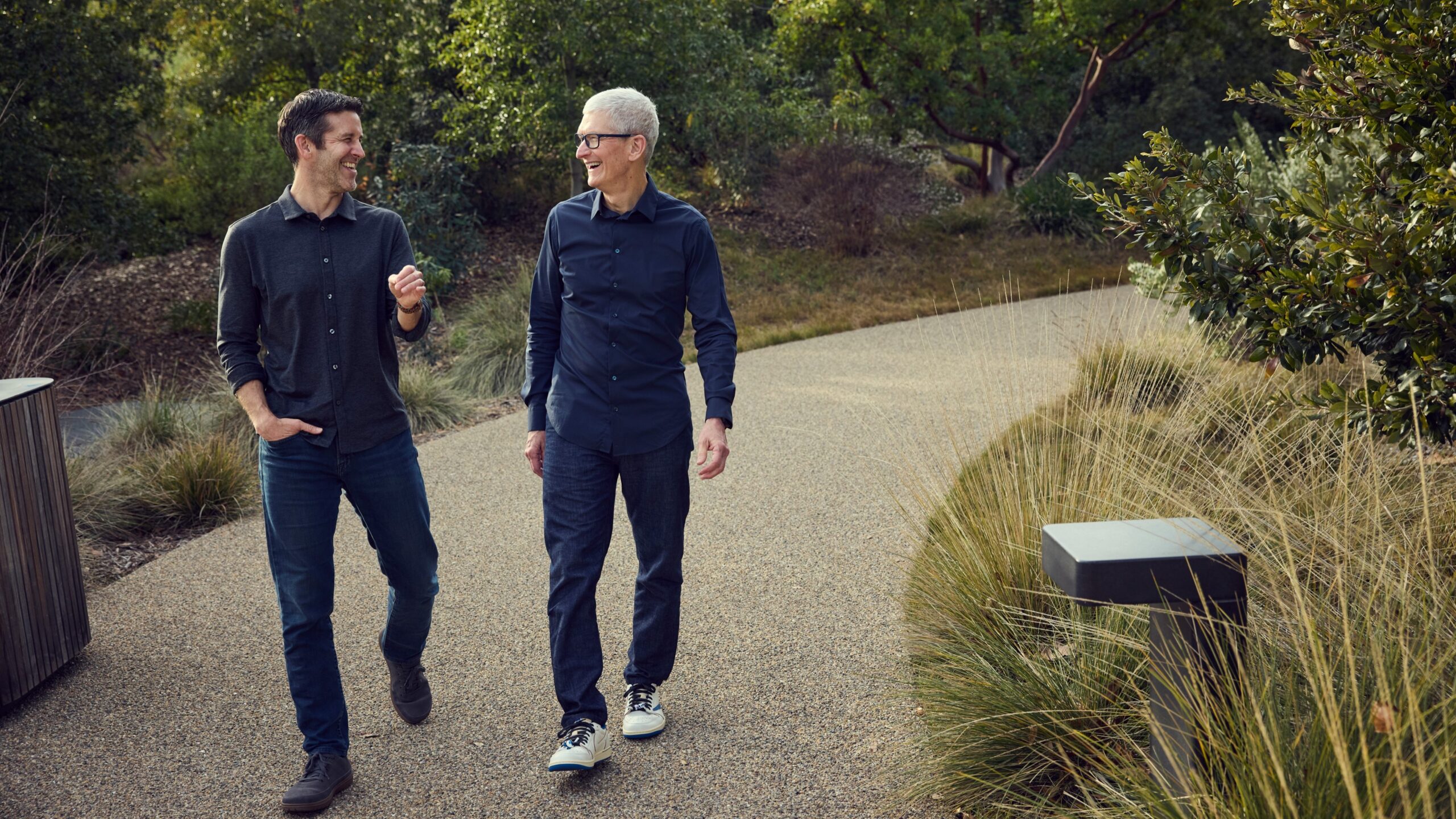
- John Ternus succeeds Tim Cook as Apple’s new CEO
- Outgoing CEO Tim Cook will remain with the company as executive chair, stepping back from day-to-day operations while retaining influence at the board level
- According to the NYT report, the incoming CEO takes the helm at a moment when Apple faces major shifts on both the technology and business fronts simultaneously
Analytical — Examining the organizational and strategic significance of a Big Tech CEO transition and tracing the axes of change that will shape Apple’s next decade
Table of Contents
On September 1, 2026, the official announcement of Apple’s CEO change was made. Tim Cook will move to the executive chair position, and John Ternus, who led hardware engineering for 15 years, will take over as the new CEO. As first reported by the NYT, this decision carries particular weight because it marks the departure of one of the longest-serving sitting CEOs among Big Tech companies.
Tim Cook became CEO in August 2011, succeeding Steve Jobs. Over 15 years, he grew the company’s market capitalization from several hundred billion dollars to the 3-trillion-dollar range and expanded the share of services revenue from single digits to the mid-20% range. During the same period, criticism that “innovation has stalled” followed consistently. This writer believes these 15 years cannot be read as a simple binary of success or failure.
Apple CEO Change: The Key Facts Confirmed by the NYT
The Apple CEO change can be distilled into two facts. One is the inauguration of John Ternus; the other is Tim Cook’s remaining as executive chair. This effectively formalizes a dual-leadership structure, distinct from the one-person system of the Jobs era when the board chair also served as CEO. The detailed timeline, changes in board composition, and the timing of the new CEO’s first official remarks fall outside the scope of verification and remain gaps to be filled by follow-up reporting.
What It Means That Tim Cook Remains as Executive Chair
It is easy to read this as an honorary role, but operationally it is different. The executive chair holds a voice in designing the board’s agenda and in reviewing CEO succession, personnel, and strategy. Cook has stepped back from the front line of decision-making, but he will remain in the meetings that set the major direction. The key question is the degree of autonomy the successor CEO will have within this structure.
If the chair position steps up to play a strategic guiding role, the new CEO’s hands will be tied; if it self-restrains to the level of advisor, synergy emerges. The next year will be the focal point of where this balance settles.
The Four Axes of Change Ternus Will Inherit at Once
The NYT described the incoming CEO as “facing major shifts on both the technology and business fronts simultaneously.” Unpacked, four overlapping axes emerge.
| Axis | Current Situation | Ternus’s Year-One Task |
|---|---|---|
| Hardware Lineup | iPhone market share stagnant, new category absent | Set direction for next-gen form factors and AR glasses |
| Services Share | Revenue in the mid-20% range, signs of growth deceleration | Redesign revenue model across subscriptions, ads, and fintech |
| AI Competition | Post-Apple Intelligence roadmap undisclosed | Make on-device and cloud AI strategy visible |
| Supply Chain & China Risk | U.S.–China tensions, exchange-rate and tariff variables | Calibrate pace of expanding production share in India and Vietnam |
The four axes are intertwined. If the AI strategy is weak, new-category hardware loses its persuasiveness, and if services revenue wobbles, defending market capitalization becomes difficult. Rather than solving all of these at once, the new CEO’s first-year tone will most likely reveal which axis is being prioritized.
Tim Cook’s 15 Years: Legacy and Unfinished Tasks
Tim Cook’s 15 years were a textbook case of operational efficiency and global supply chain optimization. At the same time, they left intact a product portfolio disproportionately weighted toward the iPhone. A structure in which more than half of revenue comes from a single lineup is the first area the new CEO must address.
What stands out from a practitioner’s perspective is the “pace of decision-making.” Under the Cook era, decisions were made public only after conservative review. In areas where time itself is competitive advantage, such as AI and AR, how quickly Ternus can make decisions will be the test of his first quarter.
The Apple CEO Change and the Trade-offs of Dual Leadership
This Apple CEO change also contrasts with succession models at other Big Tech firms. When Microsoft replaced its CEO with Satya Nadella in 2014, the outgoing CEO departed completely. When Sundar Pichai became CEO of Alphabet in 2019, Google likewise chose board chair separation. Apple alone has kept its outgoing CEO in the executive chair seat. Whether this choice becomes a source of stability or a ball and chain will be judged by the personnel and strategic messages that follow.
Outlook: Short-term Signals and Long-term KPIs
The signals that investors, developers, and consumers need to confirm within a year are different. Investors should watch the guidance personally shaped by the new CEO in the first earnings call; developers should watch the breadth of AI and toolchain at WWDC 2027’s keynote; consumers should watch the launch timing of new-category candidates (AR, foldables, home robots). Long-term KPIs worth tracking are three: iPhone dependency, services revenue share, and the ratio of AI-related R&D spending to revenue.
Summary of Key Issues
- How much the outgoing CEO’s retention as executive chair constrains the successor’s autonomy is the biggest variable for the next year.
- With three tasks — iPhone dependency, services growth deceleration, and the pace of AI transition — all open at once, priority selection itself becomes the face of leadership.
- Compared with Microsoft and Google, which chose chair separation, it is necessary to watch closely what signals Apple’s dual structure sends.
What to Do Right Now
- Mark Apple’s first earnings call date after September on your calendar via the investor relations page.
- Set keyword alerts for “John Ternus” on the NYT, Bloomberg, and Reuters to receive follow-up reporting immediately.
- Download the last four quarters of the Tim Cook era as PDFs and build a comparison table against the next two quarters’ numbers.
- Create a personal watchlist note to track WWDC 2027 schedule and 10-K filings.
Frequently Asked Questions
When was the Apple CEO change announced?
It has been confirmed that the official announcement was made based on the NYT report on September 1, 2026. Detailed timing may be updated as follow-up reporting comes in.
Is Tim Cook leaving the company entirely?
No. He will remain as executive chair, retaining influence at the board level. He steps out of the front line of decision-making, but does not fully depart.
Who is John Ternus?
He is the head of Apple’s hardware engineering division and has led the design and supply chain of the product lineup for 15 years. He had been mentioned as the leading internal candidate for this Apple CEO change.
What impact will this Apple CEO change have on Apple’s stock price?
In the short term, it is being read as an event that resolves uncertainty, and in the medium to long term, the direction will be determined by the speed at which the new CEO makes the AI and services strategy visible.
Source Article
This article was written after reviewing the following original source: NY Times Tech — John Ternus Replaces Tim Cook as Apple CEO